
Are you considering adopting a Pitbull but find yourself pondering whether a male or female would be a better fit for your home?
It’s a worthy consideration, as the gender of your future companion can influence your experience as a pet parent.
While every Pitbull is a unique individual with its own set of traits, understanding the behavioral tendencies of each gender can guide you in making a choice that aligns with your lifestyle and expectations.
Are you thinking about bringing a pitbull into your home but can’t decide between a male or female? You’re not alone! This is one of the most common questions potential pitbull owners ask, and honestly, there’s no one-size-fits-all answer. Both male and female pitbulls make wonderful companions, but they do have some differences that might make one a better fit for your specific situation.
As a pitbull lover myself, I’ve seen firsthand how these affectionate and loyal dogs can bring so much joy to a family. Let’s dive into the key differences between male and female pitbulls to help you make the best choice for your lifestyle.
Physical Differences Between Male and Female Pitbulls
Before we talk about personality traits, let’s look at the physical differences
Size and Build
- Males: Generally stand 18-21 inches tall and weigh between 35-60 pounds
- Females: Typically stand 17-20 inches tall and weigh between 30-50 pounds
Males tend to be bulkier with more muscle mass, while females have a slimmer build with less muscle. Males also typically have broader heads and wider jaws compared to females, who have narrower heads and smaller faces.
Temperament: The Real Deciding Factor
While physical differences are pretty straightforward. temperament is where things get interesting!
Male Pitbull Temperament
Males are often described as:
- More playful and goofy
- More affectionate and attention-seeking
- More likely to bond equally with all family members
- More confident and less suspicious of strangers
- More energetic, especially during puppy years
- Slightly more stubborn
- More intelligent and eager to please
Female Pitbull Temperament
Females tend to be:
- More cautious and serious
- Less demanding of attention
- More likely to bond closely with one family member
- More suspicious of strangers
- Less hyper during puppy years
- Less stubborn
- More clean and neat overall
I remember my neighbor’s male pitbull, Rocky, who would literally bounce off the walls with excitement whenever anyone came to visit. Meanwhile, my friend’s female pitbull, Luna, was much more reserved and would carefully observe new people before warming up to them.
Training Differences
If you’re concerned about training, this might influence your decision:
Training Male Pitbulls
- They can be harder to train when young due to their playful, energetic nature
- More easily distracted during training sessions
- May be more stubborn but very eager to please
- Mature slower (around 4 years compared to females’ 2 years)
Training Female Pitbulls
- Generally easier to train when young
- More focused during training sessions
- Reach maturity faster, making early training more effective
- Respond well to positive reinforcement and praise
However, during a female’s heat cycle, training can be challenging as they may feel restless and ignore commands.
Family Compatibility
Both genders can make excellent family pets, but there are some considerations:
Males with Children
- Very playful and tolerant with kids
- Great sense of humor makes them fun playmates
- Higher energy levels for playing
- May be clumsier and could accidentally knock over small children
- Often protective of the whole family
Females with Children
- More cautious and calm around young children
- Less energy for all-day play sessions
- Mature quicker, so tend to be less rowdy
- Maternal instincts may make them protective
- Often bond more closely with one family member
Getting Along with Other Pets
If you have other pets, this is an important consideration:
Males with Other Pets
- Can be more aggressive toward other male dogs
- Generally more social and playful with new animals
- May have stronger prey drive in some cases
- Need proper socialization from an early age
Females with Other Pets
- Less likely to fight to assert dominance when meeting new animals
- Often get along better with male dogs than female dogs
- Can show aggression during heat cycles
- Can be jealous of attention given to other pets
Health Considerations
Both male and female pitbulls generally live 12-16 years, but they face different health challenges:
Male Health Issues
- More prone to bone injuries and joint problems
- Higher risk of hip dysplasia
- Can develop prostate problems and testicular cancer (if not neutered)
- May be more likely to develop struvite bladder stones
Female Health Issues
- Risk of pyometra (uterine infection) if not spayed
- Higher chance of developing mammary tumors
- Risks associated with pregnancy if not spayed
- After spaying, increased risk of obesity and certain other conditions
Which Makes a Better Guard Dog?
Despite their reputation, pitbulls aren’t naturally great guard dogs because they’re typically too friendly! However:
- Males excel at protecting a whole family or territory
- Females are often better at protecting individual family members
- Females tend to be more cautious and alert
- Males might be more intimidating due to their larger size
The Bottom Line: Which is Better?
After examining all these differences, you might still be wondering: so which one is actually BETTER?
The truth is, there’s no definitive answer! It really depends on what you’re looking for:
Consider a male pitbull if:
- You want a playful, energetic dog for an active family
- You prefer a dog that bonds equally with all family members
- You want a larger, more muscular build
- You don’t mind a bit more stubbornness and slower maturity
Consider a female pitbull if:
- You prefer a more calm, cautious companion
- You want a dog that’s easier to train from a young age
- You prefer a slightly smaller, less muscular build
- You don’t mind that she might bond more closely with one person
I’ve found that individual personality often matters more than gender. My own pitbull mix, Daisy, completely defies the typical female characteristics – she’s goofy, loves everyone equally, and has never met a stranger!
Final Thoughts
Whichever gender you choose, remember that proper training, socialization, and a loving environment are what truly determine a pitbull’s behavior. These incredible dogs are known for their loyalty, intelligence, and affection – qualities that shine through in both males and females.
Both require your time, commitment, and love. They need proper exercise, training, and socialization from an early age to prevent any aggression issues. With the right care, either a male or female pitbull can be an amazing addition to your family.
If possible, meet the specific dog you’re considering adopting. Their individual personality will tell you much more than generalizations about gender ever could!
Have you already had experience with pitbulls? I’d love to hear which gender you prefer and why! Drop a comment below and share your pitbull stories.
Remember, the best pitbull isn’t determined by gender but by how well their personality matches your lifestyle and how much love and training you provide. Whether you choose a bouncy, affectionate boy or a smart, cautious girl, you’re in for years of loyalty and love from one of the most misunderstood but wonderful breeds out there!
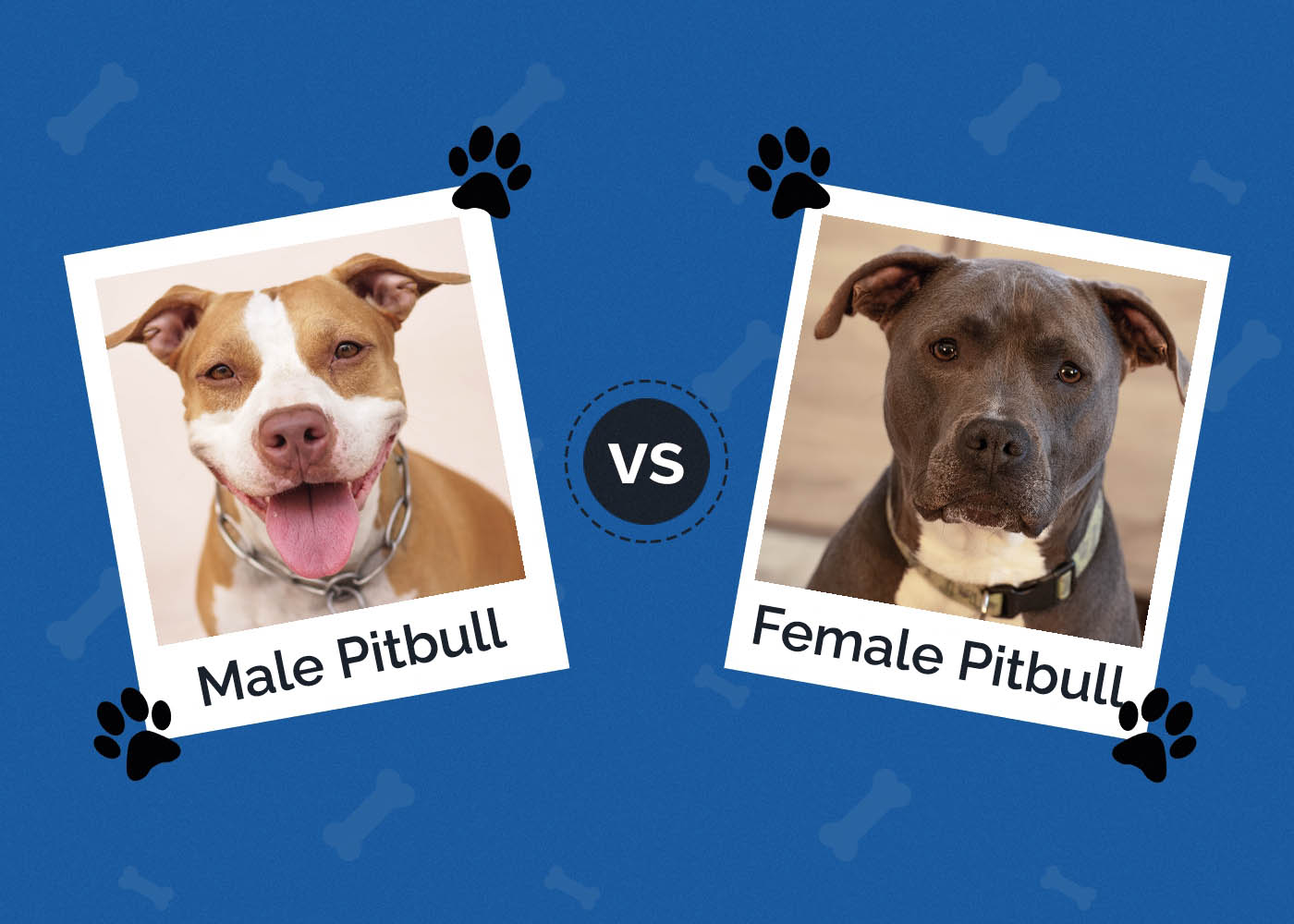
Male Pitbulls: Confidence and Exuberance
Males, on the other hand, tend to wear their hearts on their sleeves. They often display a boisterous, confident demeanor with a zest for life that is hard to ignore.
This can translate to a dog that is more outwardly affectionate, eager for attention, and sometimes more straightforward to engage in training due to their desire to please and interact with their owners.
However, this confidence can tip into assertiveness, especially if not properly managed through consistent training from a young age. Male pitbulls may exhibit more territorial behaviors and might require additional focus on socialization to ensure they learn appropriate interactions with other dogs and people.

The genetic makeup of a pitbull can predispose it to certain behaviors. However, the genetics of behavior is not black and white. It’s a spectrum where traits can vary widely, even within a litter.
If youre thinking about adopting or already own a mixed breed, you might also be wondering how long do Pitbull mixes live – a key factor for planning long-term care.
Male dogs can be sensitive and gentle, whereas females can display boldness and dominance. The key is understanding that while genetics provides a blueprint, its not the sole architect of a pitbulls personality.
The environment in which a Pitbull is raised is just as crucial as its genetic background.
Pitbulls are highly responsive to their upbringing and the attitudes and behaviors of their owners. A male pitbull nurtured with gentle training, socialization, and positive reinforcement can grow to be a calm and composed companion, while a female raised without this care may develop more independent or even aggressive tendencies.
Early socialization is particularly important. Introducing pitbull puppies to a variety of people, animals, and situations can help shape them into well-adjusted adults. A positive environment encouraging good behavior can mitigate some of the more challenging aspects of a Pitbulls genetic disposition.
The Protective Pitbull: Guarding Instincts in Genders
Pitbulls are often recognized for their loyalty and protective instincts, which can manifest distinctly in males and females. Understanding these protective behaviors is essential for families and individuals looking to adopt a Pitbull, as it can impact the dog’s interaction with family members, visitors, and other pets.
Female Pitbulls are generally known for their nurturing tendencies, which can extend to a protective nature over their perceived “pack” or family. This maternal instinct can mean that female Pitbulls are particularly watchful of children and sensitive to changes in the household. They may be more reserved or cautious around strangers, which is a protective trait that can serve well in a family environment.
However, this protective instinct should not be confused with overt aggression. Socialization is key in ensuring that their protective behavior is managed correctly. Female Pitbulls can be taught to distinguish between normal interactions and actual threats, allowing them to be both protective and well-behaved members of the family.
Male pitbulls often exhibit a more pronounced protective instinct, which is sometimes described as territorial. They may show a strong presence and may be more likely to respond to perceived threats with a display of strength. This assertiveness is part of their natural inclination to guard their family and territory.
This behavior in males can be both an advantage and a challenge. While it may provide a sense of security for the owner, it also requires diligent training to ensure that their protective instincts are controlled and do not escalate into aggression. A well-socialized male Pitbull with proper obedience training can differentiate between normal social situations and those that warrant a protective response.
For families, the protective nature of a pitbull can be comforting, but it is vital to maintain a balance to prevent overprotectiveness, which can lead to problematic behaviors. It is important for potential pitbull owners to understand that socialization and training are crucial in harnessing and managing their dog’s protective instincts.
Early exposure to a variety of people, sounds, and experiences is essential for pitbulls to learn appropriate behaviors. Training should focus on commands that halt guarding behavior, such as “leave it” or “back,” and reward-based methods that encourage calm and non-aggressive responses.
Owners should also be aware of their own behavior, as dogs are adept at reading human emotions and may react to their owner’s apprehension or discomfort. Consistent, calm, and confident commands from the owner can help guide a Pitbulls protective instincts in a positive direction.

Male Pitbull Dog vs Female Pitbull Dog – Compare and Contrast | Differences is Putbull dogs
FAQ
Is it better to get a female or male pitbull?
A male pitbull nurtured with gentle training, socialization, and positive reinforcement can grow to be a calm and composed companion, while a female raised without this care may develop more independent or even aggressive tendencies.
What type of pitbull is the nicest?
Staffordshire Bull Terrier. Despite the Staffordshire bull terrier’s 19th-century development for dogfighting, they’re now known for being unfailingly loyal and affectionate with families. These dogs enjoy snuggling with owners and are typically patient and gentle with children.
Are male pitbulls bigger than females?
The American Pit Bull Terrier varies in size: males are normally about 18–21 inches (45–53 cm) in height and around 35–60 pounds (15–27 kg) in weight, while …
Which is more aggressive male or female dogs?
For dogs, aggression is a natural aspect of behavior. It can be triggered by fear or an instinct to protect. It’s such a natural response that many dog bites occur when the dog has been startled awake. And there is much scientific research showing that male dogs have more aggressive tendencies.