
You are out for an enjoyable hike when it happens: your dog manages to find a snake nestled in the rocks. Although you call him back, it is too late. He yelps and comes back limping. This is the first time you have ever had to deal with a snake biting your dog. What do you do now?
Dogs and snakes have a complicated relationship that many pet owners worry about, especially during warmer months when snake encounters become more likely If you’ve ever wondered whether your furry friend might help keep slithering visitors away, you’re not alone! As someone who’s researched this topic extensively, I’ll share what science tells us about whether snakes are afraid of dogs and how this knowledge can help keep both your pets and family safe
Do Snakes Actually Fear Dogs?
The short answer is Yes most snakes will try to avoid dogs – but not necessarily out of fear in the way we might think.
Snakes typically prefer to avoid larger, noisy animals like dogs for practical reasons:
- Dogs are bigger and more active than a snake’s preferred prey
- Dogs make noise and vibrations that alert snakes to their presence
- Most snakes would rather retreat than confront a potential threat
According to research, snakes have cloacal glands on their tails that release a distinctive odor when they feel threatened or scared. This reaction can happen when they sense a dog’s presence. The smell serves as both a defense mechanism and a warning to other snakes in the area.
However, this doesn’t mean all snakes will always avoid all dogs. The relationship is more nuanced than that.
Why Dogs Might Not Be the Perfect Snake Repellent
While snakes generally try to avoid dogs there are some important caveats to consider
Dogs Aren’t Naturally Afraid of Snakes
Surprisingly, research published in Applied Animal Behavior Science found that dogs don’t innately fear snakes. When presented with rattlesnake scents, dogs actually showed “investigatory interest without an accompanying experience of threat.” They were curious rather than afraid!
This lack of fear might explain why so many dogs end up with snake bites. Studies estimate that approximately 150,000 pets are bitten by rattlesnakes each year, with mortality rates for dogs reaching up to 30% – significantly higher than the less than 1% fatality rate for humans.
Snake Species Matter
Different snake species react differently to dogs. Some venomous snakes, particularly ambush predators like rattlesnakes, may have evolved what researchers call “chemical crypsis” – essentially, they produce less detectable odors, which helps them remain hidden from potential prey and predators alike.
How Dogs Detect Snakes
Dogs have remarkable senses that can help them detect snakes, even when we can’t:
Amazing Sense of Smell
A dog’s primary tool for detecting snakes is their incredible sense of smell. All reptiles, especially snakes, give off particular scents. When snakes feel threatened, they release stronger odors from their cloacal glands, which dogs can easily detect.
Some breeds are especially adept at snake detection due to their superior noses:
- Beagles
- Basset Hounds
- Jack Russell Terriers
- Bloodhounds
Exceptional Hearing
Dogs can also hear the subtle sounds snakes make when moving through grass or leaves. You might notice your dog’s ears rotating like antennas when they’re picking up these faint sounds.
Signs Your Dog Has Detected a Snake
Knowing how your dog behaves when they sense a snake can help you stay safe. Watch for these signals:
- Excessive sniffing with twitching nose
- Nose pointing in the air or direction of the scent
- Ears rotating toward the sound source
- Stiff tail posture
- Paws up pointing stance
- Vocalizations like barking, whining, or howling
- Trying to block you from moving in a certain direction
If you notice these behaviors, especially in an area where snakes might be present, take caution and check your surroundings carefully.
Training Your Dog for Snake Safety
Given that dogs aren’t naturally afraid of snakes and may approach them out of curiosity, training becomes essential for their safety. There are two main approaches to snake aversion training:
Traditional Shock Collar Methods
Some trainers use remote-activated shock collars to create negative associations with snakes. While this method can work, especially with:
- Appropriate timing
- Consistent application
- Experienced handlers
However, many veterinary behaviorists warn about potential “punishment fallout” – where these aversive methods create fear, anxiety, and even aggression problems unrelated to snakes.
Positive Reinforcement Methods
Modern trainers and veterinary behaviorists increasingly recommend positive reinforcement techniques for snake avoidance:
1. “Leave It” Command
Train a strong “leave it” command starting with everyday items, then gradually introducing snake-related stimuli (from a safe distance).
2. Auto-Watch Training
Teach your dog to immediately look at you when encountering novel stimuli, including potential dangers like snakes.
3. Choice-Based Training
Allow your dog to make the right choice (disengaging from the snake) and heavily reward this behavior with high-value treats or play.
Dr. Christopher Pachel, a board-certified veterinary behaviorist, emphasizes that “the vast majority of qualified, knowledgeable trainers and behaviorists avoid the use of punishment devices whenever possible and are more likely to rely on proactive management and training techniques.”
Virtual Training Options
If you’re interested in teaching your dog to avoid snakes but don’t have access to local resources, virtual training might be an option. For example, Eileen Koval of Confident Canines offers a virtual snake avoidance course that has received positive reviews. This course teaches dogs to automatically avoid snakes based on smell, sight, and sound using only positive reinforcement techniques.
Practical Snake Safety Tips for Dog Owners
Beyond training, here are some practical steps to reduce snake encounters:
In Your Yard
- Keep grass short and remove debris piles where snakes might hide
- Install snake-proof fencing around your property
- Use natural repellents like clove and cinnamon oil (mix and spray in areas of concern)
On Walks and Hikes
- Keep dogs on leash in snake-prone areas
- Stay on established trails
- Avoid tall grass and rock piles, especially during warmer months
- Hike during cooler parts of the day when snakes are less active
Know Your Local Snakes
Check resources like interactive maps to understand which venomous snakes are native to your area. For instance, Maine, Rhode Island, Alaska, and Hawaii have no native venomous snakes, while other states have several species to be aware of.
What to Do If You Encounter a Snake
If you and your dog encounter a snake:
- Stay calm and keep your dog close
- Use your “leave it” or other trained commands
- Slowly back away without making sudden movements
- Never let your dog investigate or approach the snake
- If in doubt about the snake species, treat all snakes as potentially dangerous
Bottom Line: A Healthy Respect Works Best
While snakes generally try to avoid dogs, dogs don’t naturally avoid snakes – and that’s where the danger lies. Rather than relying on your dog to keep snakes away, focus on training your dog to respond appropriately when snakes are encountered.
I’ve found that the best approach combines awareness, prevention, and proper training. This way, both your canine companion and any local snakes can peacefully coexist with minimal risk to either.
Remember, snakes play important roles in our ecosystems by controlling rodent populations and maintaining balance in nature. With the right knowledge and preparation, we can help our dogs navigate a world where snakes sometimes cross their paths.
Have you had experiences with your dog encountering snakes? What training methods have worked best for you? I’d love to hear about your experiences in the comments!
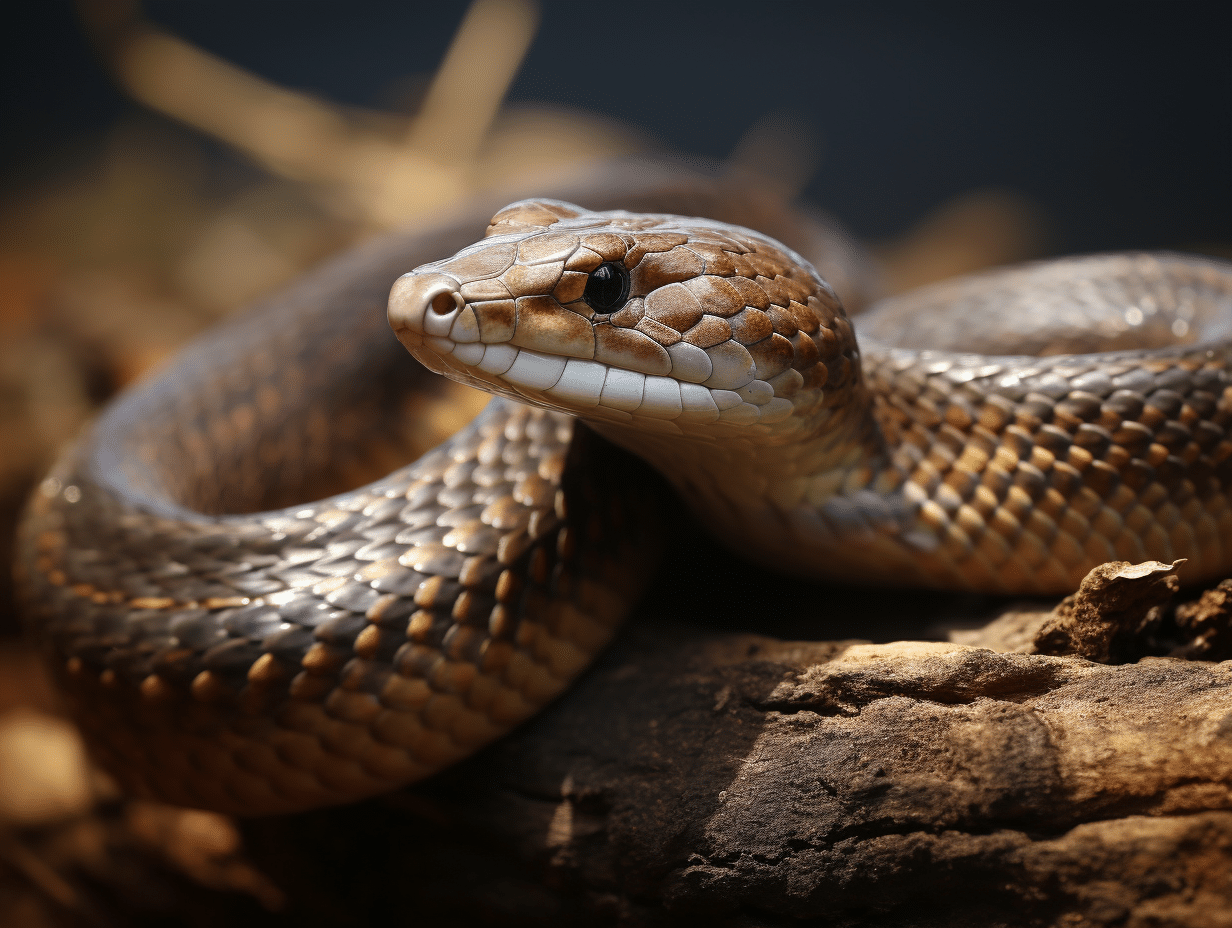
Why Do Snakes Bite Dogs?
It is quite easy when your beloved pet has been hurt by a wild animal to immediately blame the critter for the injury. However, most animals—snakes included—will only attack a much larger creature, like a dog, if they feel threatened.
Curious dogs can approach snakes quickly and often come in quite close, making the snake afraid. The snake’s natural reaction is to strike back which results in a bite to your pet. Although it is unfortunate if your dog gets injured, both parties played a role, and the snake most likely acted out of fear.
Fortunately, snake bites to dogs are relatively rare. They usually occur with dogs that hike and explore extensively in rocky areas. Also, many snakes present in North America are nonvenomous. Although a bite may be very painful, no toxin is injected with the wound and severe reactions are uncommon. This isn’t always the case, however.
How To Treat a Snake Bite on a Dog
Dogs that have been bitten by a snake need to be seen by a veterinarian immediately, whether that snake was venomous or nonvenomous.
If your dog was bitten by a snake, remove the dog as quickly as you safely can, and carry them to the car (it is better to not allow them to walk on their own even if they are able). Take a photo of the snake (if you can do so safely) and call the nearest veterinarian to find out if they are able to treat your dog right away.
If possible, send a photo for identification. The exact treatment involved will depend on the species of snake, and a proper medication can be chosen more easily if the snake species is known. Rattlesnake and coral snake bites are best treated with antivenom, and calling the veterinary hospital ahead of time to see if they have—or can rapidly get—antivenom is a helpful time saver.
A dog helps his owner who is afraid of a snake
FAQ
Are snakes poisonous to dogs?
While snakes will keep themselves away from dogs, there will be times when they will retaliate as an attempt to protect themselves when they are attacked by dogs. And if your dog gets bitten by some poisonous snakes such as Eastern Brown Snake, Mainland Tigersnake, Inland Taipan, the snake’s venom will enter his blood stream.
Do dogs have a phobia of snakes?
Most humans have an innate fear of snakes, but if you’ve ever seen a dog encounter a serpent, you may have been surprised to see that they don’t share our phobia. In fact, dogs have a playful curiosity that can quickly result in an unhappy dog bitten by a snake.
Is it normal to be afraid of snakes?
It’s normal to be afraid of snakes due to their potential to harm us. This fear, often called ophidiophobia, is a healthy respect towards snakes and their venom. People typically fear snakes for the possibility that their lives may be in danger.
Can a dog live in a snake-free area?
A dog’s natural curiosity can quickly get them into trouble unless they have previously learned to stay out of harm’s way! Even if you live in a relatively snake-free area, they should — along with other dangerous animals — be kept in mind, especially when traveling with your dog to a place where snakes are common. Not sure what snakes live where?
Do Terriers attack snakes?
For certain breeds of dogs, such as terrier breeds (eg. Australian Terriers, Cairn Terrier, Lakeland Terrier, Norfolk Terrier, Rat Terrier, Yorkshire Terrier), they are more inclined to hunt and attack small, fast moving animals such as rats, mice and snakes. This is the natural instinct that these dogs have been trained to do since ancient times.
Can dogs spot snakes?
You see, dogs with their acute scent of smell can quickly detect the snake’s presence and attack them. In fact, dogs have the ability to locate small animals such as a rat or snake even when they are still far away from your sight. For certain breeds of dogs, such as terrier breeds (eg.
What animal do snakes fear the most?
- Not Just Mongoose. 5 Other Animals Snakes Fear The Most. …
- Snakes Are Not Fearless. Snakes have fascinated and terrified humans for centuries. …
- Understanding Snake Behaviour. …
- Mongoose. …
- Wild Boars. …
- Birds Of Prey. …
- Other Snakes. …
- Dogs.
What will a dog do if it sees a snake?
The snake sees them as a threat, the dog sees or sometimes doesn’t even see them, but their nose poking in the snake’s business isn’t welcomed and is often met with a bite to their face or limbs.
Can a dog sense a snake?
Do dogs get scared of snakes?
Yes actually, the smell of a snake is very foreign to dogs and they will either be curious about it or afraid. Either way they are usually wary.