
Ever been confused about whether your furry friend is actually a medium-sized dog or falls into another category? You’re definitely not alone! With so many breeds out there, understanding dog sizes can get super confusing. As a longtime dog owner and enthusiast, I’ve put together this comprehensive guide to help you figure out exactly how big a medium-sized dog really is.
What Exactly Makes a Dog “Medium-Sized”?
Medium-sized dogs occupy that perfect sweet spot between small lapdogs and large canine companions. They’re not too tiny that you’ll trip over them, but not so massive that they take over your entire living room! But what specific measurements actually define a medium dog?
Medium Dog Size by Weight
According to multiple veterinary sources, medium-sized dogs typically weigh between:
- 24-59 pounds (10-26 kg)
This weight range is the most commonly accepted definition of a medium-sized dog, though some sources might have slight variations. Remember that these classifications aren’t governed by any official standards or rules, so there’s some flexibility depending on the breed and individual dog.
Medium Dog Size by Height
Height is another important factor in determining dog size categories. Medium dogs generally stand:
- 16-22 inches (40-56 cm) tall at the shoulder
This measurement is taken from the ground to the highest point of the dog’s shoulders (the withers), and it’s a key factor in determining if your pup falls into the medium category
Popular Medium-Sized Dog Breeds
Let’s look at some popular medium-sized breeds and their typical measurements
| Breed | Average Length (cm) | Average Height (cm) | Average Weight (kg) |
|---|---|---|---|
| Beagle | 46-51 | 33-40 | 9-11 |
| Border Collie | 56-61 | 48-56 | 14-20 |
| Cocker Spaniel | 38-43 | 36-41 | 11-14 |
| Bulldog | 31-40 | 31-40 | 18-25 |
| Whippet | 43-53 | 45-51 | 11-14 |
| Staffordshire Bull Terrier | 36-41 | 36-41 | 11-17 |
| Australian Cattle Dog | 46-51 | 43-51 | 16-20 |
| Basset Hound | 58-68 | 33-38 | 20-29 |
Remember, these are just averages! Individual dogs can vary based on gender, diet, exercise, and other factors. My neighbor’s female Border Collie is much smaller than the average, while my friend’s male Cocker Spaniel is on the larger end of the spectrum.
Medium Dogs Compared to Other Size Categories
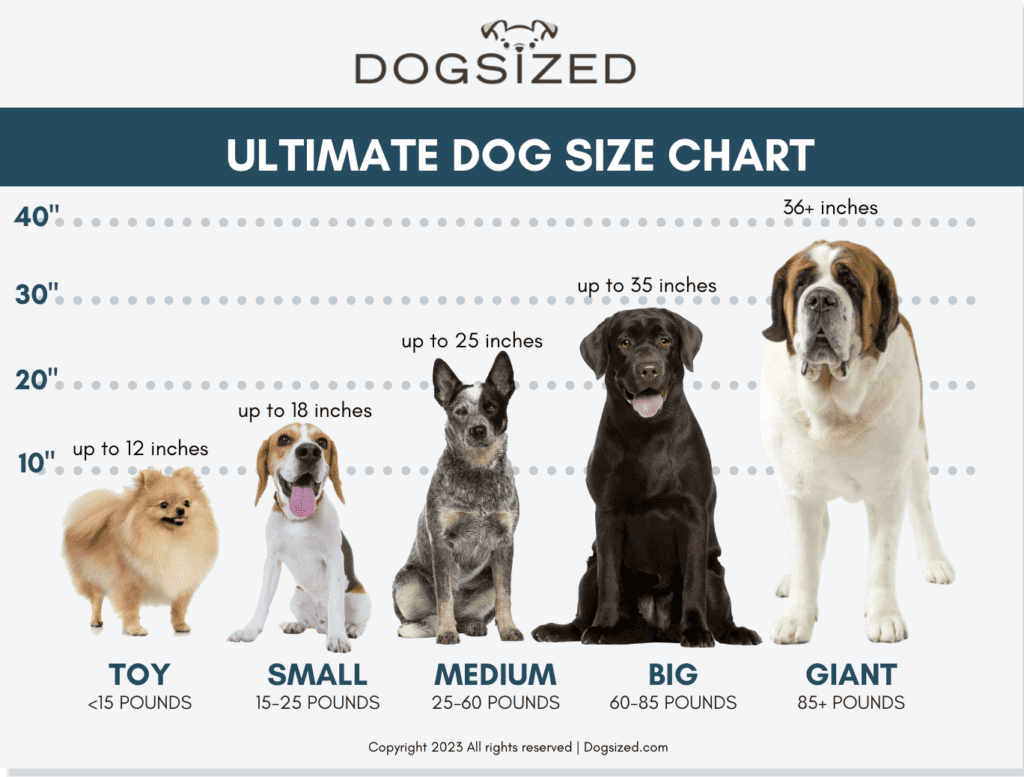
To better understand where medium dogs fit in the overall canine size spectrum, here’s how all the categories compare:
Small Dogs:
- Weight: Up to 24 pounds (10 kg)
- Height: Less than 16 inches (40 cm)
- Examples: Chihuahua, Pomeranian, Maltese, Yorkshire Terrier
Medium Dogs:
- Weight: 24-59 pounds (10-26 kg)
- Height: 16-22 inches (40-56 cm)
- Examples: Beagle, Border Collie, Cocker Spaniel
Large Dogs:
- Weight: 60-99 pounds (27-45 kg)
- Height: 22-28 inches (56-71 cm)
- Examples: Labrador Retriever, German Shepherd, Golden Retriever
Giant Dogs:
- Weight: 100+ pounds (45+ kg)
- Height: 28+ inches (71+ cm)
- Examples: Great Dane, Mastiff, Saint Bernard
Why Medium Dogs Are So Popular
There’s a reason why medium-sized dogs are often called the “Goldilocks” of the dog world – they’re just right for many lifestyles! Here’s why medium dogs have become such popular companions:
Perfect Balance of Size and Personality
Medium dogs aren’t too small to get lost in the shuffle, and not too large to take over your house. They strike the perfect balance for many families.
Adaptable to Different Living Situations
They can adapt to both apartment living and homes with yards. While they do need regular exercise, their requirements aren’t as demanding as larger breeds.
Great for Active Lifestyles
Medium dogs make excellent companions for outdoor activities like hiking and running. They’re sturdy enough to keep up with active families but won’t pull your arm off during walks (well, most of the time!).
Manageable Care Requirements
From grooming to feeding costs, medium dogs typically require less intensive care than giant breeds but are hardier than toy breeds.
I remember when I was choosing between a Border Collie and a Great Dane – the difference in food costs alone was eye-opening! My medium-sized Border Collie eats about half of what my friend’s Great Dane consumes daily.
Understanding Your Medium Dog’s Specific Needs
Just because your dog falls into the medium category doesn’t mean they have the same needs as every other medium-sized dog. Here are some factors to consider:
Breed-Specific Energy Levels
Some medium breeds like Border Collies have extremely high energy levels and need lots of mental and physical stimulation, while others like Bulldogs are more laid-back.
Health Considerations
Different medium breeds may be prone to different health issues. Some medium dogs are prone to joint problems, while others might face breed-specific challenges.
Life Expectancy
Medium dogs typically have longer lifespans than large or giant breeds, but shorter than small breeds. On average, you can expect a medium-sized dog to live between 10-15 years.
How to Properly Measure Your Dog
Not sure if your dog fits the medium-sized category? Here’s how to measure them properly:
Weight
Simply use a bathroom scale. Weigh yourself first, then pick up your dog and weigh both of you together. Subtract your weight from the total to get your dog’s weight.
Height
Have your dog stand on a flat surface. Measure from the ground to the highest point of their shoulders (the withers). Make sure they’re standing up straight for an accurate measurement.
Length
Measure from the base of their neck (where the collar sits) to the base of their tail. This isn’t typically used for size classification but is helpful for buying appropriately sized accessories.
Choosing the Right Gear for Your Medium-Sized Dog
Knowing your dog’s size is super important when shopping for:
Beds and Crates
Medium dogs need beds that provide enough space to stretch out comfortably. For crates, they should be able to stand up, turn around, and lie down with ease.
Collars and Harnesses
These need to fit just right – not too tight to cause discomfort, not too loose to slip off. Most medium dogs wear collars between 12-20 inches in circumference.
Food Portions
Medium dogs typically need between 1-2 cups of high-quality dog food per meal, depending on their activity level and metabolism.
I learned this the hard way when I bought my Border Collie a “one-size-fits-all” bed that was clearly designed for smaller dogs. She could barely curl up in it, and we had to return it for a proper medium-sized option.
How Big Will My Puppy Get?
If you’ve got a puppy and are wondering if they’ll grow to be a medium-sized adult, here are some clues:
- Medium breed puppies usually reach their full height by 9-12 months
- They typically reach their adult weight by 12-15 months
- Paw size can be an indicator – medium dogs will have proportionate paws as puppies
My Border Collie puppy had massive paws when she was little, and I was worried she’d grow to be huge. Turns out, she grew into those paws perfectly and ended up right in the middle of the medium-sized range.
Common Myths About Medium-Sized Dogs
Let’s bust some common misconceptions:
Myth #1: All medium dogs have similar energy levels
Reality: Energy levels vary dramatically between breeds. A Border Collie requires much more exercise than a Bulldog, despite both being medium-sized.
Myth #2: Medium dogs are always best for families
Reality: While many medium breeds are family-friendly, temperament varies widely. Always research the specific breed’s characteristics.
Myth #3: Medium dogs don’t need as much training as large dogs
Reality: All dogs need proper training, regardless of size. In fact, some medium breeds like Border Collies require extensive training and mental stimulation.
Final Thoughts
Medium-sized dogs truly offer the best of both worlds – not too big, not too small, just right for many households. They provide the perfect balance of cuddly companionship and active playmate without the extreme space or exercise requirements of larger breeds.
P.S. Don’t forget to measure your pup properly before buying any accessories – trust me, it’ll save you a lot of hassle and returns in the long run!
Why Medium Dogs Are the Best Companions for You and Your Family Medium-sized dogs are the perfect balance of size and personality, making them an ideal addition to any family. They are not too small to get lost in the shuffle, and not too large to take over the house. With their friendly and playful temperament, medium dogs are sure to become loyal and loving companions that bring joy and excitement to your life. Medium dogs come in a variety of breeds, each with their unique characteristics, so you can find one that fits perfectly with your lifestyle. They are the perfect size for outdoor activities like hiking and running.
Heres a size chart for some of the most popular medium breeds:
| Breed | Average Length (cm) | Average Height (cm) | Average Weight (kg) |
|---|---|---|---|
| Beagle | 46-51 | 33-40 | 9-11 |
| Border Collie | 56-61 | 48-56 | 14-20 |
| Boxer | 56-63 | 53-63 | 25-32 |
| Bulldog | 31-40 | 31-40 | 18-25 |
| Cocker Spaniel | 38-43 | 36-41 | 11-14 |
| Springer Spaniel | 45-51 | 46-51 | 20-25 |
| Shar Pei | 46-51 | 46-51 | 18-25 |
| Standard Schnauzer | 43-51 | 43-51 | 14-20 |
| Labrador Retriever | 55-62 | 56-62 | 25-36 |
| Standard Poodle | 66-71 | 38-61 | 18-32 |
| Miniature Labradoodle | 45-55 | 35-45 | 7-16 |
| Whippet | 43-53 | 45-51 | 11-14 |
| Siberian Husky | 51-60 | 53-60 | 16-28 |
| Corgi | 40-46 | 25-30 | 11-15 |
| Shiba Inu | 43-51 | 35-41 | 7-11 |
| Chow Chow | 56-66 | 46-56 | 20-32 |
| Bedlington Terrier | 38-43 | 38-43 | 8-10 |
| Rough Collie | 51-66 | 56-66 | 20-32 |
| Dalmatian | 56-61 | 53-61 | 23-27 |
| Staffordshire Bull Terrier | 36-41 | 36-41 | 11-17 |
| Keeshond | 46-56 | 46-56 | 14-18 |
| Basset Hound | 58-68 | 33-38 | 20-29 |
| Australian Cattle Dog | 46-51 | 43-51 | 16-20 |
Want your dogs breed adding to the wall of fame?
Top 10 Medium Sized Dog Breeds
FAQ
How much does a medium sized dog weigh?
Generally, medium-sized dog breeds weigh between 20 to 50 pounds (9 to 23 kilograms) and stand approximately 14 to 20 inches (36 to 51 centimeters) tall at the shoulder. However, these ranges can vary slightly depending on the specific breed standards set by kennel clubs or organizations.
What is considered a medium-sized dog?
When it comes to choosing a furry companion, many pet owners opt for medium-sized dogs. But what exactly is considered a medium-sized dog? In the world of pets, medium-sized dogs typically range from 20 to 50 pounds, standing at around 16 to 24 inches tall at the shoulder. These dogs are versatile, adaptable, and make great family pets.
How big is a small dog?
Dogs are often categorized by size based on their weight into three main groups: small, medium, and large. Small dogs weigh under 24 pounds and stand less than 16 inches tall at the shoulder. Medium-sized dogs fall between 25 and 59 pounds, with a shoulder height ranging from 16 to 22 inches.
What are the different dog sizes?
When it comes to dog sizes, they are typically grouped into five main categories: Toy, Small, Medium, Large, and Giant. Each size has a specific weight and height range, as well as breeds that fit into those groups. This simple dog size chart by weight and height will help you understand where your pup fits:
How big is a big dog?
Large dogs are impressive in both size and strength. Ranging from 50–100 pounds and standing 22–28 inches tall. Giant dogs are, well, huge- weighing over 100 pounds and tower above other dogs with heights exceeding 28 inches. Let’s take a closer look at some popular breeds in each size category.
How do you know if a dog is a medium sized dog?
These measurements can vary slightly depending on the breed of dog, so it is always best to consult with a veterinarian or breeder to get specific information about the size of a particular dog. Delve into the realm of medium-sized dogs and uncover the average dimensions that define their stature. From height and length to weight and body parts,
Is a 50 lb dog medium or large?
A 50 lb dog is considered large by some standards and medium-large or at the upper end of medium by others, as size categories vary slightly between organizations. While some might see 50 pounds as the minimum for a “large” breed, many sources place the large-breed threshold at 50 pounds or more, with others starting it closer to 60 pounds.
Is 20lbs a medium dog?
A healthy weight range for small dogs is between 12 and 24 pounds. Extra-small toy breeds like Yorkshire Terriers, Chihuahuas and Toy Poodles, however, should generally weigh less than six or seven pounds. Medium dogs should weigh between 24 and 57 pounds.
What is a good medium size dog?
Some of the best medium-sized dog breeds, suitable for different families and lifestyles, include Beagles, Cocker Spaniels, Basset Hounds, Brittanys, and Whippets for active or less active homes. For those with city living in mind, French Bulldogs, Standard Schnauzers, and Cavalier King Charles Spaniels are good choices. When choosing a medium dog, consider your specific family’s needs, including temperament, energy levels, and grooming requirements.
What are the 4 dog sizes?
Dogs are divided into four main categories — small, medium, large and giant. Small dogs can be categorised further into teacup, miniature and toy breeds. A note: As dog sizes are determined by their weight, it’s worth noting that these classifications are based on a healthy dog.