
Spring shows up, the sun sticks around longer, and suddenly your yard is full of cheerful yellow trumpets. Your dog notices too. Nose down, tail going, ready to taste-test the whole garden. So here’s the question every dog parent should ask before that happens: are daffodils poisonous to dogs? Short answer — yes, and it’s worth knowing why. Let’s walk through it like friends chatting over the fence.
Are Daffodils Safe for Dogs?
No. Daffodils are not safe for dogs. In fact, all parts of the daffodil are poisonous — and the danger climbs the deeper your dog digs. Even the water in a vase of cut daffodils can make a dog sick. If your pup nibbles any part, call your vet.
Here’s how the risk stacks up, from least to most dangerous:
- Petals — mild irritation
- Stem and leaves — more irritating, more toxin
- The bulb — the real troublemaker
Which Parts of the Daffodil Are Toxic?
Every piece of this plant carries something your dog shouldn’t swallow. But not all parts are equal. Think of it as a ladder of “nope,” where each rung is a little worse than the last.
| Plant part | Toxin level | Why it matters |
|---|---|---|
| Petals & flower | Low–moderate | Enough to cause drooling and an upset tummy |
| Stem & leaves | Moderate | More toxin, more mouth and throat irritation |
| Bulb | Highest | The bulb is the most dangerous bit by far |
| Vase water | Sneaky | Toxins leach into the water from a vase of cut flowers |
The takeaway is simple. The daffodil bulb is the most dangerous part because it holds a higher concentration of the toxic compound. If your dog is a champion digger, this is the part to worry about most.
What Makes Daffodils Poisonous? (Lycorine & Other Toxins)
Daffodils look innocent, but they’re basically tiny chemistry sets. The main villain is a compound called lycorine, and it does not play nice with a dog’s stomach.
A few things are going on inside that pretty flower:
- Lycorine — the star toxic component, which triggers digestive upset when ingested. It’s the reason your dog vomits.
- Alkaloids and glycosides — these irritate the lining of the stomach and gut.
- Oxalate crystals — sharp little compounds that cause irritation to the mouth and throat, and sometimes itchy skin.
Levels of these chemicals swing widely from plant to plant and part to part. That’s why two dogs can eat the same flower and react very differently. When in doubt, treat any amount as risky.
How Toxic Are Daffodils to Dogs?
Here’s the honest part: there’s no neat “safe dose.” Because the toxin levels vary so much, vets can’t hand you a tidy number. The smart rule of thumb is that any amount of daffodil is potentially dangerous to dogs.
The pattern is pretty logical, though:
- A quick lick or sniff — usually causes little more than drooling.
- A few bites of flower — often means digestive upset: vomiting, drool, a sad and sorry pup.
- A mouthful of bulb — this is where things get serious fast.
So while a single petal probably won’t send you racing to the clinic, the more your dog eats, the higher the risk. The more of a daffodil your dog ingests, the sicker they can get.
Does Dog Size, Age, or Health Change the Risk?
Absolutely. Not every dog handles the same nibble the same way, and this is where knowing your own dog really pays off.
- Small dogs are hit hardest. A smaller dog that eats a large amount faces the steepest danger, simply because the toxin is more concentrated in a little body.
- Puppies and senior dogs tend to be more fragile, so symptoms can land harder.
- Dogs with pre-existing conditions — like a sensitive stomach — may react more strongly.
- Pregnant dogs deserve extra caution and a fast call to the vet.
Bottom line: a big, healthy Labrador and a tiny, elderly Chihuahua are not in the same boat. Factor in your dog’s size and health before you decide how worried to be — and when unsure, worry a little more, not less.
Signs & Symptoms of Daffodil Poisoning in Dogs
If your dog got into some daffodils, your job is to watch closely. The signs of daffodil poisoning usually start in the gut and can build from there. Catching them early makes everything easier.
Here’s the roll call, from common to serious:
- Excessive drooling — often the first clue
- Stomach pain and a tender, sore tummy
- Vomiting — sometimes severe vomiting and diarrhea together
- Lethargy — your dog goes quiet, weak, and wobbly
- Dehydration as fluids drain away
- In bad cases: tremors, convulsions, collapse, and even seizures
Most dogs land in the mild-to-moderate zone. But the severe end of the list is real, which is why no daffodil snack should be shrugged off.
How Soon Do Symptoms Appear? (Timeline)
Timing helps you know what to expect — and helps your vet, too. Daffodil poisoning tends to move on a fairly predictable clock.
| When | What’s happening |
|---|---|
| 30 minutes – 4 hours | Symptoms usually start — drooling, vomiting, belly pain |
| Next several hours | Diarrhea, tiredness, dehydration may set in |
| 12 – 48 hours | Tummy upset typically lasts this long in milder cases |
| After 48 hours | Most dogs are on the mend with proper care |
If it’s been under 4 hours and you caught your dog in the act, that’s actually good news — there’s often time to act before symptoms even show up.
Mild vs. Severe Reactions: When to Worry
Not every encounter is an emergency, and knowing the difference can save you a panic. Here’s the quick gut-check.
- Probably milder: a lick, a sniff, or one chewed petal. Expect some drool and maybe an upset stomach.
- Take it seriously: your dog ate a bulb, ate a lot, or is small, old, or already unwell.
- Move fast: if you spot weakness, wobbliness, tremors, or convulsions, or signs of dehydration and blood chemistry changes, this is a get-to-the-vet moment.
When symptoms tip from “grumpy tummy” toward the nervous system, don’t wait and see. Prompt help is what turns a scary day into a full recovery.
My Dog Ate Daffodils: What to Do Right Now
Okay — your dog ate a daffodil. Deep breath. The single best move is calm, quick action. Don’t panic, but don’t shrug it off either. Contact your vet immediately, especially if your dog ate a daffodil bulb.
Step-by-Step: First 4 Things to Do
Work through these in order. It’s a short, clear checklist you can follow even while your heart is racing.
- Separate your dog from the daffodils. Move the flowers away (or move your dog) so no more can be eaten.
- Figure out how much was ingested. Note roughly how much, which parts, and what time it happened.
- Take a picture of the plant — and grab a sample if you can. This helps your vet confirm the toxin fast.
- Call your veterinarian. The sooner a professional is involved, the better the outcome.
That’s it. Four calm steps beat one frantic guess every time.
What NOT to Do (Don’t Induce Vomiting at Home)
This part matters just as much as the steps above. Good intentions can backfire here.
- Don’t induce vomiting at home. Those DIY methods are unreliable and can cause harm of their own.
- Don’t wait and see. Leaving it alone usually makes things worse.
- Don’t reach for home remedies you read about online.
Only make your dog vomit if your vet tells you to. Inducing vomiting should be done by a professional with the right injection — it’s not safe for every situation.
Emergency Contacts: Vet, ASPCA & Pet Poison Helpline
Save these before you ever need them. When minutes count, you don’t want to be searching.
- Your local veterinary clinic — always your first call
- ASPCA Animal Poison Control Center — a 24/7 animal poison control hotline
- Pet Poison Helpline — another round-the-clock option
Keep these numbers in your phone. A quick call can tell you whether to monitor at home or head straight in.
How Vets Treat Daffodil Poisoning
Once you’re at the clinic, your vet has a clear game plan. Treatment depends on your dog’s size, how much they ate, and how long ago. There’s no specific antidote for daffodil poisoning, so care is about clearing the toxin and easing symptoms.
If your dog ate the flowers very recently:
- The vet may induce vomiting with a safe, reliable injection to bring the daffodils back up.
- This works best within about 3–4 hours of eating, before symptoms appear.
Done early, this is often the fastest fix — and far safer than anything attempted at home.
Supportive Care: Fluids, Anti-Nausea & Charcoal
If it’s been too long to induce vomiting, or symptoms are already here, your vet switches to supportive treatment. The goal is to keep your dog comfortable while the body clears the toxin.
This can include:
- Intravenous fluids through a drip to fight dehydration
- Anti-nausea and pain relief to settle that sore tummy
- Activated charcoal to bind any leftover toxins in the gut
- A blood test to check your dog’s blood chemistry
- A day or two of hospitalization for more serious cases
None of it is dramatic. It’s steady, sensible care — and it works.
Recovery Outlook & Prognosis
Here’s the reassuring news you’ve been waiting for. Most dogs make a full recovery from daffodil poisoning.
- Milder cases usually have tummy upset lasting 12–48 hours, then bounce back with no lasting effects.
- Even severely affected dogs have a good chance of full recovery when treated promptly.
- Serious poisoning is rarely fatal, though it’s always taken seriously.
The one ingredient that matters most? Speed. Fast vet care is the difference-maker.
What Does Treatment Cost? (& Pet Insurance)
Nobody loves talking money during a scare, but it helps to know what you’re walking into. Costs vary a lot depending on how much care your dog needs.
| Situation | What’s usually involved | Cost range (rough) |
|---|---|---|
| Phone advice only | A quick call, mild case | Low / free |
| Clinic visit + induced vomiting | Exam, injection, monitoring | Moderate |
| Overnight hospitalization | IV fluids, blood tests, meds | Higher emergency vet bill |
Prices differ by region and clinic, so treat these as ballpark figures. This is also where pet insurance earns its keep — a good policy can cover a big chunk of an emergency visit, so you can say “yes” to care without wincing at the bill.
How to Keep Dogs Away From Daffodils
The best cure is never needing one. Since no daffodils are safe for dogs, the winning strategy is simple: keep your dog away from daffodils entirely. Strict separation does most of the work.
Try these, layered together:
- Fence or block off daffodil beds during spring.
- Keep your dog leashed near flowerbeds and on walks, so an excited pup can’t dive in.
- Train the “leave it” command — a lifesaver around any toxic plant.
- Move indoor vases up high, out of nose-and-paw range.
- Dig up and relocate bulbs to spots your dog can’t reach.
A little prevention beats a lot of worry.
Protecting Diggers & Seasonal Precautions
Some dogs just can’t resist the dirt. If yours treats the garden like a treasure hunt, you’ll want a few extra tricks — and a sense of the calendar.
- Watch the season. Daffodils bloom between March and late April, so that’s your high-alert window.
- Guard against digging. A dog who digs up bulbs reaches the most toxic part, so block access to beds and discourage the habit early.
- Mind the indoor bulbs. If you’re forcing bulbs indoors over winter, keep those pots well out of reach too.
Daffodils fade fast once they stop flowering, so this careful stretch is short. Stay watchful through the spring, and both you and your dog can enjoy the season worry-free.
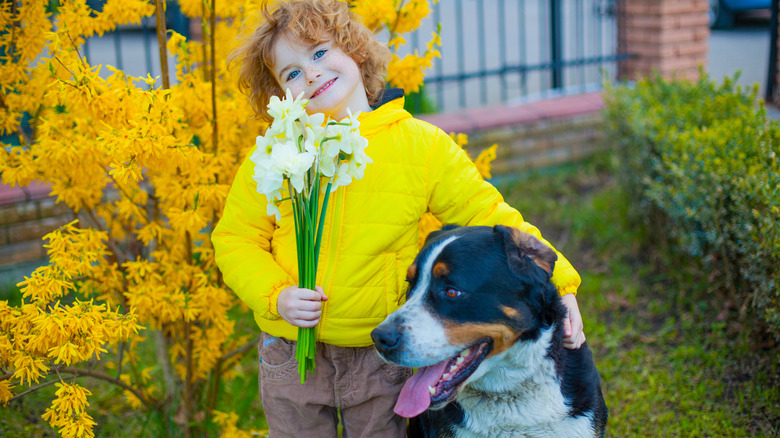
What to do if your dog has eaten daffodil flowers or bulbs?
The first thing to do is remove any flowers or bulbs from your dog’s mouth and call your vet immediately. Sometimes the vet might advise a simple solution such as giving your dog a bowl of milk or water. But in more severe situations, you will be asked to bring the dog to the vet immediately. As always, it is important to avoid administering any treatment at home without consulting the vet. Call them for advice as soon as possible.
As always when your dog eats any plant life that you can’t identify or are not sure about, don’t forget to take a picture of the plant and show it to the vet. This will help them identify the toxic component that might be in the pet’s system and recommend the best treatment. Even better yet, take a few samples and bring them to your vet so they can determine the level of risk they pose for the dog.
How to identify daffodils?
You’ll have no trouble identifying these lovely flowers. Daffodils are trumpet-shaped flowers, with usually white or yellow petals, that come with an orange central corona.
The leaves are long and flat. You will see these bright flowers in full bloom between March and late April, so pay particular attention on your dog walks during that time of year.
With daffodils cleared out of your dog’s path, the natural next question is what you can safely plant instead — so let’s swap the danger for some dog-friendly color and tie up the loose ends.
Dog-Safe Flowers to Plant Instead of Daffodils
Good news: ditching daffodils doesn’t mean a boring garden. Plenty of blooms bring the color without the risk. Since there are no dog-friendly daffodil hybrids — not one variety is safe — the smart move is to plant something your dog can sniff freely.
Here are some dog-safe flower alternatives to try:
| Safe to plant | Keep out of reach |
|---|---|
| Roses | Daffodils |
| Snapdragons | Tulips |
| Sunflowers | Hyacinths |
| Marigolds | Lilies |
| Asters | Foxgloves |
Fill your beds with the left column and you get a cheerful, non-toxic garden that’s easy on your peace of mind.
Other Toxic Spring Flowers to Watch For
Daffodils aren’t the only spring troublemakers. If you’re pet-proofing the yard, keep an eye on the whole crew of other poisonous garden flowers.
Common ones to avoid include:
- Tulips and hyacinths — bulbs are the risky part, just like daffodils
- Lilies — especially dangerous, more so for cats
- Foxgloves — affect the heart
- Ivy, oleander, and rhododendron
A quick habit: before adding any new plant, check whether it’s a toxic spring flower for dogs. Two minutes of research saves a stressful vet trip.
Frequently Asked Questions
Can daffodils kill dogs?
Rarely, but yes — it’s possible. Daffodil toxicity is rarely fatal, and severe cases are uncommon. The real danger shows up when a small dog eats a large amount, especially the bulb. With prompt vet care, most dogs make a full recovery. Still, never treat a daffodil snack as harmless.
Are daffodils toxic to cats too?
Yes. Daffodils are toxic to dogs and cats alike. The same lycorine and oxalate compounds that upset a dog’s stomach do the same to cats — often worse, since cats are smaller. Signs include drooling, vomiting, and lethargy. If your cat nibbles any part, call your vet right away.
Is daffodil vase water dangerous to dogs?
Surprisingly, yes. Even the water from a vase of cut daffodils can poison a dog. The toxins leach out of the stems into the water, so a curious drink counts as ingestion. Keep vases up high, out of paw and tongue range, and tip out old flower water where your dog can’t lap it up.
What is lycorine and how does it harm dogs?
Lycorine is the main toxic component in daffodils. It’s an alkaloid that irritates the stomach and gut lining, triggering digestive upset when ingested — think drooling, vomiting, and diarrhea. The bulb holds a higher concentration of lycorine than the flower, which is exactly why eaten bulbs cause the worst reactions.
Daffodils vs. tulips vs. hyacinths: which is most toxic?
All three are spring-bulb hazards, but they differ. Tulips and hyacinths irritate the mouth and gut, with the bulb being worst. Daffodils add lycorine, so they tend to cause stronger vomiting. None are safe — but a chewed daffodil bulb usually earns the fastest vet call among these poisonous garden flowers.
Which flowers are safe vs. toxic for dogs?
An easy way to sort your garden: safe picks include roses, snapdragons, sunflowers, and marigolds. Toxic ones include daffodils, tulips, lilies, hyacinths, and foxgloves. When adding a new plant, check it against a non-toxic plant list first. Grouping your garden this way keeps the color and cuts the risk.
The Bottom Line: Keeping Dogs Safe Around Daffodils
Let’s bring it home. No daffodils are safe for dogs — every part is toxic, and the bulb is the worst offender. But a scary situation almost always ends well when you act fast.
Keep these three moves in your back pocket:
- Prevent: Keep your dog away from daffodils, fence off beds, and train “leave it.”
- Spot it: watch for drooling, vomiting, and lethargy within a few hours.
- Act: remove the plant, snap a photo, and call your vet immediately — never induce vomiting at home.
Do that, and you and your pup can soak up the springtime without the worry. A little planning keeps every daffodil season a happy one.