
If you’re considering bringing a Bull Terrier into your family, or you’ve already welcomed one of these unique pups into your home, you’re probably wondering are Bull Terriers easy to train? The short answer is. it’s complicated.
Bull Terriers are intelligent dogs with big personalities, but they come with some training challenges that might surprise new owners. Don’t worry though! With the right approach, consistent effort, and understanding of their unique traits, you can absolutely train your Bull Terrier to be a well-behaved companion.
In this guide, I’ll walk you through everything you need to know about training these strong-willed but lovable dogs, common mistakes to avoid, and proven strategies that really work.
Understanding the Bull Terrier Personality
Before we dive into training techniques, it’s crucial to understand what makes Bull Terriers tick. These dogs aren’t your typical obedient breeds that live to please their owners (looking at you, Labrador Retrievers!).
Bull Terriers are:
- Independent thinkers: They have their own agenda and ideas about how things should be done
- Highly intelligent: They can solve problems creatively (sometimes to your dismay!)
- Energetic and playful: Even as adults, they maintain a puppy-like enthusiasm
- Stubborn: They might understand your command perfectly but choose to ignore it
- Sensitive: Despite their tough appearance, they’re emotionally responsive to their owners
This combination of traits means Bull Terriers require patient consistent training that engages their minds while respecting their independent nature.
Why Bull Terriers Have a Reputation for Being Difficult to Train
Let’s be honest here – Bull Terriers aren’t typically listed among the easiest dogs to train There are several reasons for this
-
Strong-willed nature: These dogs were originally bred for tenacity and determination, traits that can translate to stubbornness in training contexts.
-
Selective listening: Bull Terriers are notorious for appearing to ignore commands when something more interesting catches their attention.
-
Short attention spans: Their playful nature means they can get distracted easily during training sessions.
-
Independent thinking: Unlike some breeds that aim to please, Bull Terriers often evaluate whether your request is worth their effort!
-
High energy levels: Without proper exercise, Bull Terriers may be too wound up to focus on training.
But don’t be discouraged! These same traits that make them challenging also make them incredibly rewarding companions once trained. Their intelligence and problem-solving abilities mean they can learn complex behaviors – they just need the right motivation.
Essential Training Tips for Bull Terriers
Start Early and Be Consistent
The sooner you begin training your Bull Terrier, the better. Puppyhood is the ideal time to establish boundaries and expectations. That said, even adult Bull Terriers can learn new behaviors with patience and consistency.
Consistency is absolutely critical with this breed. Everyone in your household needs to enforce the same rules and use the same commands. If one person allows jumping up while another discourages it, your Bull Terrier will be confused and training will take much longer.
Focus on Positive Reinforcement
Bull Terriers respond extremely poorly to harsh training methods or punishment. Negative reinforcement can damage your relationship with your dog and may even lead to behavioral issues.
Instead, focus on:
- Treats: High-value treats work wonders for motivation
- Praise: Enthusiastic verbal praise when they get something right
- Play: Using playtime as a reward for good behavior
- Affection: Physical affection like petting or belly rubs for positive reinforcement
Remember, you want your Bull Terrier to WANT to obey commands because good things happen when they do, not because they’re afraid of what happens if they don’t.
Keep Training Sessions Short and Fun
Bull Terriers have relatively short attention spans, especially as puppies. Training sessions should be:
- Brief (5-10 minutes max)
- Engaging and varied
- Scheduled multiple times throughout the day
- Ended on a positive note
If you notice your Bull Terrier getting distracted or frustrated, it’s better to end the session on a simple command they can successfully execute rather than pushing forward.
Provide Mental and Physical Stimulation
A bored Bull Terrier is a destructive Bull Terrier! These dogs need both mental challenges and physical exercise to be at their best for training.
Make sure your Bull Terrier gets:
- Daily physical exercise (at least 30-60 minutes)
- Problem-solving toys and games
- Training that challenges their mind
- New experiences and environments
Many behavior problems in Bull Terriers stem from insufficient stimulation, so addressing this need can make training much easier.
Specific Training Challenges with Bull Terriers
Leash Training Challenges
Bull Terriers are strong dogs with a high prey drive, which can make leash training particularly challenging. They’re known for pulling, lunging at distractions, and being generally difficult to control on walks.
Tips for successful leash training:
- Start in a low-distraction environment
- Use a proper harness designed for strong dogs (never rely on collar-only for Bull Terriers)
- Teach “heel” command consistently with high-value treats
- Practice frequent direction changes to keep their attention on you
- Reward loose-leash walking generously
Socialization Is Non-Negotiable
Bull Terriers need extensive socialization to be well-adjusted adults. Without proper socialization, they can become fearful or aggressive toward other dogs or strangers.
Aim to expose your Bull Terrier to:
- Different people (all ages, appearances, etc.)
- Various environments (urban, rural, busy, quiet)
- Other well-behaved dogs
- Different sounds, sights, and experiences
Always ensure these experiences are positive! If your Bull Terrier shows fear, don’t force the interaction – instead, create distance and associate the trigger with treats and praise.
House Training Hurdles
House training can sometimes take longer with Bull Terriers than with other breeds. They can be stubborn about where they want to do their business!
For successful house training:
- Establish a strict schedule for feeding and bathroom breaks
- Watch for signs they need to go out (sniffing, circling, etc.)
- Praise enthusiastically when they eliminate outside
- Never punish accidents – just clean thoroughly and supervise more closely
- Crate training can be very helpful for house training
Common Bull Terrier Training Mistakes to Avoid
1. Inconsistency in Rules and Boundaries
Bull Terriers will quickly pick up on inconsistencies and exploit them! If you allow jumping on people sometimes but scold them for it other times, they’ll be confused and continue testing boundaries.
2. Using Harsh Training Methods
As I mentioned earlier, Bull Terriers respond very poorly to punishment-based training. Harsh corrections can damage your relationship and create fear or aggression issues.
3. Not Providing Enough Exercise
An under-exercised Bull Terrier simply can’t focus on training. Make sure your dog gets plenty of physical activity before expecting them to concentrate on learning.
4. Giving Up Too Quickly
Bull Terriers can be stubborn, and training might take longer than with more biddable breeds. Persistence is key! Don’t give up when you don’t see immediate results.
5. Not Starting Basic Training Early Enough
Some owners find their cute Bull Terrier puppy’s stubborn antics amusing, but these behaviors become problematic in a full-grown, powerful adult dog. Start training immediately!
Advanced Training for Bull Terriers
Once your Bull Terrier has mastered basic commands, you might want to challenge their intelligent mind with more advanced training:
- Agility training: Bull Terriers often excel at agility courses, which provide both mental and physical stimulation
- Trick training: Teaching complex tricks engages their problem-solving abilities
- Scent work: Bull Terriers have good noses and can enjoy scent-based activities
- Canine Good Citizen certification: Working toward this recognition can give structure to your advanced training
These activities not only provide mental stimulation but also strengthen the bond between you and your Bull Terrier.
Real Talk: How Long Will It Take to Train My Bull Terrier?
I won’t sugarcoat it – training a Bull Terrier typically takes longer than training more naturally obedient breeds. Basic commands might take weeks to months to reliably establish, and some behaviors (like perfect leash walking) might be ongoing projects.
Factors that affect training timeline include:
- Your dog’s individual personality and temperament
- Your consistency and training approach
- Previous training or lack thereof (especially important for rescued Bull Terriers)
- The specific behavior you’re working on
Be prepared for a commitment of at least 6-12 months of consistent training for a well-behaved Bull Terrier. Even then, these independent thinkers may occasionally decide to test boundaries!
Is a Bull Terrier Right for You?
After reading about their training challenges, you might be wondering if a Bull Terrier is the right dog for you. These dogs are best suited for:
- Experienced dog owners
- People with patience and a sense of humor
- Active individuals or families
- Those willing to commit time to training and exercise
- Homes without small pets (due to prey drive)
They might not be ideal for:
- First-time dog owners
- People who want an instantly obedient dog
- Those with limited time for training
- Individuals who can’t provide sufficient exercise
Final Thoughts: The Joy of a Well-Trained Bull Terrier
While training a Bull Terrier requires commitment, patience, and consistency, the rewards are tremendous. A well-trained Bull Terrier is a joy to live with – playful, affectionate, and full of character while still respecting boundaries.
The unique bond you’ll develop through training will be stronger because of the challenges you’ve overcome together. There’s something incredibly satisfying about earning the respect and cooperation of a dog known for its independent nature!
Remember that training is a lifelong process with Bull Terriers. Even well-trained adults will occasionally test boundaries or selectively listen when something more interesting catches their attention. That’s just part of their charm!
With the right approach and realistic expectations, you can absolutely train your Bull Terrier to be a wonderful companion. The journey might not always be easy, but I promise it’s worth every moment.
So, are Bull Terriers easy to train? No, not particularly. But are they trainable? Absolutely! And the relationship you’ll build through consistent, positive training will be one of the most rewarding experiences of dog ownership.
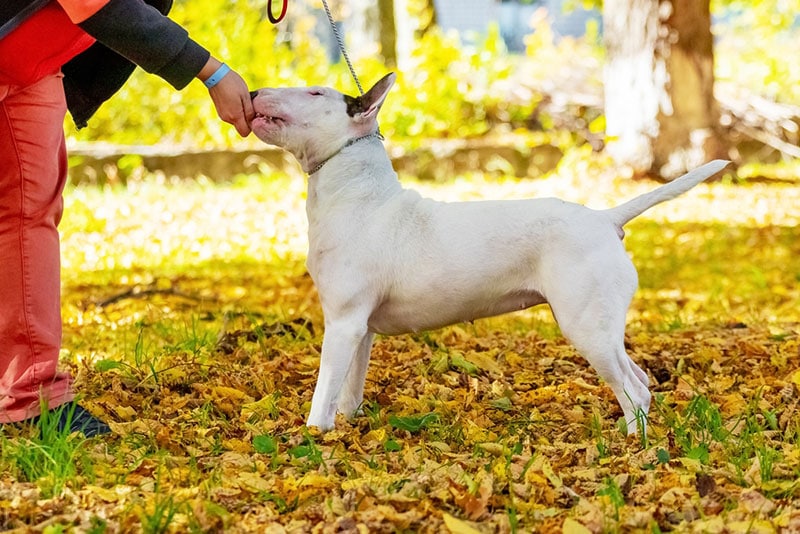
Are Bull Terriers Hard To Train?
If youre considering bringing a Bull Terrier into your family, you might be wondering about their trainability. Are Bull Terriers hard to train? In this comprehensive guide, well dive into the world of Bull Terrier training to uncover the truth behind their reputation.
While every dog is unique, well explore their intelligence, temperament, and specific training needs to provide you with valuable insights. By the end of this blog post, youll have a clear understanding of Bull Terrier training and the techniques that can help you achieve success.
Understanding the Bull Terrier Breed
Before delving into their trainability, its crucial to grasp the characteristics and traits that define the Bull Terrier breed. This knowledge will help set realistic expectations when it comes to training. Heres what you need to know:
Bull Terriers are known for their spirited and energetic personalities. They possess a strong will and a desire to please their owners. Understanding their inherent traits is key to tailoring an effective training approach.
Bull Terriers have a playful and mischievous nature, making training an enjoyable and engaging experience. Their enthusiasm for learning and their eagerness to please can work in your favor during training sessions.
5 Reasons Why YOU SHOULD Get A BULL TERRIER
FAQ
What are the pros and cons of a Bull Terrier?
Bull terrier temperament.
bull terriers are playful and mischievous dogs. They can sometimes get a bit stubborn but they love affection and physical activities. They are loyal and devoted to their humans. But they can become aggressive if not properly trained and socialized.
Is a Bull Terrier a good house dog?
Yes, Bull Terriers can be good dogs, but they are best suited for experienced owners due to their strong will, need for consistent training, and high energy levels. With proper socialization and training, they are affectionate, playful, and loyal family companions, but they require significant exercise and mental stimulation to prevent destructive behavior. Their unique personality can be a challenge to manage for first-time owners, and they may not be friendly with other dogs, so consistent leadership is essential.
Do Bull Terriers bark a lot?
No, Bull Terriers are not considered a breed that barks a lot; they are moderate barkers that typically bark for a specific reason, such as alerting to a stranger or expressing excitement. However, a lack of proper exercise, training, socialization, or mental stimulation can lead to excessive barking, as it may stem from boredom, anxiety, or frustration.
Are Bull Terriers high maintenance?
Bull Terriers are not high maintenance for physical care but are high maintenance in terms of the attention, exercise, and consistent training they need. While their short coat requires minimal grooming, their intelligence and energy necessitate constant mental and physical stimulation, with owners needing to be firm and consistent in training to prevent boredom, destruction, and potential behavioral problems. They thrive on being part of a family and can be challenging for first-time dog owners.