
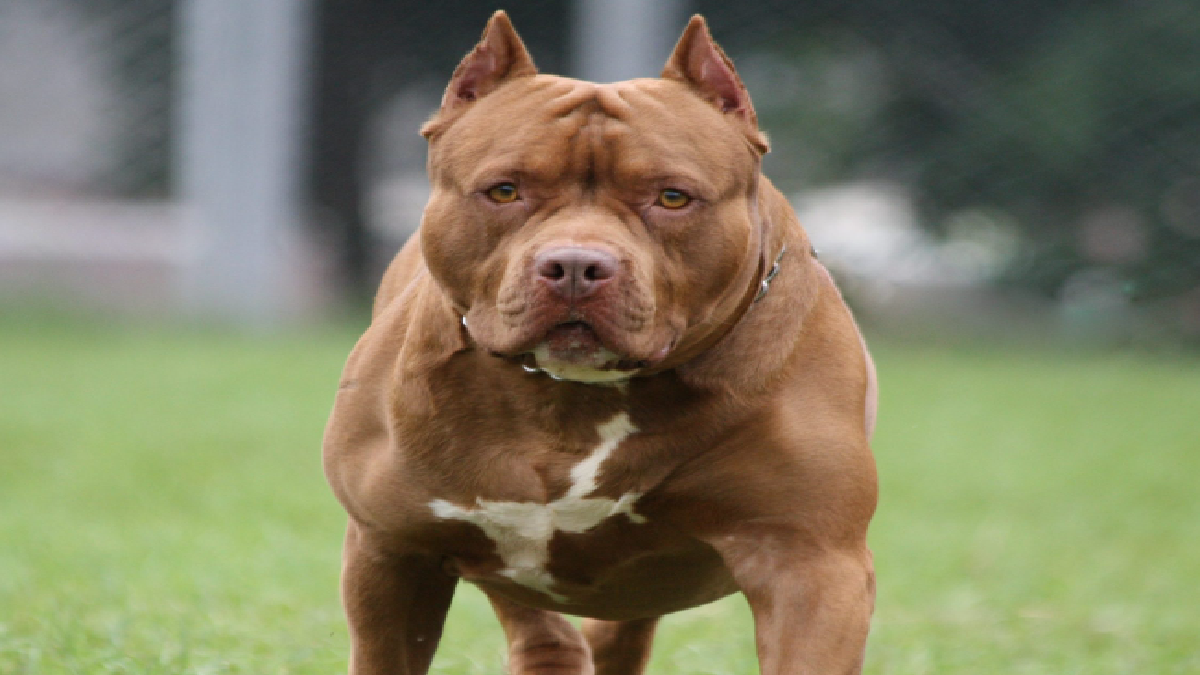
Learn about the most dangerous breeds of dogs, which are comprised of pit bull terriers, mastiff fighting and baiting breeds, which share a common ancestry, rottweilers and wolf-dog hybrids.
Have you ever walked down the street and crossed to the other side when you saw someone walking a pit bull? I’ve done it. Many of us have. But is this fear justified or are we just buying into media hype? Today, we’re diving deep into the controversial topic of whether pit bulls truly deserve their reputation as the most dangerous dog breed.
The Hard Truth: What Statistics Say About Pit Bulls
Let’s not sugar-coat it – the numbers do paint a concerning picture:
- Between 2005 and 2021, pit bulls were responsible for 66% of all dog bite-related deaths in the U.S.
- They caused over 570 deaths during this period, despite making up only about 6% of the total U.S. dog population
- According to DogsBite.org’s comprehensive study, pit bulls consistently top the list of fatal dog attacks
- The Centers for Disease Control and Prevention (CDC) has acknowledged that pit bulls, along with Rottweilers, account for the majority of dog-bite fatalities
These statistics might make you think “case closed,” but there’s way more to the story than just raw numbers.
Why Pit Bulls Can Be Dangerous
Several physical and behavioral traits contribute to pit bulls’ potential dangerousness
- Powerful bite mechanics: Pit bulls have a bite that tends to hold, grip and shake, causing significantly more tissue damage than other dogs
- Tenacity: Bred historically for bull-baiting and later dog fighting, they have a genetic predisposition toward determination
- Attack pattern: Many attacks occur without obvious warning signs
- Difficulty stopping an attack: Once a pit bull initiates an attack, it can be challenging to stop them
Attorney John J. Malm explains: “The injuries our clients have endured at the hands of an irresponsible pit bull owner are horrifying. Too often, these cases involve someone who failed to restrain their aggressive animal and failed to prevent a vicious attack.”
The Other Side: Common Misconceptions About Pit Bulls
It’s easy to demonize pit bulls, but there are several myths that need debunking:
Myth #1: Pit bulls have locking jaws
Reality: Pit bulls have the same jaw mechanics as other canines. There is no special “locking mechanism.”
Myth #2: “Pit bull” is a specific breed
Reality: “Pit bull” actually refers to several breeds including American Pit Bull Terrier, American Staffordshire Terrier, American Bully, and American Bulldog, plus various mixes.
Myth #3: They’re inherently aggressive toward people
Reality: Like other dogs, pit bulls’ aggression often results from abuse, neglect, and improper training.
Myth #4: They have the strongest bite
Reality: Many other dogs actually have stronger bite force measurements.
The Dangerous Dog Rankings: Where Do Pit Bulls Stand?
According to the compiled data from fatal dog attacks, here’s how breeds rank in terms of dangerous incidents:
- Pit Bull Terrier – Responsible for the most fatal attacks
- Rottweiler – Second place with significantly fewer incidents
- German Shepherd – Popular police dogs with protective instincts
- Bulldog – Surprising to many, but statistics show concerning numbers
- Siberian Husky – High energy can lead to aggressive tendencies
- Labrador Retriever – Their presence on this list is largely due to their popularity
- English Mastiff – Size and strength can make incidents severe
- Boxer – Can show aggression toward other dogs
- Doberman Pinscher – Historically bred as guard dogs
- Akita Inu – Protective Japanese guard dogs
It’s worth noting that some of these rankings may surprise you. Labradors, for instance, are America’s most popular dog, which partly explains their presence on this list – with more dogs of a breed, there are naturally more opportunities for incidents.
The Owner Factor: The Biggest Issue Isn’t the Breed
I’ve met many pit bulls who were absolute sweethearts, and I’ve also encountered small dogs that were terrors. The difference? The owners.
The problem is rarely just the dog – it’s often irresponsible ownership. Many pit bull attacks involve owners who:
- Let their dogs roam off-leash
- Fail to secure fences or kennels
- Ignore prior aggressive behavior
- Downplay or deny the danger their dog presents
- Don’t properly socialize their pets
- Fail to provide adequate training
Monika Martyn from World Animal Foundation points out: “Pit bulls come with a legacy filled with myths that are based on fact and speculation and oodles of misdirected hate.”
Breed-Specific Legislation: Does Banning Pit Bulls Work?
Some regions have responded to pit bull concerns with breed-specific legislation (BSL), but does it actually improve public safety?
- The American Bar Association asked for these laws to be repealed in 2012
- Canadian researchers found that dog bite rates had no relationship to municipalities with or without BSL
- The Netherlands repealed its pit bull ban after finding it ineffective
- Despite BSL, pit bull-type dogs have increased in popularity by 24%
PETA supports breed-specific legislation and sterilization campaigns, while many dog advocacy groups fight against BSL as discriminatory and ineffective.
Should You Own a Pit Bull?
Before considering a pit bull as a pet, ask yourself:
- Do you have time to train a high-energy dog?
- Is your property secure without escape routes?
- Can you ensure proper identification (license, tags, microchip)?
- Can you afford liability insurance?
- Are you able to cover potential medical bills?
- Can you read canine body language and aggression cues?
- Is regular exercise part of your daily routine?
- Who else shares your living space?
- Do you have a backup plan if you can’t keep the dog?
- Can you commit to proper training courses?
- Are there breed-specific laws in your area?
The Devastating Injuries Pit Bulls Can Cause
When pit bulls do attack, the injuries are often severe:
- Facial and head injuries
- Nerve damage
- Amputations
- Permanent disfigurement
- Bone fractures
- Psychological trauma, especially in children
According to Attorney John J. Malm, “The loss, trauma, and physical damage suffered by our clients are life-changing and, in many cases, indescribable.”
The Legal Responsibility
In many states, including Illinois, strict liability laws apply to dog attacks. Under the Illinois Animal Control Act, dog owners are responsible for injuries caused by their dogs regardless of whether the dog has shown prior aggression.
If you’re attacked by a pit bull, the owner is almost always legally responsible. Common defenses insurance companies try to use include:
- Claiming you provoked the dog
- Arguing you were trespassing
- Suggesting you voluntarily assumed the risk
- Pointing out the dog had no prior history of aggression
So, Are Pit Bulls Actually the Most Dangerous Dog Breed?
If we’re looking strictly at statistics of fatal attacks in the United States, yes, pit bulls are responsible for more deaths than any other breed. But context matters enormously.
The question isn’t just “Are pit bulls dangerous?” but rather “Under what circumstances do pit bulls become dangerous?” and “How can we reduce the risk?”
Some factors to consider:
- Population size (how many pit bulls exist compared to other breeds)
- Reporting bias (attacks by larger dogs are more likely to be reported)
- Breed misidentification (many mixed breeds are labeled as “pit bulls”)
- Owner demographics and training practices
- Historical breeding purposes
The data does suggest that pit bulls are involved in more fatal attacks than other breeds. However, most pit bulls never harm anyone, and with proper training, socialization, and responsible ownership, they can be loving family pets.
As with any powerful dog, precautions should be taken:
- Never leave small children unsupervised with any dog, including pit bulls
- Invest time in proper training and socialization
- Be aware of your dog’s triggers and body language
- Secure your property and always use a leash in public
- Consider spaying or neutering to reduce aggression
The debate about pit bulls will surely continue, but one thing is clear: no breed is inherently “bad.” The responsibility ultimately falls on us humans to ensure our dogs – regardless of breed – are set up for success.
Disclaimer: This article contains information from various sources and represents my personal opinions based on research. Individual dogs vary greatly within breeds, and no single breed should be judged entirely on statistics.
Wolf-dog hybrids (canid hybrid)
Many U.S. states regulate the breeding and ownership of wolf hybrids, a canid hybrid resulting from the mating of a wolf and a dog. This crossbreed also has a deadly track record. According to the same government study, wolf hybrids accounted for 14 deaths between 1979 and 1998.6 The death count may much be higher too; owners of wolf-dog hybrids often mislabel their dogs as a husky or malamute-mix to evade detection, as was attempted after the mauling death of Kyle Holland.

Wolf-dog hybrid |
Wolf-dog hybrid |
Wolf-dog hybrid |
Wolf-dog hybrid |
One of the most dangerous scenarios involving high-risk dog breeds is often unaddressed in media stories after serious and fatal dog attacks. The scenario entails bringing a child into the home of a friend, relative or babysitter who owns a pit bull or rottweiler. The reverse scenario — one of these dog breeds temporarily staying at the childs home — is just as dangerous. Three factors are at stake in these cases: (1) high-risk dog breed, (2) “new” or “temporary” situations, and (3) children.
DogsBite.org cannot underscore the volume of serious dog attacks, some of which are fatal, that occur when a child is visiting or temporarily living at the home of a friend, relative or babysitter who owns a dangerous dog breed (See: Blake Bettis, Lola Farr and Olivia Floyd). Under no circumstances should a person agree to dogsit or caretake a friend or relatives dangerous dog breed if there are children in the home or may be visiting the home either. Children are disproportionally victims in these attacks.
Reporting a dangerous dog
Many people are unaware that one does not have to wait for a “bite” to report a threatening (menacing), at large owned dog or stray dog. Many attacks occur due to this lack of understanding. Always report problem dogs to your city or county animal control agency or sheriffs department. If that dog ends up biting and seriously hurting a person, but there is no documented paper trail behind it, authorities will have their hands tied and the victim may have no recourse for medical expenses.
If the dog owner lives on a rental property, it is beneficial to send a certified letter asking the landlord to ensure that proper containment infrastructure is installed and that the dog is declared on the renters insurance policy. This act normally places the landlord into the “liability equation” and motivates the landlord to take care of the situation. Cell phone photographs and video of the dogs behavior can be sent as supporting evidence to show that an attack situation is imminent.
When reporting a dog bite — defined as a “breaking of the skin” — anticipate its owner to plead with you not to. Many dog owners do not want a “first bite” on record and may offer you a “home nurse” solution. Do not accept a home treatment solution. Proceed to a hospital, tell the doctor you have a dog bite injury, which should trigger a formal bite report (what the dog owner hoped to avoid), and receive dog bite medical treatment, otherwise you could develop life-altering complications. In many jurisdictions it is also a
- Dog Bite Victim Guide – Steps to take following a dog bite.
- Preventing Dog Bites – CDC also explains the risk of infection.
- Rabies Prevention – What is rabies and how is it treated?
VERIFY: Are pit bulls the most dangerous breed of dog?
FAQ
Are pit bulls the most dangerous dog?
Many people believe that pit bulls are inherently aggressive and pose a threat to both humans and other animals. However, others argue that pit bulls are just like any other breed and that it is the way they are raised and trained that determines their behavior. So, are pit bulls really the most dangerous dog as it relates to pets?
Are American pit bull terriers dangerous?
The American Pit Bull Terrier is still considered by some to be the only historically legitimate “pit bull” dog breed. When it comes to tales of pit bull assaults, this is part of the misconception. The more dog breeds a dog has, the higher the risk of an occurrence.
Why are Pitbulls dangerous?
So, let’s learn, what are the reason that makes Pitbulls dangerous. Pit bulls are often labeled as dangerous dogs, and while not all pit bulls are aggressive, their reputation stems from a combination of history, breeding, behavior, and incidents.
Are pit bulls a Bad Breed?
Because pit bulls are predisposed to aggressive and harmful behavior attributed to humans breeding them for dog fights, several laws around the country restrict ownership or set limitations on adopting a pit bull. Breed-specific legislation, or BSL, is responsible for enacting breed discrimination laws, most typically used to target pit bulls.
Are pit bulls a high-risk dog?
[Infographic: Dog Bite Incidents] Fans of pit bulls are quick to assert that a dog’s propensity for attack depends in large part on its owner and how it is raised, and there’s considerable evidence that owners of pit bulls and other high-risk dogs are themselves high-risk people.
Are pit bulls real dogs?
Pit Bulls are a dog breed that has one of the most powerful bite forces, which is why it is reported the most when one attacks. Most of the proof regarding a Pit Bull’s genuine nature, or any animal’s true character for that matter, would be based on the origins of the animal’s existence. Pit Bulls have an interesting history.
What is the #1 most aggressive dog?
While no single dog breed is definitively the “most aggressive,” pit bulls are frequently cited as the most dangerous due to their high involvement in fatal attacks and a history of being bred for fighting. However, factors like poor training, bad ownership, and the tendency to mislabel breeds in statistics also significantly influence aggression. Other breeds often linked to serious incidents include Rottweilers, German Shepherds, and even Chihuahuas, although their reputation for aggression is more about behavioral issues and aggression in smaller dogs.
What dog turns on its owner the most?
What is the #1 strongest dog?
There is no single definitive “strongest” dog, but the Kangal often tops lists for its immense strength, power, and high pain tolerance, while Mastiff breeds, such as the English Mastiff, are known for their sheer size and mass. Other powerful breeds include the Tibetan Mastiff, the Tosa Inu, and breeds like the Rottweiler and Cane Corso, all noted for their protective instincts and physical capabilities.
What triggers pit bull attacks?
Pitbulls attack for reasons common to all dogs, such as fear, pain, stress, or feeling threatened, but their history of being bred for fighting and their physical characteristics can contribute to the severity of their attacks. Irresponsible breeding, lack of socialization, abuse, or neglect can also increase the likelihood of aggression. A lack of proper training and management by owners is a significant factor in violent behavior, as is frustration from a lack of exercise or affection.