
The Department of Justice published revised final regulations implementing the Americans with Disabilities Act (ADA) for title II (State and local government services) and title III (public accommodations and commercial facilities) on September 15, 2010, in the Federal Register. These requirements, or rules, contain updated requirements, including the 2010 Standards for Accessible Design (2010 Standards).
This publication provides guidance on the term “service animal” and the service animal provisions in the Department’s regulations.
The Department of Justice does not endorse the organizations or views represented by this site and takes no responsibility for, and exercises no control over, the accuracy, accessibility, copyright or trademark compliance or legality of the material contained on this site.
If you’re a service dog owner looking for housing, you might be wondering: are service dogs exempt from pet deposits? The short answer is yes – service dogs are exempt from pet deposits, pet fees, and pet rent under federal law. But there’s more to understand about your rights and how these laws protect you.
The Legal Protection for Service Animals
Service animals have special legal status that distinguishes them from regular pets. Under both the Americans with Disabilities Act (ADA) and the Fair Housing Act (FHA), service animals are considered assistance animals rather than pets.
According to the Federal Fair Housing Act, landlords cannot
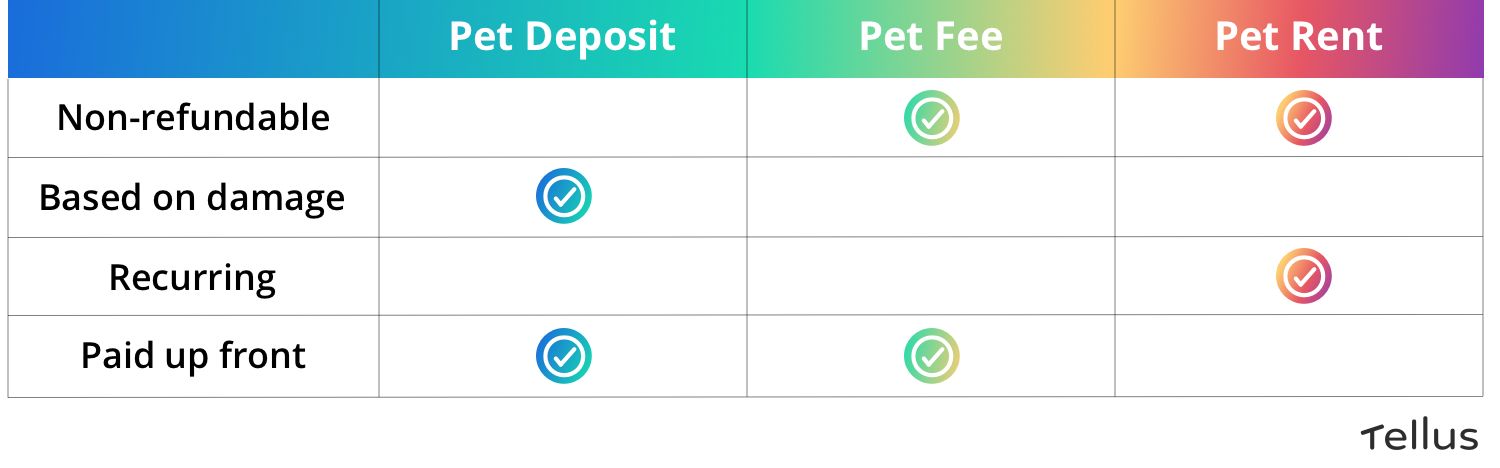
- Charge a pet deposit for service animals
- Require pet fees for service animals
- Collect pet rent for service animals
- Offer “discounted” pet fees (they can’t charge any fee at all)
- Charge an application fee for considering a service animal accommodation
These protections exist because it would be discriminatory to charge someone extra fees due to their disability. As the LegalClarity team explains, “Service animals are not considered pets under the law, highlighting their necessity for the independence and well-being of individuals with disabilities”
Why Service Dogs Are Exempt from Pet Deposits
The reasoning behind this exemption is straightforward service dogs are necessary medical equipment for people with disabilities Charging a deposit or fee for a service dog would be like charging someone extra for using a wheelchair or a cane
Service dogs perform vital tasks for their owners, such as:
- Guiding individuals who are blind
- Alerting deaf individuals to sounds
- Pulling wheelchairs
- Alerting to seizures before they occur
- Interrupting panic attacks
- Retrieving medications
- Providing stability for mobility issues
Since these animals are essential for their owners’ daily functioning, the law protects them from financial barriers that might prevent access to housing.
Service Animals vs. Emotional Support Animals
It’s important to understand the distinction between service animals and emotional support animals (ESAs), as this sometimes causes confusion regarding housing rights:
| Type | Definition | Protected by ADA? | Protected in Housing? |
|---|---|---|---|
| Service Animal | Dog trained to perform specific tasks for a person with a disability | Yes | Yes (FHA) |
| Emotional Support Animal | Animal providing comfort through presence (no specific training needed) | No | Yes (FHA) |
While the ADA only recognizes dogs (and in some cases miniature horses) as service animals, the Fair Housing Act offers broader protections. Under the FHA, both service dogs and emotional support animals are exempt from pet deposits and fees in housing.
As the Service Dog Certifications team notes, “Service dogs are not considered pets under HUD’s rules, but rather assistance animals needed by people with physical or mental health disabilities.”
What Landlords Can and Cannot Do
If you have a service dog, here’s what landlords can and cannot do:
Landlords Cannot:
- Charge pet deposits, fees, or rent for service animals
- Deny housing based on a “no pets” policy
- Restrict service animals based on breed, size, or weight
- Require registration or certification documents
- Ask about the nature of your disability
Landlords Can:
- Ask if the animal is required because of a disability
- Ask what tasks the animal is trained to perform
- Hold you responsible for damages caused by your service animal
- Deny accommodation if the animal poses a direct threat to others
- Deny accommodation if it would cause undue financial burden
What If Your Landlord Charges a Pet Deposit Anyway?
If a landlord tries to charge you a pet deposit or fee for your service animal, here’s what you can do:
- Educate them about the Fair Housing Act requirements
- Provide them with HUD guidelines on assistance animals
- Get everything in writing (document all conversations)
- File a complaint with the Department of Housing and Urban Development (HUD)
- Consult with a fair housing attorney
Remember, landlords who violate these rules can face significant legal consequences. As LegalClarity explains, “Charging illegal pet deposits for service animals can lead to legal and financial consequences for landlords. Such actions violate federal laws and can result in penalties, lawsuits, and reputational damage.”
Common Questions About Service Dogs and Housing
Do I need to register my service dog?
No. There is no official registration or certification required for service dogs under federal law. While some organizations offer registration services, these are voluntary and not legally required.
Can my landlord ask for proof of my service dog’s training?
No. Landlords can only ask two questions:
- Is the dog a service animal required because of a disability?
- What work or task has the dog been trained to perform?
They cannot request certification, documentation, or demonstration of the dog’s training.
What about emotional support animals?
ESAs are also exempt from pet deposits and fees under the Fair Housing Act, but you’ll need a letter from a licensed healthcare professional documenting your need for the animal.
Can I get my pet deposit back if my dog becomes a service animal?
Yes! If you’ve already paid a pet deposit and your dog later qualifies as a service animal, you should be entitled to a refund of that deposit.
Are there exceptions to these rules?
Very limited ones. According to the Federal Fair Housing Act, these protections don’t apply to:
- Single-family homes rented without a broker by the owner
- Buildings with 4 or fewer units where the owner lives in one unit
- Housing owned by religious organizations or private clubs that limit occupancy to members
Who Pays for Damages?
One important point: while service dog owners are exempt from paying pet deposits, they’re still responsible for any damage their service animal causes beyond normal wear and tear.
If your service dog damages the rental property, you can be held financially responsible for those repairs. This is why it’s so important to have a well-trained service animal and to address any behavioral issues promptly.
How to Communicate with Your Landlord
When applying for housing with a service dog, I recommend taking these steps:
- Be upfront about your service animal in your application
- Briefly explain that service animals are not pets under the law
- Have documentation ready (while not legally required, it can make the process smoother)
- Know your rights under the Fair Housing Act
- Be prepared to educate your landlord if they’re unfamiliar with the laws
Being proactive and knowledgeable about your rights can help prevent misunderstandings and conflicts with your landlord.
Final Thoughts
Service dogs play a crucial role in helping people with disabilities live independently. The exemption from pet deposits and fees is an important protection that ensures individuals with disabilities can access housing without facing additional financial barriers.
If you’re a service dog owner, remember that the law is on your side. Your service animal is not just a pet—it’s essential medical equipment that you have the right to have with you in your home without paying extra fees or deposits.
And for landlords reading this, understanding and respecting these laws not only helps you avoid legal issues but also creates a more inclusive and accessible housing environment for all tenants.
Have you experienced challenges with housing and service animals? We’d love to hear your experiences in the comments below!
How “Service Animal” Is Defined
Service animals are defined as dogs that are individually trained to do work or perform tasks for people with disabilities. Examples of such work or tasks include guiding people who are blind, alerting people who are deaf, pulling a wheelchair, alerting and protecting a person who is having a seizure, reminding a person with mental illness to take prescribed medications, calming a person with Post Traumatic Stress Disorder (PTSD) during an anxiety attack, or performing other duties. Service animals are working animals, not pets. The work or task a dog has been trained to provide must be directly related to the person’s disability. Dogs whose sole function is to provide comfort or emotional support do not qualify as service animals under the ADA.
This definition does not affect or limit the broader definition of “assistance animal” under the Fair Housing Act or the broader definition of “service animal” under the Air Carrier Access Act.
Some State and local laws also define service animal more broadly than the ADA does. Information about such laws can be obtained from the relevant State attorney general’s office.
Celebrating 35 Years of the ADA A spotlight on accessibility standards that ensure people with disabilities can stay active, enjoy sports and fully participate in recreation spaces across the country.
Last updated: February 28, 2020
The Department of Justice published revised final regulations implementing the Americans with Disabilities Act (ADA) for title II (State and local government services) and title III (public accommodations and commercial facilities) on September 15, 2010, in the Federal Register. These requirements, or rules, contain updated requirements, including the 2010 Standards for Accessible Design (2010 Standards).
Read this to get specific guidance about this topic.
- For a beginner-level introduction to a topic, view Topics
- For information about the legal requirements, visit Law, Regulations & Standards
This publication provides guidance on the term “service animal” and the service animal provisions in the Department’s regulations.
- Beginning on March 15, 2011, only dogs are recognized as service animals under titles II and III of the ADA.
- A service animal is a dog that is individually trained to do work or perform tasks for a person with a disability.
- Generally, title II and title III entities must permit service animals to accompany people with disabilities in all areas where members of the public are allowed to go.