
When considering adding a new furry member to your family, the Tosa Inu might catch your eye with its impressive stature and dignified presence. But the big question remains – are Tosa Inus good family dogs? I’ve spent countless hours researching this fascinating breed, and I’m here to share everything you need to know before bringing one into your home.
Tosa Inus, often just called Tosas, are massive, powerful dogs with Japanese origins. They’ve got quite the reputation, but there’s more to these gentle giants than meets the eye. Let’s dive into what makes these dogs unique and whether they could be the right fit for your family situation.
The Tosa Inu Temperament: What to Expect
The Tosa’s temperament is one of its most distinguishing features. According to the American Kennel Club, these dogs are characterized by “patience, composure, boldness and courage.” They typically display a tranquil and quiet demeanor, being obedient and vigilant without excessive barking or hyperactivity.
In their family environment, Tosas show remarkable loyalty and affection. They form strong bonds with their human pack and can be surprisingly gentle despite their imposing size. However, this doesn’t mean they’re suitable for everyone.
Some key temperament traits include
- Calm and composed attitude
- Extreme loyalty to family members
- Natural protective instincts
- Wariness around strangers
- Potential territorial behavior with other dogs
Are Tosa Inus Good for Families? The Honest Truth
Yes Tosa Inus can be good family dogs – but with several important caveats. According to Adopt a Pet, “they aren’t a great choice for first-time pet parents” due to their size strength, and specific temperament needs.
For families who understand the breed and are committed to proper training and socialization, Tosas can be wonderful companions. They’re known to be “extremely loving and loyal” and “notably affectionate and docile with their family members.”
However, their natural wariness of strangers and potential defensiveness around other dogs means they require experienced handling. These aren’t dogs that naturally excel in dog parks or crowded public spaces without extensive training.
Tosa Inus and Children: A Special Consideration
When it comes to kids, Tosas can form beautiful bonds with children they consider part of their pack. Their patient nature often makes them tolerant of the sometimes unpredictable behavior of younger family members.
That said, we cannot overlook the sheer size and strength of these dogs. Even the most well-intentioned Tosa could accidentally knock over small children during play. For this reason:
- Always supervise interactions between Tosas and young children
- Teach children proper respect and handling of large dogs
- Consider the age of your children before adopting
- Ensure your Tosa receives early socialization with children of various ages
The Training Challenge: Not for Beginners
One of the most critical aspects of raising a well-adjusted Tosa Inu is proper training – and lots of it. These intelligent dogs respond well to positive reinforcement methods, but they also need a confident handler who can establish clear boundaries.
Training needs for Tosa Inus include:
- Early and extensive socialization with people and other animals
- Consistent obedience training from puppyhood
- Clear establishment of household rules and boundaries
- Positive reinforcement techniques (never harsh methods)
- Patience for their sometimes stubborn nature
The importance of socialization cannot be overstated. Without proper exposure to different people, animals, and environments during their formative months, Tosas may develop problematic defensive behaviors that are difficult to correct later.
Space Requirements: Do You Have Room?
Let’s be real – Tosa Inus are BIG dogs. Males can weigh up to 200 pounds or more, standing nearly 25 inches at the shoulder. Their size alone makes them unsuitable for apartment living in most cases.
The ideal home for a Tosa includes:
- A securely fenced yard with substantial space
- Room to move comfortably indoors
- Sturdy furniture that can withstand their weight
- Safe spaces where they can retreat when needed
While they’re not extremely high-energy dogs that need constant exercise, they do require regular walks and space to stretch their legs. Without adequate physical outlets, they may develop destructive behaviors out of boredom or frustration.
Health Considerations for Family Planning
When bringing any dog into your family, health considerations should factor into your decision. Tosa Inus, like many large breeds, have specific health concerns to be aware of:
- Hip and elbow dysplasia
- Bloat/gastric torsion
- Heart issues
- Joint problems
- Typical large breed concerns
Their size also means they have shorter lifespans compared to smaller dogs, typically 10-12 years. This is something to consider when planning for a family pet, especially with young children who will form strong attachments.
The Financial Commitment
I won’t sugarcoat it – owning a Tosa Inu is expensive. Between their massive food requirements, larger doses of medications, bigger supplies, and potential health issues, you’re looking at a significant financial commitment.
Expected costs include:
- Premium quality dog food in large quantities
- Appropriately sized beds, crates, and supplies
- Professional training (highly recommended)
- Regular veterinary care
- Potential for costly health treatments
These expenses should be carefully considered before bringing a Tosa into your home, especially for families on tight budgets.
Daily Life with a Tosa Inu
What’s it actually like living with these majestic dogs? Day-to-day life with a Tosa involves:
- Moderate exercise requirements – they aren’t hyperactive but need regular activity
- Managing their natural guarding instincts, especially with visitors
- Dealing with drool (yes, they can be drooly!)
- Moderate shedding that requires regular brushing
- Careful management around other animals
One positive aspect is that despite their size, they’re generally indoor dogs who enjoy being close to their families. They typically aren’t prone to excessive barking, making them potentially better neighbors than some smaller, more vocal breeds.
Finding a Tosa Inu: Adoption Considerations
If after reading all this, you’re still interested in bringing a Tosa into your family, consider adoption carefully. Because of their specific needs and powerful nature, many Tosas unfortunately end up in shelters or rescues when owners aren’t prepared for their requirements.
When adopting:
- Look for breed-specific rescues that understand Tosa temperament
- Be prepared for extensive screening by responsible organizations
- Consider adult dogs whose personalities are already established
- Be honest about your experience level and living situation
Remember that in some areas, ownership of Tosa Inus may be restricted or regulated due to their history as fighting dogs. Always check local regulations before proceeding with adoption.
Who Should NOT Own a Tosa Inu
We’ve talked about who might be suited to Tosa ownership, but it’s equally important to understand who should probably consider other breeds:
- First-time dog owners
- Families with very young children and no dog experience
- People living in apartments or homes without secure yards
- Those unable to provide consistent training and socialization
- Households with multiple other pets, especially dogs
- Individuals without the physical strength to control a large dog
The Right Family for a Tosa Inu
The ideal home for a Tosa Inu includes:
- Experienced dog owners familiar with large, guardian breeds
- A securely fenced property with adequate space
- Commitment to ongoing training and socialization
- Understanding of the breed’s natural tendencies
- Ability to provide firm but gentle leadership
- Lifestyle that allows for inclusion of the dog in family activities
So, are Tosa Inus good family dogs? They can be wonderful companions for the right family, but they’re certainly not for everyone. Their combination of immense size, protective nature, and specific training needs makes them a specialized choice that requires careful consideration.
If you have the experience, space, time, and resources to devote to these magnificent animals, you may find a loyal, dignified companion unlike any other. But if you’re unsure, it’s better to consider breeds with less intensive requirements.
Whatever you decide, remember that bringing any dog into your family is a commitment for the entirety of their life. Choose wisely, and both your family and your potential furry friend will benefit from a thoughtful decision.
Have you had experience with Tosa Inus or are you considering adopting one? I’d love to hear your thoughts and experiences in the comments below!
UKC® Tosa Breed Standard
No breed specific rescue organizations found.
History Kirin. Owned by and photo copyright © Suzanne Dyke, Tosa House.
The Tosa, often referred to as the “Sumo wrestler of the dog world,” has been bred for hundreds of years in Japan. The breed excels at Japanese-style dog fighting. The Tosa we recognize today was developed in the late 1800s when the best of the Japanese Tosas were crossed with newly imported European breeds (the Great Dane, Mastiff, Bulldog, and St. Bernard) to increase its size. The result was a powerful, agile, and athletic Mastiff-type dog. In Japan, the Tosa (also called the Tosa-inu or Tosa-ken) is considered a national treasure. The Tosa is a rare breed, even in his native land, and has only recently been introduced to the United States. This massive dog makes a fine guardian and watchdog. He also can be a good companion if properly socialized and trained.
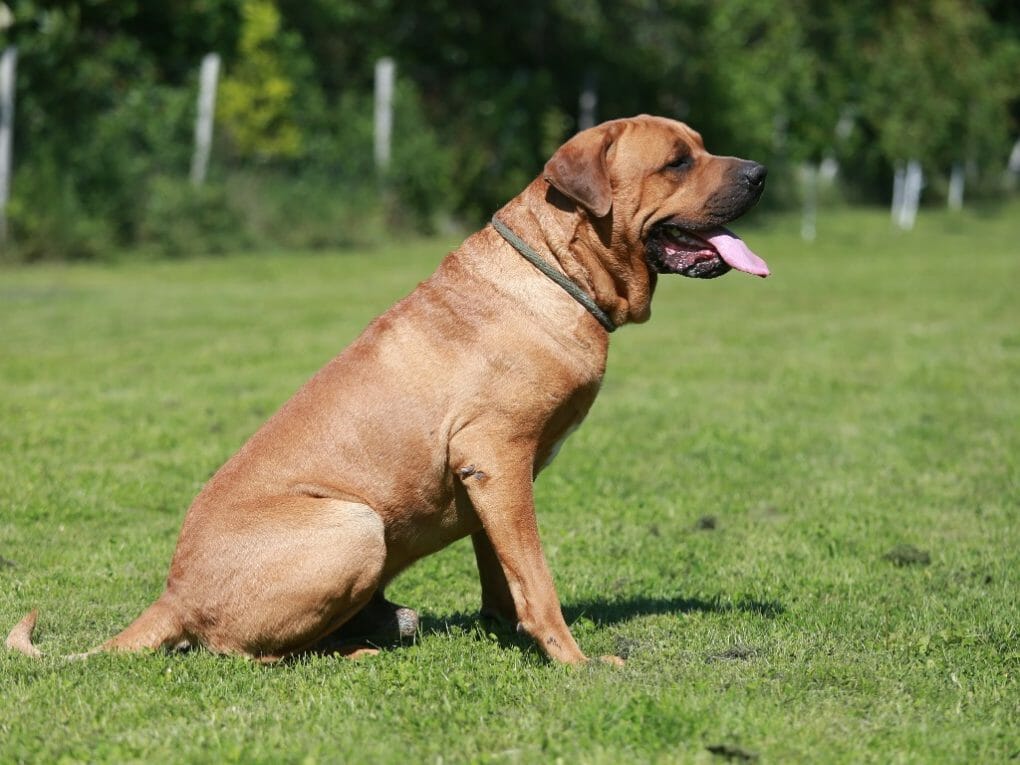
The Tosa is a stately, massive dog that’s athletic and surprisingly agile. The head is large, with a broad skull, a fairly abrupt stop, and a moderately long, squared-off muzzle. The jaws are very powerful. The skin at the neck forms a dewlap. The ears are fairly small and pendant. The eyes are small, dark, and almond-shaped, with a dignified expression. The long tail is very thick at the root, then tapers to a point. The large height and weight range in the Tosa breed is due to their background in dog fighting; they are grouped into light, middle, and heavyweight classes. The average weights for U.S. Tosas are: males—120 to 170 lbs. and females—90 to 140 lbs. The coat is short, dense, and harsh. The preferred color is solid red, but black, fawn, and brindle are permitted.
- Height: 24 to 32 in. (male); 21-1/2 to 28 in. (female)
- Size: Very large
- Weight: 85 to 200 lbs.
- Availability: Very difficult to find
- Talents: Watchdog, guarding, and weight pulling
The Tosa has been bred to be very quiet because Japanese dog fighting rules require the dogs to fight silently. He also has a very high pain threshold due to his fighting origins. This breed requires a strong and experienced owner capable of dealing with a large, powerful animal. With proper training and control, the Tosa can be a good family companion.
Brave, fearless, and bold. Very attuned to his master’s wishes. Protective and loyal. Exceptionally quiet, calm, and patient. Highly intelligent; does not need repetitious training. The sheer size of the Tosa and his deep bark are effective deterrents. Wary and protective with strangers, but will accept newcomers if properly introduced. Both males and females make excellent home and family protectors and companions. Tosas show remarkable acceptance of children and do not snap or bite from fear or pain. However, due to the Tosa’s size, he should not be left with children unsupervised. The owner must learn to control the Tosa, as the breed is too large and strong to be unmannerly. Not a good candidate for dog parks, or anywhere he can mingle and fight with other dogs. Good with other dogs and pets only when raised with them from puppyhood, and even then, this dog should not be left unsupervised. Not recommended in a home with another dog of the same sex, size, and temperament.
- Children: Good with children
- Friendliness: Very wary of strangers; highly protective
- Trainability: Easy to train
- Independence: Very independent
- Dominance: High
- Other Pets: Good with other pets if raised with them from puppyhood
- Combativeness: Tends to be very dog-aggressive
- Noise: Not a barker
- Indoors: Relatively inactive indoors
- Owner: Not recommended for novice owners
- Grooming: A little grooming needed
- Trimming and Stripping: No trimming or stripping needed
- Coat: Short coat
- Shedding: Light shedder
- Exercise: Moderate exercise needed
- Jogging: A fair jogging companion
- Apartments: Will be OK in an apartment if sufficiently exercised
- Outdoor Space: A small yard is sufficient
- Climate: Does well in most climates
- Longevity: Average (10 to 12 years)
Tosa Inu Pros and Cons | Tosa-Ken Japanese Mastiff Dog Advantages and Disadvantages
FAQ
Is a Tosa Inu a rare breed?
The Tosa Inu is considered a rare Japanese breed and is even banned in many regions. Other Names: The Japanese Mastiff, The Tosa Ken, The Tosa Token, The Tosa Dog, and The Japanese Fighting Dog Height: 21.5 to 23.5 Inches Weight: 100 to 200 Pounds Temperament: Devoted, Mild-Mannered, Courageous, Quiet Best Suited For: Experienced Dog Owners
Is a Tosa Inu a good dog?
The Tosa Inu is a large dog that’s best for experienced dog parents. These canines need appropriate training and socialization, as well as a lot of physical and mental stimulation daily. Plus, it can be difficult to find this rare breed. If you like the Tosa Inu, check out these similar breeds:
Is a Tosa Inu a mastiff?
The Tosa Inu closely resembles the mastiff, but is another breed entirely. Tosas originated in Japan and were created by breeding dogs like mastiffs, Great Danes, bulldogs, and more with other Japanese dogs. How long do Tosa Inu dogs live?
Are Tosas good family pets?
Tosas are gentle and calm with the members of their household, and with the right training, they can be suitable family pets. This breed is also known for aggression and must be socialized extensively throughout life, so it’s best suited for experienced dog parents.
Is a Tosa Inu a banned breed?
We should also remind you here that the Tosa Inu is a dog that is included on many banned breed lists. Before deciding to invest in the Tosa Inu, it’s important to consider the breed laws and legislation in your specific area to ensure this breed is allowed there. Finding a Tosa Inu puppy could be difficult, as these dogs are considered rare.
Are Tosa Inu dangerous?
Trainability: Moderate The Tosa Inu was originally used as a fighting dog in Japan, and as a result, it banned or heavily restricted dogs in Asia and other parts of the world. However, much like other seemingly dangerous dog breeds, much of this reputation comes from their historical use.
Are Tosa Inu good with kids?
It’s generally recommended that Tosa Inus are best suited for families with older, more responsible children who understand how to interact respectfully with …Aug 19, 2025
What is the calmest family dog?
What is the temperament of a Tosa dog?
The Tosa’s temperament is marked by patience, composure, boldness and courage. He is normally a tranquil, quiet, and obedient dog, with a calm but vigilant demeanor. With a stately manner and robust build, they were formerly bred for fighting, but are now used as watchdogs.