
Letting your puppy outside is far more complicated than most new pet parents realize. Obviously, we all want to take our adorable new puppies out into the world to show them off and socialize them as soon as possible, but the outside world does present risks to your puppy.
The biggest worry is that puppies may get infected with illnesses from another dog or from the environment. Because some of these infections can be deadly and many of them don’t have treatments aside from supportive care, the goal is to minimize the risk to your puppy as much as possible. For this reason, taking your puppy into public spaces isn’t recommended until he’s fully vaccinated.
But this is a catch-22 because puppies also need to be socialized as much as possible and as early as possible. The critical socialization period for puppies is when they’re 3-12 weeks old. Since they aren’t fully vaccinated until they’re about 18-22 weeks old, when can puppies be around other dogs safely?
Hey there, fellow puppy parents! If you’ve recently welcomed a furry little bundle of joy into your home, you’re probably itching to show them off to the world. I totally get it – those puppy playdates are not just adorable, they’re essential for raising a well-adjusted dog. But here’s the million-dollar question that keeps many new pet parents up at night: at what age can puppies meet other dogs?
The short answer? It’s complicated. But don’t worry I’ve got you covered with everything you need to know about safely introducing your pup to their future four-legged friends.
The Socialization vs. Vaccination Dilemma
Let’s face it – we’re caught in a bit of a catch-22 situation here. On one paw, early socialization is SUPER important for helping puppies develop into well-rounded, confident adult dogs. On the other paw, unvaccinated puppies are vulnerable to some seriously nasty diseases like parvovirus, distemper, and leptospirosis.
Here’s the thing many vets and behaviorists agree on: behavioral issues, not infectious diseases, are the number one cause of death for dogs under three years of age. That’s why many experts, including the American Veterinary Society of Animal Behavior, stress that early socialization is just as crucial as vaccinations for your puppy’s overall health and wellbeing.
As Mary Thompson, a certified dog trainer and behaviorist, puts it “Lots of positive experiences with new scenarios result in an adult dog who is able to happily and confidently navigate their world In contrast, an under-socialized puppy who isn’t taken out until they are five or six months is going to be more apprehensive and pessimistic about novel situations”
The Golden Window for Puppy Socialization
Did you know puppies have a critical socialization window between 3 to 14 weeks of age? This is when they’re most receptive to new experiences and less likely to respond with fear. Miss this window, and you might face an uphill battle with a fearful or reactive adult dog down the road.
But wait – doesn’t this window overlap with their vaccination schedule? Yep, and that’s exactly the challenge. We need to find safe ways to socialize our puppies before they’re fully protected.
Puppy Vaccination Timeline: When Can They Actually Meet Other Dogs?
Let’s break down the typical vaccination schedule and what it means for your pup’s social calendar:
| Age | Vaccines Given | What It Means for Socialization |
|---|---|---|
| 6-8 weeks | DHPP (distemper, adenovirus, parvovirus, parainfluenza) | Can meet safe, known dogs 1 week after vaccine |
| 10-12 weeks | DHLPP (adds leptospira) | Getting stronger immunity but still need caution |
| 14-16 weeks | DHLPP and rabies | Almost there! Still need some caution |
| 16-18 weeks | Fully vaccinated | Ready for most public places (introduce gradually) |
Remember, your puppy isn’t fully protected until about two weeks AFTER their final round of shots, which typically happens around 16-18 weeks of age.
Safe Ways to Socialize Your Puppy Before Full Vaccination
So you’re probably wondering, “What the heck am I supposed to do during those crucial early weeks?” Don’t worry – you don’t have to keep your pup in total isolation! Here are some safe options:
DO:
- Arrange playdates with fully vaccinated, well-socialized dogs in private spaces
- Join reputable puppy classes that check vaccination records
- Use your own yard or a trusted friend’s clean yard
- Carry your puppy in public places to expose them to sights and sounds (a stroller works great!)
DON’T:
- Visit dog parks, pet stores, or grooming salons
- Let your puppy walk in public areas where unknown dogs may have eliminated
- Assume that “dog-friendly” automatically means “safe for puppies”
I remember when I got my little guy – I was so paranoid about parvo that I carried him EVERYWHERE for the first few weeks. My arms got a serious workout, but it was worth it to keep him safe while still introducing him to the world!
Introducing Your Puppy to Your Own Dogs
If you’re bringing a new puppy into a home with existing dogs, you’ve got a built-in socialization opportunity! Just make sure your older dogs are:
- Up-to-date on vaccinations
- Haven’t been exposed to unvaccinated dogs recently
- Have a good history with puppies
The introduction process should be careful and controlled. Use baby gates and exercise pens to let them get acquainted safely. Look for play solicitation and friendly curiosity before allowing full access.
And remember – if your older dog doesn’t seem to be accepting the puppy, don’t force it! Keep them separated and consider getting help from a professional trainer, especially if your older dog has any history of aggression.
How to Properly Introduce Puppies to Other Dogs
When the time comes for your pup to meet new doggy friends, the introduction process matters a LOT. Here’s my step-by-step guide:
- Choose the right canine companion – pick calm, gentle dogs who are known to be good with puppies
- Start on neutral territory – a fenced yard or quiet room where neither dog feels territorial
- Watch body language closely – look for relaxed postures, play bows, and wagging tails
- Keep it short and sweet – limit first meetings to 10-15 minutes
- Reward calm behavior – treats and praise for everyone!
- Be ready to intervene – don’t let rough play escalate
- End on a positive note – stop while everyone’s still having fun
After Full Vaccination: Expanding Your Puppy’s Social Circle
Once your puppy is fully vaccinated (around 16-18 weeks) and has waited that additional two-week period for immunity to fully develop, the world really opens up! Now you can:
- Go on neighborhood walks
- Visit dog-friendly establishments
- Join group training classes
- Meet new dogs on leash
What About Dog Parks?
Ah, the dog park question. I know it’s tempting to head straight to the dog park once your pup is vaccinated, but I’d suggest holding off a bit longer. Most dog parks are not ideal environments for young puppies because:
- Many dogs play too rough for puppies
- Some owners don’t watch their dogs closely
- You don’t know other dogs’ vaccination status
- The overwhelming environment can create fear
Wait until your puppy is at least 5-6 months old, fully vaccinated, and has solid basic training (especially a reliable recall) before venturing into dog parks. And even then, start during quiet times and stay super vigilant!
Socialization Beyond Dog Friends
While we’re focusing on doggy interactions, don’t forget that proper socialization includes exposing your puppy to a whole range of experiences:
- Different types of people (tall, short, bearded, children, people with hats, etc.)
- Various surfaces (grass, concrete, metal, carpet, etc.)
- Unusual sounds (thunderstorms, vacuum cleaners, sirens)
- Different environments (urban settings, rural areas, car rides)
The more positive experiences your puppy has during that critical window, the more confident and adaptable they’ll be as adults!
Final Thoughts: Balance is Key
Navigating puppy socialization is definitely a balancing act between providing crucial early experiences and keeping your pup safe from disease. The good news? With some creativity and caution, you can absolutely do both.
Remember that every puppy is different – some are naturally more confident while others need more time and patience. Listen to your puppy and your vet, and adjust your socialization plan accordingly.
And please, if your puppy does have a negative experience during an introduction, don’t panic! One bad interaction won’t ruin them forever, especially if you follow it up with plenty of positive experiences.
Have you started socializing your puppy yet? What creative methods have you found to introduce them to other dogs safely? Drop your experiences in the comments – we’d love to hear your puppy socialization stories!
Disclaimer: While I’ve researched this topic thoroughly, always consult with your veterinarian about the specific vaccination schedule and socialization plan for your puppy based on their individual health needs and your local disease risk factors.
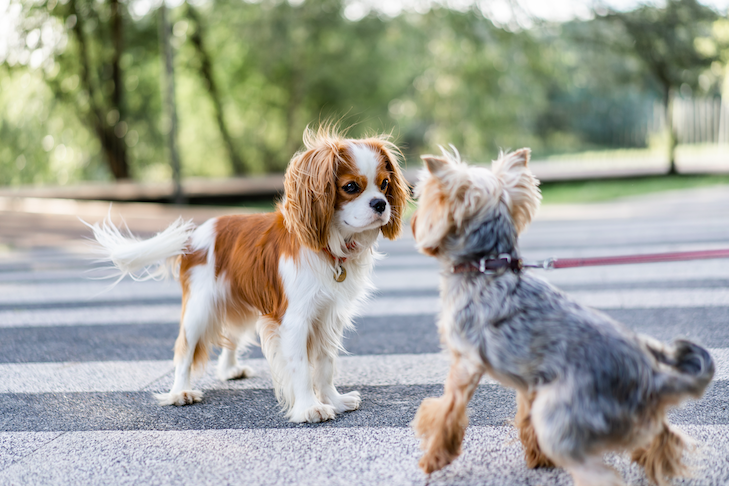
When Can Your Puppy Go on a Walk?
Wait to take your puppy for a walk until he’s fully vaccinated—typically around 18 weeks of age. Again, most vaccines take two weeks to take effect (except for the rabies vaccine, which takes 28 days to take effect). So don’t assume your puppy is fully vaccinated and safe to go to the park right after his last booster.
How to Safely Socialize Your Puppy
Puppies shouldn’t go out into public until they’re fully vaccinated, but they should be socialized as early as possible.
To start the socialization process, bring your puppy around friends or family members who have dogs that are vaccinated and are not currently sick. Socialization can be done in your home or backyard, or their home or backyard—as long as they have not had any sick dogs in their backyard recently.
Puppy classes can also be a great way to start to socialize your puppy early. Just be sure the class requires all dogs to show proof of an up-to-date vaccination history. While this does still present a risk, it’s minimal.
Utilizing a dog stroller is also a good way to take your puppy on short socialization outings before theyre fully vaccinated. Ensure that your puppy wont escape from their stroller, and dont allow unknown dogs to approach you and your puppy. Young puppies can still get sick from nose-to-nose contact, saliva, and nearby sneezing or coughing, even if they are off the ground in a stroller.
Once fully vaccinated, your pup can start to go outside, into public places like pet stores, and interact with stranger dogs. The goal is to provide your puppy with as many positive social interactions as possible.
When it comes to socializing puppies with others animals, like cats, many diseases cannot be transmitted from one species to another (with very, very few exceptions—one being rabies). This means a cat virus won’t be transmitted to a dog, and a dog virus won’t be transmitted to a cat. You can make these introductions when your puppy is still undergoing his vaccines.
Introducing Your Puppy To Other Dogs? Here’s What You Need To Know
FAQ
When can I take my puppy to meet other dogs?
Puppies can safely socialize with other vaccinated, healthy dogs after their initial round of shots, typically around 8 weeks old, but should wait for full vaccination, around 12-16 weeks, to enter public dog-dense areas like dog parks. Before full vaccination, socialization can occur with known, healthy, and vaccinated dogs in safe, controlled environments, such as the homes of friends, or in puppy socialization classes.
What is the 7 7 7 rule for puppies?
The 7-7-7 rule for puppy socialization is a guideline for exposing young puppies to a variety of experiences to build confidence and prevent fear or anxiety. By seven weeks of age, a puppy should have experienced at least seven different people, seven different locations, seven different types of toys, eaten from seven different food bowls, been on seven different types of surfaces, had seven different experiences, and been on at least seven short car rides. This early, positive exposure helps a puppy develop into a well-adjusted, adaptable adult dog.
Can my 8 week old puppy meet my friends’ dog?
No, your puppy shouldn’t be around other dogs until he/she has had the final shots at 16 to 18 weeks. Puppies get a series of shots usha!!y at 8, 12 and 16 weeks.
When can my other dog meet puppies?
This should be safe, if it’s at least a week since your puppy had their first set of vaccinations.