
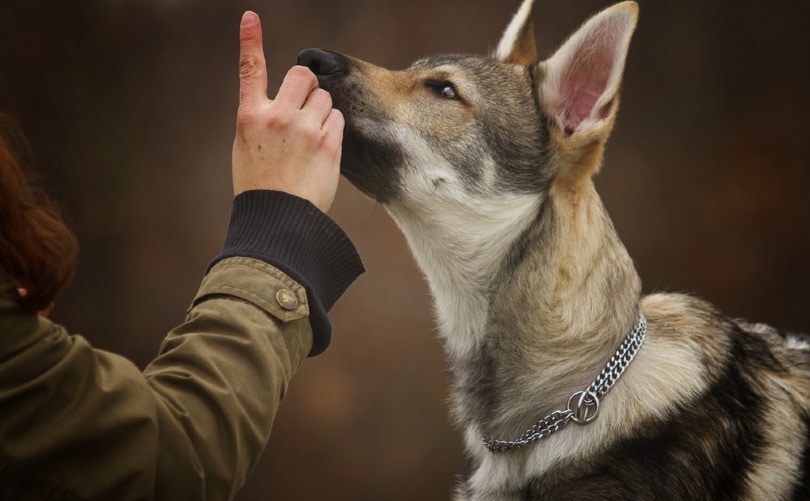
Training wolf dogs isn’t impossible, but it’s definitely not easy! As someone who’s worked with both dogs and wolf hybrids, I can tell you that expecting a wolf-dog to behave like your neighborhood Golden Retriever is setting yourself up for disappointment. These magnificent creatures require specialized knowledge, incredible patience, and a unique approach to training that respects their wild nature.
What Exactly Are Wolf Dogs?
Wolf dogs (also called wolf hybrids) are the result of breeding domestic dogs with wolves They can range from low-content wolf (mostly dog genetics) to high-content wolf (predominantly wolf genetics) This genetic makeup dramatically impacts their trainability.
The truth is most people who purchase those adorable wolf hybrid puppies don’t realize what they’re getting into. By one year old many of these animals end up in shelters that aren’t equipped to handle their unique needs, or in sanctuaries like W.O.L.F Sanctuary in Colorado.
The Challenges of Training Wolf Dogs
Let me break down why wolf dogs present unique training challenges:
- Strong Fear Responses: Unlike domestic dogs, wolves were never domesticated and often show intense fear of humans and new situations
- Less Desire to Please: Domestic dogs have been bred for thousands of years to work with and please humans – wolf hybrids lack this innate desire
- Higher Intelligence: Wolf hybrids are incredibly smart, which means they get bored easily and require constant mental stimulation
- Independence: They’re much more independent than dogs and don’t naturally look to humans for guidance
- Strong Prey Drive: Their natural hunting instincts can make them unpredictable around smaller animals
When I worked with Topaz, a young wolf hybrid at W.O.L.F Sanctuary, I noticed he displayed many normal wolf behaviors – jumping, mouthing, and play biting staff members. These behaviors are common in wolves but problematic when living among humans.
Training Techniques That Actually Work
Despite these challenges wolf dogs CAN be trained – it just requires the right approach
1. Positive Reinforcement is Essential
I’ve found that positive reinforcement training works exceptionally well with wolf hybrids. At the sanctuary, we used clicker training with Topaz. The clicking noise signaled that a food reward was coming, which helped build positive associations.
2. Target Training
We taught Topaz a foundation behavior called targeting – touching a stick with a ball on the end with his nose to earn rewards. This simple behavior created a communication bridge between us.
3. Stationing Behaviors
One of our most successful training wins was teaching Topaz to jump on a wooden spool in his habitat when staff were present. This gave him a designated place to be to receive attention without jumping on or mouthing staff.
4. Slow Trust Building
Wolf hybrids don’t automatically trust humans like many domestic dogs do. Trust must be earned gradually over time. At the sanctuary, we put significant effort into teaching volunteers “the power of slowly building up trust with the residents.”
5. Customized Training Plans
When working with the 30 residents at W.O.L.F Sanctuary, we created individualized training plans for each animal or pair. What works for one wolf hybrid might not work for another.
6. Body Language Awareness
We trained volunteers to effectively read wolf body language and adjust how they move and carry themselves around the more fearful animals. This is crucial for safety and building trust.
The Reality of Living With a Wolf Dog
I’m not gonna sugarcoat it – living with a wolf hybrid is HARD work. They require:
- Specialized enclosures (often legally required)
- Significant daily exercise
- Mental stimulation and enrichment
- Specialized diet
- Understanding of wild behaviors
- Extremely consistent training
- Socialization that respects their fear responses
Most wolf hybrids that end up in sanctuaries like W.O.L.F can never be adopted out due to laws and regulations against owning wolves or hybrids. They typically live out their lives in these sanctuaries.
Is a Wolf Dog Right for You?
Probably not, if I’m being totally honest! Unless you:
- Have extensive experience with challenging dog breeds
- Understand canine behavior deeply
- Have appropriate facilities and legal permission
- Can commit to specialized care for 10-15+ years
- Have access to vets who will treat wolf hybrids
- Are willing to accept that your wolf hybrid may never act like a domestic dog
Wolf Dog Training Success Stories
Despite the challenges, successful training is possible. At W.O.L.F Sanctuary, we made significant progress with Topaz and other residents:
-
Crate Training Success: Due to wildfires, the sanctuary animals had developed fear of crates after emergency evacuations. Through patient training, we helped the animals become comfortable with their crates again, preparing them for an eventual move to a new facility.
-
Enrichment Training: Beyond basic behaviors, we developed enrichment activities that allowed the wolf hybrids to express natural behaviors in appropriate ways.
-
Medical Training: Some residents were taught to accept handling for medical care, reducing stress during necessary procedures.
What Experts Use to Train Wolf Dogs
When training wolf hybrids, we rely on:
- High-value food rewards: Using extremely appealing treats
- Clickers: For precise timing of rewards
- Target sticks: To teach foundational behaviors
- Stationing tools: Like the wooden spool for Topaz
- Patience: Perhaps the most important tool!
The Ethics of Wolf Dogs
I gotta say, working at the sanctuary opened my eyes to the ethical issues surrounding wolf hybrids. The reality is that there are people breeding and selling wolf hybrid puppies to owners who don’t understand the commitment required.
Most of these puppies eventually end up abandoned, in shelters that can’t accommodate them, or in sanctuaries. Wolves were not domesticated for a reason – they have a really hard time with the human world they’re asked to live in.
Final Thoughts: Are Wolf Dogs Easy to Train?
No, wolf dogs are definitely not easy to train. They can be trained with the right approach, but it requires specialized knowledge, consistency, and a deep understanding of both wolf and dog behavior.
The learning principles are similar to training pet dogs, but with wolf hybrids, you’ll face additional challenges like intense fear responses and the absence of the “eager to please” mentality that makes many dogs relatively easy to train.
If you’re fascinated by wolves, I’d recommend:
- Volunteering at a wolf sanctuary
- Learning about wolf conservation
- Supporting organizations that protect wild wolves
- Choosing a dog breed with wolf-like appearance but domestic dog behavior (like Huskies, Malamutes, or German Shepherds)
Wolf hybrids are magnificent creatures that deserve our respect and understanding. But they belong either in the wild or in specialized sanctuaries with trained professionals – not in the average home expecting them to behave like domestic dogs.
For me, working with the wolves at W.O.L.F Sanctuary was “the thrill of a lifetime” – but it also confirmed that these amazing animals face tremendous challenges living in a human world.
Resources for Learning More
If you’re interested in learning more about wolf dogs and their training:
- Connect with accredited wolf sanctuaries
- Listen to episode 210 of the Disorderly Dogs podcast that features training at W.O.L.F Sanctuary
- Research the legal regulations in your area regarding wolf hybrids
- Read books by experts in wolf behavior and training
Remember, admiring wolves from afar is often the kindest choice for both humans and these wild-hearted animals!
Resources for Wolf Dog Owners
Although W.O.L.F. does not support the breeding of wolf dogs, we understand that many wolf dogs will end up in shelters and euthanized by the age of two years old because of indiscriminate breeding. W.O.L.F understands that owning a wolf dog can present many challenges that can be overwhelming for unprepared and uneducated owners. To help combat the euthanasia of so many young wolf dogs, W.O.L.F. has compiled information and resources to help wolf dog owners of wolf dogs properly care for their animals.
Wolf dogs are intelligent, energetic, curious and easily bored. When wolf dogs get bored, they may become destructive and/or escape artists. It is essential for owners to have appropriate containment. An enclosure must be well built and meet two important criteria:
- have enough space and enrichment to keep the wolf dog feeling safe and entertained and
- be secure and escape proof and
- meet federal, state, and local permitting and other requirements
The enclosure should include areas for shade, water, and provide shelter from the elements (rain, snow, wind, etc.) and be cleaned regularly. There should be items to entertain the wolf dog such as boulders, trees and bushes, pools, and chew-safe toys. An engaged and happy wolf dog who is challenged by the environment will be less likely to try to escape their containment.
ADDITIONAL DESIGN SUGGESTIONS
It is also recommended that the enclosure is in an area that allows the wolf dog the freedom to “landscape” the habitat. Wolf dogs enjoy digging dens, burying food and toys, chewing on bushes and trees, and rolling and playing in the dirt and grass. Wolf dogs should not be kept in an area that must be kept nicely landscaped. That will lead to frustration between the owner and the wolf dog.
Be aware of where the fences are in relation to other objects in the habitat (i.e. rocks, dog houses, play structures, etc.) If these items are too close to the fence, animals may be able to utilize them as a spring-board to jump or climb out.
Wolves are carnivores while dogs are omnivores, which means they have different dietary requirements and tolerances. Wolves in the wild consume raw meat, organs, hide and bones with only a minimal amount of vegetation. As a result, they have evolved a digestive system that specializes in digesting and extracting nutrients from a high-protein diet and do poorly when only fed commercial pet food diets. Dogs, on the other hand, have a much less specialized digestive system and are capable of successfully extracting nutrients from both meat and vegetation they consume. Wolf dogs, being both, can land anywhere in between these two systems. As a result, it is recommended that a wolf dog’s diet include raw meat as well as high-quality dog kibble or nutrient supplements. It is not recommended that wolves or wolf dogs be given a meat only diet unless they are regularly fed organ meat, bones, hides or have their meals supplemented with nutritional supplements. This is because muscle meat lacks many of the vitamins and minerals necessary for the animal to be healthy.
The amount of meat and kibble fed daily depends on the dietary needs of each individual based on age, size, health, the type and quality of nutritional supplements being given and should always be discussed with a veterinarian. At W.O.L.F., each wolf dog averages about two pounds of raw meat and 1.5 cups of kibble a day.
SEXUAL MATURITY AND SPAYING OR NEUTERING
 The right time to spay or neuter a dog is a challenging question, and many factors should be considered when making this decision. Some advocates suggest spaying and neutering at a young age to prevent pet overpopulation. Others argue for it to occur later in the animal’s life, or not at all. Recent evidence suggests that the expected adult size of the dog is likely a key factor in determining the best age for spaying/neutering to minimize health complications like joint or bone diseases later in life. These studies suggest that large breed dogs (weighing 66 lbs – 87 lbs) should be spayed or neutered after the age of 12 months. Giant breeds (weighing 88+ lbs) should be spayed or neutered after the age of 24 months. Some research suggests that waiting until after the animal reaches sexual maturity may help to reduce the risks of joint issues. Alternatively, there is also evidence to suggest that waiting for sexual maturity could result in possible increased risks for prostate or mammary cancers. It is always best to consult with a licensed veterinarian to determine the appropriate age for spay/neuter.
Wolves mature sexually at around two years old, much later than most domestic dogs who often reach sexual maturity between six to nine months. This means that it can be difficult to predict when a wolf dog will reach sexual maturity, though in general, high content wolf dogs are more likely to follow the wolf reproductive strategy and mature later than mid to low content individuals. Additionally, wolves (and many wolf dogs) are only able to breed once a year, whereas dogs breed twice a year on average. As a result, there are often significant behavioral changes in wolves and wolf dogs during breeding season (see the section below for more information).
Spaying and neutering may help mitigate some of the more extreme behavior changes, especially if done before an animal reaches sexual maturity. However, it will not “cure” a wolf dog of challenging or unwanted behaviors. If an owner chooses to wait to spay/neuter, it is important they pay attention to signs that the animal may be reproductively viable and take the necessary steps to prevent issues or unwanted litters.
Top 10 Essentials For Owning Wolfdogs & What You Need To Know Before Acquiring One
FAQ
How hard is it to train a wolf dog?
Yes, wolf dogs are notoriously difficult to train compared to domestic dogs, largely due to their high independence, wild instincts, and unpredictable behavior, making them unsuitable for most first-time or inexperienced owners. Training requires extreme patience, consistent discipline, early socialization, and a deeper understanding of wolf-like behaviors, including their strong drive to escape and potential for destructive tendencies. Standard dog training methods are often ineffective, and many wolf dogs end up in shelters due to owners being unprepared for the lifestyle and challenges they present.
Do wolf dogs make good pets?
Which breed of dog is hardest to train?
- Basset Hound: A Nose for Trouble. …
- Chinese Shar-Pei: Cuddly Yet Challenging. …
- Afghan Hound: Independent and Unpredictable. …
- Basenji: The Independent Thinker. …
- Chow Chow: The Aloof Guardian. …
- Shiba Inu: The Spirited Furry. …
- Bull Terrier: The Mischievous Muscle.
How much does a wolfdog puppy cost?