
Dog vaccinations are critical to ensuring your four-legged friend stays healthy from puppyhood into their senior years. Vaccines are the safest and most cost-effective way to protect your dog from many infectious preventable diseases.
The science behind canine vaccinations has progressed significantly over the past decade, enhancing both their safety and efficacy against existing and emerging pathogens. Here’s why vaccinating a dog is important.
For PetMDs complete guide on dog vaccinations and when your pet should get them, click here.
Let’s face it – bringing home a fluffy new puppy is exciting but keeping track of their vaccination schedule can be overwhelming! As a new pet parent one of the most common questions you’ll ask is at what age do puppies have all their shots?
I’ve been through this journey multiple times with my own pups, and I’m here to help you navigate this crucial part of puppy parenthood. Most puppies will have completed their core vaccination series by 16-20 weeks of age, though some vaccination protocols now recommend extending to 20 weeks for optimal protection.
Let’s dig into everything you need to know about puppy vaccinations, including schedules, costs, and why they’re so important for your furry friend’s health!
The Complete Puppy Vaccination Timeline
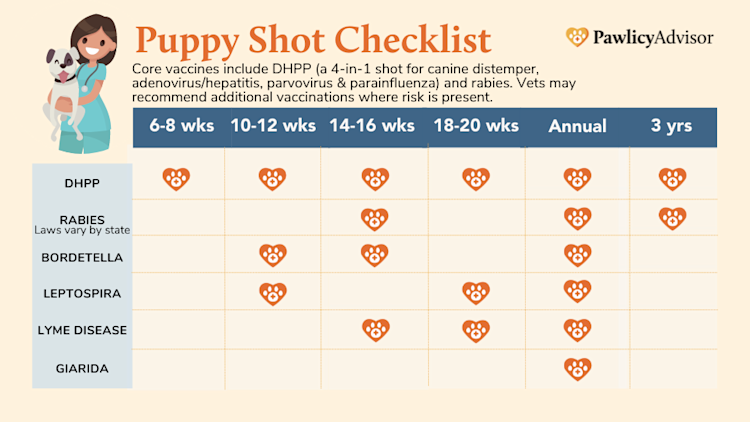
Your puppy’s vaccination journey actually starts before they even come home with you. Here’s a comprehensive breakdown of what shots puppies need and when:
6-8 Weeks
At this tender age, puppies typically receive their first set of vaccines:
- DHPP (sometimes called DAP, DAPP, or DHLPP): This protects against distemper, hepatitis (adenovirus), parainfluenza, and parvovirus
- Bordetella (optional): For protection against kennel cough
10-12 Weeks
About a month after the first round, puppies need:
- Second DHPP shot: This booster strengthens immunity
- Bordetella (if recommended)
- Lyme disease vaccine (optional, based on your location)
- Canine influenza (optional)
14-16 Weeks
The crucial third round includes:
- Third DHPP shot: Vets prefer giving the final DHPP vaccine at 16 weeks or later
- First rabies vaccine: This is required by law in most places
- Leptospirosis booster (if recommended)
- Lyme disease booster (if recommended)
- Canine influenza booster (if recommended)
18-20 Weeks
Some newer vaccination protocols recommend:
- Fourth DHPP shot: Additional protection to bridge the gap before the one-year booster
12-16 Months
Around your pup’s first birthday:
- DHPP booster
- Rabies booster
- Non-core vaccine boosters (as recommended by your vet)
Core vs. Non-Core Vaccines: What’s Essential?
Not all vaccines are created equal when it comes to importance for your puppy’s health.
Core Vaccines (Required for All Puppies)
-
DHPP/DAPP: Protects against multiple serious diseases:
- Distemper: A highly contagious viral disease affecting respiratory, gastrointestinal, and nervous systems
- Hepatitis (Adenovirus): Targets liver, lungs, kidneys, and other organs
- Parainfluenza: Contributes to kennel cough
- Parvovirus: Attacks the GI tract with potentially fatal outcomes
-
Rabies This vaccine is legally required in all states because rabies is fatal and can be transmitted to humans
-
Leptospirosis: Now considered core by many vets due to increasing prevalence in both rural and urban environments
Non-Core Vaccines (Based on Lifestyle & Location)
These vaccines are recommended based on your puppy’s specific risk factors:
-
Bordetella: Essential for social dogs who visit boarding facilities, groomers, dog parks, or training classes
-
Lyme Disease: Recommended for dogs in regions where Lyme disease is common (Northeast, northern Midwest, Pacific coast)
-
Canine Influenza: For dogs regularly exposed to other dogs in group settings
-
Coronavirus: Protects against canine coronavirus (not related to COVID-19)
-
Rattlesnake Vaccine: For dogs in areas with high rattlesnake populations
So, When Can Your Puppy Finally Go Outside?
I get this question ALL the time! Most veterinarians recommend keeping your puppy’s exposure limited until they’ve received at least their third set of shots (around 16 weeks). This is because puppies aren’t fully protected until they’ve completed their initial vaccination series.
Before this age, it’s risky to take your pup to dog parks, pet stores, or other areas frequented by unknown dogs. However, they can socialize in controlled environments with fully vaccinated dogs and visit friends’ homes where all pets are vaccinated.
If you’re eager to get your puppy socialized before they’re fully vaccinated, consider:
- Carrying them in a puppy backpack or stroller
- Setting up playdates with vaccinated dogs in private yards
- Attending puppy classes where vaccination requirements are strict
The Cost of Puppy Vaccinations
Let’s talk money, because puppy vaccines aren’t free! The average cost for core puppy vaccinations ranges from $75-$100 for the series of three doses. The rabies vaccine usually costs an additional $15-$20.
Non-core vaccines will increase your costs, with most costing $20-$30 per vaccine. All in, expect to spend between $100-$250 on your puppy’s first-year vaccinations.
Ways to save on puppy vaccination costs:
- Look for low-cost vaccination clinics
- Consider pet wellness plans through insurance providers
- Ask your vet about package deals for multiple vaccines
Booster Shots: The Ongoing Vaccination Schedule
After your puppy completes their initial vaccination series, they’ll need booster shots to maintain immunity:
| Vaccine | Booster Frequency |
|---|---|
| DHPP | Every 3 years after the 1-year booster |
| Rabies | Every 1-3 years (depends on state laws) |
| Bordetella | Every 6-12 months |
| Leptospirosis | Annually |
| Lyme Disease | Annually |
| Canine Influenza | Annually |
Potential Vaccination Side Effects
Most puppies handle vaccines just fine, but just like human kids, some may experience mild side effects:
- Common mild reactions: Soreness at injection site, mild fever, decreased appetite or energy for 24-48 hours
- Rare but serious reactions: Vomiting, diarrhea, hives, swelling around face or neck, difficulty breathing
If your puppy experiences any severe reactions, contact your vet immediately. Always mention any previous reactions when your dog gets vaccinated in the future.
Frequently Asked Questions About Puppy Shots
Is distemper and parvo the same thing?
No, they’re different diseases, but both vaccines are often combined in the DHPP shot.
What is the 5-in-1 shot for puppies?
The 5-in-1 vaccine (DHLPP) protects against distemper, hepatitis, leptospirosis, parainfluenza, and parvovirus.
Do puppies need 3 or 4 sets of shots?
It depends on your puppy’s age and your vet’s recommendations. Most puppies receive 3 sets, but newer protocols suggest 4 sets extending to 20 weeks for optimal protection.
When should puppies get dewormed?
Puppies should first be dewormed at 2-3 weeks of age, as worms are extremely common in young puppies.
Is there a heartworm vaccine for puppies?
No, there’s no heartworm vaccine. Instead, puppies should be given monthly heartworm preventative medication starting at 12-16 weeks.
The Bottom Line
By the time your puppy is 16-20 weeks old, they should have received all their initial vaccines. However, vaccination isn’t a one-and-done process. Your pup will need boosters throughout their life to maintain immunity.
Working closely with your veterinarian is the best way to create an appropriate vaccination schedule for your particular puppy based on their lifestyle, geographical location, and specific risk factors.
Remember that vaccinations are one of the most important investments you can make in your puppy’s health. They protect against potentially fatal diseases and help ensure your furry friend lives a long, healthy life by your side.
Have you gone through the puppy vaccination process before? What was your experience like? I’d love to hear about it in the comments!
What happens if your dog is not vaccinated?
Unvaccinated dogs are susceptible to preventable diseases that can be expensive to treat and, in some cases, fatal. Some of these diseases, such as rabies and leptospirosis, can also be transmitted to humans.
Bordetella and Canine Parainfluenza
Bordetella and canine parainfluenza virus are two agents associated with a highly contagious cough commonly known as kennel cough, or canine infectious respiratory disease complex (CIRDC).
Diseases from these agents typically resolve on their own, but they sometimes lead to pneumonia or more severe respiratory disease. Because kennel cough is so contagious, boarding and doggy day care facilities across the U.S. require your pet to have this vaccine.
Parainfluenza may or may not be included in a combination vaccine with Bordetella or the DAP.
Canine influenza in the U.S. is caused by two identified strains of the virus: H3N2 and H3N8. It is highly contagious and causes a cough, nasal discharge, and low-grade fever in dogs.
Outbreaks in the U.S. draw a lot of attention, as influenza viruses can give rise to new flu strains that have the potential to affect other species and possibly cause death.
Typically, the canine influenza vaccines are recommended for dogs that go to day care, boarding facilities, the groomer, or any place where they will be among other dogs. Talk to your vet about whether this dog vaccine is recommended for your pet.
Leptospirosis is a bacterial disease that can cause severe kidney or liver failure in dogs and people. It’s transmitted via the urine of infected animals and is found in both rural and urban settings.
Formerly considered a lifestyle vaccine, the leptospirosis vaccine is now a core dog vaccine. Dogs can be exposed to this illness by licking or coming in contact with a contaminated puddle or body of water where an infected animal has urinated.
Traditionally, the leptospirosis vaccine was only recommended for dogs in rural areas with outdoorsy lifestyles. But leptospirosis has now been found to occur in suburban and urban settings, too. The city of Boston experienced an outbreak in 2018 likely due to the urine of infected city rats.
Leptospirosis can be transmitted to people as well. Talk to your vet about whether they recommend this vaccine for your pet. The vaccine covers four of the most common serovars of leptospirosis, and the initial vaccine must be boostered two to four weeks later, and then annually thereafter.
Lyme disease is a tick-borne disease caused by the Borrelia burgdorferi bacteria that can cause fever, lethargy, decreased appetite, shifting leg lameness, and kidney failure in severe cases.
Lyme disease is endemic in various areas around the country (such as the Northeast, northern Midwest, and Pacific coast), and the vaccine is recommended in these areas and for dogs traveling to places with high rates of the disease. Talk to your vet if this vaccine is recommended for your dog.
Like leptospirosis, the vaccine is initially given as two injections spaced three to four weeks apart, and then yearly after that.