
It’s important to ask your veterinarian about your pal’s diet during these development stages: puppy, adult, senior, and pregnant or nursing (if applicable).
Hey there, fellow dog parents! If you’re reading this chances are your adorable little fur ball is growing up faster than you can say “fetch” and you’re wondering when exactly you should make the switch from puppy chow to adult dog food. It’s a super common question, and honestly, one I struggled with when my own pup was growing up too!
Let’s dive into everything you need to know about this important transition in your dog’s life. Trust me, getting this right can make a huge difference in your dog’s long-term health!
Why Timing Matters for Switching from Puppy to Adult Food
Before we jump into the specifics of when to switch, let’s quickly understand why it matters so much.
Puppy food and adult dog food aren’t just marketing gimmicks to get you to buy more products (although sometimes it can feel that way, right?). They’re actually formulated differently to meet the specific nutritional needs of dogs at different life stages.
According to the Association of American Feed Control Officials (AAFCO), puppy foods contain:
- Higher protein levels
- More fat
- Increased calcium and phosphorous
- Higher caloric density
These differences support your puppy’s rapid growth, muscle development, and bone formation. Puppy food also often includes extra omega-3 fatty acids to support brain and eye development.
But here’s the thing – once your dog reaches adulthood, continuing to feed them puppy food can actually be harmful! Too much protein, fat, and calories can lead to obesity and associated health problems. That’s why timing this transition correctly is super important.
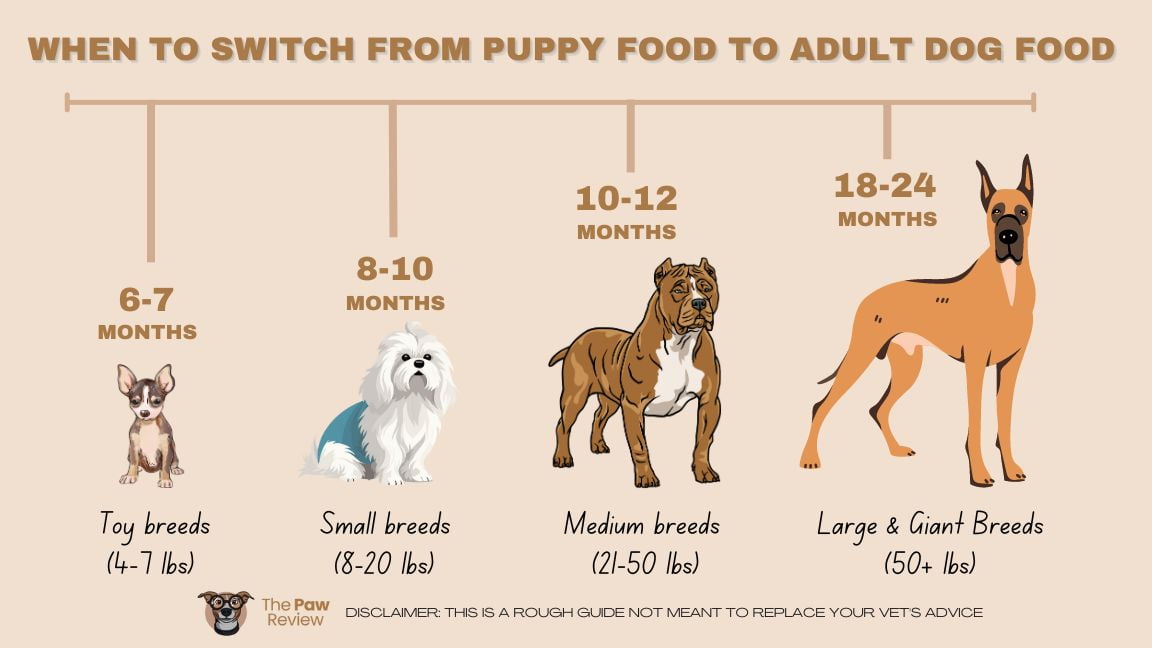
The Magic Age: When to Make the Switch Based on Breed Size
The single biggest factor in determining when to switch from puppy to adult food is your dog’s breed size. Different sized dogs mature at completely different rates!
Here’s a handy table I’ve put together based on expert recommendations:
| Breed Size | Weight | When to Switch to Adult Food |
|---|---|---|
| Small/Toy Breeds | Under 25 pounds | 9-10 months (or 6-9 months) |
| Medium Breeds | 25-50 pounds | 12-16 months |
| Large Breeds | 50-80 pounds | 15-18 months |
| Giant Breeds | 80+ pounds | 18-24 months |
Let me break this down a bit more:
Small and Toy Breeds (under 25 pounds)
These little guys grow up fast! Chihuahuas, Yorkshire Terriers, and Pugs reach adult size quicker than their larger cousins. They’ll typically be ready for adult dog food between 9-10 months of age, though some sources suggest you can switch as early as 6-9 months.
My friend’s Yorkie was fully grown at 8 months and made the switch then – he’s been healthy as can be!
Medium Breeds (25-50 pounds)
Border Collies, English Springer Spaniels, and Australian Shepherds fall into this category. These dogs usually reach adult size around 12-15 months and should transition to adult food between 12-16 months.
Large Breeds (50-80 pounds)
Golden Retrievers, German Shepherds, and Boxers are examples of large breeds. These dogs have a slower growth rate and typically should stay on puppy food until they are 15-18 months old.
Giant Breeds (80+ pounds)
Great Danes and other giant breeds have the slowest growth rate of all. They may not reach full maturity until 18-24 months of age, so they should stay on puppy food (preferably large breed puppy food) longer than any other size category.
Other Factors That Affect When to Switch
While breed size is the primary factor, there are a few other things to consider:
1. Spaying or Neutering
If your puppy has been fixed before reaching 80% of their mature size, their calorie requirements will drop significantly – sometimes by up to 30%! This doesn’t mean you should immediately switch to adult food, but you might need to reduce the amount of puppy food you’re giving them to prevent excessive weight gain.
2. Activity Level
Super active or athletic dogs might benefit from staying on puppy formulas a bit longer. The extra protein supports muscle development, and the higher caloric density provides energy for high-intensity activities.
3. When Your Dog Reaches 80% of Adult Size
A good rule of thumb is to make the switch when your dog reaches about 80% of their expected adult size. This is particularly true for medium and large breeds.
How to Tell if It’s Time to Switch
Aside from age and breed size guidelines, here are some signs your puppy might be ready for adult dog food:
- Their growth rate has noticeably slowed
- They’re leaving food in their bowl regularly
- They’re starting to put on excess weight
- Your vet has suggested it’s time based on their development
When my Lab mix started leaving kibble in her bowl consistently, I knew it was time to start the transition process, even though she was only about 14 months old.
The Right Way to Switch: Gradual Transition is Key!
Once you’ve determined it’s time to make the switch, DON’T just suddenly change their food! This can cause tummy troubles like vomiting and diarrhea.
Instead, follow this gradual transition schedule over about 5-10 days:
Day 1-2: Mix 25% adult food with 75% puppy food
Day 3-4: Mix 50% adult food with 50% puppy food
Day 5-6: Mix 75% adult food with 25% puppy food
Day 7+: 100% adult food
If your pup develops any digestive issues during this transition, slow down the process and extend it over a longer period. Some sensitive pups might need 2-3 weeks to fully transition.
Choosing the Right Adult Dog Food
When selecting an adult dog food, look for:
- A formula that meets AAFCO standards for complete and balanced nutrition
- About 18% protein and 5.5% fat (though working dogs may need more)
- Essential minerals like calcium, phosphorus, potassium, sodium, etc.
- Essential vitamins (A, D, E, B-complex vitamins)
- Quality ingredients with real meat listed first
You might also want to consider if your dog needs special ingredients:
- Omega-3 fatty acids for skin and joint health
- Glucosamine for joint health
- Probiotics for gut health
And don’t forget to consider if your dog has any sensitivities! Some dogs do better on beef or salmon-based formulas rather than chicken.
How Much and How Often to Feed Adult Dog Food
With the switch to adult food comes a change in feeding frequency:
- Small breeds: Typically twice daily (down from three times as puppies)
- Medium breeds: Twice daily
- Large breeds: Many still do well with twice daily feeding
Remember that adult dog food has fewer calories per cup than puppy food, so the amount you feed may change. Follow the guidelines on the package, but also monitor your dog’s weight and adjust as needed.
Common Mistakes to Avoid
When making this transition, try to avoid these common mistakes:
-
Switching too early: This can deprive your pup of essential nutrients needed for proper development.
-
Switching too late: Continuing puppy food too long can contribute to obesity and orthopedic problems.
-
Changing too quickly: This can cause digestive upset. Stick to the gradual transition plan!
-
Not adjusting portion sizes: Adult food often requires different portions than puppy food.
-
Choosing low-quality adult food: Just cuz your pup is grown doesn’t mean quality isn’t important!
FAQ: Your Top Questions Answered
Can puppies eat adult dog food?
While one meal won’t hurt, puppies shouldn’t regularly eat adult dog food as it lacks the higher levels of protein, fat, and nutrients needed for proper growth and development.
What happens if I switch to adult food too soon?
Your puppy might not get all the nutrients they need for proper growth and development, which could lead to health issues down the road.
Can puppy food cause diarrhea in older dogs?
Yes! The higher fat and protein content in puppy food can cause digestive upset in adult dogs. It can also lead to unhealthy weight gain since it’s more calorie-dense.
Should I consult my vet before switching?
Absolutely! Your vet knows your specific dog and their health history, so they can provide personalized advice about when to make the switch.
Final Thoughts
Switching from puppy to adult dog food is an important milestone in your dog’s life. By paying attention to your dog’s breed size, growth rate, and activity level, you can time this transition perfectly to support their long-term health.
Remember that every dog is unique, and these guidelines are just that—guidelines. Your veterinarian is always your best resource for specific advice tailored to your individual pup.
Have you already made the switch from puppy to adult food with your dog? How did it go? Drop a comment below and share your experience—I’d love to hear from you!
Until next time, happy feeding!
Switch slowly from puppy to adult food
The recipe for successful food transitioning is to do it gradually. Mix a small amount of the adult food with your dog’s favorite puppy formula and slowly increase the amount over 10-14 days, while decreasing the puppy food.
By then, you should only be feeding your dog adult food. Changing his food gradually makes it less likely he’ll experience any gastrointestinal issues.
Monitor your dog’s weight, not his food
When gauging portions, watch your dog’s body, not his bowl. Food that’s vanished without a trace or left behind doesn’t necessarily mean your dog isn’t getting enough calories or nutrients. The higher calories in puppy food may make him feel full with less of a need to eat. Your dog’s nutritional needs are determined by his individual metabolism and body type, not a predesignated amount of adult food.
Keeping track of your dog’s weight can be an important indicator when it comes to portion size. You can weigh them at your veterinarian office — many offer this free of charge. If you’d prefer to stay home and have a scale, weigh yourself while holding your dog, then weigh yourself alone and subtract the two to calculate your dog’s weight.
If you’re concerned about your dog’s size or weight gain and you’ve already switched to an adult formula, it could mean your dog just needs fewer servings per day or less food at each meal.