
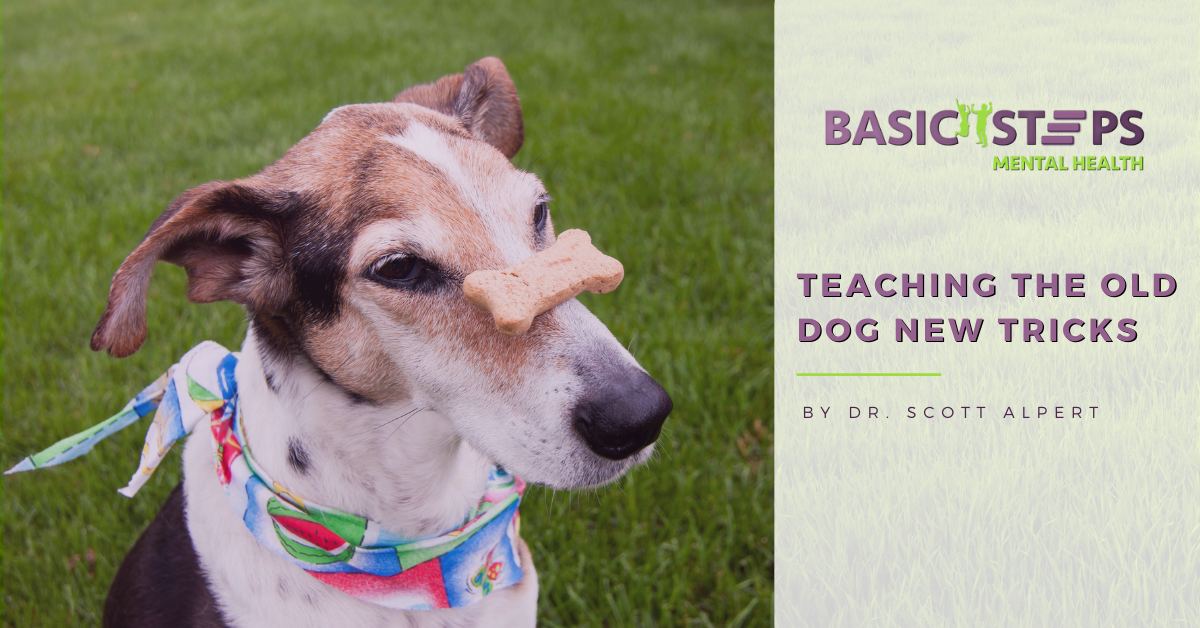
Have you ever heard someone say “you can’t teach an old dog new tricks”? It’s one of those sayings we all know, but guess what? It’s completely false! As a dog lover with several senior pups in my life, I’ve seen firsthand how adaptable and eager to learn older dogs can be. Today, I’m going to bust this myth wide open and share some practical tips for teaching your senior canine companion some awesome new skills.
The Origin of a Misguided Saying
This old adage has been around for centuries – dating back to 1523 when an English gentleman named Fitzherbert wrote about animal husbandry. In his words, “the dogge must lerne when he is a whelpe, or els it wyl not be; for it is harde to make an old dogge to stoupe.”
In modern language he was basically saying dogs need to learn when they’re puppies because it’s difficult to make older dogs comply. Over time this transformed into the common phrase we know today.
But here’s the truth: this saying is just plain wrong!
Why Senior Dogs Are Actually Great Learners
Old dogs aren’t just capable of learning new tricks – sometimes they’re even BETTER at it than puppies! Here’s why
- Better focus: Older dogs aren’t as easily distracted as puppies and can concentrate for longer periods
- Calmer energy: Senior dogs aren’t bouncing off the walls with puppy energy, making training sessions more productive
- Prior training experience: Many older dogs already understand the concept of training
- Eagerness to please: Senior dogs often have a deep bond with their humans and genuinely want to make them happy
My 12-year-old retriever mix learned “high five” in just one afternoon last year – something that would’ve taken my hyperactive puppy days or even weeks to master!
Mental Benefits of Teaching Old Dogs New Tricks
Training isn’t just about showing off cool tricks – it provides crucial mental stimulation for aging dogs. Consider these benefits:
- Prevents cognitive decline: Learning activities help ward off canine dementia
- Boosts confidence: Mastering new skills gives senior dogs a sense of accomplishment
- Strengthens your bond: Training sessions deepen the connection between you and your dog
- Reduces stress: Engaging activities can help lower anxiety in older dogs
When my neighbor’s 14-year-old poodle started showing signs of confusion, their vet actually recommended introducing simple new training exercises. Within weeks, they noticed improvements in his alertness and overall demeanor.
Physical Considerations for Senior Dog Training
While old dogs can absolutely learn new tricks, we do need to consider their physical limitations. Here are some important things to keep in mind:
- Joint health: Avoid tricks that require jumping or prolonged standing if your dog has arthritis
- Energy levels: Keep training sessions shorter for senior dogs who tire more easily
- Vision/hearing changes: Adjust your training methods if your dog has sensory decline
- Potential pain points: Be mindful of any health conditions that might make certain movements uncomfortable
My senior terrier developed arthritis in her back legs, so we switched from “sit” and “down” commands to focus on tricks she could do while standing comfortably, like “touch” and “spin” (a gentle turn).
10 Great Tricks for Older Dogs to Learn
Looking for some senior-friendly tricks to teach your old dog? Try these lower-impact options:
- Speak (bark on command)
- High five or shake paws
- Kiss (gentle nose touch to your cheek)
- Walk backwards (good for maintaining mobility)
- Retrieve specific items (like slippers, remote control, or leash)
- Put toys away in a designated basket
- Cover up with a blanket
- Push a ball with their nose (gentler than fetch)
- Touch (targeting their nose to your hand)
- Name recognition for different toys or household items
I taught my 11-year-old shepherd mix to bring me specific items by name, and not only does she love showing off this skill, but it’s been super helpful when I can’t find my phone!
How to Start Training Your Senior Dog
Ready to begin teaching your old dog some new skills? Here’s my step-by-step approach:
1. Choose the Right Environment
Find a quiet space with minimal distractions where your dog can focus. For seniors with sensory issues, consistency in location helps tremendously.
2. Keep Sessions Short and Sweet
Older dogs may tire more quickly, so aim for 5-10 minute training sessions, 1-2 times daily. Quality over quantity!
3. Use High-Value Rewards
Find treats your dog absolutely LOVES. Senior dogs might have decreased appetite or dental issues, so soft treats often work best.
4. Be Patient and Consistent
Senior dogs may take a bit longer to learn new concepts, but with consistency, they’ll get there. My old Lab took three weeks to master “roll over,” but once he got it, he never forgot!
5. Modify for Physical Limitations
If your dog struggles with sitting due to hip pain, teach them to lean against a wall instead. There’s always a workaround!
6. Use Clear, Consistent Signals
Whether verbal commands or hand signals (great for dogs with hearing loss), be consistent in your cues.
7. End on a Positive Note
Always finish training sessions with something your dog can succeed at, building confidence for next time.
Common Challenges & Solutions
Sometimes you might run into roadblocks when training your senior dog. Here are solutions to common issues:
Challenge: My dog seems confused by what I’m asking.
Solution: Break the trick down into smaller steps and reward each tiny progress.
Challenge: My dog has hearing loss and doesn’t respond to verbal commands.
Solution: Switch to hand signals or gentle touch cues that your dog can see or feel.
Challenge: My older dog gets tired quickly during training.
Solution: Keep sessions very short (even just 2-3 minutes) but do them more frequently throughout the day.
Challenge: My senior dog seems uninterested in treats during training.
Solution: Try higher-value treats (like small bits of chicken or cheese) or use toys/praise if your dog is motivated by those instead.
Why Adopt a Senior Dog?
Speaking of older dogs, there’s SO much to love about adopting seniors! If you’re considering adding a dog to your family, here are some reasons to choose an older pup:
- What you see is what you get: Their personality is already developed
- Often already trained: Many know basic commands and house rules
- Calmer energy: Perfect for less active households
- Deep gratitude: Senior adopters often report their dogs seem especially thankful for their new homes
- Shorter commitment: Ideal if you’re not ready for a 15+ year commitment
When I adopted my 10-year-old beagle mix, she already knew basic commands and was house-trained, making the transition super smooth. And the love in her eyes when we brought her home? Absolutely priceless.
Training Methods That Work Best for Senior Dogs
When it comes to teaching your old dog new tricks, some approaches work better than others:
Positive Reinforcement
This is hands-down the most effective method for dogs of all ages, but especially seniors. When your dog performs the desired behavior, immediately reward with treats, praise, or toys.
My neighbor tried to use a clicker with her 13-year-old dog who had hearing loss – not very effective! We switched to a thumbs-up visual signal paired with treats, and her dog was learning “wave” within days.
Capturing Natural Behaviors
Watch for behaviors your dog already does naturally, then “capture” them by adding a cue and reward. If your dog naturally paws at you when excited, you can capture this as “shake” or “high five.”
Luring
Use a treat to guide your dog into position, then reward and add a verbal cue. This works well for teaching “spin” or “back up” to senior dogs.
Incompatible Behaviors
Instead of trying to stop an unwanted behavior, teach an alternative that can’t be done simultaneously. For example, if your senior dog jumps on guests, teach them to go to their bed when the doorbell rings.
Real Success Stories
I’m not just making this stuff up – I’ve seen it work! Here are some real examples:
My friend adopted a 12-year-old Lab mix who had never been trained to walk nicely on leash. Within three weeks of consistent, positive training, this senior citizen was walking like a show dog!
Another acquaintance taught their 15-year-old Chihuahua to ring a bell to go outside – a brand new trick for a very old dog. Not only did it solve their housetraining issues, but it gave their dog a new way to communicate.
My own 13-year-old mixed breed learned to identify his toys by name last year – something I never thought possible at his age. Now he knows “monkey,” “ball,” and “rope” and will retrieve the correct toy when asked!
The Bottom Line
The saying “you can’t teach an old dog new tricks” needs to be retired once and for all! Senior dogs are capable, willing, and often eager learners who benefit enormously from the mental stimulation and bonding that training provides.
Not only can old dogs learn new tricks, but the process of teaching them enriches their golden years and deepens your connection. So grab some treats, set aside a few minutes each day, and start teaching your senior pup something new. You’ll both be amazed at what they can accomplish!
Have you taught an older dog new tricks? I’d love to hear your success stories in the comments below!
Remember: Always consult with your veterinarian before starting any new physical activities with your senior dog, especially if they have existing health conditions. Your vet can help you determine which types of training are safest for your individual pet.
Joshua J Jackson1Department of Psychology; Washington University in St. LouisFind articles by
Issue date 2012 Jun.
The present study investigated whether an intervention aimed to increase cognitive ability in older adults also changes the personality trait of openness to experience. Older adults completed a 16-week program in inductive reasoning training supplemented by weekly crossword and Sudoku puzzles. Changes in openness to experience were modeled across four assessments over 30 weeks using latent growth curve models. Results indicate that participants in the intervention condition increased in the trait of openness compared to a waitlist control group. The study is one of the first to demonstrate that personality traits can change through non-psychopharmocological interventions.
Given the importance of cognitive ability for health and mortality, a number of interventions have been designed to enrich cognitive functioning in older adults (Ackerman et al., 2010; Stine-Morrow & Basak, 2011). The same is not true of openness to experience, despite the similar life outcome correlates of this personality trait. To date, we know of no attempts to change levels of openness, nor any attempts to change personality, in a sample of older adults. Partly, this is due to the common assumption that personality traits do not meaningfully change in adulthood and especially in old age (McCrae & Costa, 2008). Moreover, most theoretical models fail to conceptualize personality traits as developmental constructs that can be changed through experience or targeted intervention (for a review, see Roberts, 2009; Roberts & Jackson, 2008). However, recent findings open the possibility that personality traits may respond to targeted interventions. For example, psychotherapy combined with selective serotonin reuptake inhibitors (SSRIs) results in changes in personality traits over a relatively short period of time compared to a control group (Tang et al., 2009). Moreover, previous research has shown that cognitive interventions for disadvantaged children lead to personality changes that, in turn, result in numerous positive outcomes in adulthood (Heckman et al., 2010). Thus, it appears that personality traits are potentially malleable and that long-term changes in personality may be an unintended effect of interventions aimed at improving cognitive functioning.
Personality change has been conceptualized as a bottom-up process in which individuals gradually come to see themselves in a different light in part as a consequence of taking on new roles that require novel behaviors (Roberts, Wood & Caspi, 2008). Observing ourselves in such situations and observing others’ reactions as we engage the demands of a new context can shape our behavior and its meaning relative to how we perceive ourselves. We hypothesized that an inductive reasoning intervention that was highly adaptive to individual progress in skill development would provide a context in which individual might become more positively predisposed toward intellectual pursuits, and create a set of experiences which could open individuals to such novel experiences. This hypothesis draws from theories that link openness and cognitive ability through intellectual experience (Ackerman, 1996; Chamorro-Premuzic & Furnham, 2004; Gregory et al., 2010). Thus, the current study examined whether an intervention aimed at increasing inductive reasoning skills would also promote gains in openness.
Participants included 183 older adults (64 Males) from a Midwestern city, ranging in age from 60 to 94 years (M = 72.9, SD = 7.7 years). These individuals were volunteers from the Senior Odyssey project (Stine-Morrow et al., 2007; Stine-Morrow, Parisi, Morrow, & Park, 2008), an ongoing community-based cognitive intervention. The majority of participants were Caucasian (94%) with the remaining 5% African American and 1% Hispanic. On average participants completed 15.5 years of education (SD = 2.7), with 17.5% (N = 32) completing only high school or less and 32% (N = 59) completing work beyond a college degree. Participants were recruited from the community and local retirement communities through newspaper advertisements, flyers posted in local community centers and shops, direct mailings, notices in community church bulletins, and contacts from our existing participant pool. Recruitment materials indicated that Senior Odyssey was “a fun and engaging program studying ways to prevent mental decline including memory loss.” In order to be enrolled, participants had to agree to random assignment to an intervention group or to a waitlist control. They were paid $50 to complete each of the pre-test and post-test assessments and $20 for the interim assessments, but received no financial compensation for program activities.
A number of individuals (N = 261) were contacted but were not pretested. These people were either no longer interested in participating in the study once they learned more about it (N = 141), failed to meet eligibility criteria (N = 93), or withdrew for other reasons such as medical problems that prohibited involvement (N = 27). Eligibility requirements included fewer than 15 hours of scheduled work or volunteer activity per week so as to select participants not already substantively committed to a routine of activities that could engage cognition (Schooler, Mulatu, & Oates, 1999). Participants were also excluded if they were not available for a significant portion of the study period (e.g., travel plans), if they had a stroke within the previous three years, if they were undergoing cancer treatment, or if the scored below 24 on the Mini-mental state examination (MMSE; Folsein, Folstein, McHugh, 1975).
Random assignment to treatment and control groups was done after the completion of pretesting. In the inductive reasoning intervention group, 85 participants started the program and 78 participants (92%) completed the post-test assessment. Of the 98 participants in the control group, 88 (89%) completed the post-test assessment. Participants who dropped out of the intervention program were invited back for post-test and included in the statistical analyses. This intent-to-treat approach is a conservative test of effects of treatment that takes into account imperfect program compliance (Lachin, 2000). Of the 11 participants who dropped in the intervention group, 4 returned for post-testing. Excluding these individuals from analyses did not substantively change the results.1
A 16-week home-based intervention had two components: (a) an inductive reasoning training program developed by Margrett and Willis (2006) that had been adapted from the protocols used in the ACTIVE trials (Advanced Cognitive Training for Independent and Vital Elderly; Ball et al., 2002), and (b) puzzles that relied in part on inductive reasoning (and also made the program more enjoyable). Both of these activities were adaptive as skill level changed, with the goal that participants would feel challenged but not overwhelmed (Payne, Jackson, Noh, & Stine-Morrow, in press). At two points during the program, one-hour instructional sessions in a classroom format were available for participants (a session detailing strategies for Sudoku and crosswords and a session that introduces participants to the home-based training program for reasoning). For the remaining weeks, participants in the intervention only came to the lab each week to turn in materials and pick up a new packet; these visits typically lasted 10 to 15 minutes. The 16 program weeks actually spanned 20–22 weeks to accommodate weather cancellations and winter holidays.
Participants began the program 4 to 5 weeks after pretest, which included a large battery of cognitive and dispositional measures. The interval between pretest and posttest, 30 to 32 weeks, was equated for those in the intervention and the control (so posttest was typically completed 4 to 5 weeks after training was completed). In addition, two smaller assessments that included personality trait measures occurred during the intervention, one at week 6 (+1) of the training program and again on week 12 (+1). Personality assessments at pretest and posttest were completed at home and returned to the lab when participants came for their cognitive testing, while interim assessments were completed in the lab. Testers at posttest and the two interim assessments were blind to the condition to which the participant was assigned.
Participants were initially presented with crossword and Sudoku puzzles with a wide range of difficulty.2 In subsequent weeks, puzzle sets were matched to each participant’s skill level based on performance on the previous week. Over the course of the training program, participants were given increasingly difficult puzzle sets depending on their performance and self-perceived challenge with the previous set. As such, the difficulty of the puzzles was adapted to the participant, tailored in difficulty week-to-week as participants’ skills changed.
The inductive reasoning intervention trained participants in recognizing novel patterns and using these patterns to solve problems. Early in the program, participants were given explicit training in how to use the home-based inductive reasoning materials in a single hour-long instructional session in a classroom format. Following this initial session, participants were asked to complete the exercises at home. The reasoning materials included both basic series problems, in which participants explicitly solved problems that required inference from a serial pattern of words, letters, or numbers and everyday serial problems, such as completing a mail order form and answering questions about a bus schedule. The problems introduced in the reasoning training steadily increased in level of difficult across the study period, as participants were trained in recognizing more complex patterns. Reasoning packets were augmented with crossword and Sudoku puzzles and participants were asked to devote a minimum of ten hours per week on program activities.
The adaptive nature of the training program and activities was intended to result in more active engagement in the tasks, and thus, a greater likelihood that participants would complete the training and puzzles. Indeed, compliance with the intervention was exceptional. Participants in the training intervention were asked to keep a daily log reporting the amount of time in half-hour increments that they spent on the training materials. They submitted these logs to laboratory personnel once a week across the 16 program weeks. Participants reported an average of 11.4 hours per week of program activities with participants missing on average of 1.5 weekly summary reports over the 16-week intervention. Participants who recorded 10 hours of program activity for that week were recognized on a bulletin board tally sheet and entered into a raffle for a prize (e.g., an umbrella or tote bag).
The Big Five personality dimension of openness was measured using 48 items of the IPIP-AB5C openness measure (Goldberg, 1999). These 48 items measure 5 facets of openness that assess the extent to which participants enjoy and seek out cognitively engaging activities, specifically: ingenuity (e.g., Am full of ideas), intellect (e.g., Enjoy thinking about things), quickness (e.g., Catch on to things quickly), creativity (e.g., Ask questions that nobody else does), and competence (e.g., Seek explanations of things). Participants rated the items on a five-point scale from strongly disagree (1) to strongly agree (5). Alpha reliabilities for each time point were all above .70 in the current sample. Correlations among the facets ranged from r = .57 for Intellect and Competence to r = .80 for Ingenuity and Quickness.3 The four remaining Big Five personality traits (extraversion, agreeableness, conscientiousness and neuroticism) were assessed using the BFI (John & Srivastava, 1999) at pre-test and post test. Alpha reliabilities for each trait were acceptable at each time point (all α’s > .70).
Five instruments were used to assess inductive reasoning (α = .90): letter sets, number sets, letter series, and word series tasks (Ekstrom et al., 1976), as well as the everyday problem-solving task (Marsiske & Willis, 1995). The first four measures from the Ekstrom et al. (1976) battery range in size from 15 to 30 problem sets. Collectively, these tests require participants to identify patterns in a series of items and either generate the next item in the series (letter series and word series), or decide which item did not adhere to the pattern (letter sets and number sets). Inductive reasoning was assessed at pre- and post-test. A standardized inductive reasoning composite was calculated from these five measures.
At pre-test and post-test, participants also were assessed on measures of divergent thinking, processing speed, and verbal ability. Divergent thinking consisted of a composite of Word Association, Ornamentation, and Opposites tests (Ekstrom et al., 1976), FAS (Benton & Hamsher, 1978), and Alternate Uses test (Reese, Lee, Cohen, & Puckett, 2001). Processing speed was measured through letter and pattern comparison tasks (Salthouse & Babcock, 1991). Verbal ability was assessed with a measure of vocabulary performance from the ETS Advanced Vocabulary and Extended Range Vocabulary scales (Ekstrom et al., 1976).
Second-order latent growth models (LGM) were employed to analyze the effect of training on openness to experience. Analyses were conducted in Mplus using Full Information Maximum Likelihood (FIML) estimation. The FIML estimator in Mplus applies a model-based approach to missing data, where model parameters are estimated using all available information. Thus, individuals who dropped out of the study or missed an assessment were used in estimating each model. The four measurements of openness were used to define two latent factors that describe change in openness: the latent intercept factor representing levels of openness post treatment and the latent slope factor representing the amount of individual change across time. We chose to set the intercept parameter to indicate post treatment scores to compare the means of each group after treatment. Fixing all loadings to unity identified the latent intercept factor, while the slope factor was set to -3 at T1, -2 at T2, -1 at T3, and 0 at T4. As such, the intercept parameter represents standing at post-treatment, whereas the slope factor represents the average amount of change in openness between time points.
As unreliability of the measured variables can distort estimates of change, we employed second-order latent growth models, as opposed to a standard LGM. Second-order LGM assess the repeated measures latently, not as manifest variables, to control for measurement error. As these models analyze change at the latent level, rather than at the observed level, they offer the advantage of better distinguishing structural relationships from measurement error (Bollen & Curran, 2006). To estimate these models, scores from each openness facet scale were used as indicators of the latent factors, given that scale scores tend to be more reliable and more normally distributed compared to single items, and are thus better at meeting the assumptions of maximum likelihood estimation for personality traits (e.g., Allemand, Zimprich & Hertzog, 2007). Second-order growth models require measurement equivalence of the latent factors across time points to make sure that the changes at the latent level correspond to actual changes in the construct. In preliminary analyses, the four waves of openness exhibited strict measurement equivalence. Thus, we constrained our models for strict measurement invariance across time by equating the factor loadings, item intercepts and residual variances to be equal across the four time points. Additionally, we allowed the residual variances for each indicator to correlate across the four time points.
Latent change score models (McArdle, 2009) and residualized change scores were used to assess cognitive abilities and personality measures that were only assessed at pre- and post-test. Latent change score models operate similarly to the latent growth models detailed above and can be interpreted as such. A latent intercept parameter is defined by fixing loadings to unity on pre- and post-assessment points, whereas the slope parameter was defined by setting pre-test to 0 and post-test to 1. Another method we employed to examine changes was residualized change scores. A simple regression equation was created where group membership predicted post-test scores controlling for pre-test scores.
At pre-test there were no differences between the treatment and control groups in age (MC= 72.9, SD = 7.43; MT = 73.0 SD = 1.75; t < 1), education (MC = 15.7, SD = 2.71, MT = 15.4, SD = 2.60; t < 1), openness to experience (MC = 3.56, SD = .60; MT = 3.60, SD = .57; t < 1), or on a composite measure of inductive reasoning skill (MC = −.01, SD = 1.01, MT = .01, SD = .99; t < 1). At pretest, openness and inductive reasoning were moderately associated with one another (r = .23). Consistent with past research, the inductive reasoning training led to increases in inductive reasoning compared to the control group (b = .29, SE = .12, p <. 05; d = .44), suggesting that the intervention was effective (Payne, Jackson, Hill et al., in press).
Next, we examined whether openness changed in response to the intervention. To test this hypothesis, we first fit an unconditional second order latent growth model in order to examine the trajectory of openness across the study period for each participant. The base model fit well, χ2 (158) = 225.10, CFI = .97, RMSEA = .05. On average, the entire sample (control and intervention groups combined) did not change in openness to experience across the study period (slope = .07, se = .05, p > .05). However, the existence of significant variance around the slope parameter suggests that people varied in the amount of change in openness across the study period.
We next tested whether this variance in slope was attributable to group differences in the post-test openness score by specifying a dummy variable where control group = 0 and the training intervention group = 1. In line with our hypothesis, group membership significantly predicted the intercept parameter (b = .17, se = .07, p < .05) such that post-test openness scores were higher for the training group than for the control group (MT = 3.75, MC = 3.52; SDpooled = .54, d = .39). To strengthen this claim and utilize our multiple assessments of openness to experience, we next examined whether group membership predicted the openness slope parameter. Consistent with the previous analysis, treatment condition predicted openness slope (b = .11, se = .04, r = .47, p < .05). As seen in Figure 1, the training group experienced significant increases in openness over the study period. Examining the latent means of openness across the 4 waves for the training group (3.60, 3.68, 3.74, 3.75) suggests that increases in openness occurred across each wave. Age was not a significant predictor of either post-test levels of openness to experience (r = .03) or changes in openness to experience (r = .04), suggesting that the intervention was effective in changing openness to experience across older adulthood.
Second order latent growth models estimates of changes in openness for the cognitive training intervention group and the control group.
Further tests suggested that the intervention was specific to openness and inductive reasoning, as no other cognitive abilities or personality traits changed in response to the intervention. Latent change score models for divergent thinking, processing speed, verbal ability, and the remaining Big Five traits (extraversion, agreeableness, conscientiousness and neuroticism) all had nonsignificant variance around the slope parameter, suggesting that changes could not be attributable to the training intervention. To further explore this finding, a series of residualized change score models was also examined. For all models, we found no differences between the control and training group (all β < .06, all t < 1), indicating that the effect of the intervention was primarily in inductive reasoning and openness, and no other cognitive abilities or personality traits.
We next investigated whether or not changes in openness could be specifically localized to changes in inductive reasoning, given that changes in openness correlated with changes in inductive reasoning across all participants (r = .31, p < .05). To test this, we examined whether changes in inductive reasoning mediated changes in openness. Changes in inductive reasoning did not mediate the effect of group on changes in openness, according to a Sobel test (z = 1.47), suggesting that changes in openness were not dependent on changes in inductive reasoning. Indeed, after controlling for changes in inductive reasoning, group membership still significantly predicted post-test openness (b = .19, se = .09, p < .05) and openness change (b = .09, se = .04, p < .05), again suggesting that the increase in openness as a function of the engagement with cognitive training occurred independently of improvement in cognitive skill.
The current study is the first to demonstrate that a cognitive training intervention has the capacity to change a personality trait. Moreover, our results suggest that change in openness to experience could not be attributed to change in cognitive ability per se. Put differently, the cognitive intervention had an effect above and beyond increasing inductive reasoning, suggesting that the intervention affects levels of openness, not that openness changes as a result of changes in inductive reasoning. The “use it or lose it” tag often attributed to studies such as these usually find changes only in the specific tasks trained for and normally do not generalize to cognitive functioning as a whole (e.g., Ackerman et al., 2010). However, the current results suggest that “using it” also can lead people to view themselves as more open, an unintended effect of the training intervention that may have important ramifications. Although the current results cannot test whether changes in openness to experience relate to long-term cognitive functioning, there is evidence that sustained intellectual engagement – which may certainly be nurtured by greater levels of openness to experience – may lead to long-term increases in intellectual functioning (Schooler et al., 1999; Schooler & Mulatu, 2001).
While openness to experience is often thought to play a role in cognitive aging (e.g., Gregory et al., 2010; Sharp et al., 2010), it is usually treated as a dispositional covariate or a predictor variable rather than a developmental or changeable construct; thus, it has never been studied longitudinally as an outcome in cognitive intervention studies. As openness to experience contributes to sustained engagement and enjoyment in intellectually stimulating mental activity (McCrae & Sutin, 2009), a dynamic process likely exists between cognitive functioning and openness. Given this relationship, the current study suggests that naturally occurring decreases in openness during older adulthood as found in longitudinal studies (e.g., Allemand et al., 2007) may lead to changes in cognitive functioning through decreased cognitive engagement.
Moreover, as openness to experience is linked to better health and decreased mortality risk (Goodwin & Friedman, 2007; Taylor et al., 2009; Turiano, Mroczek, & Spiro, under review), these findings may have additional effects on the health of older adults. Given that past studies of inductive reasoning training are related to the ability to perform daily activities (Willis et al., 2006), the current findings suggest that health benefits attributable to cognitive training may also be due to changes in openness, rather than only resulting from changes in cognitive ability.
While this study employed a unique design, some limitations must be considered. First, our study did not examine the mechanisms by which changes in openness occurred. With the addition of crossword and Sudoku puzzles to the intervention, it is difficult to tease apart whether the effect of the intervention was due to the inductive reasoning training, the puzzles, or both — or whether any cognitive activity at all that is adaptively scaled to skill level would have such effects. Additionally, engagement in cognitive activities likely plays a role in the relationship between openness and cognitive ability (Chamorro-Premuzic & Furnham, 2004). Future research should examine whether the intervention leads to changes in participating in intellectual activities and if this mediates the changes found in openness. Secondly, future research should investigate the range of cognitive engagement that can lead to changes in personality traits (e.g., memory training, courses in substantive content domains).
Third, it is important to consider the possibility that demand characteristics may have played a role in self-assessments of personality. Certainly, participants in the intervention knew they were involved in cognitive training and the control participants knew they were not. However, multiple assessment points of openness were included to partly safeguard against such demand characteristics. If demand characteristics were responsible for changes in openness, these changes would be likely to occur by the second assessment point. Our data suggest that participants continued to increase in openness throughout the study period and even after the intervention ended, which is more consistent with authentic change than participant compliance with experimenter expectations. Nevertheless, future research that uses observer reports or identifies behaviors associated with openness would be beneficial in ruling out such concerns.
Finally, our participants were older adults and were not actively employed or volunteering, so that our study targeted individuals who may have a relatively impoverished repertoire of existing activities when they were recruited. Any consideration of how to generalize these findings should take into account this baseline.
In conclusion, the current study is the first to find that cognitive training in later adulthood changes the personality trait of openness. As a result, this study provides a possible intervention that may change the personality trait of openness, which may have a cascade of benefits given the relationship between openness and health. Accordingly, increases in openness may have a profound effect in the daily lives of participants, as they came away from training with a greater enjoyment for cognitive pursuits and desire to experience new activities.
We are grateful for support from the National Institute on Aging Grant R01 AG029475. We also wish to thank Donna Whitehill, MT Campbell, and Jennifer Kapolnek, for managing recruitment, training, and testing; and Jennifer Margrett and Sherry Willis for making their home-based inductive reasoning program available to us.
Publishers Disclaimer: The following manuscript is the final accepted manuscript. It has not been subjected to the final copyediting, fact-checking, and proofreading required for formal publication. It is not the definitive, publisher-authenticated version. The American Psychological Association and its Council of Editors disclaim any responsibility or liabilities for errors or omissions of this manuscript version, any version derived from this manuscript by NIH, or other third parties. The published version is available at www.apa.org/pubs/journals/pag. 1
An additional 131 participants were recruited and randomly assigned to an engagement intervention, which entailed team-based creative problem solving and no explicit training of a targeted ability or feedback on improvement (Stine-Morrow et al., 2008). This group did not show a reliable increase in openness. In order to simplify our presentation of the effects of cognitive training on openness, we focus on the contrast between the inductive reasoning training group and the waitlist control. 2
We compiled a collection of crosswords and Sudukos from readily available books, with one to four puzzles per page. Puzzles ranged in difficulty from those designed for children (grade level 3 – 4) up to difficulty similar to that of the Sunday crossword in the New York Times. If needed, participants were provided explicit instruction in completing Sudoku. Other logic puzzles were also available if participants expressed either boredom or frustration with the crosswords and Sudukos. 3
Running analyses separately for each facet resulted in a similar pattern of change across all facets. As such, we collapsed the facets into a broad measure.
Can Old Dogs Learn New Tricks?
FAQ
Can you teach an old dog New Tricks?
You CAN Teach an Old Dog New Tricks! On Training Knowledge Graph Embeddings. In ICLR. Zhiqing Sun, Shikhar Vashishth, Soumya Sanyal, Partha Pratim Talukdar, and Yiming Yang. 2020. A Re-evaluation of Knowledge Graph Completion Methods.
Can a dog learn new tricks?
In fact, the world’s most famous investor, Warren Buffet, calls this the “Circle of Confidence”. Buffet famously avoided the tech boom and burst in the 2000′s, claiming he just didn’t fully understand technology companies. But in some cases an “old dog can learn new tricks”.
Should you teach old dogs new tricks?
Tricks can be a fun pastime for both you and your dog, no matter their ages. Time spent learning new tricks deepens the bond you share with your canine friend. Additionally, tricks provide mental stimulation for older dogs who may be suffering from dementia.
Can a dog be too old to learn new tricks?
There’s no specific age where it’s too late to train a dog. Dogs can learn at any age, and retraining is often possible with patience and consistency. Assess the dog’s individual needs and tailor the training approach accordingly for the best results.
Can teach new tricks to an old dog meaning?
When a person says “you can’t teach an old dog new tricks,” he or she means that some one will have great difficulty in learning some specific thing (and thus should not waste the time trying to learn the thing), for most old dogs do indeed have trouble learning new things.
At what age do dogs stop learning new tricks?
Dogs can learn new tricks at any age, but the ability to learn typically peaks during their puppy and adolescent stages, roughly between 8 weeks and 2 years old.