
This haunting story by Arthur Conan Doyle was my first introduction to Sherlock Holmes – in the 1939 film version of the story, which aired on TV in the late 1960s. But up until recently, if you had asked me “Why is The Hound of the Baskervilles famous?” I wouldn’t have had an answer.
There are actually two main reasons for the book’s popularity. The biggest one is that the book “resurrected” Sherlock Holmes in 1901, eight years after he had been killed off in the short story titled “The Adventure of the Final Problem.” (After being serialized in The Strand Magazine in 1901, The Hound of the Baskervilles was published as a novel in 1902.)
Have you ever wondered exactly when “The Hound of the Baskervilles” hit bookshelves? As a massive Sherlock Holmes fan, I’ve always been fascinated by the publication timeline of this iconic detective novel. Let me walk you through the fascinating publication history of this beloved mystery that brought Holmes back from the dead (sort of)
The Birth of a Classic Mystery
“The Hound of the Baskervilles” holds a special place in the Sherlock Holmes canon, This spine-tingling tale wasn’t just any Holmes adventure – it marked the character’s dramatic return after Arthur Conan Doyle had seemingly killed him off years earlier!
The novel’s publication timeline looks like this:
- First serialized: August 1901 to April 1902 in The Strand Magazine
- Published as a complete novel: March 25, 1902 by George Newnes Ltd in the United Kingdom
- US publication: 1902 by McClure, Philips & Co.
Serialization: How Readers First Experienced the Terror
Before becoming a complete book, “The Hound of the Baskervilles” entered the world as a serial. This publishing approach was extremely common in the Victorian era – it built suspense and kept readers coming back month after month.
The serialization in The Strand Magazine began in August 1901 and continued through April 1902. Can you imagine waiting an entire month to find out what happened next in the spooky Dartmoor mystery? Those cliffhangers must’ve been agonizing for readers of the time!
The story was perfectly suited for serialization because individual chapters often ended with dramatic moments that left readers desperate for the next installment. It was the Victorian equivalent of binge-worthy TV shows that end episodes on cliffhangers.
The Complete Novel Publication
After the serialization concluded, the complete novel was published on March 25, 1902, by George Newnes Ltd in the United Kingdom. This allowed readers to finally experience the entire story in one volume.
The novel’s publication came eight years after Holmes’ apparent death in “The Final Problem” (1893), which had left fans devastated. Many had canceled their subscriptions to The Strand Magazine in protest of their beloved detective’s demise!
Why The Publication Date Matters
The timing of “The Hound of the Baskervilles” publication is particularly interesting because:
- It came after a significant “Holmes hiatus” – Doyle hadn’t written about the character in 8 years
- It was set BEFORE Holmes’ apparent death, creating an interesting timeline situation
- Its immense success paved the way for Holmes’ official resurrection in later stories
Doyle’s Return to Holmes
Why did Arthur Conan Doyle return to Holmes after declaring he was tired of the character? A few fascinating factors were at play:
- Financial incentives: Publishers offered substantial payment to bring back the popular detective
- Public demand: Fans were clamoring for more Holmes stories
- Creative inspiration: Doyle was inspired by legends of spectral hounds in Dartmoor
After returning from South Africa where he’d worked as a volunteer physician during the Second Boer War, Doyle returned to his home, Undershaw in Surrey, and began work on what would become one of his most famous tales.
Collaboration on the Story
Interestingly, Doyle didn’t work entirely alone on this famous story. He was assisted by a Daily Express journalist named Bertram Fletcher Robinson, who helped with:
- The legend of the hound
- Local color and details about Dartmoor
- Regional folklore elements
Robinson received a significant royalty payment for his contributions – more than 500 pounds by the end of 1901, which was a substantial sum at the time!
The Success of the Publication
The publication of “The Hound of the Baskervilles” was a massive hit. Its popularity helped convince Doyle to fully resurrect Holmes in “The Adventure of the Empty House” (1903), which explained that Holmes had faked his death.
This success led to:
- More short stories published in 1903-04
- The collection “The Return of Sherlock Holmes” (1905)
- Holmes becoming one of literature’s most enduring characters
The Manuscript’s Interesting Fate
Here’s something wild – the original manuscript has an interesting story all its own! In 1902, Doyle’s American publisher broke up the original manuscript into individual leaves as part of a promotional campaign. These pages were used in window displays by booksellers.
Of an estimated 185-190 leaves from the original manuscript:
- Only 37 are known to still exist today
- The New York Public Library holds all the leaves from Chapter 11
- Other leaves are owned by university libraries and private collectors
- Some have sold at auction for impressive sums (one fetched $423,000 in 2021!)
Why “The Hound of the Baskervilles” Remains Special
Even among the Sherlock Holmes stories, “The Hound of the Baskervilles” stands out as something special. Published in 1902, it:
- Was ranked as the best of the four Holmes novels in a 1999 poll of “Sherlockians”
- Listed as #128 of 200 on the BBC’s “The Big Read” poll of the UK’s best-loved novels in 2003
- Is considered one of the most famous stories ever written
- Uniquely emphasized eerie settings and atmosphere over Holmes’ deductive reasoning
The Novel’s Adaptations
Since its publication in 1902, “The Hound of the Baskervilles” has been adapted countless times:
- Over 20 film and television versions
- Numerous radio plays
- Stage productions
- Audio readings
- Video games
The first film adaptation appeared just 12 years after publication – a silent German production in 1914!
Inspirations Behind the Story
The 1902 novel drew inspiration from several fascinating sources:
- Legend of Squire Richard Cabell: A monstrously evil man whose tomb in Buckfastleigh, Devon became associated with a phantom pack of hounds
- Yeth hound: A fearsome supernatural dog from Devon folklore
- Possible real locations: Several houses have been suggested as inspirations for Baskerville Hall, including properties in Devon and Wales
Did You Know?
A few interesting tidbits about the 1902 publication:
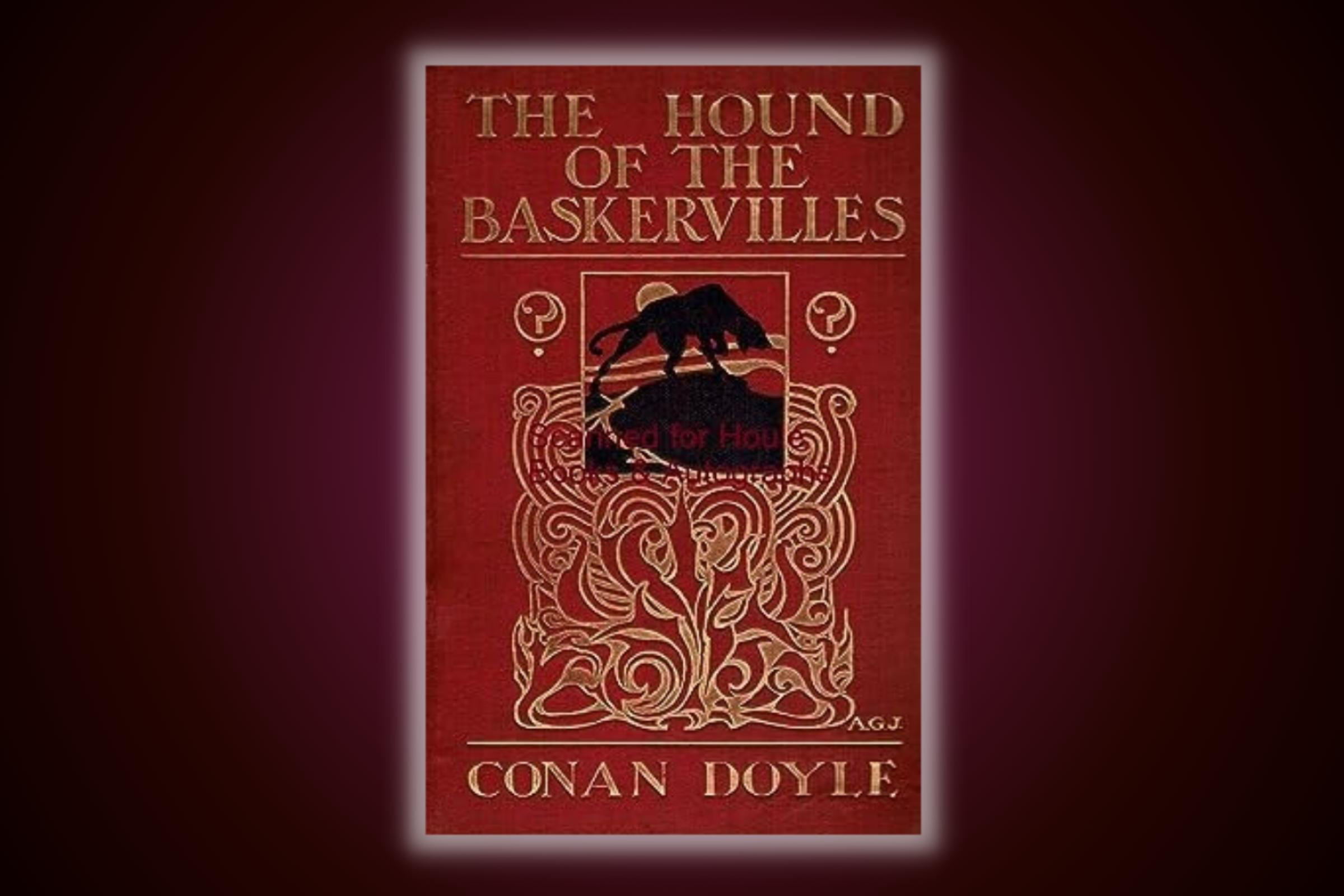
- The cover artist for the first edition was Alfred Garth Jones
- Sidney Paget provided illustrations for the story
- The book’s popularity made publishers eager to pay Doyle handsomely for more Holmes stories
- The story occupies a unique place in the Holmes timeline – published after his “death” but set before it
“The Hound of the Baskervilles” was first published as a complete novel on March 25, 1902, following its serialization in The Strand Magazine from August 1901 to April 1902. Its publication represented a significant literary event – the return of Sherlock Holmes after an eight-year absence.
The novel’s immense popularity proved to Doyle that the public’s appetite for Holmes remained insatiable, eventually leading to the character’s full resurrection. More than 120 years after its publication, this spooky tale of a demonic hound on the moors continues to captivate readers and inspire adaptations.
What’s your favorite version of “The Hound of the Baskervilles”? Have you read the original 1902 publication or experienced one of its many adaptations? I’d love to hear your thoughts in the comments below!
Detective Story Meets Gothic Tale
The second reason The Hound of the Baskervilles is so popular is that it combines supernatural elements (the kind often found in Gothic tales) with the shrewd, intellectual elements found in popular detective novels. Strange events taking place on the haunted moors of Devonshire near Baskerville Hall, including rumors of an evil hound and an escaped convict, make for the kind of gripping tale many detective story afficiandos enjoy.
Detailed descriptions of scenery are hallmarks of most Gothic novels. Phrases like “rolling pasture lands curved upwards on either side of us” and the “long gloomy curve of the moor, broken by the jagged and sinister hills” are just a couple of examples from the book.
Why Did Sir Arthur Conan Doyle “Resurrect” Holmes?
After learning of Sherlock Holmes’s death in “The Final Problem,” published in December 1893, thousands of readers canceled their subscriptions to The Strand. These cancellations upset the publishers, of course, but it didn’t faze Doyle. That is, until about eight years later.
In 1901, “annoyed by bad imitations,” Doyle wrote The Hound of the Baskervilles. The events in the book are supposed to have taken place in 1889 – more than a decade before Sherlock’s death.
The Hound of the Baskervilles eventually became Arthur Conan Doyle’s most popular book.
Two years later, in October 1903, Conan Doyle was offered a VERY large sum of money by publishers to bring Sherlock back “for good.” In the short story “The Adventure of the Empty House,” readers learned that Sherlock had faked his own death. Surprise!
When Was The Hound Of The Baskervilles Published? – Tales And Texts
FAQ
When was The hound of the Baskerville written?
Why did Doyle write The Hound of the Baskervilles?
Arthur Conan Doyle was apparently a family friend who often stayed there and may have been aware of a local legend of the hound of the Baskervilles. Still other tales claim that Doyle was inspired by a holiday in North Norfolk, where the tale of Black Shuck is well known.
Why is The Hound of the Baskervilles a classic?
The Hound of the Baskervilles has become a classic in the detective genre, known for its atmospheric setting, clever deductions by Sherlock Holmes, and the suspenseful unraveling of the mystery.
What is The Hound of the Baskervilles controversy?
… Arthur Conan Doyle stole The Hound of the Baskervilles and then poisoned the true author colluding with his wife, Gladys, with whom he was supposed to have …Oct 16, 2015