
Heres what happens in the mind when you encounter cuteness – and why puppies and kittens are scientifically cuter than babies.
What’s the cutest thing you can think of right now? Puppies? Kittens? Your own child, or, much more likely, Baby Yoda?
Whatever you chose, be warned: that adorable thing has hacked your brain. In fact, just glimpsing at it will trigger an innate caregiving mechanism, a neurological response that’s been sharpened across thousands of years of human evolution.
“Ultimately, this cuteness response is an important adaptation for us. Without it, I simply don’t think we’d survive as a species,” says Morten Kringelbach, Professor of neuroscience at the Universities of Oxford and Aarhus (Denmark).
“Human beings basically have a response to what we call ‘cuteness’ as we come to the world too early. We’re not quite cooked. Most animals can immediately get up and walk around after birth. We can’t. We need a lot of care – and need to make sure our young are appealing enough to receive it.”
This theory is much more than speculation. Thanks to the development of new brain-scanning techniques – including magnetoencephalography (neuroimaging that maps your mind’s activity over milliseconds using magnetic fields) – researchers have gained extraordinary insights into how our instinctual reaction to cuteness works.
But what exactly happens in the brain when we gaze at a baby? And why do we respond the same way to the offspring of other animals? Get in the know below. Or just scroll down for cute baby pictures – that’s what you’re adapted for, after all.
Have you ever found yourself completely melting at the sight of a puppy? Or maybe you’ve forgiven your furry friend for destroying your favorite shoes just because they looked up at you with those big, round eyes? Don’t worry – you’re not alone in this weakness! As a dog lover and researcher, I’ve spent countless hours trying to understand why my heart turns to mush every time I see a puppy waddling around.
There’s actually fascinating science behind why puppies make us go “awww” and why we can’t help but nurture them. Let’s dive into the adorable world of puppy cuteness and understand why humans are biologically programmed to find these furry little creatures absolutely irresistible
The Science of Cute: What Makes Puppies So Adorable?
Ever wondered what exactly makes puppies so darn cute? Scientists have actually identified specific characteristics that trigger our “aww” response. These features fall under what Germans call “kinderschema” or “baby schema” – a set of physical traits that signal youth, vulnerability, and a need for care.
Key Cuteness Features That Make Us Melt:
- Big head relative to body size or a particularly rounded head
- Large, forward-facing eyes (this is why you find your dog cute but maybe not so much a catfish!)
- Big, round ears that often flop adorably
- Teetering, floppy gait (those stumbling puppy steps get us every time!)
- Rounded body shape with soft curves
- Soft, touchable body surfaces (like that irresistibly soft spot just above a puppy’s nose)
Take French bulldogs as a perfect example. These little bundles of joy check every box on the cuteness list: pudgy features, loose skin creating adorable rolls, round eyes, round ears, a wide staggering gait, and that cute little smushed nose. No wonder they’re rapidly becoming one of America’s most popular dog breeds!
It’s All in Our Heads: The Biology Behind Our Response
Our reaction to puppy cuteness isn’t just a matter of personal preference – it’s actually hardwired into our brains! The reason we find certain features cute goes back to something much more fundamental: human survival.
Those features that make puppies cute – the big eyes, round heads, and clumsy movements – are the same features human babies have. Our brains evolved to respond positively to these traits because they trigger our caregiving instincts. And here’s the really interesting part – our brains don’t automatically distinguish between “human baby” and “cute animal baby.” The same warm, fuzzy feelings get triggered for both!
As Natalie Angier explained in the New York Times, the features of cuteness are those that express “extreme youth, vulnerability, harmlessness and need,” and these features elicit a nurturing response. When we see something that looks young and helpless, we instinctively want to protect and care for it.
This isn’t just a human quirk – it’s an evolved biological response crucial to our species’ survival. If we didn’t get all gooey over cute things, we wouldn’t take care of them, and our own species wouldn’t thrive. We’re basically programmed to nurture anything that looks baby-like!
How Dogs Got Cuter Over Time
Now here’s where it gets really interesting. Some studies suggest that dogs may have actually evolved to be cuter over time as they became domesticated – all to make humans more likely to take care of them!
Think about it – if looking cuter meant more humans wanted to feed and protect you, wouldn’t that be a pretty good survival strategy? One UK research team found that shelter dogs who “actively raised their inner brow and widened their eyes” were adopted faster. The study suggested that “dogs’ facial movements have evolved in response to a human preference for child-like characteristics.”
In other words, dogs might have figured out (evolutionarily speaking) that the cuter they look, the more likely humans will be to look after them. Pretty clever, right?
I’ve noticed this with my own dog, Max. Whenever he knocks something over or makes a mess, he immediately gives me those big puppy eyes, and I can never stay mad. I’m literally being manipulated by thousands of years of canine evolution – and I’m completely okay with it!
Cuteness Across Ages and Breeds
You might think that puppies are automatically cuter than adult dogs because they’re younger, but that’s not always the case. As we can see in the Psychology Today article about Loki the puppy, younger isn’t necessarily more babyish or cute.
In the comparison between Loki at six weeks and ten weeks, the ten-week-old puppy appeared cuter because he was healthier – with a more rounded face compared to when he was thinner and sicker at six weeks. This makes biological sense too – humans tend to respond more positively to infants (of any species) who look healthy.
And what about dogs that stay cute their whole lives? Many breeds that were specifically bred to be lap dogs maintain their “puppyness” into adulthood. These dogs typically have very short noses, small mouths, bulbous foreheads, and large heads – all those baby-like features that trigger our nurturing instincts. These permanent puppy features help ensure they remain adorable (and cared for) throughout their lives.
Beyond Dogs: The Universal Appeal of Cuteness
Our attraction to cuteness isn’t limited to puppies. Studies show that both adults and young children prefer looking at animals over human faces! In fact, researchers found that among animals, dogs received the highest “cuteness” scores, followed closely by cats.
And when it comes to baby animals, puppies and kittens received similarly high cuteness ratings. This preference exists regardless of whether someone owns pets or not, suggesting it’s a universal human trait.
Even animals we don’t typically associate with cuteness can trigger our “aww” response when they’re babies. Chickens, for example, aren’t usually described as cute when they’re adults, but baby chicks? Absolutely adorable! Their small size, big heads relative to their bodies, and other babyish features make them irresistible to many people.
When Cuteness Becomes a Superpower
The power of puppy cuteness goes beyond just making us smile – it actually affects our behavior in profound ways:
-
It makes us forgive bad behavior – Think about the naughtiest thing your dog ever did. For many of us, it’s hard to stay mad when they look up with those big, adorable eyes.
-
It drives us to adopt – Shelters report spikes in adoptions during stressful times, as people seek the comfort and joy that comes from caring for a cute animal.
-
It changes our voice – Ever catch yourself using “baby talk” with your dog? That high-pitched, exaggerated way of speaking is called “pet-directed speech,” and it’s triggered by the cuteness response.
-
It releases oxytocin – Looking at puppies actually triggers the release of oxytocin, the same “cuddle hormone” released when mothers bond with their babies.
-
It creates a biological imperative to protect – We don’t just think puppies are cute – we feel compelled to care for them because of our biological wiring.
Not All Cute Is Created Equal
While puppies generally hit all the cuteness marks, there’s definitely some variation in what different people find adorable. Some folks are drawn to squat bully breeds, while others prefer elegant, long-legged hounds.
And what about those dogs that win “World’s Ugliest Dog” contests? Even they elicit a caregiving response from their human companions! This suggests that cuteness isn’t just about a checklist of physical attributes – it’s about the relationship and the vulnerable state of being that triggers our nurturing instincts.
In my experience working at the local shelter, I’ve seen people fall head over heels for dogs that others might pass by. Sometimes it’s that unique “ugly-cute” quality that makes a particular dog stand out from the crowd and find their perfect human match.
The Practical Benefits of Puppy Cuteness
There’s a good reason shelters were “flooded with volunteers to foster animals” during stressful times like the pandemic. The psychological benefits of caring for something cute are well-documented:
- Reduced stress levels
- Lower blood pressure
- Increased feelings of happiness and wellbeing
- A sense of purpose and meaning
- Social connection (even in times of isolation)
When the psychology professor in the Psychology Today article decided to adopt puppy Loki during a stressful time, they weren’t just getting a cute companion – they were tapping into a powerful psychological coping mechanism that humans have used for thousands of years.
Embracing the Power of Puppy Cuteness
So next time you find yourself completely losing it over a puppy video or spending way too much time scrolling through #DogsOfInstagram, don’t feel bad! Your reaction is completely normal and biologically programmed.
Our attraction to puppy cuteness isn’t just a random preference – it’s a fundamental part of what makes us human. That instinct to protect and nurture vulnerable creatures has helped our species survive and thrive.
And honestly, in a world full of challenges and stress, sometimes allowing yourself to be completely overwhelmed by the cuteness of a puppy might be exactly the emotional release you need. So go ahead and squee over that puppy pic – your ancestors would approve!
What’s the cutest thing about your dog? I’d love to hear in the comments! For me, it’s definitely the way my dog Baxter tilts his head when he’s confused. Those floppy ears and big eyes get me every single time!

How does the brain respond to cuteness?
As Kringelbach’s breakthrough research demonstrated, if you stare at a baby’s face, your brain will actually process it very differently to the face of an adult.
“If you look at a fully-grown person, there’s first activity in the retina of your eyes, immediately transferred to the brain regions in the back of your brain. Here your brain makes sense of what you’re seeing and where. There is a special part of the brain, the fusiform face area that responds maximally to faces. However, when you look at babies, there’s activity in your orbitofrontal cortex (an area strongly involved in emotions and pleasures, located just above your eyeballs) at the same time as the activity in the fusiform face area,” he explains.
“In this way, cute babies essentially have a very quick and privileged way of entering our consciousness. They grab our attention so quickly that you are not yet conscious of it – after a seventh of a second of seeing a baby, you get this wave of brain activity that says ‘Woah, that’s a baby! I need to care for it!’”
Researchers have even developed a cuteness rating system based on objective measurements including the proportion of forehead to overall face, cheek chubbiness, and how big the eyes are.
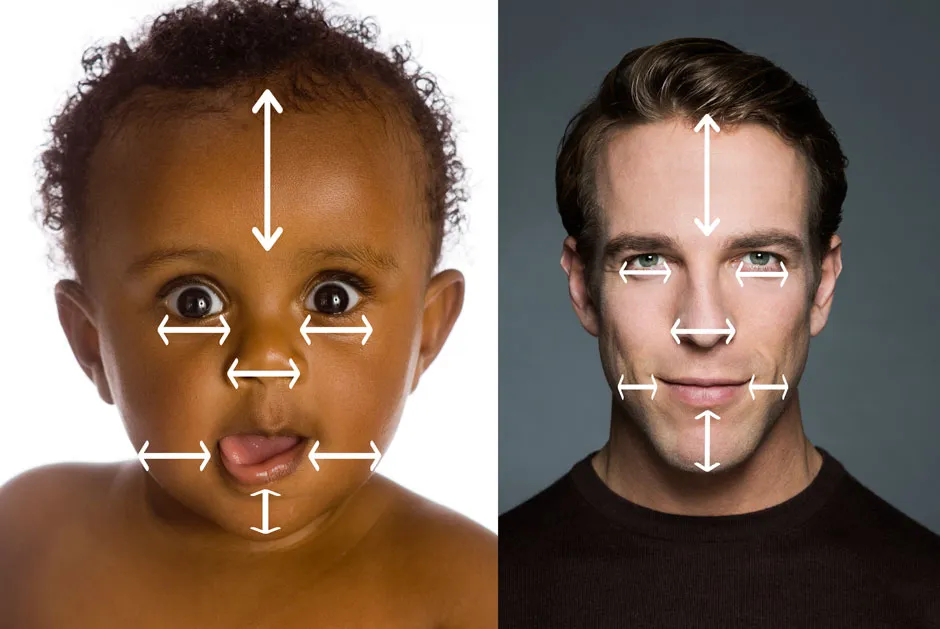
In addition, scientists have found artificially boosting a baby’s cuteness score using photo-editing software could elicit a stronger cuteness response in humans. Adorability, in other words, can be engineered.
But although you might need a bit of computer wizardry to increase your cuteness score, lowering it simply takes a bit of ageing.
“When you’re an infant, you have a high cuteness rating, but this lowers as you get older and those proportions change. With age, suddenly facial features no longer grab us in the same way – it doesn’t elicit the same selective attentional response,” says Kringelbach.
Read more about the science of babies:
However, cuteness isn’t all about sight. As Kringelbach’s research has highlighted, sounds can also trigger the same cuteness response in the brain. “Sounds like laughing babies can elicit a big response in your reward centre. If you ever need your Monday fix, just type ‘laughing babies’ into YouTube!” he says.
And there’s smell – a whiff of a baby’s head can also prompt the same reaction in the reward centre. “At that point in a human’s life, the skull hasn’t closed – the fontanelle [the soft spot on a babys head] is still there. The exact smell is something hard to quantify, but we are working on it!” says Kringelbach.
Why do people find puppies and kittens cuter than babies?
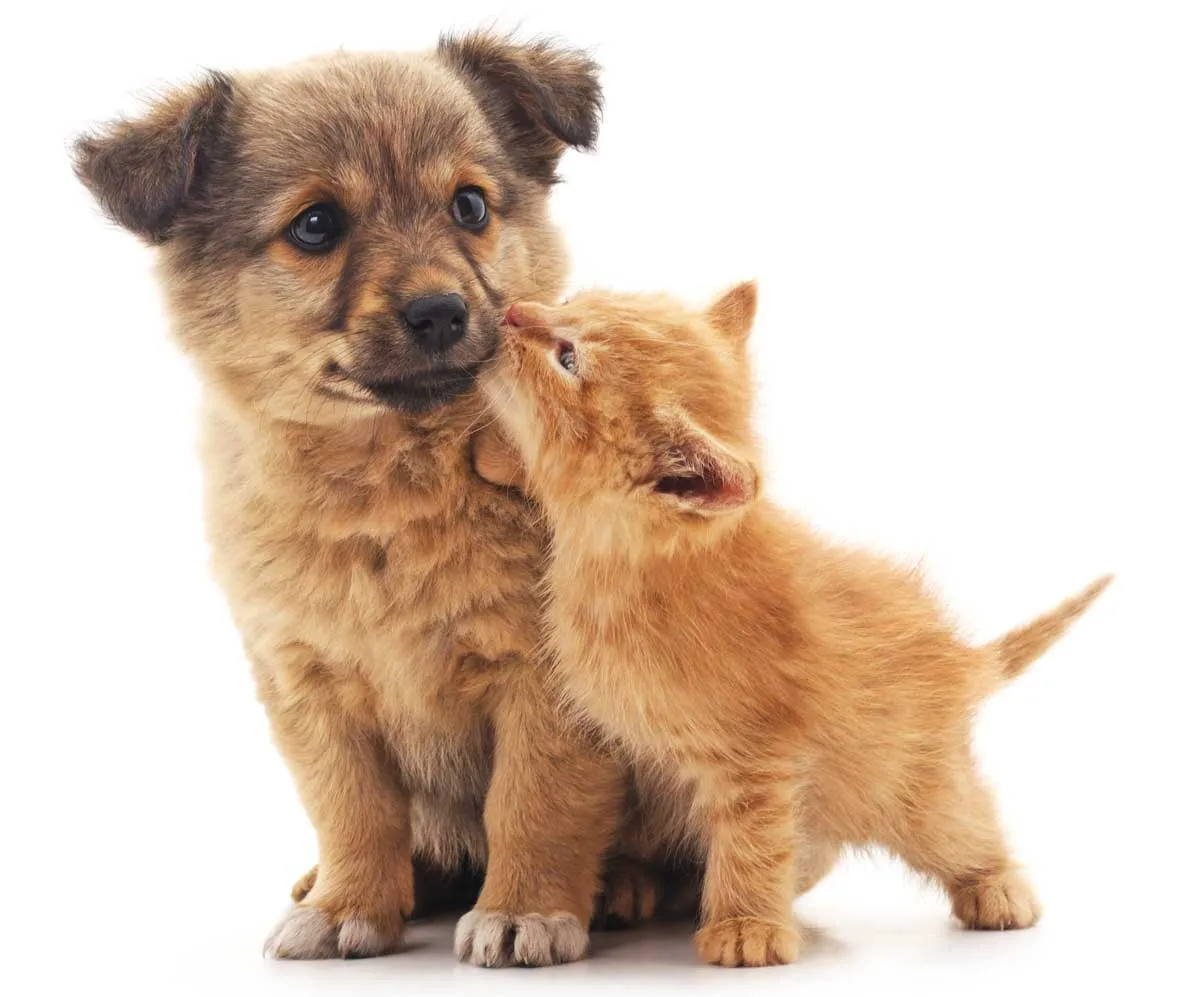
Remember that objective cuteness scale we mentioned above? Well, on average, puppies and kittens scored higher on this scale than humans. (Congratulations to all dog lovers: puppies were generally found to be marginally cuter than kittens, with adult dogs also still slightly cuter than babies).
We know what you’re thinking here: why have humans evolved to find baby animals cuter than our own? One answer is that humans have had immense control over the evolution of domesticated cats and dogs, changing their appearance over generations through selective breeding.
“Animals like dogs and cats have been essentially bred to look like babies,” says Kringelbach. “They have the big eyes, they have the big ears. When you see them, your brain is thinking ‘this could be a baby’. And it’s only later on, by the time you already have reacted, you say ‘oh, thats not a baby. But maybe I should still look anyway!
“It’s amazing our reaction to cuteness, something that can propagate our species, is useful to other animals too. But it’s important to remember they don’t do it in a conscious or malicious way!”
But there’s evidence fictional characters have been changed in the same way. Mickey Mouse and even standard teddy bears have been shown to adopt more infant – and cuter – facial features over the past several decades.
“Although these child-like features are a big part of Japanese subcultures like ‘Kawaii’ (roughly translating to ‘cute’), there are a lot of Kawaii-seeming characters here too. Just look at Baby Yoda!” says Kringelbach.
The Reason We Find Dogs So Cute | The Science of Cute
FAQ
Why do humans find puppies so cute?
Puppies are considered cute because their “baby schema” physical traits—like big eyes, large heads, and short noses—trigger our innate, evolved caregiving response, similar to how we react to human babies. This triggers brain activity associated with reward and bonding, releasing hormones like oxytocin and dopamine, creating feelings of warmth, and an urge to protect and nurture them.
Why do humans love puppies so much?
People love puppies because their “baby-like” physical features trigger an innate “cute response” that activates caretaking instincts, leading to feelings of reward, compassion, and empathy. This response is amplified by the puppies’ playful and innocent demeanor, their ability to foster a strong bond and provide companionship, and the release of “happy” neurochemicals like oxytocin, which strengthens the connection between humans and dogs, similar to a parent-child bond.
Why are puppies so attracted to humans?
Recent studies have demonstrated that dogs also create oxytocin in their brains when they are interacting through touch with their human owners. In this way, on a neurological level, dogs literally come to consider humans part of their “pack.” In many ways, they don’t see us as being separate from them.
Why are puppies naturally friendly to humans?
Because dogs have lived with us for 20000 years, they have become domesticated. This simply means they have biologically evolved and adapted to living with humans – it’s in their DNA. Puppies don’t have to be taught to work with and coexist with humans; it’s biological.