
Weaning—the transition from drinking only milk to eating solid food and drinking water—can be a nerve-wracking time in a puppy’s and pet parent’s life. Most people never have to take care of puppies who aren’t fully weaned, and finding yourself in that position for the first time can feel overwhelming.
Have you just welcomed a litter of adorable puppies into your home? Or maybe you’re fostering a 3-week-old pup without its mama? One of the biggest questions that’s probably keeping you up at night is can a 3 week old puppy eat soft dog food?
I’ve been there myself, and let me tell ya, figuring out what these tiny furballs should eat isn’t as straightforward as you might think! After consulting with vets and doing tons of research, I’ve put together this comprehensive guide to help you navigate the tricky waters of feeding very young puppies.
The Short Answer: Not Quite Yet
Let’s cut to the chase – at exactly 3 weeks old, puppies aren’t quite ready for soft dog food yet Their tiny tummies and developing digestive systems just aren’t equipped to handle it properly At this tender age, puppies should still be getting most of their nutrition from their mother’s milk, which provides all the essential nutrients they need for proper growth and development.
According to veterinary guidance, puppies generally begin their introduction to solid foods around 4 weeks of age as part of the weaning process – not at 3 weeks. This is an important distinction that many new puppy parents miss!
What a 3-Week-Old Puppy Should Actually Be Eating
At 3 weeks old, here’s what should be on your puppy’s menu:
- Mother’s milk: This should still be their primary source of nutrition
- Puppy milk replacer: If the mother isn’t present or can’t nurse
- Beginning to familiarize with the smell and texture of food (but not necessarily eating much of it yet)
The transition to solid foods is a gradual process that typically spans several weeks, starting around week 4, not week 3.
The Weaning Process: Timing is Everything
The weaning process is super important, and rushing it can lead to digestive issues that nobody wants to deal with (trust me on this one!). Here’s a quick breakdown of the typical puppy feeding timeline:
| Age | Primary Food Source | Introduction Phase |
|---|---|---|
| 0-3 weeks | Mother’s milk/puppy formula | Nursing only |
| 4 weeks | Mother’s milk + introduction to gruel | Begin weaning process |
| 5-6 weeks | Less nursing + more soft food | Weaning continues |
| 7-8 weeks | Primarily soft puppy food | Weaning completes |
When Can You Start Introducing Soft Food?
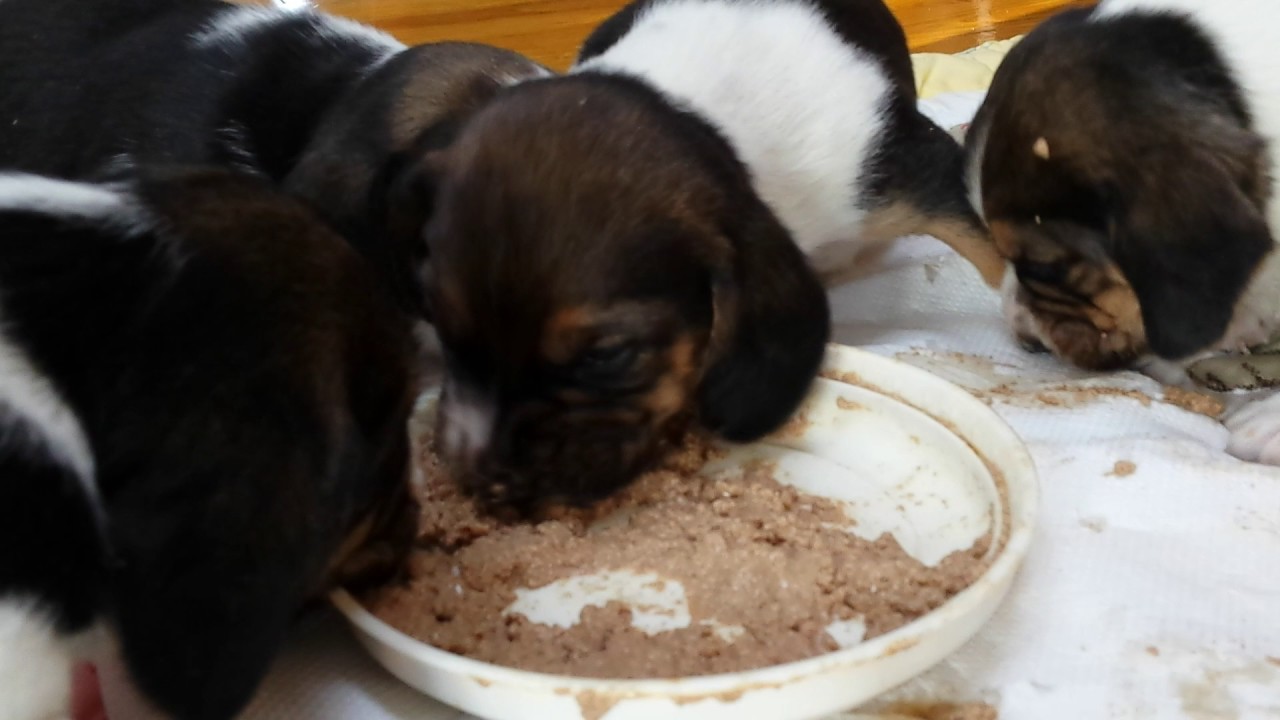
Around 4 weeks old (not 3!), you can begin the process of introducing puppies to a gruel made from:
- High-quality puppy food softened with water or puppy milk replacer
- The consistency should be very liquid at first (think soupy oatmeal)
- Only small amounts offered 4-5 times daily
This gruel serves as their first introduction to solid food. They might walk in it or play with it more than actually eat it at first. This is totally normal! They’re learning.
What Happens If You Start Too Early?
I know you’re probably eager to start the weaning process, but introducing solid food too early (like at exactly 3 weeks) can cause:
- Digestive upset and diarrhea
- Refusal to eat
- Potential nutritional deficiencies
- Dehydration
- Slower overall development
I made this mistake with my first litter, and let me tell you – cleaning up puppy diarrhea from 6 puppies is NOT how you want to spend your weekend!
What About Orphaned Puppies?
If you’re raising a 3-week-old puppy without its mother, the situation is a bit different. In this case:
- Puppy milk replacer is absolutely essential
- Feed from a bottle or syringe every 4 hours
- You might begin introducing a very liquid gruel at the 3-week mark, but proceed with extreme caution
- Always consult with a vet for orphaned puppies, as they have special needs
Even though 3 weeks is generally too early, some puppies develop at slightly different rates. Here are signs that your puppy might be getting close to being ready (usually closer to 4 weeks):
- Beginning to show interest in mom’s food
- Starting to develop teeth
- Becoming more coordinated
- Showing curiosity about what you’re offering
How to Make Puppy Gruel When The Time Comes
When your puppy reaches 4 weeks and is ready to start the weaning process, here’s a simple recipe for puppy gruel:
- Take high-quality puppy food (wet food works best initially)
- Mix with warm water or puppy formula until it’s very soupy
- Mash thoroughly to eliminate any chunks
- Serve at room temperature in a shallow dish
As the puppies grow and become more comfortable with eating, you can gradually make the mixture thicker until they transition to regular puppy food.
What If My Puppy Doesn’t Want to Eat Solid Food?
When the time comes (at 4 weeks, not 3!), some puppies might be hesitant to try solid food. Don’t worry! Here are some tips:
- Be patient – don’t force it
- Try hand-feeding small amounts
- Ensure the food is warm (not hot!)
- Let them see other puppies eating (if possible)
- Dip your finger in the gruel and let them lick it off
- Establish regular feeding times
The Mother Dog’s Perspective
When puppies start weaning (around 4 weeks, not 3), changes happen in the mother dog’s body too:
- Her milk production begins to decrease gradually
- The milk that remains gets reabsorbed through a process called involution
- There’s a risk of mastitis if weaning happens too abruptly
This is why the natural, gradual weaning process starting at the right time (4 weeks) is so important for both mom and pups.
A Sample Feeding Schedule for 3-Week-Old Puppies
At 3 weeks old, puppies still need frequent feeding:
- With mom: Allow nursing on demand, usually every 2-3 hours
- Without mom: Bottle feed puppy formula every 4 hours, including overnight
Common Mistakes to Avoid
In my years of raising puppies, I’ve seen (and unfortunately made) plenty of mistakes:
- Starting solid food too early (at 3 weeks instead of 4)
- Transitioning too quickly from milk to solid food
- Using regular cow’s milk instead of puppy formula
- Feeding adult dog food instead of puppy-specific food
- Not providing access to fresh water once introduction to solids begins
- Expecting puppies to eat large amounts of food at once
When to Call the Vet
Even with the best care, problems can arise. Contact your vet immediately if your 3-week-old puppy:
- Refuses to nurse or take a bottle
- Has diarrhea or vomiting
- Seems lethargic or weak
- Isn’t gaining weight
- Shows signs of dehydration (dry gums, sunken eyes)
- Has a distended abdomen
The Transition Beyond Soft Food
Once your puppy successfully transitions to soft food (starting at 4 weeks, not 3), the journey continues:
- 6-7 weeks: Begin decreasing the amount of water mixed in
- 8 weeks: Transition to moistened kibble
- 9-12 weeks: Gradually transition to regular kibble
Final Thoughts: Patience is Key
To sum everything up, while it might be tempting to start introducing soft dog food to your 3-week-old puppy, it’s best to wait until they’re about 4 weeks old. Their little digestive systems just aren’t quite ready yet!
Remember, every puppy is different and may develop at slightly different rates. When in doubt, consult with your vet for personalized advice.
The first few weeks of a puppy’s life are critical for their development, and proper nutrition plays a huge role in ensuring they grow up to be healthy, happy dogs. By following the proper feeding guidelines and being patient with the weaning process, you’re giving your puppies the best possible start in life.
Have you raised 3-week-old puppies before? What was your experience with feeding them? I’d love to hear your stories and tips in the comments below!
FAQs About Feeding 3-Week-Old Puppies
Q: Can I feed my 3-week-old puppy wet dog food?
A: It’s generally too early. Wait until around 4 weeks to begin introducing a very soupy gruel made with wet puppy food.
Q: How often should I feed a 3-week-old puppy?
A: If they’re nursing, they’ll feed every 2-3 hours. If bottle feeding, offer formula every 4 hours.
Q: What’s the best milk replacer for a 3-week-old puppy?
A: Commercial puppy milk replacers designed specifically for dogs are best. Never use cow’s milk.
Q: My 3-week-old puppy seems hungry. Can I start weaning early?
A: It’s best to wait until 4 weeks. If they seem exceptionally hungry, consult your vet for advice.
Q: How do I know if my 3-week-old puppy is getting enough nutrition?
A: They should be gaining weight steadily, have good energy when awake, and sleep contentedly after feeding.
Remember, when it comes to feeding puppies, it’s always better to be cautious and follow veterinary guidelines. Your patience will pay off with healthy, thriving puppies!
When Can Puppies Start Drinking Water?
Introducing water to a puppy follows a similar schedule as introducing them to solid food.
When Can Puppies Eat Dry Food and Wet Food?
Their mother’s milk (or puppy milk replacer, if necessary) is the only food a puppy needs from the time they are born until they are around 3 or 4 weeks old. At that point, weaning begins.
Weaning a puppy happens slowly. Though it can start when a puppy is 3–4 weeks old, the weaning process won’t usually be complete until a puppy is 6–8 weeks old. Over that time, puppies will gradually get less and less nutrition from milk and more and more from puppy food and water.
Initially, weaning puppies can only lap up very soft, wet foods—such as canned puppy food with a little puppy milk replacer mixed in to make a “puppy gruel.” By the end of the weaning process, they can be crunching on dry puppy food and drinking water from a bowl.