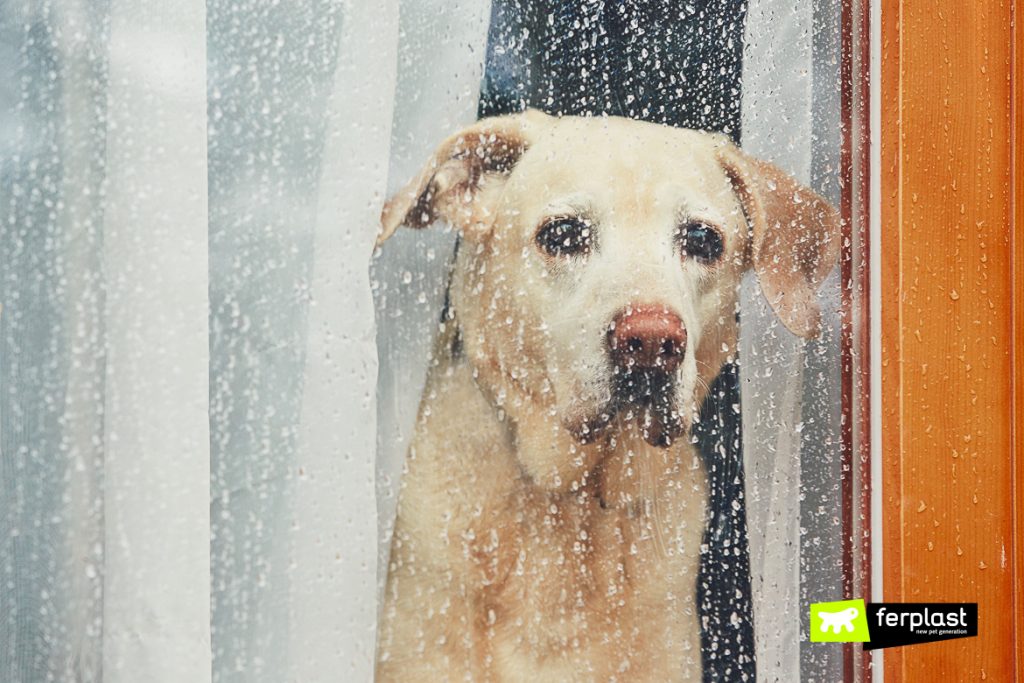
Our dog’s world is much different from ours. Their sense of smell is 1000 times better than our own (they can smell something we have cleaned off the floor 6 weeks ago!) and their hearing is far more acute . It’s not surprising then, that dogs seem to pick up on impending weather changes and thunderstorms much before we do. Dogs detect the changes in electrostatic charges of the atmosphere and barometric pressure changes as well as detecting low frequency noises. To a dog, a thunderstorm represents a mini environmental disaster, several hours before we even know it’s on its way!
Owners of pooches with a thunderstorm phobia often have tales of their pets’ frantic behaviour. Gardens are dug up, furniture overturned and some dogs will defecate and urinate in the house and over the furniture. Some will even jump through plate glass windows in order to escape. The cause of thunderstorm anxiety may be both hereditary and learnt behaviour. Most commonly affected breeds include the herding dogs such as German Shepherds and Collies, the hounds-beagles and Bassets, as well as Labradors and Golden Retrievers. Herding dogs are bred to be highly reactive and also to hide fear. This mix is likely to result in high anxiety.
These dogs can be helped to overcome their fear using a training process called systemic desensitisation and counter-conditioning. Basically, this involves exposing the dog to gradual increases in loudness of the thunderstorm noise using a tape recording and rewarding the dog for being relaxed when it is played.
Even if the dog gets upset well before the storm can be heard by people, it is still worthwhile desensitising him to the noise. It is likely that the dog will be less upset when the storm is overhead, and therefore may not react as badly when he knows it is approaching.
Desensitisation tapes and CD’s can be purchased from your local vet. Tapes need to be played very softly at first, rewarding the dog for not reacting. Gradually increase the loudness and reward for relaxed behaviour each time. If the dog reacts, it means the noise has become too loud too quickly and you will have to go back a few steps. It is wise to have veterinary guidance for this program.
There are some other things you can do to help your dog. Try to make sure your dog always has a place to go for shelter. Animals dig and become destructive because they are searching for a safe place, and a good kennel, or den with some sound proofing will help. Never baby- talk to your dog through a storm. This is just a signal to him that the fear is OK. Interestingly, the most recent studies indicate that dogs with another dog in the household tend to manage their fear of storms better than single dogs do, even though the unaffected dog completely ignored the anxious dog during the storm. If you’re game, you could get your frightened friend a pal.
A pheromone diffuser called Adapil (dog appeasing pheromone) may also be helpful. This is a substance released by the lactating female dog that functions to calm puppies in times of stress. It has been found to successfully calm dogs in stressful environments and unpredictable situations. This is available through vets, on prescription.
Sometimes it will be necessary to tranquilise the dog during the first few training sessions. Various drugs are available and your vet will prescribe them, if needed, depending on whether the dog is better suited to sedation or anti anxiety medication.
Have you ever noticed your furry friend acting super weird right before it starts raining? Maybe they’re hiding under the bed pacing around nervously or suddenly becoming your shadow? Well, turns out your pup isn’t just being dramatic – they might actually be sensing the rain before you even knew it was coming!
As a dog owner myself, I’ve always been fascinated by how my Golden Retriever, Max, seems to know when storms are approaching. He’ll start pacing and whining a good 30 minutes before I hear the first rumble of thunder. It’s like living with a furry meteorologist who doesn’t need fancy equipment!
The Science Behind Dogs’ Weather-Sensing Abilities
Dogs aren’t just being cute when they act strange before a storm – there’s actual science behind their behavior! Let’s look at the amazing ways our four-legged friends can predict rain and storms:
Barometric Pressure Sensitivity
One of the most impressive abilities dogs have is their sensitivity to barometric pressure changes When a storm is brewing, the atmospheric pressure drops, and dogs can actually feel this change While we humans might not notice anything different, our pups are already picking up on these subtle atmospheric shifts.
“Dogs can detect drops in barometric pressure, a common precursor to storms,” according to research reported by The Weather Channel “This sensitivity allows them to perceive atmospheric changes that often go unnoticed by humans.”
Super-Powered Hearing
Think your dog’s hearing is just good for knowing when the treat bag rustles? Think again! Dogs can hear frequencies way beyond human capabilities.
Their enhanced hearing abilities let them detect the low-frequency rumblings of distant thunder long before humans can. This early detection often triggers behaviors like restlessness or seeking shelter. So when your dog starts barking at “nothing,” they might actually be hearing thunder from miles away!
That Incredible Nose Knows
We all know dogs have amazing noses, but did you realize they can literally smell rain coming? It’s true!
A dog’s sense of smell is highly developed, enabling them to detect:
- The scent of rain itself
- Ozone produced by lightning
- Changes in air composition before storms
When your dog starts sniffing the air more intensely or licking their nose excessively, they might be picking up on these scents that signal an approaching storm.
Static Electricity Awareness
Ever had your hair stand up from static? Dogs experience something similar before storms!
Dogs may feel uncomfortable from static electricity buildup in their fur before a storm. This can lead to behaviors like:
- Seeking grounded areas (like bathrooms with plumbing)
- Displaying anxiety
- Hiding under furniture
This static sensitivity explains why some dogs seek out bathtubs or shower stalls during thunderstorms – they’re trying to find relief from the static charge!
13 Strange Ways Dogs Show They Sense Rain Coming
Now that we understand the “why” behind dogs sensing rain, let’s look at the “how” – the weird and wonderful ways our pups let us know bad weather is on the horizon:
1. Sudden Restlessness or Pacing
When the pressure drops before a storm, many dogs become little furry pendulums, pacing back and forth. They might whine, circle the room, or just seem unable to get comfy. My own dog does this about an hour before it rains – I’ve started checking the weather app whenever he gets into his pacing mode!
2. Hiding in Weird Places
Found your normally social butterfly of a dog squeezed behind the toilet or under your bed? They might be seeking shelter from the storm they know is coming. Dogs can sense changes in static electricity in the air, and their instincts tell them to find safe, enclosed spaces.
3. Barking at “Nothing”
That random barking session might not be so random after all! Dogs can hear those distant thunderclaps long before we can. Some scientists believe dogs also react to infrasound – super low-frequency sounds that come from natural disasters like hurricanes.
4. Becoming Extra Clingy
If your usually independent pup suddenly transforms into your shadow, check the weather forecast! Many dogs become super clingy when they sense changes in the weather. They might follow you everywhere, jump into your lap, or lean against you seeking comfort.
5. Excessive Whining
That annoying whimpering might actually be your dog trying to warn you! Changes in air pressure before a storm can make dogs uncomfortable, especially affecting their sensitive ears. Think about how your ears feel on an airplane – dogs might experience something similar before storms.
6. Indoor Digging Behavior
Is your dog suddenly trying to dig through your couch cushions? While digging is normal for many breeds, unusual indoor digging might be a sign they sense weather changes. In the wild, dogs would dig burrows for protection, and this instinct still shows up in our domestic pups.
7. Alert Posture with Intense Staring
If your dog suddenly stops what they’re doing, perks up their ears, and stares into the distance like they’re seeing a ghost, they might be tuning into weather activity that hasn’t reached you yet. It’s like they’re listening to the Earth’s warning signals!
8. Random Zoomies
Those crazy bursts of energy where your dog races around the house like they’ve had too much coffee? Could be a reaction to changes in barometric pressure and static electricity. Some dogs release nervous energy this way when they sense a storm coming.
9. Excessive Air Sniffing
Dogs have an incredible sense of smell and can detect scents in the air that we can’t perceive. Before a storm, they might sniff the air repeatedly or lick their noses more than usual. This could be because they can smell rain, lightning, or even ozone created by electrical storms.
10. False Potty Alerts
If your dog keeps asking to go outside but then just stands there sniffing the air instead of doing business, they might be checking the weather! Some dogs feel the pressure drop and want to investigate their surroundings or seek familiar outdoor scents for comfort.
11. Ear Flicking or Shaking
Noticed your dog shaking their head or flicking their ears for no apparent reason? Changes in atmospheric pressure might create strange sensations in their sensitive ears. It’s their way of trying to adjust to the changing conditions.
12. Increased Panting or Drooling
Some dogs start panting heavily before a storm, even when it’s not hot. This could be due to anxiety about the coming weather or physical discomfort from pressure changes. Excessive drooling might also signal stress about the approaching storm.
13. Waking Up Suddenly from Sleep
If your normally deep-sleeping pup suddenly jolts awake in the middle of the night, they might be sensing an approaching storm. Dogs remain somewhat aware of their environment even while sleeping and may wake up when they detect unusual changes.
How to Help Your Weather-Sensitive Pup
Now that we know our dogs can sense rain and storms, what can we do to help them when they’re feeling anxious about incoming weather? Here are some tips:
-
Create a safe space – Designate a comfortable area where your dog can retreat during storms. Think cozy blankets, favorite toys, and perhaps some white noise.
-
Stay calm yourself – Dogs pick up on our emotions, so keeping your cool helps them stay relaxed too.
-
Try a thunder shirt – These snug-fitting vests apply gentle pressure that many dogs find calming during storms.
-
Distraction techniques – Engage them with games, treats, or training to take their mind off the weather.
-
Consider supplements or medications – For severely anxious dogs, talk to your vet about calming supplements or anti-anxiety medications.
The Ultimate Weather Forecasters
While us humans rely on fancy weather apps and meteorologists, our dogs have their own built-in weather radar! Their ability to sense barometric pressure changes, hear distant thunder, smell approaching rain, and feel static electricity makes them natural weather predictors.
So next time your dog starts acting weird out of nowhere, maybe check the forecast! They might be trying to tell you that you need an umbrella today. After all, they’ve been predicting weather long before we invented radar!
I find it fascinating how our modern technology still can’t match the natural abilities our dogs have developed over thousands of years. While we’re busy checking Doppler radar, they’re already sensing the storm using their amazing doggy superpowers!
FAQ About Dogs Sensing Rain
Can all dogs sense rain, or just certain breeds?
While all dogs have these sensory capabilities to some degree, some breeds might be more sensitive than others. Working breeds and those with particularly acute senses may show stronger reactions to incoming weather.
How far in advance can dogs sense rain?
Some dogs can sense storms hours before they arrive, while others might only react 30-60 minutes beforehand. It depends on the dog’s sensitivity and the storm’s intensity.
Can I train my dog not to be afraid of storms?
While you can’t eliminate their ability to sense storms, you can help reduce their anxiety through desensitization training, creating positive associations with storm sounds, and providing safe spaces.
Is my dog’s weather prediction always accurate?
Dogs are surprisingly reliable weather predictors, but they’re not perfect! Sometimes other factors might cause similar behaviors. However, many dog owners report their pets are more accurate than the local weather forecast!
Next time there’s rain in the forecast, pay attention to your furry friend’s behavior – you might just discover you’re living with your very own canine meteorologist!