
Is everything in a dog’s world black and white? That idea that dogs can’t see color was widely accepted for decades, but new research and conclusions about canine anatomy and behavior have shown that while dogs can’t see the same colors humans do, dogs can still see some colors.
Technicolor may be beyond their comprehension, but research shows that the dog’s eye can see much more than shades of gray.
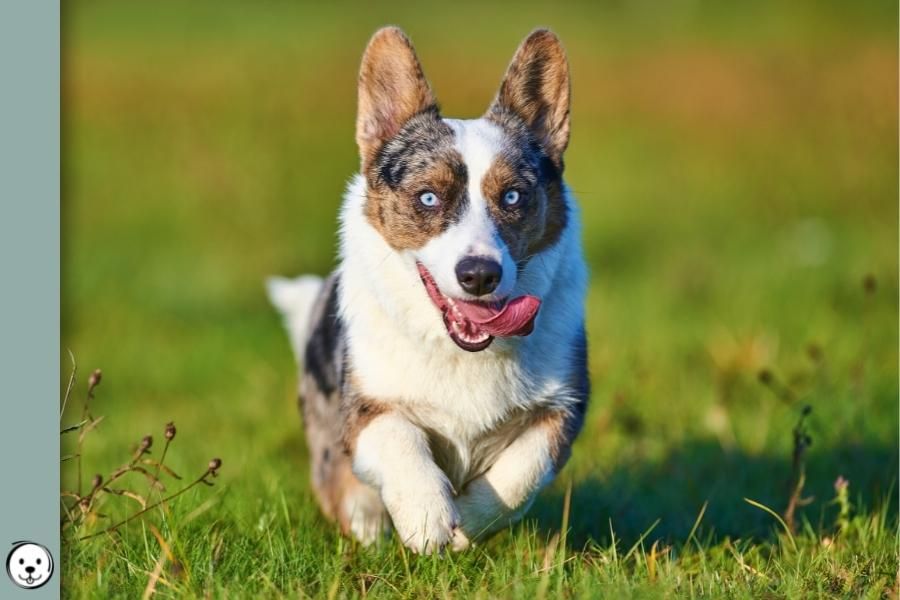
Ever wondered if those stunning blue-eyed pooches see the world differently? Maybe you’ve heard that dogs are completely colorblind or that blue-eyed dogs have special vision powers. Well I’m gonna bust some myths and share some pretty cool facts about our furry friends’ eyesight!
As a dog owner myself I’ve always been fascinated by how my pup sees the world. Those head tilts when they lose their red ball in green grass suddenly make a lot more sense once you understand their color vision!
The Truth About Dogs and Color Vision
Let’s get one thing straight right away – that old myth about dogs only seeing in black and white? Totally false! Dogs definitely see colors, just not the same rainbow we humans enjoy.
Dogs have what scientists call dichromatic vision, which means they see primarily two color groups:
- Blue-violet colors
- Yellow-green colors
This is different from humans, who typically have trichromatic vision with three types of color-detecting cone cells in our retinas. Dogs only have two types of these special cells, which limits their color spectrum.
What Colors Can Dogs Actually See?
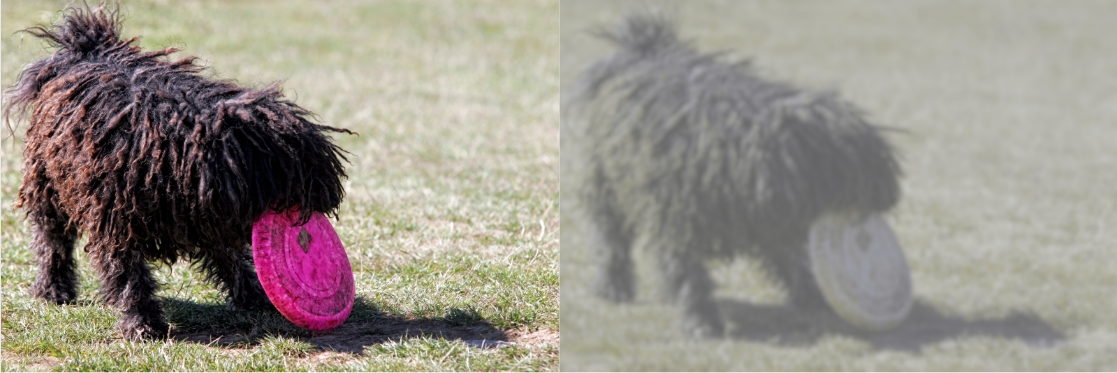
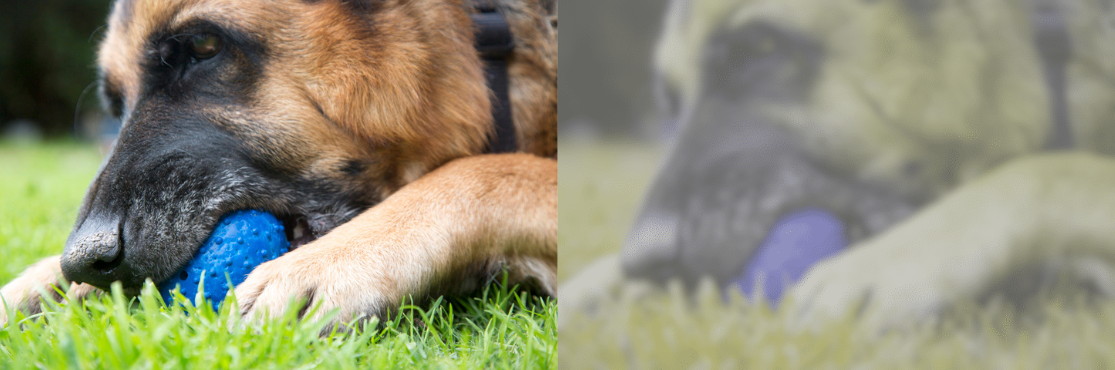
If you’ve been buying bright red toys thinking they pop out to your dog, I hate to break it to ya, but those toys might actually look pretty dull to them! Here’s a breakdown of how different colors appear to dogs:
- Blue: Dogs see this color quite well, similar to how we see it
- Yellow: Also easily visible to dogs, appears similar to our perception
- Green: Looks more like a dull yellowish or grayish-brown
- Red: Appears as dark brown or even black
- Orange: Shows up as a brownish color
- Purple: Hard for dogs to distinguish from blue
So basically, dogs see the world mainly in blues and yellows, with other colors appearing as various shades of these colors or as gray/brown tones.
Do Blue Eyes Make Any Difference to a Dog’s Color Vision?
Here’s where it gets interesting! Despite what you might think, a dog’s eye color has no impact on their color vision abilities. Whether your dog has those striking blue eyes, warm brown eyes, or even heterochromia (different colored eyes), their color perception remains the same.
The color we see in a dog’s iris (the pretty part of the eye) is separate from the structures that detect color. A dog’s ability to see color depends on those cone cells in the retina that I mentioned earlier, not the pigmentation that gives their eyes that gorgeous blue hue.
So while those blue eyes might look magical, they don’t give your pup any special color-seeing superpowers!
Dogs vs. Humans: Vision Differences Beyond Color
Dogs might not win the color vision contest, but they’ve got some impressive visual abilities that leave us humans in the dust:
- Superior motion detection: Dogs are incredible at spotting even tiny movements
- Better night vision: Thanks to having more rod cells in their retinas
- Wider field of vision: Depending on breed, dogs can have up to a 250-degree field of view compared to our 180 degrees
- Low-light superpower: Dogs have a special reflective layer called the tapetum that helps them see in dim conditions
And don’t forget – only about 10% of a dog’s light-detecting cells are dedicated to color vision. The rest are all about catching movement and working in low light – skills that were super important for their wild ancestors!
Common Myths About Dog Vision
Time to bust some more myths about how our furry friends see the world:
❌ Myth: Dogs only see in black and white
✅ Truth: Dogs see blues and yellows, just not reds and greens
❌ Myth: Red is the most visible color to dogs
✅ Truth: Blues and yellows are actually much more vibrant in their world
❌ Myth: Dogs can’t watch TV because they can’t see the colors
✅ Truth: Many dogs enjoy watching TV! In fact, studies show 95% of dogs are interested in watching animals on TV
❌ Myth: All dogs see colors the same way
✅ Truth: Just like humans, dogs can have variations in their vision
❌ Myth: Dogs can’t see in the dark
✅ Truth: Dogs actually see BETTER than humans in low light conditions
Making Your Dog’s World More Colorful (In Ways They Can Appreciate!)
Now that we know dogs mainly see blues and yellows, we can make some smart choices to enhance their visual experience:
Choosing Toys
Pick toys in blue or yellow! These colors will stand out much better to your pup than reds or oranges. This explains why some dogs seem to “lose” their red ball on green grass – to them, both look like similar brownish colors!
Training Tools
If you’re training your dog, use blue or yellow discs, markers, or other tools for better visibility. This is especially important for agility training or outdoor activities.
Home Environment
While your dog probably doesn’t care much about your interior design choices, using blue or yellow for their beds, toys, and bowls might make these items easier for them to spot.
Can Dogs with Eye Problems Still See Color?
Just like humans, dogs can develop various eye conditions that might affect their vision, including their ability to see color. Common canine eye problems include:
- Cataracts
- Glaucoma
- Progressive retinal atrophy
- Corneal ulcers
These conditions can definitely impact a dog’s overall vision quality, but they don’t typically change which colors a dog can or cannot see. The basic two-color system remains the same, though the clarity might be reduced.
The Role of Breed in Dog Vision
While all dogs have the same basic color vision setup, there are some differences in overall vision quality between breeds:
-
Brachycephalic breeds (think Pugs, Bulldogs): These smooshed-face pups often have a wider field of vision because their noses don’t block their view.
-
Sighthounds (like Greyhounds): These breeds were developed specifically for hunting by sight and may have better visual acuity for spotting movement at a distance.
-
Herding breeds (like Border Collies): Often have excellent motion detection vision, which helps them track moving animals.
But remember – regardless of breed or eye color, all dogs have that same dichromatic blue-yellow color vision system!
What This Means for You and Your Dog
Understanding your dog’s color vision can help improve your interactions in several ways:
- Choose toys they can actually see – opt for blue or yellow toys rather than red or green ones
- Make training more effective by using visual cues in colors they can distinguish
- Be patient when they can’t find things that might blend into their color-limited background
- Create contrast in their environment using colors they can easily differentiate
Final Thoughts: Seeing the World Through Your Dog’s Eyes
Our furry friends experience the world in ways both similar and different from us. While their color vision isn’t as rich as ours, they compensate with other amazing visual abilities and their incredible sense of smell (which is 1,000 to 10,000 times better than ours!).
So next time you look into your blue-eyed dog’s gorgeous peepers, remember – they’re seeing a world of blues and yellows, not the full rainbow we enjoy. But that doesn’t mean their world is any less vibrant or exciting! They’re just processing it in their own unique canine way.
And honestly, isn’t that what makes dogs so fascinating? They share our world but experience it so differently – reminding us that there’s more than one way to see things.
Do you have a blue-eyed dog? I’d love to hear your experiences in the comments below! Has understanding your dog’s color vision changed how you choose toys or training tools? Share your thoughts!
Remember: If you notice any changes in your dog’s vision or eye health, always consult with your veterinarian. While color vision is interesting to understand, overall eye health is crucial for your pup’s wellbeing!
Different-Colored Dog Toys Through the Lens of a Dog

What Is Color Blindness?
English scientist John Dalton (1766–1844) conducted some of the first studies on congenital color blindness in the late 18th century. Dalton became aware of the phenomenon because he and his brother could not recognize some colors. They confused scarlet with green and pink with blue.
In humans, the defect in red-green perception is the most common form of color deficiency. As many as 8 percent of men and 0.5 percent of women with Northern European ancestry have red-green color blindness. It is caused by abnormalities in color-detecting molecules, known as cones, in the retina. The retina is a lining at the back of the eye that converts light into electrical impulses. These signals are then conveyed, through the optic nerve, to the brain, where an is formed.
People missing some of these color-detecting molecules (also known as photoreceptors) won’t recognize certain light wavelengths. This is what makes them color blind, although they actually can make out some hues. Red-green color-blind people can still discern yellow and blue, but items in red will appear gray or brown to them.
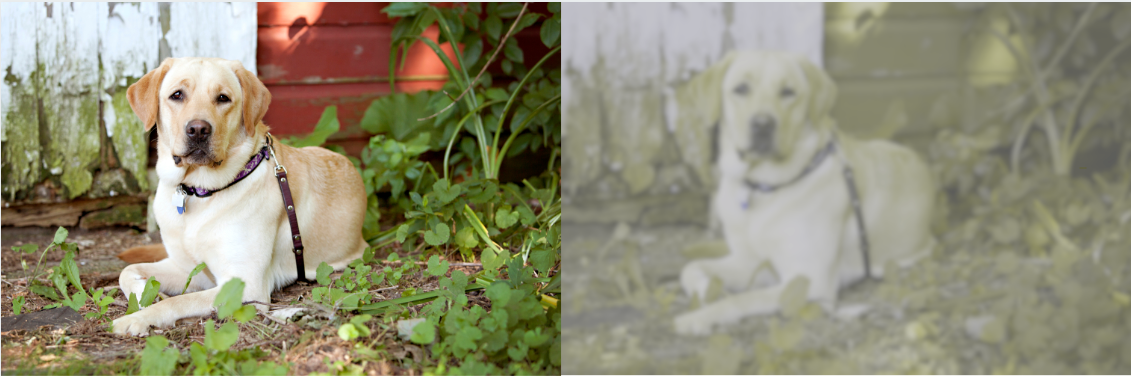

Can Dogs See Color? – How a Dog’s VISION Works
FAQ
Can dogs with blue eyes see?
Yes, dogs can see blue eyes. Their ability to perceive color is known as dichromatic vision, meaning they can see shades of blue and yellow, but not red or green. So, while a dog won’t see a blue eye with the same richness of color that a human sees, the blue color will be distinct and perceivable to them against other shades.
What colors can dogs see best?
Dogs see best in yellow and blue, with reds and greens appearing as shades of gray or brown. This limited color vision, called dichromatic vision, is similar to a human with red-green color blindness, as dogs have two types of color-sensitive cells in their eyes (cones) instead of the three that humans possess.
How rare is it for a dog to have blue eyes?
Yes, dogs having blue eyes is considered rare, affecting a small percentage of the total dog population, although it’s more common in certain breeds like Siberian Huskies, Alaskan Klee Kais, Australian Shepherds, and Miniature American Shepherds. The phenomenon is primarily caused by genetic factors, not pigment, with the ALX4 gene being a known blue-eye variant. Blue eyes can also occur in merle dogs, resulting from pigment disruption in the eye, or in cases of albinism.
What color confuses dogs?
As cats and dogs are not sensitive to red light, they have difficulty distinguishing some colours. For example, behavioural tests in dogs suggest that they can distinguish red from blue, but often confuse red and green. Similarly, they often perceive green as grey.