
A greyhound, a breed of dog specifically bred for their speed and agility, can indeed run faster than Usain Bolt, the world’s fastest human. This statement, though surprising to some, is not without merit, as the two subjects in question possess vastly different physical capabilities and methods of achieving their impressive speeds. In the sections below, comparisons will be made using various factors, including their peak speeds, acceleration capabilities, and body structures, in order to provide a comprehensive understanding of this topic.
Greyhounds and Usain Bolt are both known for their exceptional speeds. To better understand their abilities, let’s compare their peak speeds:
As evident from the table, greyhounds are significantly faster than Usain Bolt—able to reach speeds between 40-45 miles per hour, while Bolt’s top speed has been recorded at 27.8 miles per hour. This substantial difference shows that a greyhound can, in fact, outrun the world’s fastest human.
Another critical factor in understanding the speed differences between greyhounds and Usain Bolt is their acceleration—the speed at which individuals can reach their peak velocity.
As seen, greyhounds clearly have the edge in acceleration, hitting their top speed far faster than Bolt. This innate ability further emphasizes their advantage in racing against the fastest human on the planet.
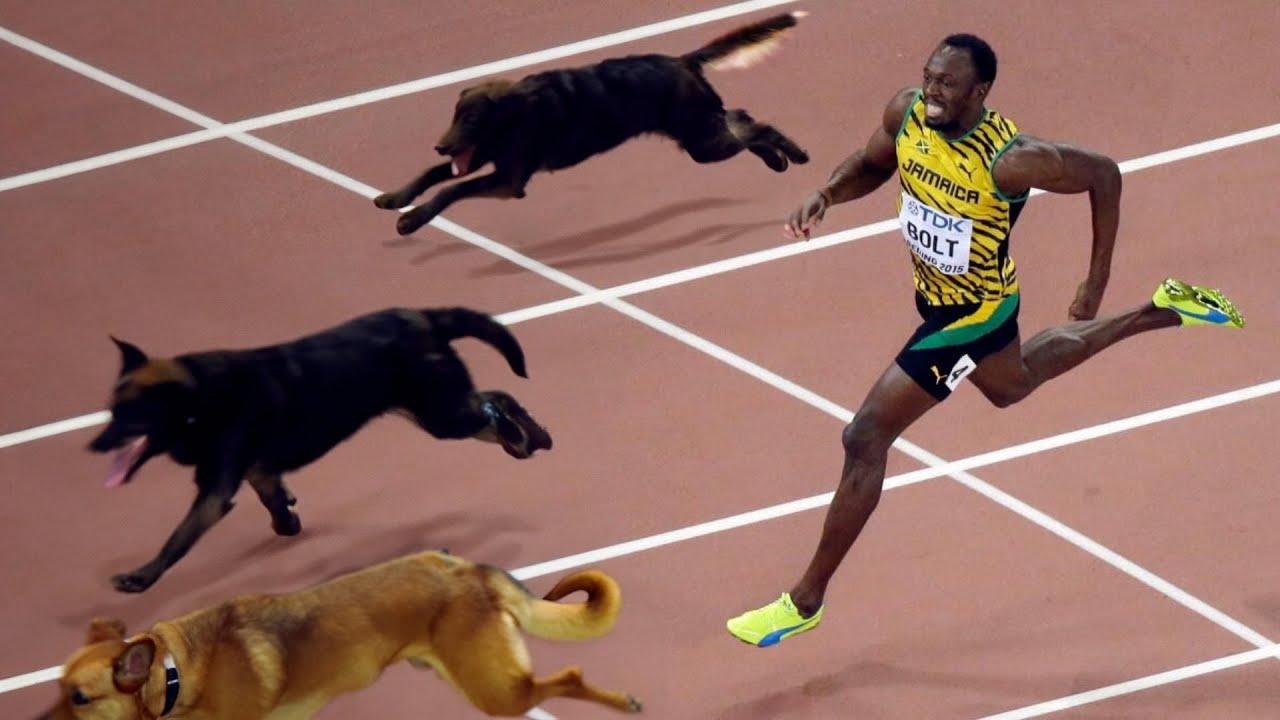
Have you ever wondered if the world’s fastest human could beat your furry friend in a race? This question has crossed my mind plenty of times while watching my neighbor’s German Shepherd zoom around the yard. Today, I’m diving into this fascinating speed matchup between the legendary Usain Bolt and our canine companions.
The Lightning Bolt: Just How Fast Is He?
Usain Bolt isn’t called “Lightning Bolt” for nothing. This Jamaican sprinter has dominated the track for over a decade with speeds that seem almost superhuman. According to the information from EssentiallySports Bolt runs at an incredible
- 27.78 mph (miles per hour)
- That’s about five times faster than your average human jogger
- His 100m world record stands at a blistering 9.58 seconds (set in 2009)
- His 200m world record is an equally impressive 19.19 seconds (also from 2009)
No other human has managed to break these records since Bolt set them He’s even outrun a metro train in a promotional race! But dogs? Well, that’s where things get interesting
Dog Speed: Faster Than You Might Think
Dogs evolved as hunters and have maintained impressive speed capabilities throughout their domestication. When we look at various breeds, many can actually surpass Bolt’s top speed. Here’s where things get surprising – according to the data from EssentiallySports, several common dog breeds can outpace the Olympic champion:
- German Shepherds can reach 30 mph (that’s faster than Bolt!)
- Jack Russell Terriers, despite their small size, can hit a shocking 38 mph
- The Greyhound, built for racing, tops out around 45 mph
The Canine Speed Champions
Based on the EssentiallySports article, here’s the full list of dogs that could leave Bolt in their dust:
- Greyhound – 43 mph
- Saluki – 43 mph
- Vizsla – 40 mph
- Afghan Hound – 40 mph
- Jack Russell Terrier – 38 mph
- Scottish Deerhound – 38 mph
- Borzoi – 38 mph
- Dalmatian – 37 mph
- Russian Wolfhound – 36 mph
- Whippet – 35 mph
- Doberman Pinscher – 32 mph
- Border Collie – 30 mph
- Siberian/Alaskan Husky – 30 mph
- German Shepherd/Belgian Malinois – 28 mph
Notice that even the “slowest” dog on this list – the German Shepherd at 28 mph – is still slightly faster than Bolt’s 27.78 mph!
Why Dogs Outrun Humans (Even Bolt)
The superiority of canine speed over human speed comes down to several factors:
- Four legs vs. two legs – Dogs’ quadrupedal stance gives them mechanical advantages
- Body design – Dogs’ bodies are literally built for running with flexible spines that extend their stride
- Muscle composition – Many dog breeds have a higher percentage of fast-twitch muscle fibers
- Specialized breeding – Certain dogs have been selectively bred for hunting or racing
But Wait – There’s More To Consider
While the raw speed numbers favor dogs, there are some important nuances to consider:
Endurance Matterss evolved as persistence hunters, meaning we can outlast many animals in longer distances. Bolt is a sprinter, not a marathon runner, but even dogs like Greyhounds can only maintain their top speeds for relatively short bursts.
As I learned from reading various sources, while a Greyhound can hit 45 mph, it can only maintain this speed for about 30 seconds. After that, even an endurance-trained human could potentially catch up.
Terrain Makes a Difference
The comparison assumes a flat, ideal running surface. On rough terrain, the human ability to navigate obstacles might give Bolt an edge against some dogs. And let’s not forget that Bolt runs in specialized sprint shoes on a carefully maintained track!
Start vs. Sustained Speed
Dogs typically accelerate faster than humans. Even Bolt’s famous “slow start” would be magnified against the explosive acceleration of most dogs. By the time Bolt reaches his top speed, many dogs would already have a significant lead.
The Verdict: Can Bolt Outrun a Dog?
Based on the speed data from EssentiallySports and other sources, I can confidently say:
No, Usain Bolt cannot outrun most athletic dog breeds in a sprint race.
Even an average German Shepherd, a common pet and police dog, can reach speeds slightly higher than Bolt’s maximum. And specialized racing dogs like Greyhounds would leave him far behind, being nearly 20 mph faster.
However, in a longer race of endurance (think several miles), Bolt – or any trained human distance runner – would likely overtake most dogs as canine stamina diminishes.
A Fun Thought Experiment
Imagine if the Olympics had a special event where Bolt raced against different dog breeds. What would that look like?
- 100m race vs. Greyhound: The Greyhound would win by a significant margin, probably finishing when Bolt was only about 60-70% done.
- 100m race vs. German Shepherd: Much closer! The Shepherd might win by just a few meters.
- 400m race vs. most dogs: As the distance increases, Bolt’s chances improve as dog stamina decreases.
- 1000m+ race: Bolt (or better yet, a human distance specialist) would likely overtake most dog breeds.
Other Animals That Could Beat Bolt
While we’re on the topic, it’s worth mentioning that many animals could outpace both Bolt and dogs:
- Cheetahs can hit an astonishing 70 mph (though only for short bursts)
- Horses gallop at about 55 mph
- Even Ostriches can maintain speeds of 45 mph
Final Thoughts
Speed is relative, and every species has evolved for different purposes. Humans didn’t evolve to be the fastest sprinters but rather efficient long-distance movers. The fact that Bolt can reach nearly 28 mph on two legs is actually remarkable in the animal kingdom!
So next time you’re walking your dog and they suddenly dart after a squirrel, don’t feel bad that you can’t keep up. Even the fastest human in history would be left in the dust! But if you’re planning a marathon, you might just have the advantage.
What do you think? Would you put money on Bolt or a German Shepherd in a 100m race? I’d probably bet on the dog, but it would be a close and exciting finish!
FAQ About Usain Bolt vs. Dogs
Q: Could Usain Bolt outrun a puppy?
A: Yes! Puppies haven’t developed their full speed capabilities, so Bolt would easily outpace a young dog.
Q: What about average pet dogs?
A: Many average pet dogs that aren’t athletic breeds might run around 15-25 mph, giving Bolt a fighting chance or even an advantage.
Q: Has Bolt ever raced against a dog officially?
A: No, there’s no record of an official race between Bolt and any dog breed. This remains a theoretical comparison.
Q: Would training help Bolt beat more dogs?
A: Unfortunately, Bolt was already at the peak of human performance when setting his records. The biological limitations of human anatomy make it virtually impossible for any human to reach the speeds of specialized running dogs like Greyhounds.
So there you have it – the world’s fastest man vs. man’s best friend. In the sprint, the dog wins. In the marathon, I’d put my money on the human. Nature has designed each species with its own unique advantages!
How Morphological Differences Influence Speed
Understanding the morphological differences between greyhounds and Usain Bolt allows for a deeper appreciation of the speed disparity. Variations in muscle type and distribution, lung capacity, and weight distribution—all play a critical role in dictating the speed at which both entities can run.
- Muscle: Primarily high-density fast-twitch muscles suited for swift, immediate action.
- Lung Capacity: large lung capacity allows for efficient oxygen uptake during running.
- Weight Distribution: Lightweight and even weight distribution eases rapid movement.
- Muscle: Display a blend of slow-twitch (endurance) and fast-twitch (speed and power) muscle fibres.
- Lung Capacity: Human lung capacity smaller compared to body size when compared with a greyhound.
- Weight Distribution: Weight more evenly distributed across body height contributes to endurance, not speed.
This morphological analysis provides further evidence of how the greyhound’s body is purpose-built for speed, giving it a natural advantage over Usain Bolt.
Body Structure and Design
The physical attributes of greyhounds and Usain Bolt play a significant role in determining their speed potential. Examining their body structure and design can shed light on how these differences lead to varying levels of speed.
- Long and slender body allows for a streamlined shape
- Lightweight, aerodynamic, and powerful muscles for optimal speed
- A naturally flexible spine that enables a longer stride and range of motion
- Foot structure designed for maximum traction and efficient power transfer
- Exceptionally tall with long legs, allowing for a larger stride
- Muscular physique, similar to a typical sprinter, aids in generating power
- Human spine is less flexible compared to a greyhound’s, limiting the stride
- Foot anatomy better suited for endurance rather than explosive speed
From these comparisons, it’s apparent that greyhounds possess unique physical traits allowing them to cover more ground and reach higher speeds than Usain Bolt. These structural differences highlight how the greyhound’s body is specifically designed for speed, whereas human anatomy, even in Bolt’s case, simply doesn’t compare.