The bond between a human and a dog is like no other. In fact, as well as becoming a part of our own family, we also naturally adapt a parent-like approach to our four-legged friends. And as we would with our own children, no parent wants to see them stressed, anxious or upset. This is where calming pheromone dog collars come into the equation.
Now, there are many solutions out there for supporting a stressed or anxious dog. But the hot topic we want to discuss today is a solution we swear by ourselves! We’re here to provide some insight into ADAPTIL collars and the real benefits of their efficacy. So, let’s get started…
Have you ever watched your furry friend tremble during a thunderstorm or pace anxiously when you’re about to leave the house? As pet parents, seeing our dogs stressed breaks our hearts. We’d do anything to help them feel better! That’s why so many of us have considered purchasing dog calming collars, hoping they might provide some relief for our anxious pups.
But the big question remains do calming collars really work for dogs? Or are they just another pet product gimmick that promises more than it delivers?
I’ve researched extensively, consulted veterinary sources, and gathered real-world experiences to give you the full scoop on these popular anxiety solutions
What Are Dog Calming Collars Anyway?
Before we dive into whether they work, let’s understand what calming collars actually are. These are special collars designed to help reduce anxiety and stress in dogs through either:
- Pheromone release: Collars infused with dog-appeasing pheromones (DAP) that mimic the calming chemicals mother dogs naturally produce to soothe their puppies
- Aromatherapy: Collars containing essential oils like lavender or chamomile that have calming properties
Most popular calming collars on the market today work through pheromones. The synthetic version of these natural hormones is released gradually from the collar and picked up by your dog’s nose, potentially triggering a calming response.
The Science Behind Dog Calming Collars
Let’s get a bit sciency for a moment (but I promise to keep it simple!).
Pheromones are natural chemicals produced by animals that affect the behavior of other animals of the same species. These chemical messages are detected through an organ in the nose called the vomeronasal organ.
As Dr Joseph Turk, a veterinarian in Palm Harbor, explains “This pheromone is released as mother dogs nurse their puppies very early in life As such, it appears to aid in relaxation for some dogs.”
Research has shown some promising results:
- One study found dogs exposed to pheromones were noticeably less anxious in veterinary hospital settings
- Another study with beagles showed they appeared less nervous during simulated thunderstorms when wearing pheromone collars
The Rising Popularity of Calming Collars
Calming collars have become increasingly popular in recent years. Pet owners everywhere are seeking natural, non-invasive solutions to help their dogs cope with anxiety and stress. This trend reflects our growing awareness of mental health in pets and our desire to find alternatives to medication.
The market now offers a wide variety of options, from pheromone-based collars to herbal-infused alternatives, giving pet owners plenty of choices when looking for the right solution for their furry friends.
When Might You Consider a Calming Collar?
Calming collars might be worth trying if your dog shows signs of anxiety such as:
- Excessive barking or whining
- Destructive chewing or scratching
- Pacing and restlessness
- Panting when not hot or tired
- Trembling or shaking
- Hiding or cowering
- House soiling despite being housetrained
These collars are particularly popular for helping dogs cope with:
- Thunderstorms and loud noises
- Fireworks
- Separation anxiety
- Travel stress
- Vet visits
- Moving to a new home
- Introduction of new pets or family members
What Veterinarians Say About Calming Collars
I wanted to get the expert opinion, so I consulted several veterinary sources on the effectiveness of these products. The consensus? Cautiously optimistic.
Dr. Patrick Mahaney, a veterinarian in Los Angeles, reports: “I’ve seen success with calming pheromone collars and diffusers in dog patients exhibiting anxiety (firework, thunderstorm, separation, etc.), inappropriate urination/defecation, aggressive tendencies, and more.”
However, Dr. Turk shares a more mixed experience: “Sometimes we have good results with these collars, and sometimes there can be little to no difference noted.” He suggests this variation might be related to the severity of the dog’s anxiety.
Dr. Linda Simon, a veterinary surgeon, adds that “Collars work best for those who are mildly anxious and who need minimal external help. For a dog with severe anxiety, a collar is not likely to have much effect.”
Popular Calming Collar Options
If you’re considering trying a calming collar for your pup, here are some of the most popular options on the market:
1. Adaptil Adjustable Calming Collar
- Uses dog-appeasing pheromones (DAP)
- Safe to use alongside flea and tick medications
- Designed to help with loud noises, training, kennel anxiety, and socialization
- Generally lasts about 30 days
2. ThunderEase Calming Dog Collar
- Made by the same company that produces the popular ThunderShirt
- Uses pheromone technology
- Aimed at reducing stress chewing, problem barking, and separation anxiety
- Some users report fit issues with certain dog breeds/sizes
3. Sentry Calming Collar for Dogs
- Combines pheromones AND aromatherapy (lavender and chamomile)
- Lasts up to 30 days
- Designed for thunderstorm fears, fireworks anxiety, travel stress, and separation anxiety
- Many users comment positively on its pleasant scent
My Personal Experience with Calming Collars
We tried the Adaptil collar with our anxious rescue dog, Max, who gets especially nervous during thunderstorms. After putting it on, we didn’t notice an immediate difference (I was kinda hoping for magic!), but after a couple of days, he seemed slightly less panicky when it stormed.
Was it a miracle cure? Definitely not. But it did seem to take the edge off his anxiety. We still use other methods alongside it, like creating a safe space in the bathroom with his favorite toys.
I’ve also heard mixed reviews from friends who’ve tried these collars. Some swear by them, while others saw no change at all in their dog’s behavior.
The Pros and Cons of Calming Collars
Pros:
- Non-invasive: No need for medications that might cause side effects
- Easy to use: Just put it on and let it do its work
- Continuous effect: Works 24/7 while your dog wears it
- Generally safe: Few reported adverse reactions
- Affordable: Cheaper than many prescription anxiety medications
- No sedative effect: Your dog stays alert and active
Cons:
- Inconsistent results: Works for some dogs, not for others
- Not strong enough for severe anxiety: Likely ineffective for dogs with serious anxiety issues
- Regular replacement needed: Most need to be replaced every 30 days
- Potential chewing hazard: Some dogs might try to chew or eat their collar
- Conflict with essential oils: Some natural collars use oils that might not be safe around cats
- Limited scientific evidence: More research needed to confirm effectiveness
Tips for Getting the Most from a Calming Collar
If you decide to try a calming collar for your anxious pup, here are some tips to maximize its potential benefits:
-
Proper fit is crucial: The collar should be snug but not tight, with enough room to fit two fingers between the collar and your dog’s neck.
-
Trim excess length: As Dr. Simon recommends, cut off any extra collar length to prevent your dog from chewing on it.
-
Track results objectively: “Create a treatment log/journal by noting the dog’s response (improved, worsened, no change, etc.) on a calendar,” suggests Dr. Mahaney. You might even want to film your dog’s behavior before and after using the collar.
-
Give it time: Some dogs may not show immediate results. Give the collar at least a week before deciding if it’s working.
-
Use in combination with other methods: Calming collars often work best as part of a comprehensive approach to managing anxiety.
-
Replace as recommended: Most collars lose effectiveness after about 30 days and need to be replaced.
Beyond the Collar: Other Ways to Help Your Anxious Dog
Calming collars are just one tool in your anxiety-management toolkit. For best results, consider combining them with:
- ThunderShirt or pressure wrap: These provide gentle, constant pressure, similar to swaddling a baby
- Behavioral training: Working with a professional to address anxiety triggers
- Environmental management: Creating safe spaces for your dog during stressful events
- Calming treats: Supplements containing ingredients like L-theanine or tryptophan
- Puzzle toys: Mental stimulation can help distract from anxiety
- Consistent routine: Predictability helps many anxious dogs feel more secure
- Veterinary consultation: For severe anxiety, your vet might recommend medication
The Bottom Line: Should You Try a Calming Collar?
After all my research and personal experience, here’s my take:
Calming collars might work for your dog, especially if they have mild to moderate anxiety. They’re generally safe, relatively affordable, and worth trying before moving on to more intensive interventions like prescription medications.
However, they’re not a miracle solution. Like any anxiety treatment, results vary widely from dog to dog. What works amazingly for one might do absolutely nothing for another.
If your dog struggles with severe anxiety that significantly impacts their quality of life, a calming collar alone probably won’t be enough. In these cases, please consult your veterinarian, who can help develop a comprehensive treatment plan that might include behavioral modification, environmental changes, and possibly medication.
Frequently Asked Questions About Dog Calming Collars
Are calming collars safe for all dogs?
Most calming collars are considered safe for dogs of all ages and breeds. However, always check the specific product guidelines and consult your vet if your dog has any health concerns.
Can my dog wear a calming collar alongside their regular collar?
Yes, your dog can wear both a calming collar and their regular ID collar simultaneously.
Will my dog become dependent on the calming collar?
According to veterinarians, dogs are unlikely to become dependent on calming collars. They’re not addictive or habit-forming.
How long does it take to see results from a calming collar?
Some dogs may show improvement within hours, while others might take several days. Give the collar at least a week before deciding if it’s effective.
Can calming collars help with separation anxiety?
They may help with mild separation anxiety, but severe cases usually require additional interventions like behavioral training.
Are there any side effects of calming collars?
Side effects are rare. The biggest risk is if your dog manages to chew and ingest parts of the collar, which could cause gastrointestinal issues.
Have you tried calming collars for your dog? We’d love to hear about your experience in the comments! And remember, what works for one dog might not work for another—finding the right solution for your anxious pup may take some trial and error.
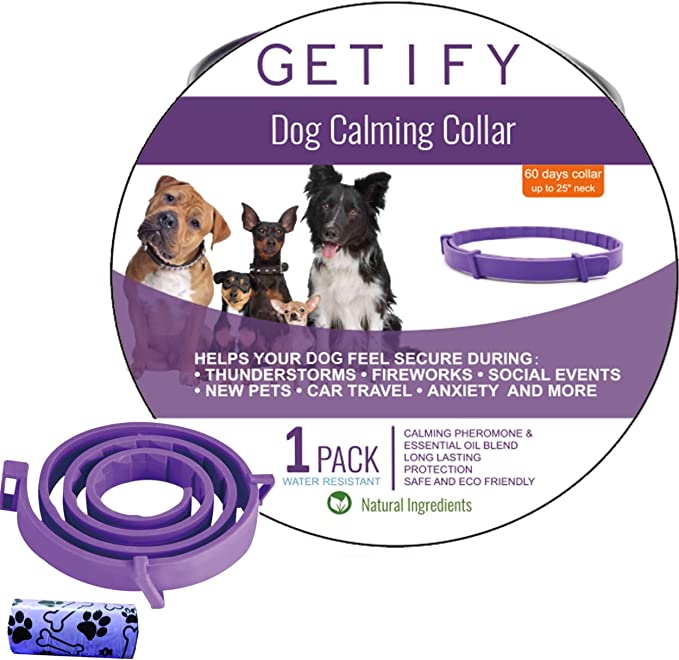
ADAPTIL is Clinically proven
Although we can’t verify this statement for all the calming dog collars out there, we certainly can for ADAPTIL!
ADAPTIL Calming Collars are clinically proven, veterinary used and recommended. We are trusted globally as the go-to brand and have seen millions of pooches and pups around the world show great results.

Works at any age
Dogs can detect the scent of pheromones at any age. What’s great is that they do not lose the ability to respond to these as they grow older. This means the collars are effective for them when they are puppies right up to their golden years. We recommend to use an ADAPTIL Junior Collar for your puppy until they are 6 months old.