
Finding a strange lump on your dog can be alarming. Sometimes, it’s hard to know whether that skin issue is nothing to worry about or a sign of skin cancer. Skin tags are common in dogs and nothing to worry about, but they can be confused for other types of skin growths. Read on to learn:
Dogs can develop many types of lumps and growths on their skin, especially as they grow older. Many, like skin tags, are nothing to be concerned about. However, malignant tumors can be deadly and confused with benign lumps on the skin. It’s always best to get a vet’s opinion on a new skin abnormality.
Have you ever been petting your furry friend and suddenly felt a small lump that wasn’t there before? Maybe you’ve spotted what looks like a tiny growth on your dog’s skin while giving them a bath It’s natural to worry when you find something new on your pup, and you might be wondering – do dogs get moles or skin tags like humans do?
The short answer is yes, dogs absolutely do get both moles and skin tags As a dog owner myself, I’ve experienced that moment of panic when discovering a new bump on my retriever, Charlie Let me share what I’ve learned about these common skin growths and when you should be concerned.
What Are Dog Skin Tags?
Skin tags (technically called acrochordons) are benign growths that appear as small lumps or bumps on your dog’s skin. They’re basically overgrowths of skin that often look like dangly masses attached by a thin stalk of tissue.
Most skin tags are:
- Small (usually under one centimeter)
- Soft and fleshy
- The same color as your dog’s skin or slightly darker
- Not painful when touched
Vets might use fancy terms like “fibrovascular papillomas,” “fibroepithelial polyps,” or “soft fibromas” to describe them. But whatever you call ’em, they’re generally harmless.
Do Dogs Get Moles Too?
Yes! Dogs can also develop true moles, which veterinarians call “nevi” (singular nevus) These are benign skin growths that are usually small and symmetrical. They typically appear as small black or brown spots on the skin
True moles in dogs might show up on:
- The face
- The flank (side area)
- Paws
- Other locations across the body
Like skin tags, most moles are completely harmless and don’t require treatment.
The 6 Common Types of “Moles” on Dogs
When most of us say “mole,” we might be referring to several different types of skin growths. Here are the six most common types you might find on your pup:
1. Skin Tags
As I mentioned above, these dangly bits of flesh are super common, especially in older dogs. You’ll often find them on the face, elbows, armpits, and ankles. They grow slowly and typically don’t bother your dog at all.
2. Cysts
Cysts are another common growth that might be mistaken for a mole. They’re small, round bumps that can be filled with fluid or a thicker substance (kinda like cottage cheese – gross, I know!). They can appear anywhere on your dog’s body and may grow larger over time.
3. Warts (Sebaceous Adenomas)
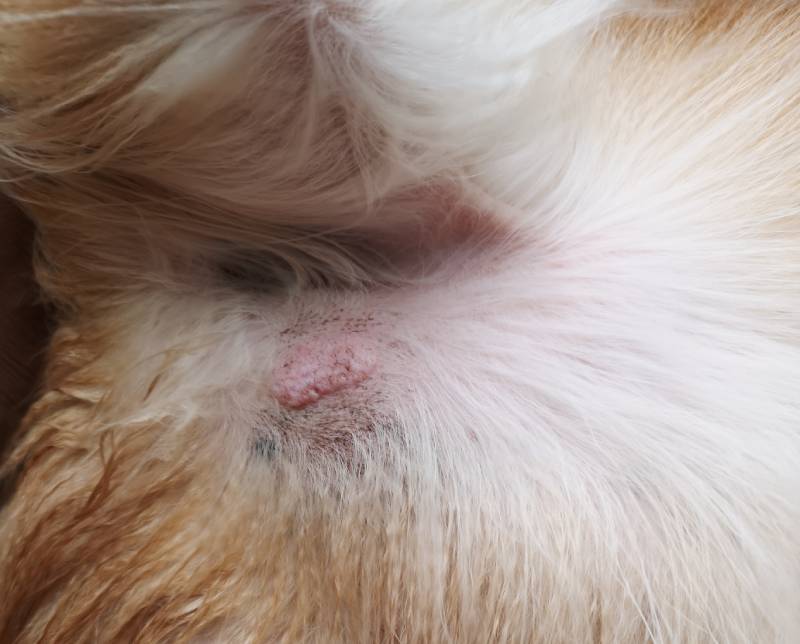
Warts tend to be light pink and look like tiny cauliflowers. They’re most common in puppies and senior dogs because both age groups have weaker immune systems. Puppies usually outgrow them within a few months, but older dogs may have them for longer.
4. True Nevi (Moles)
These are the actual moles – small brown or black spots that can appear on various parts of your dog’s body. They’re benign and usually don’t require any treatment.
5. Melanomas
Now, these are the ones to watch out for. A black mole on a dog is more likely to be melanoma (a type of skin cancer) than other colored growths. These commonly appear in the mouth, near claws, or within the eye. Any black growth should be checked by a vet.
6. Other Cancerous Growths
Cancerous moles or lumps can come in various shapes and sizes. They often grow rapidly and have irregular shapes. Red, black, or unhealthy-looking moles deserve immediate veterinary attention.
What Causes Skin Tags and Moles in Dogs?
Honestly, the exact cause of skin tags and moles in dogs isn’t fully understood. However, several factors seem to make them more likely:
- Age: Just like with us humans, dogs are more prone to developing skin tags and moles as they get older.
- Breed: Larger dog breeds seem more predisposed to skin tags, but any breed can get them.
- Genetics: There’s likely a genetic component that makes some dogs more prone to these growths.
- Sun exposure: Dogs who spend lots of time in the sun, especially short-haired breeds, seem more likely to develop certain skin growths.
- Weight: Overweight dogs might be more prone to developing skin tags.
- Friction: When skin rubs against itself (like in armpits or groin areas) or against collars and harnesses, skin tags can develop.
- Skin irritation: Ongoing irritation from infections, parasites, or chemicals might contribute.
When to Worry About a Mole or Skin Tag on Your Dog
Most of the time, skin tags and moles are nothing to worry about. But sometimes they can indicate a more serious issue. Here’s when you should be concerned:
- The growth is changing rapidly in size, shape, or color
- It’s bleeding, ulcerating, or has discharge
- Your dog is licking, scratching, or seems bothered by it
- The growth is in a troublesome location (like near the eye or mouth)
- Multiple new growths appear suddenly
- Your dog seems generally unwell (lethargic, not eating, etc.)
I remember when Charlie had a skin tag that started bleeding because it kept getting caught on his collar. That was definitely time for a vet visit!
Skin Tag or Tick? How to Tell the Difference
This is a common confusion! When you first notice a small bump on your dog, you might panic thinking it’s a tick. Here’s how to tell them apart:
| Skin Tag | Tick |
|---|---|
| Same color as dog’s skin or slightly darker | Usually dark brown or gray |
| Doesn’t grow quickly | Gets larger quickly as it feeds |
| No visible legs | Has legs you can see with magnification |
| Doesn’t move when touched | May move slightly when touched |
If you’re not sure, use a magnifying glass to look closely. You should be able to see a tick’s legs, which will move if you touch it (with gloved hands, of course!).
What To Do If You Find a Mole or Skin Tag on Your Dog
Here’s my step-by-step advice based on what vets recommend:
-
Take pictures of the growth when you first notice it. This helps you track any changes in size or appearance.
-
Monitor it for a few days if it’s small and not bothering your dog. It could be a small scab or insect sting that will resolve quickly.
-
Prevent your dog from licking or scratching at it. A cone collar might be necessary if they won’t leave it alone.
-
Visit your vet if:
- The growth persists for more than a week
- It’s growing or changing quickly
- It’s bleeding or seems infected
- Your dog seems bothered by it
Treatment Options for Dog Skin Tags and Moles
If your vet determines that the growth needs attention, here are the typical options:
Monitoring
For most benign growths, your vet will simply note its location, size, and appearance and recommend monitoring for changes.
Testing
If there’s any concern about cancer, your vet might recommend:
- Fine Needle Aspirate (FNA): A simple test where cells are drawn out with a small needle and examined under a microscope. This typically costs $150-250.
- Biopsy: A small piece or the entire growth is removed and sent to a lab for analysis. This costs around $200-400.
Removal
If removal is necessary, options include:
- Surgical excision: The growth is cut out under local or general anesthesia. This typically costs $400-900, including lab analysis.
- Cryosurgery: The growth is frozen off, though not all vet practices offer this.
Can I Remove My Dog’s Skin Tags at Home?
PLEASE DON’T TRY THIS! While you might find internet advice on home remedies for removing skin tags, these methods are risky and can cause:
- Pain to your pet
- Bleeding
- Infection
- Delayed diagnosis if the growth is actually cancerous
Always let a professional handle any removal. Your dog will thank you!
Preventing Skin Tags and Moles in Dogs
While many skin tags and moles develop naturally due to genetics and age, you can take some steps to minimize others:
- Regular skin checks: Check your dog’s skin monthly for any changes or new growths.
- Maintain healthy weight: Extra skin folds from excess weight can create friction that leads to skin tags.
- Proper collar fit: Ensure collars and harnesses aren’t too tight or constantly rubbing.
- Good skin care: Regular bathing with appropriate shampoos and proper grooming helps maintain skin health.
- Parasite prevention: Keep up with flea and tick prevention to avoid skin irritation.
Final Thoughts
Finding a new bump or growth on your dog can be scary, but now you know that most moles and skin tags are completely harmless. The key is to be vigilant, monitor any changes, and consult your vet when needed.
I’ve had many moments of panic over Charlie’s various skin bumps over the years, but most turned out to be nothing to worry about. Still, I never regret getting them checked – peace of mind is worth it when it comes to our furry family members!
Remember, you know your dog best. If something doesn’t seem right or you’re concerned about a growth, trust your instincts and consult your veterinarian. Better safe than sorry when it comes to our four-legged friends!
How are skin growths diagnosed and treated by a vet?
A vet can test a skin growth to see if it is a cancerous or benign growth. Fine needle aspiration allows a vet to examine the cells under a microscope to determine if they are normal or cancerous. Taking a biopsy or submitting tissue samples after surgical removal provides the most conclusive information about a dog’s skin growth. Some growths and tumors can be removed surgically. If cancer is diagnosed, additional surgery, radiation, and chemotherapy, may be recommended.
What causes skin cancer in dogs?
It is not fully understood how our canine companions develop skin cancer, but it is likely due to multiple factors. UV radiation from the sun, exposure to certain chemicals, and some types of viruses are all shown to increase the risk of skin cancer in dogs. Some dogs are simply genetically predisposed to certain cancers, just like people.
Skin Tags on Dogs How to Prevent and Remove Them
FAQ
What does a mole look like on a dog?
A mole on a dog is a benign skin growth, or nevus, which appears as a small, flat, or slightly raised bump that can be pink, white, gray, or black, is usually hairless, and has a smooth surface. While often harmless, it’s crucial to have any new or changing skin growth checked by a veterinarian to rule out more serious conditions, such as melanoma or mast cell tumors, which can resemble moles but may be cancerous.
What do cancer skin tags look like on dogs?
Some cancers like melanoma can appear as a black skin tag and may also be easy to confuse. Cysts of the skin are usually more attached and larger than skin tags. Cysts can be firm or soft, depending on what is inside. Some cysts can have a small attachment like a skin tag but will usually get larger over time.
Can dogs get moles or skin tags?
What does a skin tag feel like on a dog?
Also known as fibrovascular papillomas, skin tags range in appearance and texture. They can feel firm or soft as well as squishy or hard.