
Have you ever noticed something weird in the corner of your dog’s eye while they’re falling asleep? Maybe a whitish membrane sliding across their eyeball? Well, I’ve got news for ya – that’s actually your dog’s third eyelid! Yep, while we humans make do with just two eyelids per eye, our canine companions are rocking three eyelids on each eye.
As a dog lover who’s spent countless hours researching canine health (and staring at my own pup’s face), I find this fascinating. Today I’m gonna break down everything you need to know about this unique feature of your furry friend’s anatomy.
What Exactly Is This Third Eyelid?
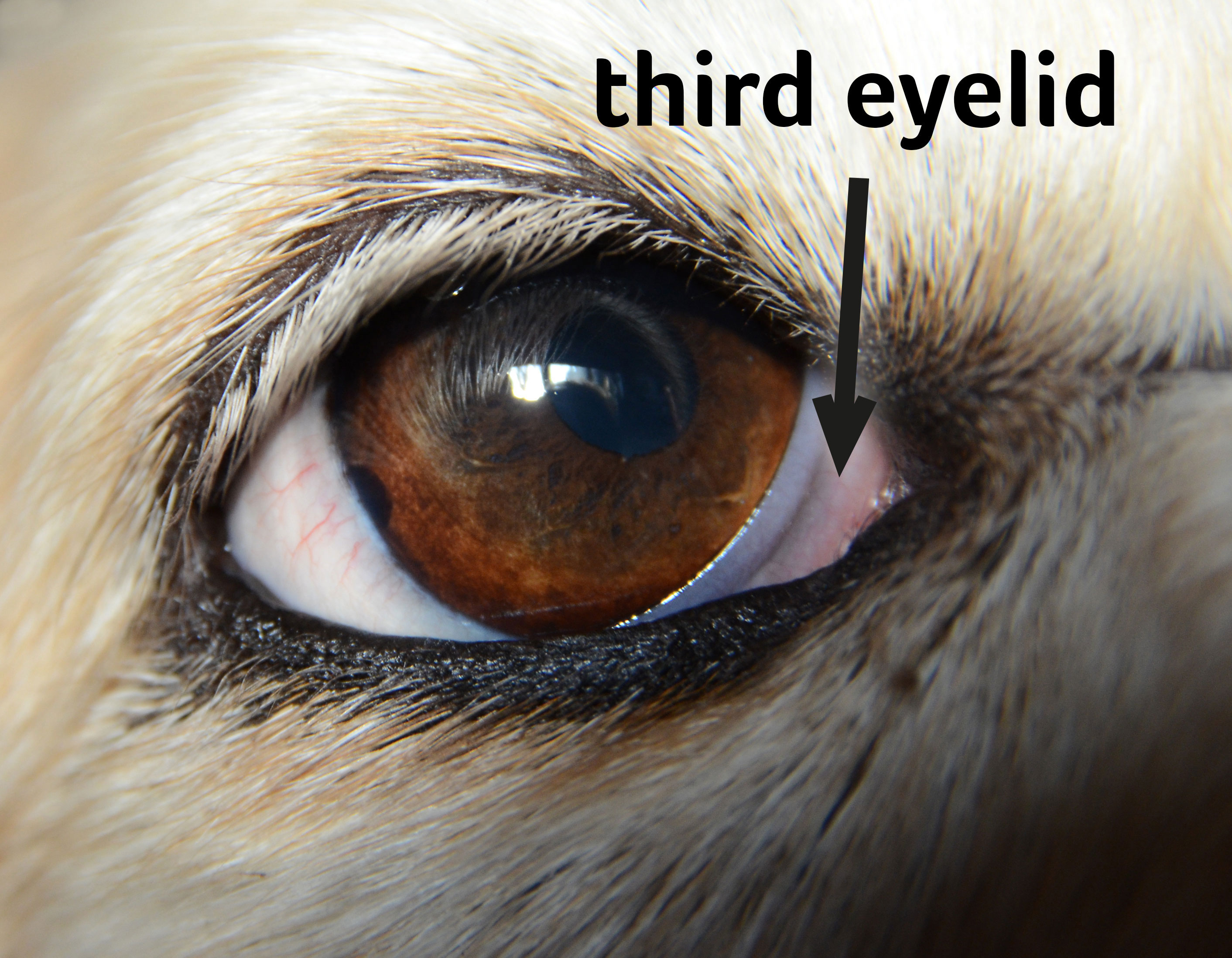
Dogs have a special membrane called the “nictitating membrane” – also known as the “haw” or third eyelid. Unlike the upper and lower eyelids that we can easily see, this third eyelid is normally hidden away in the inner corner of your dog’s eye.
The nictitating membrane isn’t unique to dogs. Birds, reptiles, and some other mammals like camels also have this cool feature. Humans actually used to have a third eyelid too, but throughout evolution, ours shrank to become what’s now just a tiny structure in the inner corner of our eyes called the plica semilunaris.
The Anatomy of Your Dog’s Third Eyelid
Your dog’s third eyelid isn’t just a simple membrane. It’s actually a complex structure with three main parts:
- The thin protective membrane called the conjunctiva
- A T-shaped cartilage that forms a firm connective tissue
- A tear gland held in place by the T-shaped cartilage
This structure allows the third eyelid to do its job properly, sweeping across the eye when needed.
What Does The Third Eyelid Actually Do?
You might be wondering why dogs need this extra eyelid when we humans get by just fine without one. Well, this third eyelid serves several important purposes:
- Protection from injury – It shields the eye from scratches, especially when dogs are running through brush or areas where their eyes might get scratched
- Keeps the eye moist – It helps spread tears across the eyeball (fun fact: the nictitating membrane produces about 50% of a dog’s tears!)
- Cleans the eye – It helps remove debris by sweeping across the eyeball
- Defends against infection – It acts like a lymph node, producing antibodies to protect against eye infections
When you think about wild canids like wolves, coyotes, and foxes, this third eyelid makes perfect evolutionary sense Their eyes are constantly subject to potential injury, dirt, and infection from activities like fighting and eating carcasses
When Can You Actually See Your Dog’s Third Eyelid?
Under normal circumstances, you won’t actually see your dog’s third eyelid It’s usually only visible in specific situations
- When your dog is falling asleep
- If your dog just woke up suddenly
- When your dog is extremely relaxed (like during a really good petting session)
As Scott Sheaffer, a certified dog behaviorist, notes, seeing the third eyelid in these contexts is pretty normal – similar to how humans’ eyes might roll back when falling asleep or experiencing pleasure.
When Should You Worry About Your Dog’s Third Eyelid?
While it’s normal to occasionally glimpse your dog’s third eyelid, there are times when its visibility might indicate a problem. If your dog’s third eyelid is showing in situations where you’ve never noticed it before, it could be a sign of injury or illness.
Common Problems With The Third Eyelid
Cherry Eye
Cherry eye is the most common problem involving a dog’s third eyelid. This occurs when the ligament holding the tear gland ruptures, causing the gland to become exposed. You’ll notice a swollen, bright red mass (hence the name “cherry”) in the corner of your dog’s eye.
Cherry eye usually requires surgical treatment to replace the gland back where it belongs.
Horner’s Syndrome
This neurological disorder affects the eye and facial muscles, typically on one side of the face. Signs include:
- Drooping eyelid and/or sunken-looking eye
- Visible third eyelid that may look red and raised
- Difficulty eating on the affected side
- Excessive drooling
Horner’s syndrome can have various causes, from nerve damage to medication side effects to head trauma. It often resolves on its own, but it might indicate an underlying health issue that needs attention.
Conjunctivitis (Pink Eye)
Just like humans, dogs can get conjunctivitis. Symptoms include:
- Red eyes
- Swelling around the eyes
- Eye discharge (cloudy, yellow, or greenish)
- Squinting or excessive blinking
Poor Overall Health
A visible third eyelid might also be a sign of:
- Malnourishment
- Dehydration
- Excessive weight loss
- Eye pain
Breeds More Prone to Third Eyelid Issues
While any dog can experience third eyelid problems, certain breeds are more susceptible:
Breeds With Short Muzzles and Flat Faces
These dogs have small eye sockets and prominent eyeballs that aren’t well-covered by the eyelids:
- American Cocker Spaniels
- Beagles
- Lhasa Apsos
- Pekingese
- English Bulldogs
Large and Giant Breeds
These dogs are more prone to third eyelid cartilage eversion (scrolled cartilage):
- Great Danes
- Weimaraners
- German Shepherds
- Dobermans
Treatment for Third Eyelid Problems
Treatment depends on the specific issue but might include:
- Removal of any foreign objects
- Stitching for larger cuts
- Surgery for conditions like cherry eye
- Medications to treat inflammation and infection
An Interesting Side Note for Dog Owners
Here’s something fascinating I learned: dog behaviorists sometimes use the visibility of the third eyelid as a way to monitor dogs on behavioral medications! When using central nervous system depressants (like Xanax) to treat issues like aggression or separation anxiety, the appearance of the third eyelid too frequently can be an early warning that the dosage might need adjustment.
When to Call Your Vet
A visible third eyelid isn’t necessarily painful for your dog, but it should be addressed to prevent other potential eye problems. Without the proper functioning of the nictitating membrane, your dog might not produce enough tears, making them more susceptible to eye infections.
Call your vet if:
- The third eyelid doesn’t retract
- It looks red and inflamed
- Your dog is pawing at their eye
- There’s discharge from the eye
- Your dog is squinting or blinking excessively
My Personal Experience
I remember the first time I noticed my dog Baxter’s third eyelid. We were having a lazy Sunday afternoon, and he was getting the best belly rubs of his life. I noticed this weird white membrane sliding across his eye and totally freaked out! A quick call to my vet reassured me that this was completely normal during moments of extreme relaxation.
Now whenever I see his third eyelid, I know he’s either super relaxed or about to fall asleep. It’s actually become a cute little indicator of his mood!
Final Thoughts
So there you have it – dogs do indeed have three eyelids, and this extra membrane serves some pretty important functions. While us humans lost our third eyelids through evolution, our canine companions still benefit from this cool anatomical feature.
Next time you see that little membrane peek out when your pup is dozing off, you’ll know exactly what it is and why it’s there. Just another reason to appreciate the amazing design of our four-legged friends!
Have you ever noticed your dog’s third eyelid? Or maybe you’ve dealt with cherry eye or another third eyelid issue? I’d love to hear about your experiences in the comments below!
FAQ About Dogs’ Third Eyelids
Do all dogs have a third eyelid?
Yes! All dogs, regardless of breed, age, or size, have a third eyelid in each eye.
Can humans see their dog’s third eyelid normally?
No, under normal circumstances, the third eyelid remains hidden. You’ll typically only see it when your dog is falling asleep, just waking up, or extremely relaxed.
Is it normal to see my dog’s third eyelid?
Occasional glimpses are normal, especially during sleepy times. However, if it’s constantly visible or appears red and inflamed, consult your vet.
Do cats have third eyelids too?
Yes! Cats also have a nictitating membrane that serves similar functions as in dogs.
Can a dog’s third eyelid be removed?
In some severe cases, surgery might involve removing part of the third eyelid, but vets typically try to preserve this important structure because of its role in tear production and eye protection.
What is involved with the surgery?
Your pet will stay in the hospital for the day and undergo a general anaesthetic for the ‘pocket’ technique to be performed. This technique involves the creation of a small space or ‘pocket’ on the back of the third eyelid into which the gland can be placed and permanently secured by suturing the overlying tissue.
Is my dog or cat at risk?
Third eyelid gland prolapse is much more common in dogs than in cats. It usually affects young dogs between the ages of 6 to 12 months, although there is some variation in the age of onset. Predisposed breeds include the Bulldog, Shih Tzu, Lhasa Apso, Cocker Spaniel, Great Dane and Mastiff.