
Dog vaccinations are critical to ensuring your four-legged friend stays healthy from puppyhood into their senior years. Vaccines are the safest and most cost-effective way to protect your dog from many infectious preventable diseases.
The science behind canine vaccinations has progressed significantly over the past decade, enhancing both their safety and efficacy against existing and emerging pathogens. Here’s why vaccinating a dog is important.
For PetMDs complete guide on dog vaccinations and when your pet should get them, click here.
Are you wondering if your furry friend really needs those annual shots? It’s a common question many dog owners ask themselves when that yearly reminder card arrives from the vet The topic of vaccination frequency has evolved significantly in recent years, and understanding the current recommendations can help you make the best decisions for your pet’s health
The Evolution of Dog Vaccination Protocols
Traditionally, annual revaccination was the standard practice for all dogs However, veterinary science has made significant advances in understanding vaccine duration and effectiveness. Research now shows that many core vaccines provide protection for much longer than a year – sometimes even for several years or potentially a lifetime!
This shift in understanding has led major veterinary organizations like the American Animal Hospital Association (AAHA) and the World Small Animal Veterinary Association (WSAVA) to update their vaccination guidelines moving away from the one-size-fits-all annual approach.
Core vs. Non-Core Vaccines: What’s the Difference?
Not all vaccines are created equal, and not all dogs need the same vaccinations. Veterinarians categorize vaccines into two main types:
Core Vaccines
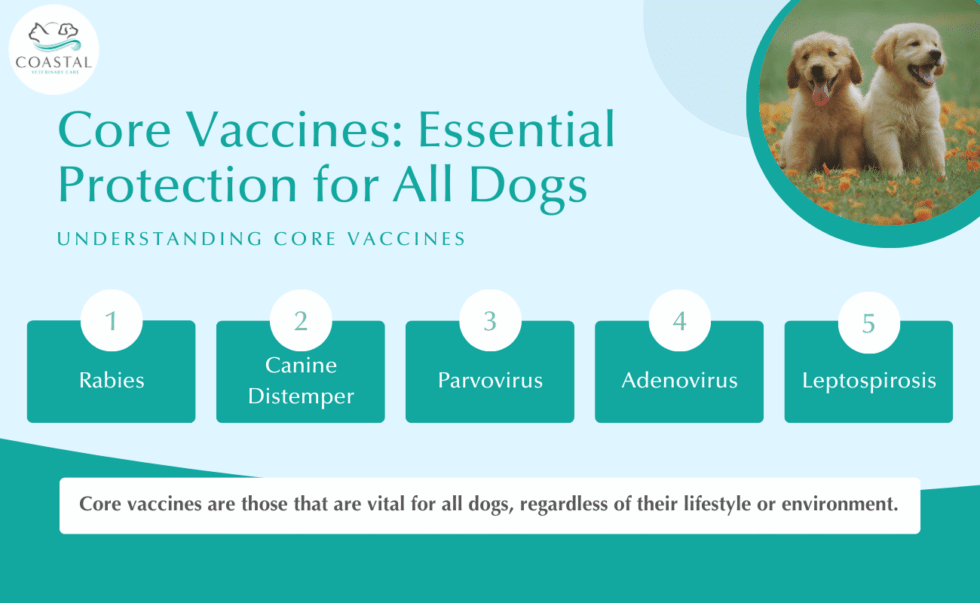
These are considered essential for ALL dogs regardless of lifestyle or location:
- Rabies: A fatal viral disease that affects the central nervous system and can be transmitted to humans
- Distemper (CDV): A highly contagious and often fatal viral disease affecting multiple body systems
- Parvovirus (CPV-2): A highly contagious virus causing severe gastrointestinal distress, especially dangerous for puppies
- Canine Adenovirus (CAV): Causes infectious canine hepatitis, a severe liver disease
Core vaccines are typically administered as a combination vaccine (often called “DHPP” or “DAPP”) with rabies given separately.
Non-Core Vaccines
These are recommended based on individual risk factors such as:
- Bordetella: Protects against kennel cough, important for dogs that are boarded or attend daycare
- Leptospirosis: A bacterial disease transmitted through infected animal urine
- Lyme Disease: Transmitted through tick bites
- Canine Influenza: A respiratory disease that’s highly contagious
Your vet will assess your dog’s lifestyle, geographic location, and exposure risks to determine which non-core vaccines might be appropriate.
How Long Do Vaccines Actually Last?
The duration of immunity (DOI) varies by vaccine type:
- Core Viral Vaccines: Studies have shown that immunity from core vaccines like distemper and parvovirus can last 5-7 years or even longer in some dogs
- Bacterial Vaccines: These typically provide shorter protection periods, often requiring annual boosters
- Rabies: Depending on the specific vaccine and local regulations, rabies vaccines are labeled for either 1-year or 3-year duration
Current Recommendations for Dog Vaccination Schedules
Puppy Vaccination Schedule (6-16 weeks)
Puppies need a series of vaccinations to establish initial immunity:
- DHPP: Series of shots every 3-4 weeks from 6-8 weeks until 16 weeks of age
- Rabies: Typically given at 12-16 weeks of age
- Non-core vaccines: Administered based on risk assessment
Adult Dog Vaccination Schedule
After completing the puppy series and a one-year booster:
- Core Vaccines: Many veterinarians now recommend every three years instead of annually
- Rabies: Every 1-3 years depending on vaccine type and local laws
- Non-core Vaccines: Frequency varies based on risk factors and specific vaccine
Senior Dog Consideration
As dogs age, vaccination protocols may need adjustment:
- Titer testing may be more appropriate for senior dogs
- Individual risk assessment becomes even more important
- Some veterinarians may recommend continuing the three-year protocol while others may prefer to rely on titer testing
Titer Testing: An Alternative to Automatic Revaccination
Antibody titer testing is a blood test that measures the level of antibodies against specific diseases in your dog’s bloodstream. This can help determine if your dog still has adequate immunity from previous vaccinations.
Benefits of titer testing include:
- Avoiding unnecessary vaccinations if immunity is still present
- Reducing potential adverse reactions from over-vaccination
- Providing a more personalized approach to your dog’s healthcare
However, it’s worth noting that titer tests:
- Are often more expensive than vaccines
- May not always correlate perfectly with protection
- May not be accepted by boarding facilities or groomers that require proof of vaccination
Potential Risks of Over-Vaccination
While vaccines are generally safe and effective, there are potential risks associated with vaccinating too frequently:
- Mild reactions like soreness at injection site, low-grade fever, or lethargy
- Rare but serious reactions like allergic responses or anaphylaxis
- Potential long-term issues like immune-mediated diseases (though research is ongoing)
By vaccinating only when necessary, we can minimize these risks while still providing essential protection against dangerous diseases.
Making the Right Decision for YOUR Dog
So, do dogs really need yearly vaccinations? The simple answer is: not necessarily for all vaccines, but it depends on several factors specific to your dog.
Here’s how to make an informed decision:
- Consult with your veterinarian: They can assess your dog’s individual risk factors
- Consider your dog’s lifestyle: Does your dog attend daycare, go to dog parks, or spend time boarding?
- Know your local disease risks: Some diseases are more prevalent in certain regions
- Discuss titer testing: Ask if this might be appropriate for your dog
- Keep accurate records: Maintain a vaccination history to track when boosters might be needed
Remember that while we’re moving away from annual vaccinations for some diseases, regular vet check-ups are still extremely important for your dog’s overall health!
A Balanced Approach
The most important takeaway is that vaccination decisions should be individualized. The current trend in veterinary medicine is moving toward a more tailored approach rather than a one-size-fits-all annual schedule.
As one veterinary expert put it, “The goal is to provide necessary protection without over-vaccinating. We want to maximize benefits while minimizing risks.”
Most vets now recommend a three-year schedule for core vaccines after the initial puppy series and one-year booster. This strikes a balance between ensuring protection and avoiding unnecessary procedures.
Our Take
At our clinic, we believe in evidence-based medicine and individualized care plans. We’ve moved away from automatic annual boosters for core vaccines and instead recommend:
- A thorough risk assessment for each dog
- Core vaccine boosters every three years for most adult dogs
- Annual assessment of need for non-core vaccines
- Titer testing when appropriate
- Annual wellness exams regardless of vaccination schedule
While annual vaccinations might not be necessary for all vaccines or all dogs, regular veterinary care certainly is! Work with your vet to create a vaccination schedule that provides your dog with the protection they need based on their individual risk factors.
Remember: prevention is always better than treatment. Proper vaccination is one of the most effective ways to protect your beloved furry friend from dangerous and potentially fatal diseases.
Have you reconsidered your dog’s vaccination schedule recently? Let us know in the comments below!
Which Dog Vaccines Does My Pet Need?
It’s important to discuss your dog’s lifestyle with your veterinarian so they can make appropriate recommendations regarding vaccines for your dog.

Apart from the necessary core vaccines, there is no one-size-fits-all protocol for vaccinating your dog. Working together with your veterinarian is the best approach to developing the right dog vaccine schedule for your pet.
How Much Do Dog and Puppy Vaccines Cost?
Puppy and dog vaccine costs may vary depending on where you live. Typically, the basic DHLPP vaccine can cost $20–$60 per shot, while the rabies vaccine may be $20–$30. Other non-core vaccine prices can vary but are generally less than $100 per shot.
Vaccines are an essential part of dog and puppy care, and it is important to budget appropriately for them—especially when getting a new puppy. Puppies typically receive several different vaccines, often with boosters. But once they have been fully vaccinated, puppies transition to an adult vaccine schedule of annual (or even every three years) vaccines.
So, while getting a puppy started on vaccines may be an investment, this financial obligation will decrease during adulthood.
To help offset the cost of vaccines, many local animal shelters or humane societies have low-cost or even free vaccine clinics. Your veterinarian may be able to help identify these local options.
Additionally, pet insurance may be a good way to help offset these costs. Many insurance carriers will have wellness or preventative care plans to cover some (or all!) of the core and non-core vaccines.
STOP Vaccinating Your Dog Every Year says Veterinarian
FAQ
What happens if I stop vaccinating my dog?
If you don’t vaccinate your dog, your dog will be vulnerable to deadly diseases such as parvo, distemper and rabies. Not only will your dog die a horrible death if it contracts one of these diseases, it also will put other dogs at risk by potentially spreading the disease.
What happens if a dog doesn’t get yearly shots?
A dog without vaccinations is vulnerable to serious diseases like parvovirus, distemper, and rabies. Symptoms may include lethargy, vomiting, diarrhea, or neurological signs. Immediate veterinary consultation is essential to start a vaccination schedule.
Are there alternatives to yearly dog vaccinations?
The titer test is a blood test that measures the presence (and level) of certain antibodies in your dog’s blood. If antibodies against a certain disease are present in your dog’s system, further vaccinations are likely unnecessary.
Is it okay to skip the dog vaccine?
Missing a scheduled vaccine dose for a puppy typically does not require restarting the entire series. It is generally safe to administer the missed second shot as soon as possible. Vaccination timing is important to ensure immunity, but slight delays can be managed by consulting a veterinarian.