
Have you ever seen your furry friend shaking their head like crazy or scratching their ears till they cry? You might be wondering “do ear mites hurt dogs?” The short answer is YES – ear mites are not just annoying, they can cause significant pain and discomfort for our canine companions.
As a pet parent myself, I’ve seen firsthand how these tiny parasites can turn a happy pup into a miserable mess Today, I’m gonna share everything you need to know about ear mites in dogs – from identifying symptoms to effective treatments that’ll give your pooch relief.
What Are Ear Mites in Dogs?
Ear mites (scientific name Otodectes cynotis) are tiny parasites that take up residence in your dog’s ear canals. Though they’re relatively uncommon in dogs compared to cats, they still represent an important health concern for pet owners to understand.
These microscopic bugs are particularly problematic for:
- Puppies
- Dogs who spend lots of time outdoors
- Pups who aren’t on regular monthly preventatives
These pesky parasites live in the ear canal where they feed on ear wax and skin oils. While they’re super tiny (you can’t see them with the naked eye), they can cause major discomfort.
Do Ear Mites Actually Hurt Dogs?
Absolutely. Ear mites don’t just cause mild irritation – they can be downright painful for your dog. Here’s why:
- They cause extreme itching that drives dogs to scratch relentlessly
- The constant scratching leads to inflammation and raw, tender skin
- The ear canal becomes red, swollen, and sensitive to touch
- Secondary infections often develop, adding to the pain
- In severe cases, they can even lead to hearing loss if left untreated
One thing I’ve noticed when treating dogs with ear mites is that their behavior changes dramatically. A normally playful dog might become irritable or withdrawn because they’re in constant discomfort.
How to Tell If Your Dog Has Ear Mites: Key Symptoms
Ear mites in dogs typically present with several noticeable symptoms. If your dog is experiencing these signs, they might be suffering from ear mites:
| Common Symptoms | Description |
|---|---|
| Head shaking | Frequent, sometimes violent head shaking |
| Ear scratching | Persistent pawing or scratching at ears |
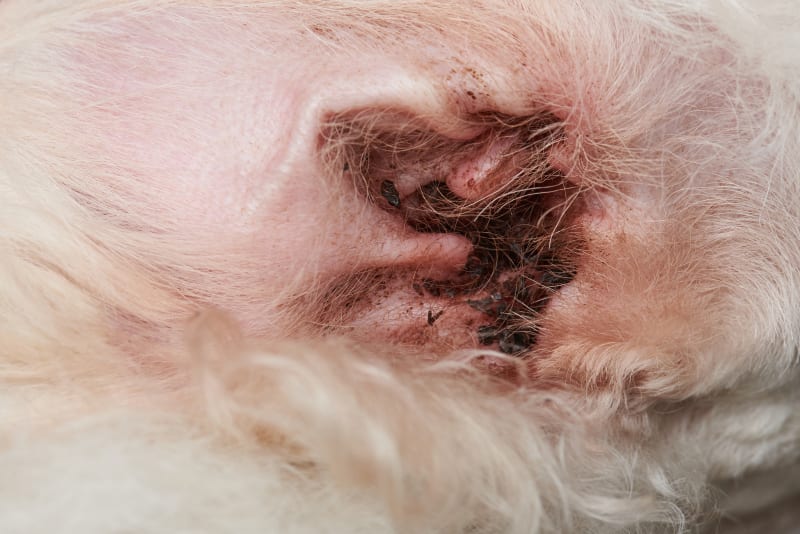
| Dark discharge | Thick brown or black debris in ear canal (looks like coffee grounds) |
| Ear odor | Unpleasant smell coming from ears |
| Inflammation | Red, swollen ear canals |
| Pain response | Yelping or pulling away when ears are touched |
| Head tilt | Tilting head to one side persistently |
| Hair loss | Around ears and eyes due to scratching |
| Decreased appetite | May eat less due to discomfort |
| Lethargy | Less energy or enthusiasm than normal |
My neighbor’s Golden Retriever had ear mites last year, and the poor thing couldn’t stop shaking his head. The dark, crumbly discharge in his ears was a dead giveaway – it looked almost like coffee grounds! That’s a classic sign of ear mites.
How Dogs Get Ear Mites: Transmission and Risk Factors
Understanding how ear mites spread can help you protect your dog from infection. These parasites are highly contagious and can be transmitted through:
- Direct contact with an infected animal (dog or cat)
- Shared environment with infected pets
- Contaminated bedding or toys
What’s super important to remember is that if one pet in your household has ear mites, all pets are likely to become infected. These little buggers spread like wildfire!
Dogs who aren’t on regular monthly preventatives are at highest risk because they lack parasite protection. Puppies are also more susceptible to ear mite infections than adult dogs.
How Vets Diagnose Ear Mites in Dogs
If you suspect your dog has ear mites, a trip to the vet is necessary for proper diagnosis. Here’s what typically happens during the diagnostic process:
-
Physical examination: Your vet will look closely at your dog’s ears using an otoscope to examine the ear canals.
-
Ear cytology: This is the preferred diagnostic test. The vet will:
- Use a cotton swab to collect debris from the ear canal
- Mix the sample with mineral oil on a glass slide
- Examine it under a microscope to identify mites or eggs
-
Additional testing: The vet might also check for secondary infections (bacterial or yeast) that often accompany ear mites.
We took our terrier mix to the vet last summer with suspected ear mites, and the cytology confirmed it. The vet showed us the slide with the actual mites moving around – it was gross but fascinating! Those tiny bugs were causing so much discomfort for our pup.
Effective Treatments for Ear Mites in Dogs
Treating ear mites requires a multi-pronged approach. Here’s what’s typically involved:
1. Ear Cleaning
The first step is thorough ear cleaning to remove debris and allow medications to work effectively. Vets often use products like:
- Epi-Otic® Advanced for general cleaning
- TrizULTRA™+ Keto Flush if there’s a secondary bacterial infection
These cleansers are usually used once daily until the mites and any infections resolve.
2. Parasite Medications
The main treatment involves flea, tick, and heartworm preventatives, which are highly effective against ear mites even though they’re not directly labeled for this use. Options include:
- Topical treatments: Applied between the shoulder blades (like Advantage Multi™)
- Oral medications: Given by mouth (like Bravecto®)
Usually, a single treatment is enough to eliminate ear mites, but your vet will determine the best course of action.
3. Additional Medications
If your dog has developed secondary infections or is in significant pain, your vet might also prescribe:
- Topical ointments like Animax® for bacterial or yeast infections
- Steroids (topical or oral, like prednisone) to reduce inflammation and itching
I remember when our dog had ear mites, the vet prescribed a topical preventative plus ear drops. The difference in his behavior after just 2-3 days of treatment was amazing! He stopped scratching and seemed so much happier.
Recovery Timeline and Follow-Up Care
Most dogs start feeling better within 1-2 days after treatment begins, but complete elimination of ear mites can take up to 30 days. Follow-up care typically includes:
- Completing the full course of prescribed medications
- Follow-up vet visit with repeat ear cytology to confirm the mites are gone
- Additional treatment if ear mites or infections persist
Don’t forget – if one pet in your home has ear mites, all pets should be treated simultaneously to prevent reinfection.
Preventing Ear Mites in Dogs
Prevention is always better than cure! Here’s how to protect your dog from ear mites:
- Regular preventatives: Keep your dog on year-round flea, tick, and heartworm preventatives
- Weekly ear cleaning: Regular cleaning removes debris and reduces infection risk
- Prompt isolation: If one pet shows symptoms, separate them until diagnosed and treated
- Environment cleaning: Wash pet bedding and disinfect areas where infected pets spend time
We’ve learned our lesson and now make sure our dog never misses his monthly preventative medication. It’s way easier to prevent these parasites than to deal with them once they’ve set up shop in your dog’s ears!
Can Humans Get Ear Mites From Dogs?
This is a question I get asked a lot! The good news is that it’s highly unlikely for humans to get ear mites from dogs. However, if an ear mite from a dog jumps onto and bites a person, it might cause temporary itchiness or a skin rash.
Still, it’s a good idea to wash your hands after handling a dog with ear mites, just to be on the safe side.
Common Questions About Ear Mites in Dogs
Can ear mites infest your house?
Ear mites can be found throughout your home, especially in bedding or toys that an infected animal has touched. However, they don’t survive long in the environment, so proper cleaning and disinfection should eliminate them quickly.
Do I need to take my dog to the vet for ear mites?
Yes, absolutely. Dogs with ear mites must be treated by a veterinarian. Prescription medications are necessary to eliminate the ear mites and reduce inflammation in the ear canal. This isn’t something you can effectively treat at home.
How serious are ear mites in dogs?
While ear mites aren’t considered a medical emergency, they cause significant discomfort and pain for dogs. Left untreated, they can lead to secondary infections or even hearing loss. Therefore, prompt treatment is important.
Final Thoughts
So, do ear mites hurt dogs? Yes, they absolutely do. These tiny parasites cause extreme itching, pain, and discomfort that no dog should have to endure.
If you notice your dog shaking their head excessively, scratching at their ears, or showing any of the symptoms we’ve discussed, don’t wait – schedule a vet appointment right away. The sooner your pup gets treatment, the sooner they’ll get relief.
Remember, keeping your dog on regular monthly preventatives is the best way to protect them from ear mites and other parasites. Your furry friend depends on you to keep them comfortable and pain-free!
Have you ever dealt with ear mites in your dog? I’d love to hear about your experiences in the comments below!
How Long Does It Take to Get Rid of Ear Mites?
A single dose of NexGard® for Dogs or NexGard SPECTRA® for Dogs is highly effective at treating ear mites in puppies and dogs. If the ear irritation persists, or a secondary ear infection requiring additional treatment is present, it’s best to consult with your vet.
Can You Get Ear Mites From Your Dog?
With all this talk of nasty little parasites, you may be wondering if you can catch ear mites. The good news is that the likelihood of ear mites moving from dogs to humans is very small.