
Scruffing a dog is a training technique still recommended by some dog owners for teaching puppies right from wrong. It’s often used for controlling or restraining older dogs too.
However, scruffing your dog relies on training principles which, whilst once the cornerstone of canine education, have since been debunked. And thankfully replaced with more modern methods backed by behavioral science.
So if a well-meaning person has recommended scruffing your dog, here’s what you need to know about where that idea came from, whether it can ever work, and how it can backfire. And, what kinder, more effective training strategies to employ instead.
Your dog’s scruff is a loose area of skin at the nape of his (or her) neck. It extends from roughly the base of their skull to the bottom of their shoulder blades. And it’s about as wide as the space between their shoulder blades. The original purpose of the scruff was for your dog’s mom to move them around before they are old enough to walk. For example to move them to a new nesting spot if the original one stopped feeling safe. Or to retrieve a pup who had wiggled too far away from her.
Not long after they are old enough to stand and walk independently, puppies also become too heavy to carry by the scruff. Their mom instinctively knows when this point has been reached, and stops doing it. The skin will always remain a little bit loose at the scruff compared to the rest of their body. But its only remaining function is as a handy place for your veterinarian to administer shots!
Have you ever wondered if pulling your dog’s skin hurts them? Maybe you’ve noticed that loose fold on your pup’s neck and given it a gentle tug, or perhaps you’ve grabbed their scruff during playtime. As a dog owner myself, I’ve always been curious about this question, so I decided to dive deep into the topic to help fellow pet parents understand what our furry friends experience when we handle their skin.
The Short Answer: Yes, It Can Hurt
Yes, pulling a dog’s skin can cause pain and discomfort. Dogs have sensitive skin with nerve endings that detect pressure and touch. Forceful pulling can lead to skin damage, open wounds, and even infections if not handled with care. Always handle your dog gently during grooming or playtime to prevent injuries.
Understanding Your Dog’s Skin: More Than Just a Covering
A dog’s skin is much more than just the fuzzy exterior we see and pet It’s actually their largest organ and serves several crucial functions
- Acts as a protective barrier against harmful bacteria and viruses
- Helps regulate body temperature
- Contains nerve endings that detect pressure, heat, cold, and pain
- Produces vitamin D
- Provides sensory information about their environment
Dogs actually have relatively thin skin compared to humans, making them more susceptible to damage from scratching, pulling, or aggressive handling. Their skin consists of three layers:
- Epidermis – the outer layer
- Dermis – the middle layer
- Hypodermis – the innermost layer (subcutaneous tissue)
Each layer has a specific function in maintaining your dog’s overall health, and disrupting any of these layers through rough handling can cause problems.
What Actually Happens When You Pull Your Dog’s Skin?
When you pull on your dog’s skin, several things happen:
- The epidermis separates from the underlying dermis
- This separation triggers pain receptors
- Your dog experiences a reflex called the “skin twitch response”
- They instinctively try to move away from the discomfort
- If they can’t escape or feel threatened by repeated tugs, they may become aggressive
- Continuous pulling can cause blood vessels beneath the skin to rupture
- This rupturing leads to bruising or hematoma formation (swelling from blood accumulation)
I remember when my neighbor’s child pulled too hard on my dog’s loose neck skin. Though my dog is normally gentle, he yelped and became visibly distressed. This was a clear indication that the pulling caused pain, even though the child meant no harm.
The Scruff Myth: A Special Case
Many people believe grabbing a dog by the scruff (the loose skin at the back of the neck) is harmless because mother dogs carry their puppies this way. However this is a misunderstanding of canine anatomy and development.
While mother dogs do carry puppies by the scruff this is
- Only done with young puppies
- Only for short periods
- Only by the mother dog who knows exactly how to do it safely
- Made possible because puppies have a temporary reflex that makes them go limp when picked up this way
Adult dogs no longer have this reflex, and their body weight is far too heavy to be supported by the scruff without causing pain and potential injury. When an adult human grabs an adult dog’s scruff, it can:
- Cause significant pain
- Damage the skin and underlying tissues
- Break trust between you and your dog
- Lead to fear or aggression
Common Situations Where Dogs’ Skin Gets Pulled
Unfortunately, there are several everyday situations where dogs’ skin might get pulled:
1. Leash pulling
When walking your dog with a collar, aggressive tugs can cause whiplash injury and reduce oxygen flow to vital areas. This is why many vets and trainers recommend harnesses instead of collars, especially for dogs who pull on leash.
2. Grooming sessions
Brushing out mats or tangles can pull on the skin if not done carefully. Always use appropriate grooming tools and techniques.
3. Playtime
Rough play, especially with children who don’t understand a dog’s physical boundaries, can lead to skin pulling.
4. Handling during baths
Trying to keep a squirming dog in the tub can sometimes result in grabbing and pulling their skin.
How To Tell If You’ve Hurt Your Dog By Pulling Their Skin
Dogs can’t tell us when they’re in pain with words, but they communicate through body language. Signs that skin pulling has hurt your dog include:
- Yelping or crying out
- Flinching or moving away from your touch
- Licking or focusing on the affected area
- Showing signs of aggression like growling or snapping
- Changes in behavior like becoming withdrawn or nervous
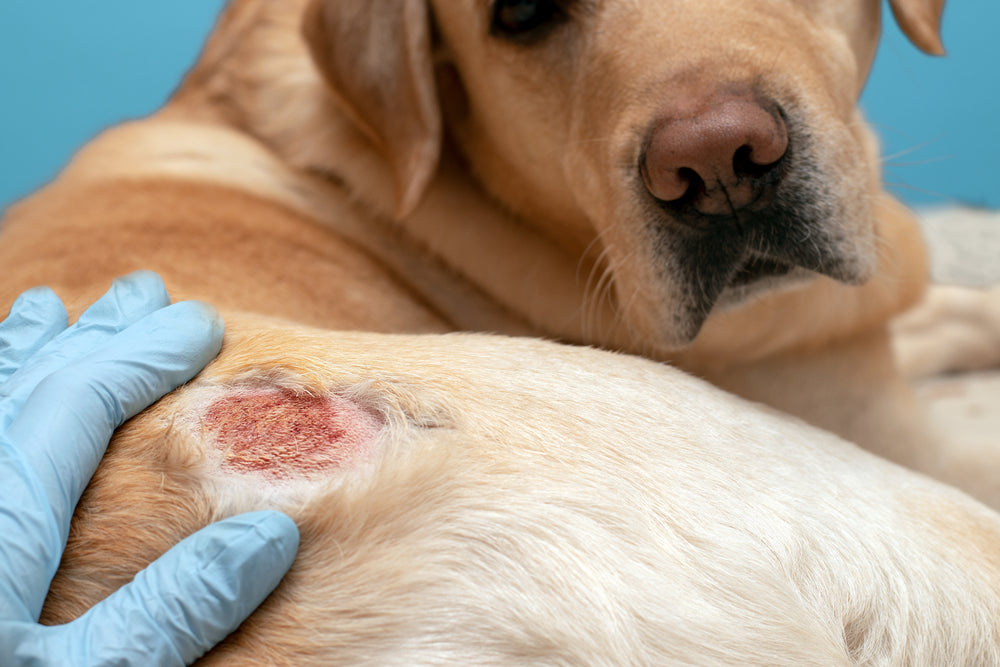
- Visible signs of injury like redness, swelling, or bruising
What To Do If You Accidentally Pull Too Hard
Accidents happen, and if you find yourself in a situation where you’ve accidentally pulled your dog’s skin too hard:
- Check for signs of redness, swelling, or damage
- Offer reassurance through gentle words and petting
- Give them a small treat as a positive association
- Monitor the area for any developing issues
- If you notice open wounds, bleeding, or serious damage, contact your vet immediately
5 Important Facts About Dog Skin Sensitivity
Here are five essential facts that all dog owners should know about their pets’ skin sensitivity:
1. Sensitivity varies by breed and individual
Some breeds have more sensitive skin than others, and individual dogs may have their own sensitivity levels. Breeds with thin coats or minimal body fat often have more sensitive skin.
2. Stretching can be uncomfortable
Dogs have specialized sensory receptors in their skin that detect pressure changes and force. Sudden stretching of these tissues can cause discomfort or pain.
3. Even small injuries can have long-term effects
Small cuts or injuries from pulling can lead to infections or scarring, which may decrease your dog’s resistance to skin diseases over time.
4. Your dog’s reaction is meaningful
Pay attention to your dog’s body language and vocalizations when handling their skin. They will usually let you know if something hurts.
5. Prevention is better than cure
Rather than testing how much pulling your dog can tolerate, focus on gentle handling techniques that avoid the issue altogether.
Better Ways To Handle Your Dog
Instead of pulling or tugging at your dog’s skin, try these gentler approaches:
- For control: Use properly fitted harnesses rather than pulling on collars
- For grooming: Work with a professional groomer or learn proper techniques
- For play: Provide appropriate toys for tug games rather than using your hands
- For training: Use positive reinforcement methods that don’t rely on physical correction
- For bathing: Use calming techniques and secure footing rather than restraint
Teaching Children About Proper Handling
Kids love dogs but often don’t understand how to interact with them safely. Teach children:
- To pet gently, going with the direction of the fur
- Never to pull on a dog’s skin, ears, tail, or fur
- To respect a dog’s personal space
- How to recognize signs that a dog is uncomfortable
- That dogs have feelings too and can experience pain
The Bottom Line: Respect Your Dog’s Body
Our dogs trust us to care for them and treat them with kindness. Part of that responsibility is understanding their physical sensitivities and respecting their boundaries. Pulling on a dog’s skin isn’t just uncomfortable for them—it can damage your relationship by breaking that trust.
I’ve learned through years of dog ownership that gentle handling builds stronger bonds. When my dog knows I’ll never hurt him, even accidentally, he’s more relaxed and confident in all our interactions.
Remember, your dog depends on you to understand their needs and limitations. By handling them with care and teaching others to do the same, you’re ensuring they stay happy, healthy, and trusting of the humans in their life.
So next time you’re tempted to tug on that adorable loose skin, think twice—your furry friend will thank you for your consideration!
Forcing the puppy to hide the behavior
Even if the same puppy parent only scruffs their puppy when they catch it in the act, this can simply drive the puppy to conceal what they’re doing. Don’t want to get caught chewing a baseboard and be scruffed? Then chew the baseboard while mom and dad aren’t looking, or wiggle behind the sofa and chew that bit.
Failure of timing
Puppies live in the moment, and they have no concept of how your treatment of them relates to something they did more than a second ago. If a puppy parent finds their puppy sitting quietly next to a freshly-chewed baseboard and scruffs them, they’re punishing the quiet sit, not the chewing.
Doctor Teaches: HOW TO REMOVE A TICK
FAQ
Does it hurt a dog when you pick them up by their skin?
They explain that while it may not cause immediate harm in all cases, it can lead to discomfort, fear, or even injury in some dogs. They also emphasize the importance of using alternative methods to lift and handle adult dogs safely.
Does it hurt dogs to pull their skin?
Pulling a small dog by the scruff can cause pain or discomfort, especially if done abruptly. Symptoms include yipping, flinching, or avoidance behavior. The scruff is sensitive; gentle handling is essential. Instead, guide dogs calmly using treats or coaxing.
Why do dogs go limp when you grab their scruff?
Dogs may go limp when their scruff is grabbed due to a reflex inherited from their puppy days, where a mother dog would carry them by the scruff, causing them to relax and become limp to make it easier to transport them safely. This “puppy reflex“ is a genetically programmed survival mechanism, but it fades as the dog matures and can become a painful or stressful experience for adult dogs, who lack the necessary physical characteristics to be safely lifted by the scruff.
Do dogs like when you pull their skin?
Whining – If you try to lift an adult dog by the scruff, or even a puppy, but do so improperly, they will start whining and yelping because this causes them pain and might even cause harm. Weakness – If the dog accepts you as the dominant one, touching the scruff will be met with lying down, even becoming a bit limp.