
Dr. Berst is the Cross Brand Medical Lead with Zoetis. In this role she serves as the medical partner for both the veterinary and consumer marketing teams. Heather has been involved with both the state and national veterinary organizations. She was editor of the quarterly PVMA magazine and was the delegate for Pennsylvania for the AVMA House of Delegates. She was on the Penn Vet Alumni Board and was a board member for the Collaborative Care Coalition. Heather holds a veterinary degree from University of Pennsylvania School of Veterinary Medicine and in April 2018 she completed a master’s degree in Health Communications from Southern New Hampshire University. Before joining industry, Heather was a veterinarian in small animal private practice, and she continues to do relief work in practice. She currently resides in Asheville, NC with her husband Rich and rescue Chinese Crested dog, Dottie. She also has a horse she shows in the jumpers, Elroy.
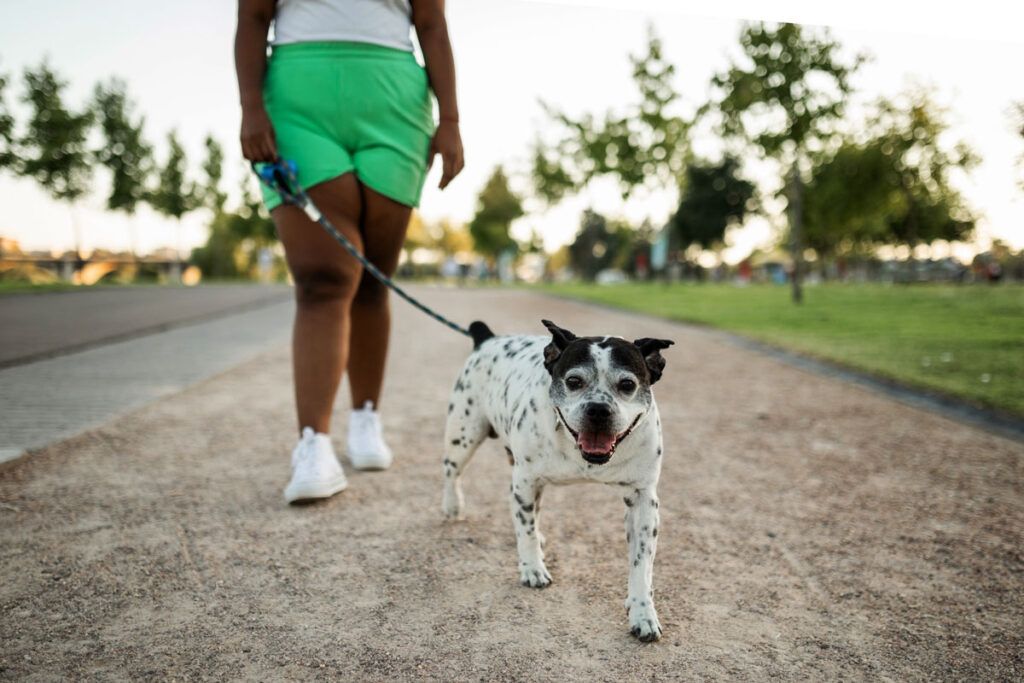
If your furry friend has been diagnosed with arthritis, you’re probably worried about how to keep them comfortable while maintaining their quality of life. One of the most common questions pet parents ask is whether they should continue walking their arthritic dog or if that might make things worse. The good news? Walking is actually beneficial for dogs with arthritis – but you need to do it right!
As a dog owner myself, I’ve dealt with this exact situation with my senior Lab, Buddy. At first, I was scared to walk him at all, thinking I might hurt him more. But after researching and talking with our vet, I discovered that the right kind of walking routine can actually improve his condition significantly.
The Truth About Exercise and Canine Arthritis
Historically, many vets recommended “exercise restriction” for dogs with arthritis. But guess what? That advice was actually incorrect! Limiting activity too much can cause:
- Weight gain (which puts MORE pressure on painful joints)
- Increased joint stiffness
- Muscle loss
- Decline in functional abilities
Studies now show that regular, appropriate exercise is crucial for arthritic dogs. In fact, one study found that dogs with hip arthritis who exercised for more than 60 minutes daily had lower lameness scores than dogs exercising less than 20 minutes daily. That’s pretty compelling evidence!
How Walking Benefits Arthritic Dogs
Walking your arthritic dog provides multiple benefits that help manage their condition:
1. Maintains Joint Health
Walking helps lubricate the joints and keeps them mobile This reduces stiffness and improves range of motion, The gentle movement encourages production of synovial fluid – the natural lubricant that cushions joints and reduces friction
2. Strengthens Supporting Muscles
Regular walking builds muscle strength around affected joints These stronger muscles provide better support and stability, which reduces stress on the painful joints themselves Think of strong muscles as natural shock absorbers!
3. Weight Management
Let’s be honest – obesity makes arthritis WAY worse. Each extra pound puts about four pounds of additional pressure on weight-bearing joints! Walking helps burn calories and maintain a healthy weight, which can dramatically improve your dog’s comfort and mobility.
4. Mental Stimulation
Dogs need mental stimulation as much as physical exercise. Walking provides new smells, sights, and potential social interactions that keep your dog’s mind engaged. This helps combat the depression and boredom that often accompany chronic pain.
The Right Way to Walk an Arthritic Dog
Now, this is where many pet parents go wrong. You can’t just walk an arthritic dog the same way you’d walk a healthy, young pup. Here’s how to modify your walking routine:
Short and Frequent is Better Than Long and Infrequent
Instead of one long walk, aim for multiple shorter walks throughout the day. This approach helps:
- Keep joints lubricated
- Prevent stiffness
- Avoid overexertion
Try 2-3 walks of 10-15 minutes each, rather than one 30-45 minute walk. My Buddy does so much better with this approach – he’s actually more energetic now than when we used to do one longer walk!
Let Your Dog Set the Pace
This isn’t the time for power walking! Allow your dog to move at a comfortable pace. A gentle stroll is much more beneficial than trying to maintain a brisk pace. Watch your dog closely – they’ll tell you what speed works for them.
Choose the Right Walking Surface
The walking surface makes a HUGE difference for arthritic dogs. Opt for:
- Soft surfaces like grass or dirt trails (GOOD)
- Flat, even terrain (GOOD)
- Avoid concrete and asphalt when possible (BAD)
- Avoid hills and very uneven surfaces (BAD)
I’ve noticed Buddy does much better on our walks through the local park’s grassy areas compared to neighborhood sidewalks. The impact reduction makes a real difference!
Use Proper Walking Gear
The right equipment can make walks more comfortable:
- Harness instead of collar: Distributes pressure more evenly and reduces strain on the neck
- Short, standard leash: Avoid retractable leashes that encourage pulling
- Supportive booties: Can provide traction and cushioning on hard surfaces
Consider the Formula: Force = Mass × Acceleration
Sorry for the physics lesson, but this is super important! To reduce force on arthritic joints:
- Reduce Mass: Keep your dog at a healthy weight or try water-based exercise (swimming or underwater treadmill)
- Decrease Acceleration: Avoid activities with high impact like running, jumping, or rough play
Signs You’re Walking Your Arthritic Dog Too Much
It’s crucial to monitor your dog during and after walks. Signs that you might be overdoing it include:
- Limping or increased lameness
- Stiffness that lasts more than a few minutes after walking
- Reluctance to move or get up after resting
- Excessive panting
- Lagging behind during walks
- Irritability or behavior changes
- Licking or chewing at affected joints
If you notice these signs, reduce the duration or intensity of your walks and consult your vet.
A Complete Arthritis Management Plan
While walking is important, it’s just one piece of the puzzle. A comprehensive approach to managing canine arthritis includes:
Medication and Supplements
Work with your vet to find the right pain management protocol. This might include:
- NSAIDs for pain and inflammation
- Joint supplements like glucosamine and chondroitin
- Omega-3 fatty acids for their anti-inflammatory properties
Weight Management
I cannot stress this enough – maintaining ideal body weight is CRITICAL for arthritic dogs. Even a small amount of weight loss can make a significant difference in comfort level.
Alternative Therapies
Consider adding these to your dog’s treatment plan:
- Hydrotherapy (swimming or underwater treadmill)
- Acupuncture
- Massage therapy
- Laser therapy
Activities to Avoid for Dogs With Arthritis
Some activities put too much stress on arthritic joints and should be avoided:
- Jogging/running with your dog
- Flyball
- Agility courses
- Frisbee or jumping to catch balls
- Any sport involving jumping, running, or explosive movements
Good Activities for Arthritic Dogs
Instead, focus on these joint-friendly activities:
- Leash walks on varied terrain like trails
- Swimming (be careful about entry/exit points)
- Underwater treadmill therapy
- Nosework/scent detection games
- Outings to pet-friendly stores or cafes
- Canine freestyle (dancing with your dog – it’s a real thing, look it up!)
My Personal Experience
When Buddy was first diagnosed with arthritis in his hips and elbows, I panicked and almost stopped walking him completely. Big mistake! Within weeks, he gained weight and seemed more stiff and uncomfortable than ever.
Our vet recommended we try 3 shorter walks daily instead, and WOW what a difference! Now we do a 10-minute morning walk, a 15-minute afternoon stroll, and another 10 minutes before bed. He’s moving better, maintaining a healthier weight, and seems happier overall.
We’ve also incorporated a routine where I gently massage his joints before each walk as a “warm up” and let him rest comfortably afterward. This has made a huge difference in his mobility.
Final Thoughts
So, does walking help dogs with arthritis? Absolutely YES – when done properly! The key points to remember:
- Regular, controlled exercise is beneficial for arthritic dogs
- Short, frequent walks are better than long, infrequent ones
- Choose appropriate surfaces and walking gear
- Monitor your dog closely for signs of discomfort
- Combine walking with other aspects of arthritis management
Don’t let arthritis stop you and your furry friend from enjoying walks together. With some thoughtful modifications, you can keep your dog moving comfortably well into their senior years.
Remember, every dog is different, so work closely with your veterinarian to create the walking routine that’s best for YOUR dog’s specific needs. And don’t forget – those daily walks benefit your health too! It’s a win-win for both ends of the leash.
Have you found a particular walking routine that works well for your arthritic dog? I’d love to hear about your experiences in the comments below!
Sign-up for the Latest Vet‑Approved Health Tips, Giveaways, and MoreBy signing up, you agree to our
IMPORTANT SAFETY INFORMATION: For use in dogs only. Women who are pregnant, trying to conceive or breastfeeding should take extreme care to avoid self-injection. Hypersensitivity reactions, including anaphylaxis, could potentially occur with self-injection. Librela should not be used in breeding, pregnant or lactating dogs. Librela should not be administered to dogs with known hypersensitivity to bedinvetmab. The most common adverse events reported in a clinical study were urinary tract infections, bacterial skin infections and dermatitis. See full Prescribing Information.
INDICATIONS: For the control of pain associated with osteoarthritis in dogs.
See the Client Information Sheet for more information about Librela.
Tips for Managing Arthritis in Dogs
FAQ
What is the best exercise for dogs with arthritis?
Swimming. The buoyancy of the water reduces the pressure on the joints, making it easier for dogs to move and exercise. The cohesion and turbulence of water provide a resistant force when moving through it, helping increase muscle strength, endurance, and the range of motion of the joints.
How can I strengthen my dog’s back legs with arthritis?
Tips on How to Strengthen old dog’s hind legs
It is recommended to take your furry companion for brief yet consistent walks on a daily basis. This will aid in gradually restoring their hind-leg muscles.
How often should I walk a senior dog with arthritis?
Leisurely walks: Short, frequent walks (10–15 minutes, 2–3 times a day) are better than one long walk. Let your dog sniff and go at their own pace.Jul 1, 2025
What is the fastest way to relieve arthritis pain in dogs?
Evidence-based medicine suggests that fish oil is more effective than Glucosamine products at alleviating symptoms associated with arthritis, so we suggest …