
Every once in a while the topic of a “dry-mouth” Newfoundland pops up in conversation and it always makes me cringe a little.
People use this term to describe a Newfoundland that doesn’t drool or a Newfie that produces less drool than the typical Newfie.
Dog breeders will often use this term to market puppies saying that their Newfies don’t drool or drool less.
Have you ever seen a magnificent Newfoundland dog walking down the street, their majestic coat flowing in the breeze, only to notice strings of drool hanging from their jowls? If you’re considering adding one of these gentle giants to your family, you’ve probably wondered: do Newfoundland dogs drool?
Well, I’ve been living with these big fluffy beasts for years, and I’m here to give you the unfiltered truth about Newfies and their slobber situation Spoiler alert yes, they drool, but there’s more to the story than just that simple answer
The Drool Reality: Do All Newfoundlands Drool?
Let’s get straight to the point – all Newfoundland dogs drool to some extent. It’s part of their genetic makeup and breed characteristics. However, there’s a common misconception that every single Newfie is constantly walking around with waterfalls of slobber pouring from their mouths 24/7.
The truth is more nuanced While every Newfoundland will drool at some point (they’re Newfies, after all!), the amount and frequency vary significantly from dog to dog. Some Newfies are what we affectionately call “drool machines,” while others might be relatively dry-mouthed in comparison.
As one experienced Newfie owner put it, “Some drool more than others Some can make drool jewelry while some can barely manage to spit out a tiny string”
Why Do Newfoundlands Drool So Much?
Before you run away screaming at the thought of drool, let’s understand why these lovable giants tend to be on the slobbery side:
-
Facial Structure: Newfoundlands have loose jowls and lips that don’t seal tightly, which naturally leads to drool escaping.
-
Genetics: Drooling is literally built into their DNA. They’re one of the top 10 iconic dog breeds known for drooling.
-
Working Heritage: As water rescue dogs, Newfies have physical characteristics that help them in their traditional roles, including those loose jowls.
-
Anticipation & Excitement: Just like humans might salivate at the thought of a delicious meal, Newfies drool more when excited or anticipating food.
-
Temperature Regulation: When it’s hot, Newfies may drool more as part of their cooling mechanism.
The “Dry-Mouthed Newfie” Myth
Here’s something you should know: there is NO SUCH THING as a completely “dry-mouthed” Newfoundland. If anyone tries to sell you a Newfie puppy with promises of “no drool guaranteed,” they’re either misinformed or intentionally misleading you.
As one passionate Newfie owner states: “Anyone who tells you otherwise is lying and if they’re a breeder, shame on them. No reputable Newfoundland breeder can guarantee that a Newf won’t drool unless they are intentionally trying to breed out that trait which is altering the breed.”
Attempting to breed out drooling would mean altering fundamental physical characteristics of the breed, which most responsible breeders consider wrong and potentially harmful to the breed’s integrity.
Drool Levels: The Slobber Spectrum
From my experience with Newfies (and talking to countless other owners), I’ve noticed there’s what I call a “slobber spectrum.” Here’s a rough breakdown:
-
Minimal Droolers: These Newfies only really drool when drinking water, eating, or extremely excited. You might see occasional strings of drool but nothing excessive.
-
Moderate Droolers: These dogs have regular drool moments throughout the day, especially around food or during excitement. You’ll definitely notice it, but it’s manageable.
-
Super Soakers: These are the champion droolers! They can fling drool across a room, create actual puddles, and leave drool strings hanging from furniture, walls, and ceiling fans (yes, really). Their owners have drool cloths stashed in every room.
Most Newfies fall somewhere in the middle of this spectrum, but remember – even the “minimal” droolers still drool more than many other dog breeds.
Real-Life Drool Scenarios (The Good, The Bad, The Slobbery)
Let me share some real-life Newfie drool moments that every owner can relate to:
-
The Water Bowl Aftermath: After taking a drink, Newfies create their own personal river trail through your house. As one owner described it: “Did you ever see a Newfie not leave a trail of water from the water bowl through the house? They create their own river every single time they take a drink.”
-
The Food Anticipation Drool: When you’re preparing their dinner, the kitchen floor becomes a slip hazard zone from all the anticipatory drooling.
-
The Greeting Ceremony: When they’re excited to see you come home, prepare for drool strings to potentially land on your clothes, hair, or face during the welcoming committee.
-
The Car Ride Window Drool: If your Newfie hangs their head out the car window, be prepared for drool streaks down the side of your vehicle.
-
The Shake: Perhaps the most notorious of all – when a Newfie with a drooly mouth decides to shake their head. Drool can fly EVERYWHERE, including walls, ceilings, furniture, and unsuspecting humans.
Living With a Drooling Newfie: Practical Tips
After years of Newfie ownership, I’ve developed some coping strategies for dealing with the drool factor:
1. Embrace the Drool Cloth Army
Keep drool cloths or small towels scattered throughout your house. I have them in every room, in my car, and in my purse. These aren’t just convenient – they’re essential Newfie owner accessories!
2. Consider Drool Bibs or Bandanas
For particularly drooly Newfies, specially designed drool bibs can help catch some of the slobber before it hits your floors. They won’t eliminate the problem, but they can reduce cleanup time.
3. Stay Hydrated (Your Dog, That Is)
Make sure your Newfie always has access to fresh water. Proper hydration can help minimize excessive drooling, especially during hot weather.
4. Mealtime Management
Try not to get your Newfie overly excited before meals, as this can trigger drool fountains. Create calm, consistent feeding routines.
5. Regular Grooming
The drool that doesn’t hit your floors often ends up on your dog’s chest fur, creating gross, hardened “drool stalactites.” Regular grooming helps manage this.
6. Protect Your Furnishings
If you’re precious about your furniture, either train your Newfie to stay off it or use washable covers. Drool can leave stains on some fabrics.
7. Magic Erasers Are Your Friend
Keep a stock of Magic Erasers for those dried drool streaks that inevitably appear on walls and woodwork.
8. Acceptance Is Key
Perhaps the most important strategy: accept that drool is part of the Newfie package. The love, loyalty, and gentle nature of these dogs far outweigh the inconvenience of a little (or a lot of) slobber.
Should Drool Be a Deal-Breaker?
Here’s my honest opinion after years with these giant slobber monsters: if drool genuinely disgusts you to the point where you can’t imagine living with it daily, a Newfoundland probably isn’t the right breed for you.
As one Newfie enthusiast bluntly puts it: “Don’t like drool? Don’t get a Newfie.”
There’s absolutely no shame in recognizing this isn’t the right fit for your lifestyle or preferences. These dogs deserve owners who love them completely – drool and all. There are plenty of wonderful, less drooly dog breeds that might be a better match for you.
Beyond the Drool: What Makes Newfies Worth It
Despite the drool factor, Newfoundlands remain incredibly popular family dogs. Why? Because they offer so much more than just a slobber challenge:
-
Unmatched Gentleness: They’re known as “nanny dogs” for their exceptional patience and gentleness with children.
-
Loyal Companionship: The bond between a Newfie and their family is extraordinarily strong and devoted.
-
Intelligent and Trainable: Despite their sometimes goofy demeanor, they’re highly intelligent working dogs.
-
Brave and Protective: While gentle, they have a natural protective instinct toward their families.
-
Swimming Superheroes: Their natural water rescue abilities are amazing to witness.
For those of us who’ve fallen in love with the breed, we quickly reach a point where we barely notice the drool anymore. It just becomes a small price to pay for having such an incredible canine companion in our lives.
The Final Verdict on Newfies and Drool
So, do Newfoundland dogs drool? Yes, absolutely. Is it manageable? For most people who truly want a Newfie, yes. Is it worth it? If you’re the right match for this breed, a thousand times yes.
The drool is just one small aspect of owning these magnificent gentle giants. As with any breed characteristic, it’s important to go into Newfie ownership with your eyes wide open, knowing what to expect.
If you can embrace the slobber as part of the package, you’ll be rewarded with one of the most loving, loyal, and extraordinary canine companions available. And eventually, you might even find yourself proudly showing off drool pictures and laughing about the time your Newfie’s shake sent drool flying onto your dinner guests.
After all, it’s not just drool – it’s a badge of honor in the exclusive club of Newfie owners!
Final Thoughts
I wouldn’t trade my drool-slinging Newfie for any other dog breed. Yes, I’ve had to adjust my lifestyle and lower my cleanliness standards. I’ve wiped more slobber than I care to admit. But the love, loyalty, and joy my Newfie brings to my life makes every slobber string worth it.
Remember, if you’re considering adding a Newfoundland to your family, do your research, talk to experienced owners, and maybe even spend some time with a few Newfies to see if you can handle the drool factor. Be honest with yourself about your tolerance level, and make the decision that’s right for both you and the dog.
Because at the end of the day, these magnificent creatures deserve owners who love them completely – epic drool and all!
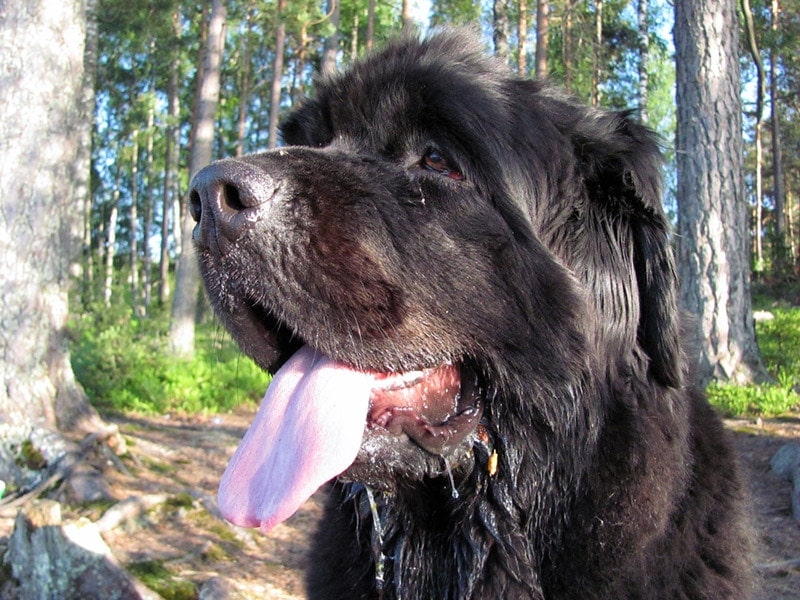
What is a Dry-mouth Newfoundland?
Depending on who is using this term, a “dry mouth” Newfoundland is a term made up by breeders to market to unsuspecting new puppy buyers.
It’s a marketing ploy.
It’s a red flag if used as a term by a Newfie breeder to get you to buy a puppy.
Because no matter how good a breeder is they can not predict if a Newfie is going to drool or not.
Newfies drool they’re on the list of top dog breeds that drool the most.

Even if a breeder tells you that Mom and Dad didn’t drool much, that doesn’t mean that they’re going to produce drool-less offspring.
Some breeders will also try to sell you on, the “our Newfies are dry-mouth which doesn’t mean that they don’t drool but they drool less” scheme.
What they try to highlight is that their Newfies don’t have constant drool strings hanging from their mouth, rather they drool normally like when they’re hot, begging, eating, drinking or nervous.
The part that they’re leaving out is that this IS what most Newfies do all day long.
Newfies are always hot, begging and drinking water.

95% of the Newfie population don’t drool when they’re taking a nap on your couch.
Not even the below-par breeders that say they breed for tighter lips can guarantee a “dry mouth”.
Which by the way, means that they are altering the breed over and over again to get a tighter lip.
Some breeders even try to fool you into believing that Newfies have extra salivary glands so they breed that out.
All dogs have the same number of salivary glands.

Things I’ve heard over and over again in regards to non-droolers vs. droolers:
“We got our Newf from a breeder who breeds dry-mouths and he’s a constant leaky faucet!”
“We got our Newf from a reputable breeder who didn’t mention anything about a dry-mouth but our Newfie doesn’t drool! We asked the breeder about this and they said to go buy a lottery ticket.”
“We have a dry-mouth Newfoundland. She only drools when she’s begging or after she dunks her head in the water.”
The bottom line is some Newfies drool more than others
Some start off droolers as soon as they can drool and some take time to mature into full or part-time droolers.

Not All Newfies Drool The Same
In my experience, I’ve had heavy droolers and light droolers but all of my Newfoundlands have drooled.
If I take the time to look back, my Newfies that have bigger heads, drool more.
For instance, Sherman and Lou have similar heads, big and blocky.
Their facial features were big also.
They have wider snouts and bigger lips.
Leroy had a massive head also, but it was a bit more narrow and Odin’s head is small and narrow.
Odin also has a longer snout but he still drools a lot.

I think one of the most important points is that if a Newfie breeder is focusing on offering dry-mouth Newfies instead of overall health, that’s a big red flag.
Breeding out common health problems like SAS and focusing on a sound dog with a sweet temperament is much more important than drool.
How to make a dog drool. Warning you cannot unsee this. #dog #drooling #gross 
FAQ
Why is my Newfoundland dog drooling so much?
Excessive drooling in Newfoundlands often results from loose lips, heat, or oral irritation. While gland removal is uncommon, managing drool includes regular mouth checks for infections or dental issues. Keeping the dog cool and hydrated helps. Consult a vet to rule out underlying problems like oral tumors or nausea.
What dog breeds are known for drooling?
Dogs with large jowls and loose skin, like Saint Bernards and Bloodhounds, are more prone to drooling. Drooling can sometimes indicate health issues, such as stress, dental problems, or overheating.
What are the behavior issues with Newfoundland dogs?
Just like any other dog, the Newfoundland dog can have behavior issues. Some of these issues are barking, jumping, counter-surfing, prey drive and resource guarding.
How cold is too cold for a Newfoundland dog?
-10°C to -20°C (14°F to -4°F) – Most Newf/Bernese mixes can tolerate this, but monitor for signs of discomfort like lifting paws, shivering, or reluctance to move. Below -20°C (-4°F) – Caution is needed.