
Have you ever wondered if your pet rat could become besties with your dog? I’ve been there too! As someone who’s kept both rats and dogs under the same roof, I wanted to share everything I’ve learned about this unusual friendship potential Can these two very different animals actually get along? Let’s dive into this fascinating topic!
The Nature of Rats: Understanding Their Behavior First
Before we can understand if rats and dogs can form a bond, we need to understand rat behavior. These little critters are much more complex than many people realize!
Rats Are Highly Social Creatures
Rats aren’t the dirty, aggressive pests that many people imagine. In fact, they’re incredibly clean, intelligent, and social animals. My rats spend hours grooming themselves and each other every day! According to PetMD, rats naturally engage in grooming behaviors that include:
- Rubbing their front paws on their face
- Licking and rubbing the rest of their body
- Grooming other rats (and sometimes even their human caretakers!)
This social grooming isn’t just about cleanliness—it’s about forming bonds and showing affection That’s right, rats actually show affection! It’s one of their most endearing qualities.
Curious Investigators by Nature
One thing I’ve noticed with all my rats is their incredible curiosity PetMD confirms this behavior, noting that rats are “highly inquisitive animals by nature” They love exploring their environments and investigating new things.
When a rat encounters something new (like a dog), they’ll typically:
- Use their excellent sense of smell to investigate
- Their whiskers and nose will twitch as they gather information
- They’ll use their front paws and mouth to touch and explore further
This curiosity can be both good and bad when it comes to meeting larger pets like dogs. While it means rats are open to new experiences, it also means they might fearlessly approach a potentially dangerous situation!
Rats Communicate Their Feelings
My rats have always been pretty expressive about their emotions. When they’re happy and content, they make a behavior called “bruxing” – a gentle grinding of their teeth that’s similar to a cat’s purr. Sometimes this is accompanied by “boggling,” where their eyes bulge in and out slightly due to their jaw muscles.
PetMD notes that while bruxing often indicates happiness, rats may also brux when stressed. That’s why it’s important to look at their overall behavior to determine their emotional state.
Do Rats Actually Like Dogs?
Now for the big question: do rats like dogs? The answer isn’t simple because it depends on several factors:
Individual Personalities Matter Most
Just like people, rats and dogs have individual personalities. Some rats are naturally more brave and curious, while others are shy and easily frightened. The same goes for dogs – some are gentle and calm around small animals, while others have strong prey drives.
In my experience, the personalities of both animals are the biggest factor in whether they’ll get along. My most confident rat, Beans, was completely unfazed by my friend’s gentle golden retriever. But my more timid rat, Pepper, would freeze in terror at the mere smell of a dog!
Size Difference Creates Natural Caution
Let’s be real – the enormous size difference between rats and dogs creates an inherent power imbalance. Even a small dog is gigantic compared to a rat, which naturally puts rats on the defensive.
Most rats will be cautious around dogs at first, which is actually a good survival instinct. This doesn’t mean they can’t eventually become comfortable around dogs, but it does mean that initial interactions should be carefully managed.
Prey Drive is a Critical Factor
Dogs have varying levels of prey drive – the instinct to chase and catch smaller animals. Breeds developed for hunting or vermin control (like terriers) often have high prey drives that make them unsuitable companions for rats.
On the other hand, breeds like retrievers, some shepherds, and many companion breeds may have lower prey drives and can potentially learn to be gentle with smaller pets.
Introducing Rats and Dogs: A Step-by-Step Guide
If you’re determined to help your rats and dog become friends (or at least peaceful cohabitants), here’s my tried-and-true approach:
1. Assess Both Animals Honestly
Before any introductions, honestly evaluate both your rat and dog:
- Is your dog calm around small animals? Has it ever chased squirrels, mice, or other small critters?
- Is your rat confident and curious, or easily stressed?
- How good is your dog’s obedience training? Can they reliably respond to commands like “leave it” and “stay”?
If your dog has a high prey drive or poor impulse control, it might be safest to keep the animals permanently separated.
2. Start with Scent Exchange
Animals communicate largely through smell. Before visual introductions:
- Place a blanket or toy with your rat’s scent in your dog’s area
- Similarly, put something with your dog’s scent near the rat cage
- This helps both animals become familiar with each other’s smell without the stress of direct contact
3. Create a Safe First Meeting
When you’re ready for a face-to-face meeting:
- Keep your dog on a leash and under control
- Hold your rat securely or place them in a secure carrier
- Maintain a safe distance initially
- Watch both animals’ body language closely
I like to have another person help during these introductions – one person manages the dog while the other handles the rat.
4. Gradually Decrease Distance
If both animals remain calm:
- Slowly decrease the distance between them
- Continue to monitor body language
- Be prepared to end the session if either animal shows signs of stress
- Keep initial meetings brief – just a few minutes
5. Never Leave Them Unsupervised
Even if your rat and dog seem to get along wonderfully, NEVER leave them unsupervised together. Even the gentlest dog could accidentally harm a rat during play, and it only takes a second for instincts to kick in.
Signs Your Rat Likes (or Dislikes) Your Dog
How can you tell if your rat is actually enjoying the company of your dog? Here are some behaviors to watch for:
Positive Signs
- Curious approach and sniffing
- Relaxed body posture
- Normal activity levels
- Bruxing (teeth grinding) in a relaxed context
- Willing to take treats near the dog
Warning Signs
- Freezing in place
- Chattering teeth loudly (different from gentle bruxing)
- Raised fur
- Attempting to hide
- Aggressive posturing or biting
- Excessive urination or defecation (stress response)
PetMD mentions that “chattering is typically louder, stronger, and with more pops or cracking noises” than bruxing, and is associated with stress or annoyance rather than contentment.
Can Rats and Dogs Ever Be Kept Together?
While rats and dogs can sometimes peacefully coexist in the same home, they should generally have separate living spaces. Here’s why:
Safety Concerns
Even with the best intentions, accidents can happen. A playful dog paw that’s harmless to humans could seriously injure a rat. Additionally, dogs may not understand how fragile rats are.
Different Environmental Needs
According to PetMD, rats need specific habitats with:
- Multiple levels for climbing
- Hide boxes for security
- Chew toys for dental health
- Proper bedding materials
These environments aren’t compatible with dog living spaces.
Stress Reduction
Even if your rat doesn’t seem obviously frightened of your dog, the constant presence of a predator species can cause chronic stress, which can lead to health problems over time.
Success Stories: When Rats and Dogs Become Friends
Despite the challenges, I’ve seen some heartwarming friendships develop between rats and dogs. My friend’s elderly Labrador became quite attached to her pair of female rats. The rats would actually seek out the dog for warmth, nestling against his side while he remained perfectly still and gentle.
The key elements in successful rat-dog relationships tend to be:
- A dog with extremely low prey drive
- Confident, social rats
- Consistent, positive interactions
- Constant supervision
- Respect for boundaries
Common Questions About Rats and Dogs
Can rats and dogs get along?
Yes, some rats and dogs can get along, but success depends heavily on individual temperaments, proper introductions, and constant supervision.
Are some dog breeds better with rats than others?
Generally, breeds with lower prey drives (many companion breeds, some retrievers) do better with small pets like rats. Terriers and hunting breeds often have high prey drives that make them unsuitable companions for rats.
Will my rat be stressed living in a home with a dog?
It depends on the rat’s personality and how the dog behaves. Some rats adapt well, while others may experience chronic stress. Always provide rats with secure hideaways and safe spaces.
How do I know if my dog will hurt my rat?
Watch for signs like intense staring, stalking behavior, whining, or excessive excitement around the rat cage. These can indicate prey drive. Test your dog’s reaction to other small animals before introducing them to rats.
Final Thoughts
While the internet is full of cute videos showing rats and dogs cuddling together, these relationships require careful management and should never be forced. The safety and wellbeing of both animals should always be your top priority.
In my years of keeping both species, I’ve found that peaceful coexistence is possible in many cases, but true friendship is rare and special. If you’re bringing rats into a home with dogs (or vice versa), be prepared to keep them separated if necessary.
Have you had experiences with rats and dogs living together? I’d love to hear your stories in the comments below! And remember, every animal is an individual – what works for one pair might not work for another.
Until next time, happy pet parenting!
The Cons Of Rats
I could go on and on and on about all the reasons to own a rat. If you go to any pro-rat account on social media you’ll see thousands of reasons why rats make great pets. But what you really need to know are the downsides to rats because, like with any pet, there are some drawbacks. And people new to rats also need to be aware that these are not throwaway animals just because they are also sold for food and found in pet stores. Being a pocket pet doesn’t mean they should be an afterthought or purchased just for the fun of it. They require dedicated owners!

Rats are social animals and should always be kept with friends. This means you need to have at least two rats, if not three. I personally recommend having three or more so when one dies, you’re not left with a lonely, depressed singleton. You experience a lot more enjoyment from having more than one rat, but this automatically increases all your costs.
Hands down, the hardest part about pet rats is their short life span, which is roughly 2 to 3 years. Those huge personalities I raved about earlier have you fall in love so hard, that it’s going to hurt far more than you’ll ever expect when your rats leave you. I think people who stop being rat owners do so because they can’t bear to continue going through the losses.
I suppose you could say the upside is that you only have to make a two-to-three-year commitment, versus the much, much longer commitment that other types of pets require.
It’s often joked that the only survivors of a nuclear war would be cockroaches and rats, but they clearly aren’t talking about pet rats. Who knows if wild rats would really survive, but domesticated ones are actually rather delicate creatures. They are prone to many illnesses, and their survival is usually dependent on getting quick and proper veterinary care.
You should expect to take your rat to a veterinarian at least once, if not a couple times, over their life. Unfortunately, vet care for rats is NOT cheap. It is not always easy to find either, because they require a vet who specializes in exotic animal care. If seeing a vet is not an option or a priority, then rats are not the right pet for you.

Cages are great for keeping a pet contained, but a proper rat cage doesn’t come cheap — especially when you add in all the needed supplies.
They also require regular cleaning, which can be tedious. A dirty cage is one of the quickest ways to make your house smell and your pet sick.
Having other types of pets in your home doesn’t automatically disqualify you from having rats, but it may mean extra work on your part. Besides our rats, we also have a cat and a dog with a naturally high prey drive. It has taken a considerable effort to ensure that our ratties stay safe because of her.
Our dog Juno’s prey drive was so high that she used to instantly lunge and jump up at me if she saw me even holding the rats. But after a year and a half of intense work to get her to lose all interest in them (and in our cat for that matter), not only can my rats be in the same room as Juno, but she now stays a safe distance away from us when I have the rats on the couch with me.
We also dedicated a room in our house for the rats, where their cages are kept. This regularly keeps Juno away from them, but also our cat Vertigo. Vertigo has never attempted to hurt them, but her incessant need to watch them in their cage, like one watches a cooking show, really upset and scared them.
So, having a multipet family isn’t out of the question, but are you ready for the extra commitment involved?
Please never leave your rats unsupervised with other pets!
Rats don’t require a yard, or to be walked, or litterboxes around the house, but when a rat needs to go to the bathroom while out of their cage, they are going to go. It’s also especially common to be marked by younger male rats. They do get better about it as they age, however.
There are ways to stay dry, like keeping blankets or towels under your rats, or having wet wipes handy, but you expect to be peed (maybe even pooped) on every now and then.
Some people are allergic to rats and break out in hives wherever rat nails or tail touch their skin. Some people also get itchy eyes or have asthma-like symptoms. Many rat lovers put up with these allergies, but that is a personal decision.

There’s a reason rats have a bad reputation for being destructive; they are prolific chewers! Whether it’s the contents of their cage, your clothes, your bedding, your furniture, or whatever, your rats are going to try and chew it. You have some control over this if you are extra diligent, but expect to have telltale signs that you have rats in your home. But I have to say, my three rattie boys have caused far less destruction than Juno has. She even tore apart one of their beds! My rats have been way less work in general than Juno.
Finding someone to pet sit for a rat is more difficult when you leave town. And because rats are one of the most misunderstood pets, loving them can sometimes feel a little isolating. Expect to experience a few (or many) unfiltered people saying rude, hurtful, and even cruel things to you once they learn you have pet rats. Friends and family might even be afraid of your rats or may have less empathy when your rat is sick or has passed on then they would for another type of pet.
But … you could be like me and revel in the uniqueness of being a rat owner. I’ve always been drawn to the weird and quirky; the misfits of the world. Which is probably why I was fated to love rats in the first place. Instead of allowing the rudeness to hurt me, I make it my mission to dispel the myths about rats and teach others about their greatness.
The Pros Of Rats
Rats are without a doubt one of the most impressive creatures to ever exist! OK, I may be biased, but I wouldn’t have dedicated almost 30 years of my life to talking about them if there wasn’t something genuinely rewarding about them.
Rats are affectionate, charming, intelligent, persistent, opinionated, silly, funny, and absolutely fascinating. Each one is uniquely their individual self, just waiting to show you who they are and to delight you with their endless curiosity of the world around them. In my opinion, the No. 1 reason to have rats as pets is their multilayered personalities that never cease to amaze their owners.

I always liken pet rats to tiny dogs. Rats provide companionship, are capable of learning their own names, will often come when called (if they aren’t purposely ignoring you that is), enjoy scritches and cuddles, like to play, can be taught tricks, are easily carried around, love treats, and are likely to greet you at their cage door with as much enthusiasm as any dog greets their owner at the front door. That’s because rats can form strong bonds to their humans and sincerely enjoy attention from them.
Also, like dogs, they don’t care what you look or sound like, or your age. They have the ability to love unconditionally. I mean who doesn’t want a pet that is happy to see you and loves you for being, well, you?
Their small size, which allows them to live in cages, makes them perfect for apartment life; no need for a yard or to take them out to go potty. And as long as they are caged, your house is safe from any naughty behavior while you’re away. Rats also eat far less than a dog or cat. Outside of their staple diet, rats can be given almost anything you eat as a small treat — even grapes and chocolate, which are toxic to dogs.
Another benefit is that rats don’t need yearly vaccinations or need to be registered. But the best thing is they never have bad breath, and they never smell like … dog! In fact, female rats commonly smell like a mixture of grape soda and fabric softener, while intact males smell similar to warm, corn tortillas. For this reason, many owners confess to “huffing” their rats, which means they enjoy inhaling their rats’ pleasant-smelling fur with long, deep breaths.
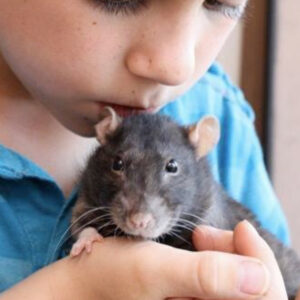
Rats are one of the better pocket-pet options for children because they are bigger and easier for little hands to hold than hamsters, gerbils, and mice. Their curiosity and enjoyment of humans also makes them quite friendly and sociable, and they are much less likely to bite than say, hamsters. I’m not trying knock any of the other small critters, as I’ve had all sorts throughout my life, but there’s just something about rats that makes them extra special.