
AKC is a participant in affiliate advertising programs designed to provide a means for sites to earn advertising fees by advertising and linking to akc.org. If you purchase a product through this article, we may receive a portion of the sale.
There are many invaluable benefits to owning a dog. Having to pick up dog poop maybe isn’t one of them, yet part of being a responsible dog owner is cleaning up after your dog. It’s not only socially unacceptable to leave your dog’s waste lying around, but it’s also an environmental contaminant if you don’t pick it up and dispose of it properly. While you might be tempted to let it lie, here’s the scoop on dog poop disposal.
Have you ever been walking your furry friend and thought, “Do I really need to pick up my dog’s poop? No one’s watching.” Well, I’m here to tell you that you absolutely should, and there are some pretty important reasons why. As a dog owner myself, I totally get it – stooping down to pick up warm dog waste isn’t exactly the highlight of my day. But it’s an essential part of responsible pet ownership that goes beyond just being polite to your neighbors.
The Legal Side: Yes, It’s Actually Required
In most cities and towns across the country, picking up after your dog isn’t just good manners—it’s the law. These “pooper scooper laws” have become increasingly common in recent years due to growing awareness about the health and environmental concerns associated with dog waste.
According to vetexplainspets.com, failing to clean up after your pet can result in some pretty hefty fines depending on where you live. These penalties can range from a few dollars to hundreds of dollars! Some communities have even started implementing more creative consequences like community service for repeat offenders.
And get this – some apartment complexes and housing communities have gotten super serious about enforcing these rules They’re actually using DNA testing to catch owners who don’t pick up after their dogs! Property managers collect DNA samples from resident pets and then test abandoned poop to identify the culprits. Pretty wild, right?
Environmental Impact: It’s Not Just Gross, It’s Harmful
You might think, “It’s just poop, it’ll decompose naturally!” While that’s technically true, dog waste isn’t as harmless as you might believe.
When dog poop is left on the ground, it doesn’t just magically disappear. Rainwater washes it into storm drains, where it eventually makes its way into local streams, rivers, and lakes. The AKC notes that dog feces contain excess nutrients like nitrogen and phosphorus. With millions of tons of dog poop produced in the United States each year, these nutrients can overwhelm water systems.
What happens next isn’t pretty – this nutrient overload leads to excessive algae and weed growth, making bodies of water cloudy and unsuitable for animals or humans. It’s like fertilizer on steroids, but the bad kind.
Health Hazards: It’s Not Just Dirt
Beyond the environmental impact, there’s a significant health risk associated with leaving dog waste lying around. Dog poop can contain:
- Parasites like Giardia and various worms
- Harmful bacteria including salmonella and E. coli
- Viruses that can make humans and other animals sick
The scariest part? Even feces from perfectly healthy-looking dogs can contain these pathogens. When these contaminants enter the water supply, they put human health at serious risk.
According to dogster.com, it’s crucial to pick up dog poop promptly because “many parasites require days to weeks to reach the infective stage, so feces becomes more hazardous to your health the longer it sits.” So that poop that’s been sitting in your yard for a week? It’s actually getting more dangerous by the day!
Proper Disposal Methods: How to Do It Right
So we’ve established that you should definitely pick up your dog’s poop, but what’s the best way to dispose of it? There are a few options:
1. Trash Disposal
The most convenient option is throwing the waste in the trash. Many parks provide dedicated poop receptacles, or you can carry it home in a poop bag and dispose of it in your household trash.
2. Flushing
In some areas, flushing dog poop down the toilet is acceptable—but not everywhere! This method only works if your wastewater goes through a sewage treatment plant. If you have a septic system, don’t flush dog poop as it can contaminate the water supply. Always check with your local government first.
3. Burying
While burying might seem like a natural solution when hiking or camping, it’s not ideal in most situations. If you must bury, dig six to eight inches deep and ensure the hole is at least 200 feet from any water source.
4. Composting
This is the most environmentally friendly solution, but it requires specific equipment and knowledge. Home composters may not effectively handle the pathogens in dog waste. Some cities have implemented dog waste composting programs where poop is collected along with other organic waste.
The Plastic Bag Dilemma
While plastic poop bags are convenient, they contribute significantly to environmental pollution. A recent study estimated that around 415 billion plastic dog poop bags are disposed of every year—equivalent to 0.76 to 1.23 million tons of plastic waste!
Some more eco-friendly alternatives include:
- Reusing plastic bags from bread or produce
- Using newspaper (though this won’t work well in rain)
- Paper poop bags
- Compostable poop bags (though these need proper composting conditions to break down)
Just be aware that bags labeled “biodegradable” don’t necessarily decompose quickly or in an environmentally friendly way, especially in landfills. But they’re still better than regular plastic bags.
Common Questions About Dog Poop Cleanup
Do I need to pick up dog poop in my own yard?
While laws vary by location, some cities do require you to clean up after your pet on your own property to prevent odor and health issues. Plus, allowing waste to accumulate in your yard creates a health hazard for your family and pets.
What if my dog poops on someone else’s lawn?
It’s polite to ask the homeowner for a bag and clean up after your dog. If they don’t have a bag, offer to come back later with one. Never leave your dog’s waste on someone else’s property—it’s both rude and potentially illegal.
What should I do if I don’t have a bag with me?
Always try to carry poop bags when walking your dog. If you run out, you can use a tissue or a leaf as a temporary solution, but return to properly clean it up as soon as possible.
Should I pick up after my dog in natural areas like woods?
Yes! It’s important to pick up after your dog in natural areas to prevent contamination of the environment and protect wildlife. The “wild animals do it” argument doesn’t hold up because domestic dogs are concentrated in much higher numbers than wild animals would be.
What should I do if I see someone not picking up after their dog?
You can politely remind them of the importance of cleaning up after their pet. If they consistently ignore the rules, you might report them to local authorities, especially in areas with strict enforcement.
Tips for Being a Responsible Poop-Picker-Upper
-
Always be prepared: Keep poop bags in multiple places—your coat pockets, car, treat pouch, and attach a dispenser to your dog’s leash.
-
Know your dog’s schedule: Most dogs poop once or twice daily, often after eating. Being aware of your dog’s habits helps you anticipate when there will be poop to scoop.
-
Practice good hygiene: Keep your hands covered with a bag or gloves when picking up waste, and thoroughly wash your hands afterward.
-
Consider using a pooper scooper: These devices put more distance between you and the waste, which some people prefer.
-
Teach your dog potty cues: You can train your dog to eliminate on command and in designated areas, making cleanup more predictable.
Why Some People Don’t Pick Up (But Should)
I’ve heard all the excuses:
- “It’s natural fertilizer!” (It’s not—it’s actually terrible for lawns)
- “It’ll wash away in the rain!” (Into our water supply…)
- “Wild animals don’t pick up their poop!” (Wild animal populations are much less dense)
- “It’s gross and I don’t wanna!” (Fair, but still not a valid excuse)
None of these justifications hold water when you consider the environmental, health, and community impacts of leaving dog waste behind.
The Bottom Line
So, do you need to pick up dog poop? The answer is a resounding YES. It’s not just about avoiding fines or being a good neighbor (though those are important too). It’s about protecting our environment, preventing disease transmission, and being a responsible member of your community.
I’ll admit that scooping poop isn’t the most glamorous part of having a dog, but it’s a small price to pay for all the joy our furry friends bring us. So next time you’re out walking your dog and they do their business, remember all the good you’re doing when you stoop and scoop!
And hey, if you’re using biodegradable bags and properly disposing of the waste, you can even feel a little environmental pride along with fulfilling your civic duty. Win-win!
What’s your experience with picking up after your dog? Have you found any particularly effective methods or eco-friendly solutions? I’d love to hear your thoughts and tips in the comments below!
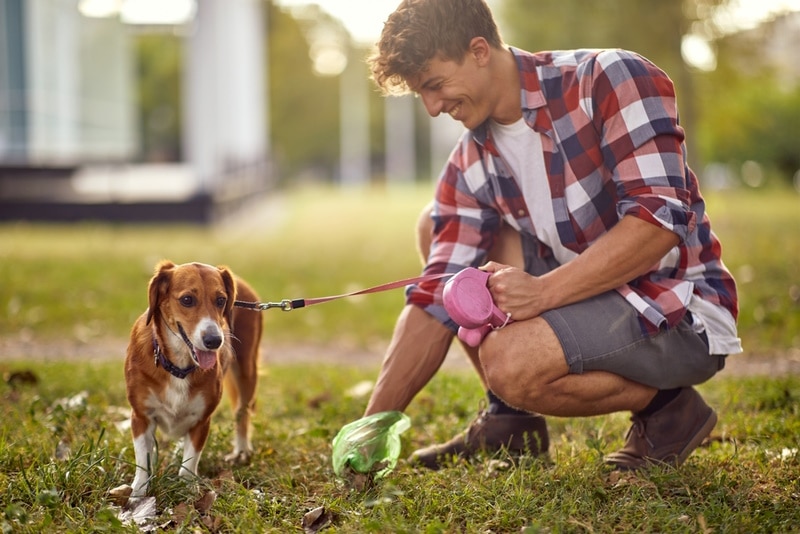
Why You Should Clean Up After Your Dog
There’s no better way to ruin relationships with your neighbors than to leave your dog’s dropping on their property. Nobody wants to step in dog poop. It’s smelly and unsightly. And for dogs with a coprophagia habit, it’s a tempting snack. It’s common courtesy to stoop and scoop. Even if you’re hiking or camping, you need to pick up your dog’s waste.

You might think dog poop is great fertilizer for your lawn. Or perhaps you think if wild animals can do it, so can your dog. Neither are true. In fact, dog waste is a dangerous source of contamination whether you’re in the city or the wilderness. That’s because when dog poo is left on the ground, it’s washed away by rainwater. In nature, that tainted water makes its way into streams, rivers, and lakes. In town, the water enters the storm drain where it’ll eventually flow into local bodies of water.
Plastic Poop Bags Contribute to Pollution
Plastic poop bags protect your hands, contain odor, and work no matter the weather. But they have a negative impact on the environment by contributing to plastic and microplastic pollution. A recent study in the journal Environmental Pollution estimated that around 415 billion plastic dog poop bags are disposed of every year, which is the equivalent to 0.76 to 1.23 million tons of plastic waste.
Alternatives to plastic poop bags include reusing other plastic bags, such as those from bread or produce, or using newspaper or paper poop bags. However, paper won’t work in the rain or if your dog has diarrhea. Compostable poop bags are a better solution, but they need to be placed in a composter to break down. The conditions in a landfill simply don’t cut it. And be aware that bags labeled “biodegradable” don’t necessarily decompose at a fast rate or in an environmentally friendly way. However, these bags are still a greener option, even in the trash.