
If you’ve recently welcomed a pitbull puppy into your home, you’re probably wondering “how big will my pitbull get?” Trust me, I’ve been there! When I first got my pittie, I was constantly checking his paws and trying to guess his adult size. This comprehensive guide will help you understand your pitbull’s growth patterns and give you a clear picture of what to expect as your furry friend matures.
Understanding the Pitbull Size Range
First things first – “pit bull” isn’t actually a specific breed but rather a term that describes several breeds including
- American Pit Bull Terrier
- American Staffordshire Terrier (AmStaffs)
- Staffordshire Bull Terrier
- Bull Terrier
Each of these breeds has different standard sizes, which explains why you might see such variation among dogs called “pit bulls.” Let’s break down what you can expect:
Adult Pitbull Size by Breed
| Breed | Male Weight | Male Height | Female Weight | Female Height |
|---|---|---|---|---|
| American Pit Bull Terrier | 35-60 lbs | 18-21 inches | 30-50 lbs | 17-20 inches |
| American Staffordshire Terrier | 55-70 lbs | 18-19 inches | 40-55 lbs | 17-18 inches |
| Staffordshire Bull Terrier | 28-38 lbs | 14-16 inches | 24-34 lbs | 14-16 inches |
As you can see, there’s quite a range! If someone asks “how big will my pitbull get?”, the answer really depends on which specific breed we’re talking about.
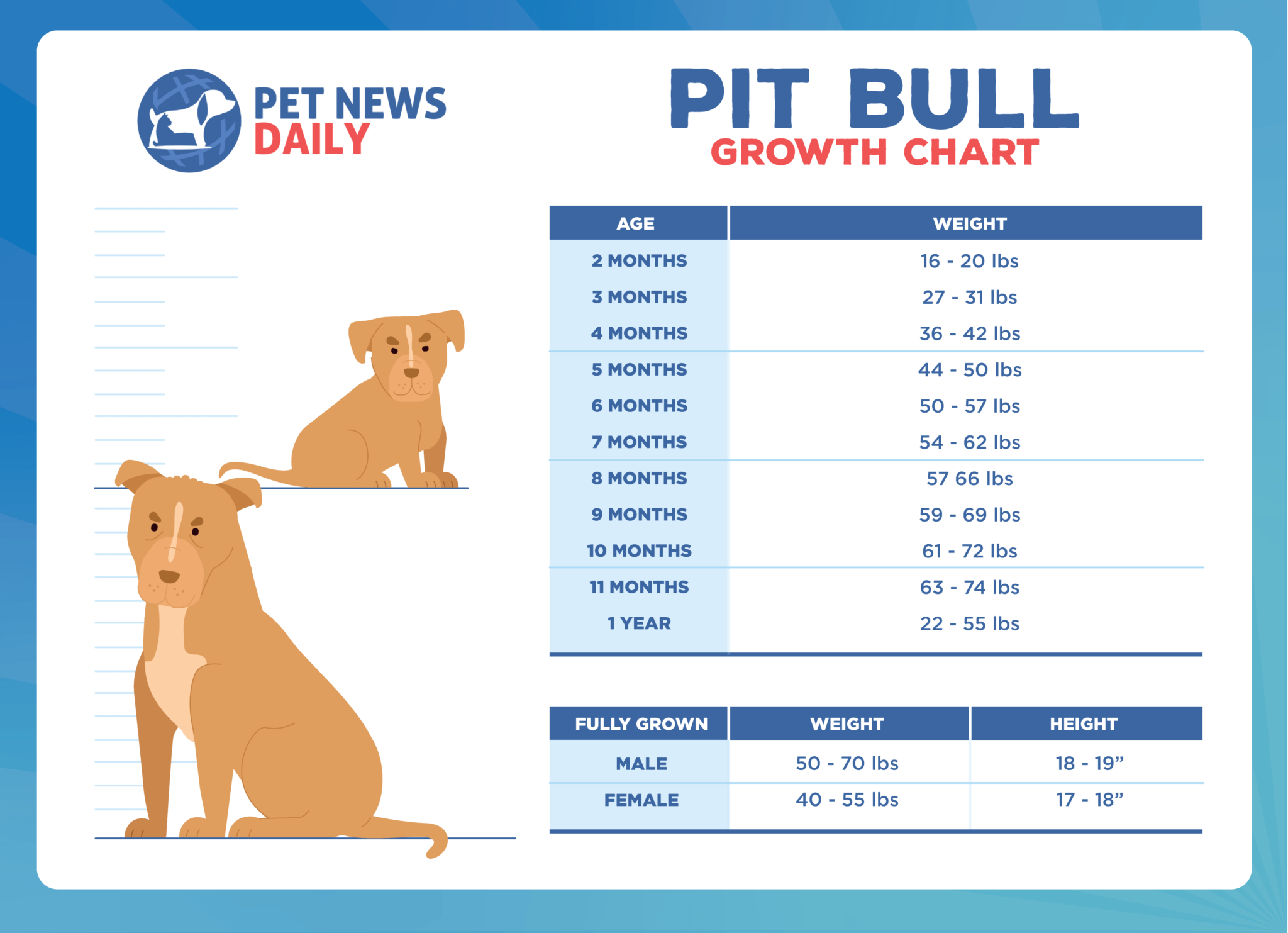
Pitbull Growth Chart by Age
Here’s a detailed breakdown of how your pitbull puppy might grow month by month. Remember that these are averages – your individual pup may grow at a different rate!
| Age | Male Weight | Female Weight |
|---|---|---|
| 1 month | 3-5 lbs | 2-4 lbs |
| 2 months | 5-15 lbs | 5-15 lbs |
| 3 months | 10-20 lbs | 10-20 lbs |
| 4 months | 15-25 lbs | 10-20 lbs |
| 5 months | 15-30 lbs | 15-25 lbs |
| 6 months | 20-35 lbs | 15-30 lbs |
| 7 months | 20-40 lbs | 15-35 lbs |
| 8 months | 25-45 lbs | 20-35 lbs |
| 9 months | 25-50 lbs | 20-40 lbs |
| 10 months | 25-50 lbs | 25-40 lbs |
| 11 months | 30-55 lbs | 25-45 lbs |
| 12 months | 30-55 lbs | 25-45 lbs |
| 2 years | 35-60 lbs | 30-50 lbs |
When Do Pitbulls Stop Growing?
One of the most common questions I hear from new pitbull owners is: “When will my puppy stop growing?” Here’s what you need to know:
- Most pitbulls reach their full height by around 12 months (1 year) of age
- They may continue to fill out and gain muscle mass until they are 18 months to 2 or even 3 years old
- Larger pitbull types may take up to 18 months to fully develop their chest
- Between 2 and 6 months is when puppies experience their fastest growth rate
So if your 1-year-old pittie seems a bit lanky, don’t worry! They’ll likely continue to develop muscle and reach their full weight over the next year or so.
How to Predict Your Pitbull’s Adult Size
Wondering if your pup is on track or how big they’ll eventually get? Here are some methods to help predict your pitbull’s adult size:
1. The Paw Test
Look at your puppy’s paws. If they seem oversized or out-of-proportion to the rest of the dog’s body, your pup is probably still growing and will eventually “grow into” those big feet!
2. The Parent Method
If possible, look at your puppy’s parents. Genetics play a huge role in determining what your dog will look like. Generally, females will resemble their mothers and males their fathers in terms of size.
3. The Formula Method
Here’s a simple formula to estimate your puppy’s final weight:
(Current weight/Age in weeks) x 52
For example, if your pup is 25 pounds at 16 weeks of age:
(25/16) = 1.57 (rounded up)
1.57 x 52 = 82 pounds (rounded up)
This formula works best when your puppy is around 12-16 weeks old.
Factors That Affect Pitbull Growth
Your pitbull’s ultimate size isn’t just about genetics. Several factors can influence how big your dog gets:
1. Nutrition and Diet
What you feed your pittie matters! A proper diet with high-quality protein is essential for healthy muscle development. Be careful not to overfeed – pitbulls can gain too much weight pretty easily, which can lead to health problems.
2. Exercise
Regular exercise helps develop muscles and maintain a healthy weight. However, too much strenuous exercise (like running on pavement or fierce tugging) can stress your dog’s developing bones and joints, especially before they’re fully grown.
3. Health Issues
Some health conditions can affect growth. Common issues in pitbulls include:
- Allergies (very common in pitties!)
- Intestinal worms
- Hip dysplasia
- Thyroid problems
4. Spaying/Neutering Timing
Early spaying or neutering can delay the solidification of growth plates, potentially leading to a taller, leaner dog. It’s best to consult with your vet about the optimal timing for this procedure.
Signs Your Pitbull May Not Be Growing Properly
While growth rates vary, there are some red flags that might indicate your pitbull isn’t developing as expected:
- Visible hip and rib bones
- Lack of energy
- Skin issues
- Digestive problems
- Poor coat health
- Weak immune system
If you notice any of these symptoms, consult with your veterinarian. They could be signs of malnutrition, parasites, or other health issues.
How to Ensure Healthy Growth for Your Pitbull
I want my pitbull to grow up strong and healthy, and I bet you do too! Here are some tips to support proper development:
-
Feed a high-quality diet – Look for food specifically formulated for medium to large breed puppies with high protein levels.
-
Regular vet check-ups – Schedule routine visits, especially during the first year when your pup is growing rapidly.
-
Appropriate exercise – Provide regular but gentle exercise until your dog is fully grown.
-
Weight monitoring – Keep track of your puppy’s weight to ensure they’re growing at a steady rate.
-
Check body condition regularly – You should be able to feel your dog’s ribs when you run your hand over their middle, but not see them when looking from the side.
Frequently Asked Questions
How big is a 6-month-old pit bull?
At six months, male pit bulls typically weigh 20-35 pounds, while females weigh about 15-30 pounds.
How fast do Pit Bulls grow?
Pitbulls experience their most rapid growth between 2 and 6 months of age. By six months, they’ll be about two-thirds of their final adult weight.
Are male pitbulls bigger than females?
Yes, male pitbulls are generally larger and heavier than females across all pitbull-type breeds.
At what age should I switch my pitbull puppy to adult food?
Most pitbulls can transition to adult food around 12 months of age, but consult with your vet for personalized advice.
Conclusion
So, how big will your pitbull get? While we can’t predict with 100% accuracy, the guidelines and charts in this article should give you a good idea of what to expect. Remember that each dog is unique, and factors like genetics, diet, and overall health all play important roles in determining your pup’s ultimate size.
The most important thing isn’t how big your pitbull gets, but that they grow up healthy, happy, and well-loved. Regular vet check-ups, proper nutrition, and plenty of exercise will help ensure your pittie reaches their full potential, whatever size that may be!
Have you noticed any interesting growth patterns with your pitbull? I’d love to hear about your experiences in the comments below!
Instantly Compare Pet Insurance Plans
Aliyah Diamond has more than ten years of experience in animal hospitals – working with dozens of species from dogs and cats, to elephants and snow leopards. Her lifelong passion for helping animals currently has her earning her doctorate of veterinary medicine at Cornell University and helping Pawlicy Advisor educate pet parents.
Do you want to find the best pet insurance?
Lets analyze your pets breed, age, and location to find the right coverage and the best savings. Ready?
The pet insurance marketplace endorsed by veterinarians, at Pawlicy Advisor we make buying the best pet insurance easier. By comparing personalized coverage and pricing differences we can save you a ton of money, up to 83% in some instances!