
Summer is the perfect time for you and your dog to go out on quality outdoor adventures. However, hot temperatures can lead to overheating and exhaustion, so it’s important to be aware of how fun in the sun can affect your furry family members. To keep your dog as safe as possible in the summer heat, here are some tips on how to spot signs of overheating and what you can do as a pet parent to prevent it.
As a dog owner, I’ve had those moments where I’m enjoying a summer day with my furry buddy and suddenly notice they’re panting way more than usual. Is it just normal dog behavior or something more serious? If you’ve wondered the same thing, you’re in the right place. Today we’re diving deep into how you can tell if your dog is overheated – because recognizing these signs early could literally save your pup’s life.
Summer heat isn’t just uncomfortable for our four-legged friends – it can be downright dangerous. Unlike us humans who can sweat all over to cool down, dogs rely mainly on panting to regulate their body temperature. This makes them especially vulnerable to overheating and heat stroke, which can lead to organ damage or even death if not addressed quickly.
Why Dogs Overheat Differently Than Humans
Before we jump into the warning signs, let’s understand why dogs get overheated in the first place:
- Limited cooling ability: Dogs don’t sweat like we do. They have few sweat glands, mostly located in their paw pads, which isn’t enough for effective cooling.
- Panting is their primary cooling method: Dogs cool themselves by inhaling cooler air through their nose and exchanging it for warmer air through their mouth.
- Fur insulation: While a dog’s coat can provide some insulation against heat, certain breeds with thick or dark coats absorb more heat.
When the outside environment is hot and humid, a dog’s natural cooling system becomes less effective. Their body temperature can rise rapidly, leading to overheating and potentially heat stroke.
12 Warning Signs Your Dog Is Overheated
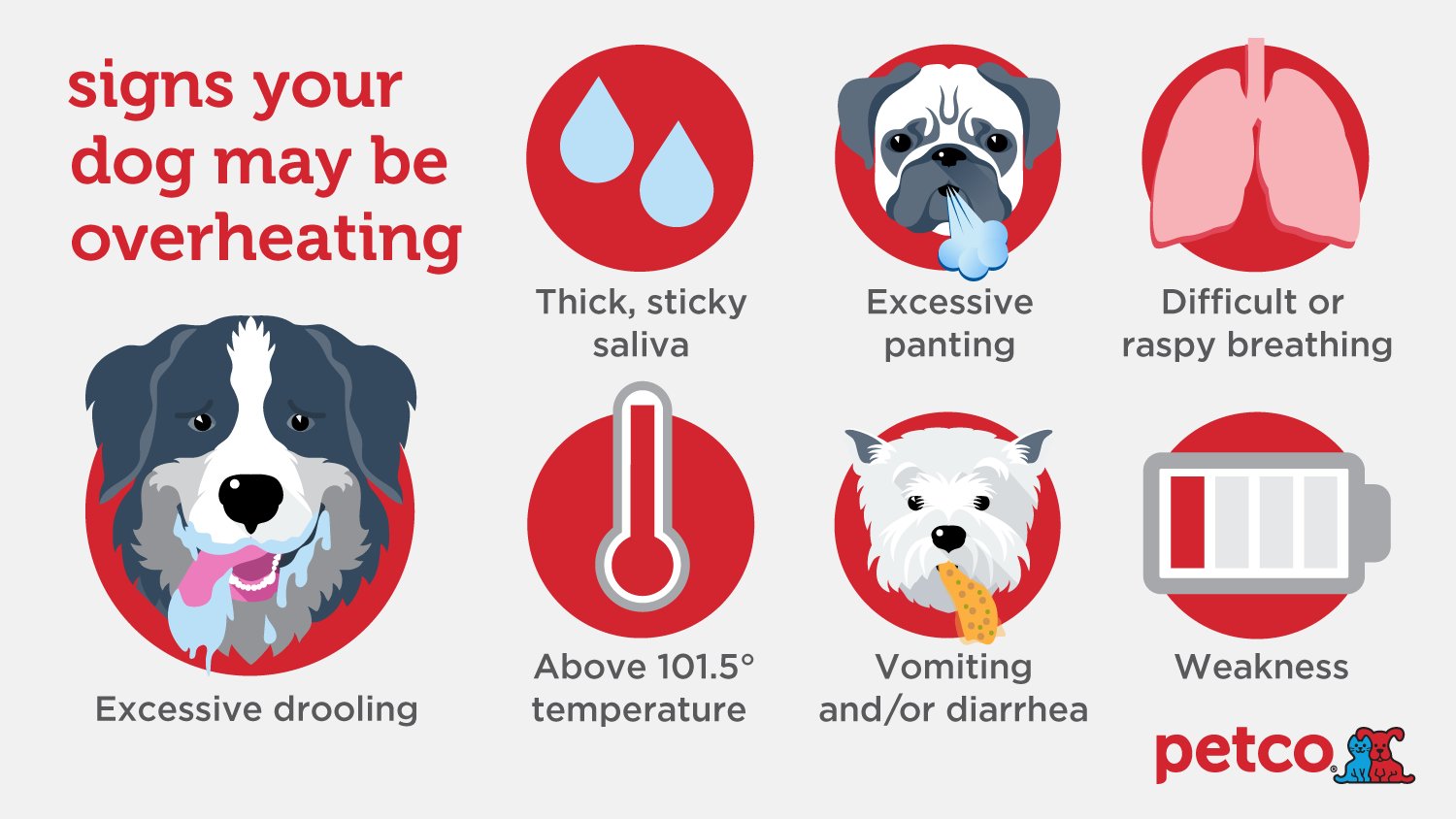
1. Excessive, Non-Stop Panting
While panting is normal during exercise or warm weather. it becomes concerning when
- It’s rapid and labored
- It continues after your dog has been removed from heat
- Your dog seems unable to catch their breath
Normal panting should slow down within minutes of resting in a cool environment. If your dog keeps panting heavily even after cooling down, something’s wrong.
2. Bright Red or Purple Tongue and Gums
Take a peek inside your dog’s mouth if you suspect overheating You might notice
- Tongue appears bright red, deep red, or even purple
- Gums look unusually red, gray, purple, or blue
- Inside of ears may also appear redder than usual
These color changes happen because blood is rushing to the surface to help transfer excess heat.
3. Excessive Drooling or Thick Saliva
While some breeds naturally drool more than others, heat-related drooling looks different:
- Saliva becomes thick and slimy
- Drool may form long strands
- Even breeds that don’t normally drool much might start drooling
This happens as your dog’s body attempts to cool itself and becomes dehydrated.
4. Disorientation or Confusion
An overheated dog may show mental changes like:
- Appearing dazed or “out of it”
- Not responding to commands they usually know
- Seeming confused about familiar surroundings
- Lack of focus or alertness
This behavior change can be one of the scarier signs as it indicates the heat is affecting brain function.
5. Restlessness and Agitation
Your dog might:
- Pace around unable to settle
- Show signs of anxiety
- Seem distressed
- Get up and down repeatedly
This restlessness indicates discomfort as your dog tries to escape the feeling of being overheated.
6. Seeking Cool Surfaces
Dogs instinctively try to cool themselves by:
- Lying on cold tile or concrete floors
- Seeking shade desperately
- Trying to lie in water sources like puddles or kiddie pools
- Digging at cool dirt or sand
This cooling-seeking behavior is your dog’s attempt to transfer heat away from their body.
7. Refusal to Eat or Take Treats
When a dog is overheated, their appetite typically disappears:
- They’ll ignore favorite treats
- Show no interest in food
- May turn away from water despite needing it
This is similar to how humans often lose appetite when they’re too hot.
8. Weakness or Collapsing
As overheating progresses, physical symptoms worsen:
- Your dog might stumble or seem uncoordinated
- They may sit or lie down and refuse to continue walking
- In severe cases, they may collapse completely
- Muscle tremors or shaking might occur
These signs indicate the heat is significantly affecting your dog’s muscle function and overall strength.
9. Vomiting or Diarrhea
Gastrointestinal distress often accompanies overheating:
- Vomiting can occur suddenly
- Diarrhea may develop (sometimes appearing black)
- These symptoms can happen even after minimal heat exposure
If your dog shows these signs after being in the heat, don’t wait – seek veterinary care immediately.
10. Rapid Heart Rate
A dog’s heart rate increases as their body tries to cool down:
- Small dogs normally have faster heart rates (60-160 beats per minute at rest)
- During exercise, rates may exceed 200 BPM but should return to normal within 5-10 minutes
- If your dog’s heart continues racing even after cooling down and resting, it’s a warning sign
You can check your dog’s pulse by feeling the femoral artery in their inner thigh where it meets the body wall.
11. Elevated Body Temperature
A dog’s normal temperature is 100-102.5°F (37.8-39.2°C):
- Temperatures of 103-103.5°F can be normal during excitement or stress
- Exercise might temporarily raise temperature to around 105°F
- Temperatures above 105°F that don’t quickly return to normal are dangerous
- At 106°F and above, dogs enter critical territory and need immediate medical attention
I recommend keeping a rectal thermometer in your pet first aid kit to check temperature if needed.
12. Unresponsiveness or Seizures
These are the most severe signs of heat stroke and require immediate emergency care:
- Your dog may become unconscious
- Seizures can occur
- They may be completely unresponsive to stimuli
If you see these signs, skip all home treatment and get to an emergency vet immediately while working to cool your dog down during transport.
Who’s Most at Risk for Overheating?
While any dog can overheat in hot weather, some are at much higher risk:
- Brachycephalic (flat-faced) breeds like Bulldogs, Pugs, and Boxers have narrower airways and struggle to cool efficiently through panting
- Dogs with thick coats especially double-coated breeds
- Dark-colored dogs absorb more heat from the sun
- Elderly dogs have less efficient body regulation
- Puppies haven’t fully developed their temperature regulation
- Overweight dogs have extra insulation that traps heat
- Dogs with heart or respiratory conditions already have compromised systems
As a Boxer owner, I’m extra careful with my dog during hot weather because I know she’s in a high-risk category with her short muzzle.
What To Do If Your Dog Is Overheated
If you notice any of the signs above, take action immediately:
1. Move to a Cool Area
Get your dog out of the heat and into air conditioning or shade immediately.
2. Begin Cooling (But Not Too Quickly!)
- Wet your dog with cool (not cold) water, focusing on the head, neck, ears, belly and paw pads
- Use a fan to enhance evaporative cooling
- Apply cool wet towels to these areas
- Allow small amounts of cool water to drink (not ice cold)
3. Monitor Temperature If Possible
- If you have a thermometer, check your dog’s temperature rectally
- Continue cooling until temperature drops to 103°F
- Once temperature reaches 103°F, stop active cooling to prevent hypothermia
4. Seek Veterinary Care
Even if your dog seems to recover, a veterinary visit is crucial. Internal damage can continue even after their temperature normalizes.
Preventing Overheating in Dogs
The best approach is preventing overheating before it happens:
- Never leave dogs in cars – even with windows cracked, temperatures can rise to fatal levels in minutes
- Schedule walks during cooler hours – early morning or late evening
- Provide constant access to shade and fresh water
- Use cooling products like elevated beds or cooling mats
- Check pavement temperature – if it’s too hot for your hand, it’s too hot for paws
- Know your dog’s limits – especially for high-risk breeds
- Don’t shave double-coated dogs – their coat actually provides insulation against heat
- Gradually acclimate dogs to warmer weather – don’t expect them to handle sudden heat waves
When to Seek Emergency Care
While some mild overheating can be managed at home, certain situations warrant immediate emergency veterinary care:
- Temperature above 105°F that doesn’t quickly reduce
- Seizures or collapse
- Vomiting or diarrhea that doesn’t stop
- Changes in gum color (very pale, blue or bright red)
- Mental dullness or unresponsiveness
- Difficulty breathing that doesn’t improve
Remember, even if your dog seems to recover after cooling down, internal damage from overheating can continue. A veterinary check ensures there’s no organ damage or other complications.
Final Thoughts
As temperatures climb across the country, knowing how to recognize when your dog is overheated isn’t just helpful – it’s essential. Our furry friends can’t tell us when they’re suffering, so it’s up to us to watch for these warning signs and take quick action.
I’ve learned to be extra cautious with my own dogs during hot weather. We stick to early morning walks, always carry water, and I’ve become pretty obsessive about checking the pavement temperature before we head out. It might seem like a lot of work, but seeing those happy tail wags when we’re safely back in the air conditioning makes it all worthwhile.
Have you ever dealt with an overheated dog? What signs did you notice first? Share your experiences in the comments below to help other pet parents know what to watch for!
Disorientation, stumbling, or weakness
If your dog seems confused, disoriented, or has trouble walking, they could be suffering from heatstroke. Disorientation is a clear signal that your dog needs to be cooled down right away.
Heat can upset your dog’s stomach, which can lead to vomiting. If your pup is experiencing these symptoms, it’s important to cool them down and closely monitor their condition to ensure it doesn’t get worse.
How to Avoid Heat Exhaustion for Your Dog
As a pet parent, it’s important to take the right prevention steps to keep your dog protected from over-heating and understand how to respond if your dog should become stressed in hot temperatures. By using the following tips, you can help protect your dog from dangerous heat-related issues.
Heatstroke: How to Tell If Your Dog is Overheating — and What to Do Next
FAQ
How do I know if my dog is overheating?
It is crucial to be able to recognize the signs of overheating in dogs so that you can take immediate action to cool them down and prevent heatstroke. There are several key signs that your dog may be overheated. One of the most obvious signs is excessive panting and drooling.
Is my dog overheating?
The hotter it is, the more active your dog is, the more humid it is, the harder panting becomes, the more likely your dog is to exhibit one or more signs that your dog is overheating. Image by Myriams-Fotos from Pixabay Dogs at higher risk for overheating include: 3 4 Conditions that increase the risk of overheating include: 5 6
Why is my dog panting when he is overheating?
Panting also occurs when a dog is overheated after exercise. Redenned Mucus: which can be noticed on a dog’s gums when their mouths are open. More severe dog overheating symptoms include: Dog over heating seizure: A dog that is suffering from overheating may experience seizures and collapse or convulse.
How do I know if my dog is too hot?
When your dog’s fur and skin feel unusually hot to the touch, it’s often a sign that their internal temperature is climbing too high. Check areas like the belly, armpits, and ears, where heat is more noticeable. If they’re radiating heat like a portable furnace, it’s time to act quickly.
Can a dog overheat if he is overweight?
Overweight dogs and those with underlying health conditions, such as heart or respiratory problems, face increased challenges in coping with heat. Dark-coated dogs absorb more heat than light-coated ones. Early detection is paramount in preventing heatstroke. Knowing the subtle signs of overheating can make all the difference.
How do you know if a dog has a high body temperature?
If the length and width of the tongue grow, it’s a sign their body temperature is rising. Forceful or heavy panting: As a dog owner, you’re familiar with your dog’s breathing, so when their panting starts to be more pronounced than usual, it’s time to cease all activity and get your dog to a cool place with plenty of water.
How do you cool down an overheated dog?
What are the three stages of heat exhaustion in dogs?
When he’s unable to effectively dissipate the heat, the progressive stages of HRI may appear. The three stages of HRI are heat stress, heat exhaustion and heat stroke. The chart below is a reference to help owners determine if their dog is dangerously overheating and what actions to take to help him.
What are the first signs of a dog overheating?
- Excessive panting. …
- Excessive drooling. …
- Changes in gum color or tongue (bright or dark red) …
- Elevated body temperature. …
- Increased pulse and heartbeat. …
- Excessive thirst. …
- Disorientation, stumbling, or weakness. …
- Vomiting.
How do dogs act when they are too hot?
Early Signs of Overheating in Dogs
Keep an eye out for these early warnings that your dog might be getting too hot: Excessive Panting and Drooling: While panting is normal, pay attention if it seems heavier than usual or if your dog is drooling more than normal.