
Shaking in dogs can be a physiological response or clinical sign and can occur voluntarily or involuntarily. It can range in severity, from minor muscle spasms to intense tremors, and affect a certain body part or the entire body, depending on the cause.
Knowing how to read your dog’s body language—shaking included—can help you better understand how they’re feeling and when it’s time to schedule a visit with your veterinarian.
We spoke with experts to answer crucial questions on the matter, including “Why do dogs shake?” and “Should I be worried if my dog is shaking?”
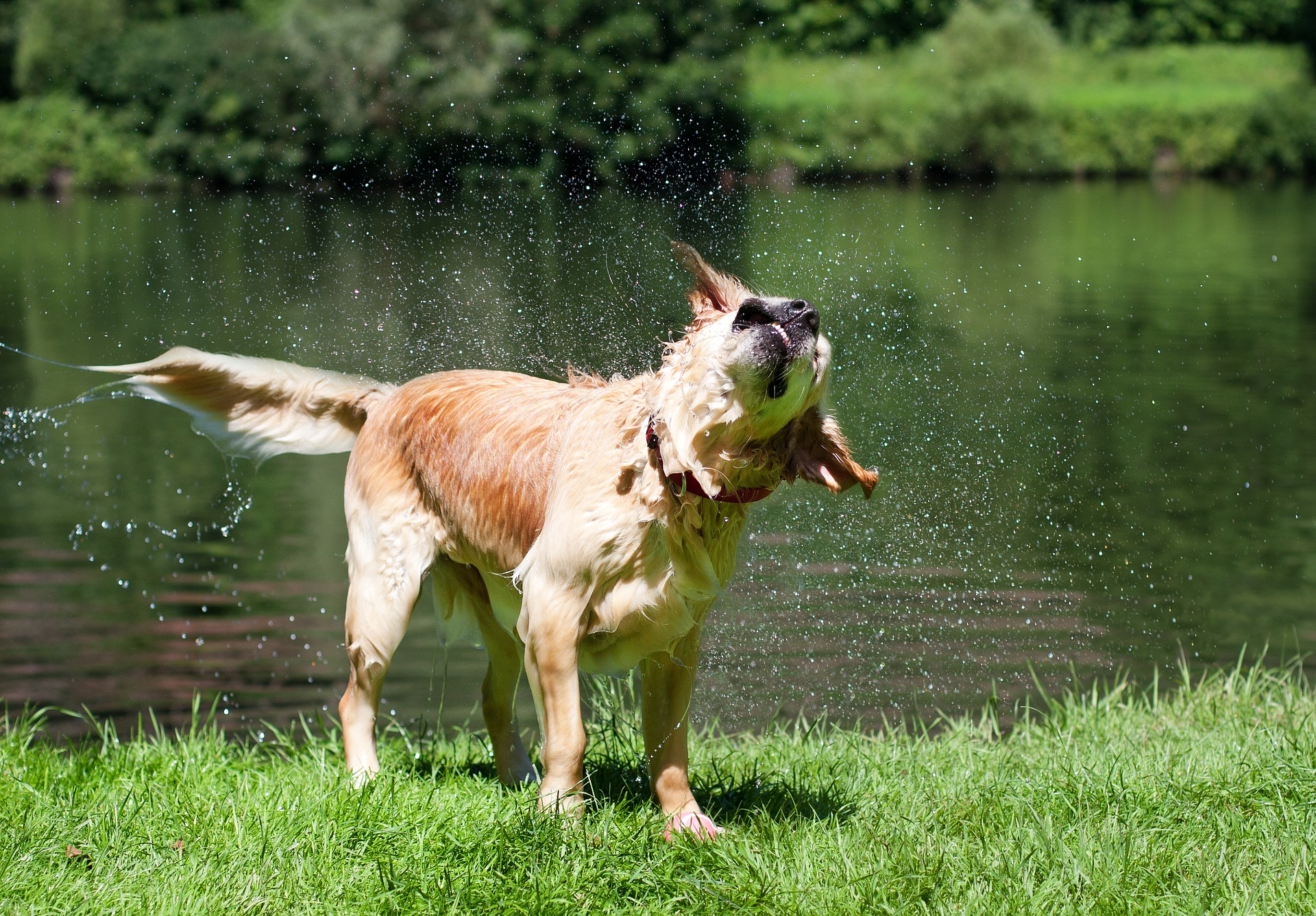
Have you ever watched your dog shake after a bath and wondered how they manage to get you completely soaked while they end up almost dry? I’ve experienced this countless times with my furry friends, and it turns out there’s some fascinating science behind this seemingly simple behavior. Dogs shake for various reasons – sometimes when they’re wet, sometimes when they’re anxious, and sometimes for health-related reasons. Today, I’m diving deep into the remarkable mechanics of how dogs shake and why they do it.
The Physics Behind the Shake: How Dogs Shake Water Off
Let’s start with what might be the most impressive shake – the post-bath shimmy that sends water flying everywhere except the towel you’re holding
According to research by Professor David Hu and his team at Georgia Institute of Technology, dogs can shake off nearly 70% of the water from their fur in just about 4 seconds. That’s incredibly efficient!
Here’s how the mechanics work
- A dog’s backbone can only twist about 30 degrees in either direction (imagine a clock face with the backbone at 12 o’clock, only moving between 11 and 1)
- The magic happens because dogs have loose skin that can swing much farther – up to 90 degrees in either direction (from 9 o’clock to 3 o’clock on our imaginary clock)
- The skin actually whips faster than the backbone, generating forces between 10 and 70 times that of gravity
- These forces are so strong that dogs must close their eyes during shaking to prevent damage from the extreme centripetal forces
The researchers discovered something really cool too – animals tune the frequency of their shaking based on their size! Think about it like two different sized wheels with water droplets on them. The smaller wheel needs to spin faster to generate enough force to throw off the water.
This explains why:
- Labrador Retrievers shake at about 4.5 Hz (cycles per second)
- Chihuahuas shake at around 6.8 Hz
- Mice shake at a whopping 29 Hz
- Brown bears only need to shake at 4 Hz
Why Shaking is a Survival Skill
Now you might be thinking, “Interesting physics, but why did dogs evolve to do this?” Well, it’s actually crucial for survival!
Imagine your dog’s ancient ancestor crossing a cold stream and getting soaked. Without the ability to shake off that water, they’d be in serious trouble because:
- Wet fur loses its insulation properties
- Without proper insulation, hypothermia becomes a real risk
- Drying through body heat alone would require an enormous amount of energy
How much energy? Dr. Hu’s team calculated that a wet 60-pound dog with just one pound of water in its fur would use about 20% of its daily caloric intake simply to air-dry! In the wild, that energy difference could mean life or death.
Fur insulates by trapping warm air between the hairs, and when it’s wet, that mechanism fails completely. The shaking behavior evolved as an energy-efficient way to get mostly dry quickly. That’s why so many furry mammals – not just dogs but also tigers, bears, and mice – all use this same technique.
Other Reasons Dogs Shake: Beyond Getting Dry
While the wet shake is impressive, dogs shake for plenty of other reasons too:
Excitement Shaking
Sometimes dogs shake when they’re super excited to see you. Just coming home at night might be enough to make some dogs shake, bark, and even pee a little with excitement. These excited trembles usually happen when:
- You’ve been away and just returned
- During playtime
- When they know they’re about to go for a walk
Most dogs grow out of the more extreme excitement behaviors, but you can help by keeping your greetings calm and brief. Training them to sit before you greet them can also help manage their excitement.
Anxiety and Fear Trembling
Dogs also shake when they’re scared or anxious. Your dog might tremble during:
- Thunderstorms
- Fireworks displays
- Trips to the vet
- When left alone (separation anxiety)
For anxiety-related shaking, you can:
- Create a safe space like a crate or quiet room
- Use toys and treats as distractions
- Provide soothing touch and gentle massage
- Maintain consistent daily routines
- Speak to your vet about anti-anxiety medications for severe cases
Health-Related Shaking
Sometimes shaking can indicate health problems. Medical causes of shaking include:
Pain and Age-Related Trembling
- Older dogs often develop tremors in their hind legs due to muscle weakness
- Arthritis can cause pain-related trembling
- Your vet can recommend supplements, medications, and therapies to help
Poisoning
Several toxins can cause tremors in dogs:
- Chocolate
- Cigarettes (nicotine poisoning)
- Xylitol (found in many sugar-free gums)
- Snail baits containing metaldehyde
If you suspect poisoning, call your vet immediately. Other symptoms may include weakness, disorientation, drooling, nausea, vomiting, and seizures.
Distemper
This virus commonly causes tremors in unvaccinated puppies and adolescent dogs. Signs include:
- Eye and nose discharge
- Fever
- Coughing
- Trembling
- Loss of appetite
Other Medical Causes
- Seizure disorders like epilepsy
- Generalized tremor syndrome (GTS)
- Low blood sugar (hypoglycemia)
- Kidney failure
- Neurological problems
How to Help a Shaking Dog
If your dog is shaking, here’s what you can do:
For Wet Dogs:
- Have towels ready BEFORE they shake
- Create a designated shake zone in your bathroom
- Use a blow dryer on low heat if your dog tolerates it
For Anxious Dogs:
- Watch for early signs of stress like yawning or lip licking
- Provide a safe space with familiar items
- Use distraction with toys, treats, and games
- Soothe them with gentle touch and massage
- Maintain consistent daily routines
- Ensure they get plenty of exercise
When to See a Vet
Take your dog to the vet if:
- They suddenly begin trembling for no apparent reason
- The shaking is accompanied by other symptoms like vomiting or limping
- You suspect they’ve eaten something toxic
- The shaking doesn’t stop or gets worse
My Personal Experience with Dog Shaking
I’ll never forget when I first bathed my Corgi mix, Max. I had everything prepared – towels, treats, the whole works. But the second I turned off the water, he gave that classic shake and managed to soak literally everything in the bathroom EXCEPT the towel I was holding!
The funniest part was watching his tiny legs wiggle at what seemed like super-speed compared to his larger body. Now I know he was shaking at a higher frequency because of his size! These days, I’m smarter – I put him in the tub, close the shower curtain, and let him shake before I dry him off.
FAQs About Dog Shaking
Should I be worried if my dog is shivering but isn’t cold?
Not necessarily, but stay alert. Dogs sometimes shiver when excited or anxious. However, trembling can also indicate toxin ingestion or other medical conditions. If your dog is trembling AND vomiting or showing other concerning symptoms, contact your vet.
Do different breeds shake differently?
Yes! Smaller dogs like Chihuahuas shake faster than larger breeds like Labradors. This is because they need to generate more force relative to their size to effectively remove water from their fur.
Can I train my dog not to shake?
You can teach a dog to shake on command, but it’s not recommended to prevent them from shaking entirely. Shaking serves important functions for dogs – from drying off to relieving stress. Instead, you might train them to shake in specific areas when wet.
Why does my dog shake their whole body after interacting with another dog?
This is often a stress-relief mechanism. Just like humans might take a deep breath after a tense situation, dogs shake to release built-up tension.
Conclusion
The next time your dog gives that full-body shake, remember you’re witnessing an evolutionary adaptation that has helped canines survive for thousands of years. From the physics of oscillation frequencies to the energy-saving benefits, the dog shake is truly a marvel of natural engineering.
So grab that towel, stand back, and appreciate the amazing way your furry friend has adapted to stay dry, comfy, and healthy through the simple act of shaking. Just maybe don’t stand too close after bath time!
Have you noticed any interesting shaking behaviors in your dog? I’d love to hear about them in the comments below!
10 Reasons for Dog Shaking
There are numerous reasons why a dog might shake—some are harmless, normal responses and others can be a sign of something potentially serious and require consulting a veterinarian or an animal behaviorist.
Here are 10 potential causes for dog shaking:
Medication Side Effects
Like people, dogs can have side effects to medications. One potential side effect is shaking.
Side effects can occur in dogs due to the following:
- The type of medication
- The dosage of medication
- How the medication is administered
- A pet’s health status and age
If your dog is experiencing any adverse reactions to medications, monitor them and consult your vet to learn more about how to best manage or treat the condition.
Seizures result in shaking that can vary in intensity and duration compared to a normal shake-off or trembling due to feeling excited, cold, or anxious.
A few other symptoms of seizures in dogs include:
- Loss of consciousness
- Paddling limbs
- Loss of bladder and bowel control
“Occasionally, focal seizures can happen that aren’t obvious to the pet parent,” Dr. Dixon says.
Shaking or trembling is also a common symptom of other health conditions, including:
Seek out veterinary advice when shaking can’t be clearly attributed to an obvious cause and doesn’t improve quickly with appropriate intervention.
Dogs who have ingested a toxin might show signs of poisoning. Depending on the toxicity of the substance and the ingested amount, it can affect the nervous system and lead to severe symptoms, such as shaking, shortness of breath, and decreased coordination.
Some common poisons for dogs include:
Poisoning is a medical emergency that requires immediate veterinary care. If you suspect that your dog has ingested a potentially dangerous item, call your vet or try the Pet Poison Helpline at 855-764-7661, where a consultation fee applies.