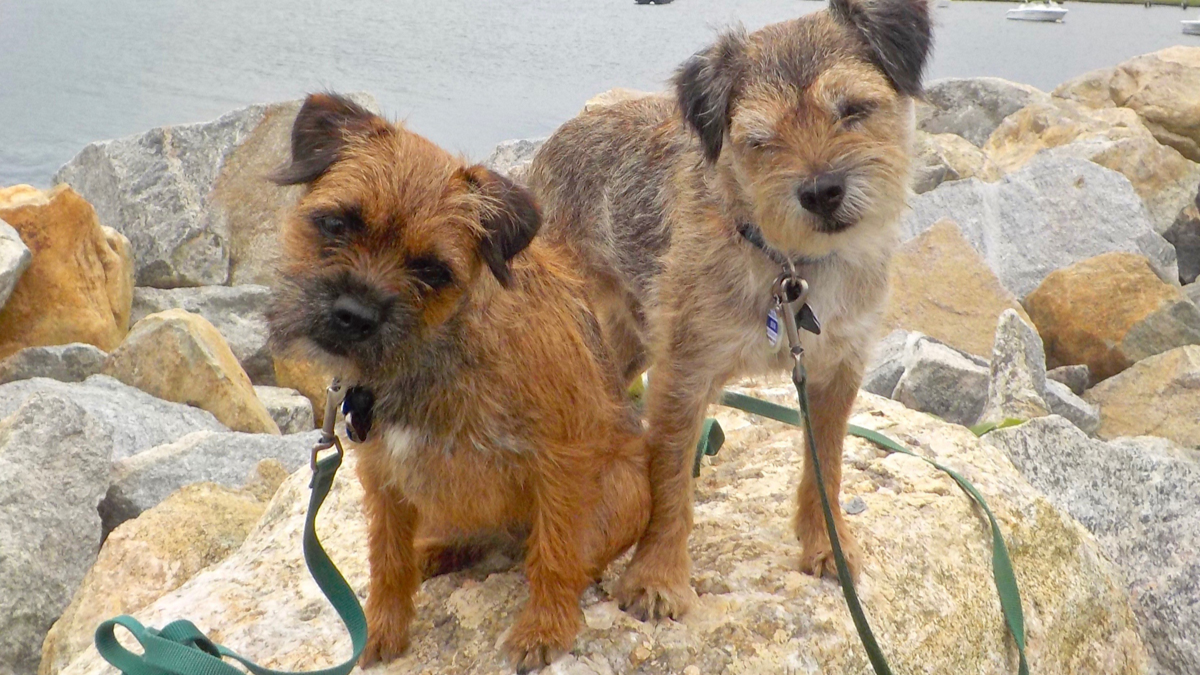
Border terriers are small, energetic dogs with big personalities. Theyâre easy to train because they love learning new things. Theyâre an adaptable breed and fit in well with most types of families as long as they get your love and attention.Â
Border terriers are working terriers originating from the borders of Northumberland and Scotland. They were used for hunting alongside border foxhounds.Â
They are wonderful, small dogs with energy and a cheerful disposition, making them a joyful addition to your household.Â
Border Terriers have a reputation for being clever little dogs with loads of personality. But if you’re considering bringing one of these pups into your home, you might be wondering: are Border Terriers easy to train? As someone who’s worked with dozens of these feisty terriers, I can tell you the answer isn’t just a simple yes or no – though the news is mostly good!
In this comprehensive guide, I’ll share everything you need to know about training these energetic companions, from their natural temperament to specific techniques that work best for this unique breed
The Truth About Border Terrier Trainability
Border Terriers are generally considered easy to train despite their independent streak. These small dogs are intelligent, eager to please, and respond well to positive reinforcement. However, like any dog, they do have their quirks that require understanding and patience.
Let me break down what makes Border Terriers both easy and occasionally challenging to train
Why Border Terriers Are Easy to Train:
- They’re intelligent and quick learners
- They respond exceptionally well to clicks and clicker training
- They have a natural desire to please their owners
- They’re food-motivated (they LOVE treats!)
- They enjoy mental stimulation and learning new things
Training Challenges to Be Aware Of:
- Their independent nature can sometimes make them stubborn
- They have a high prey drive and may chase after potential prey
- They love to dig and might try to escape under fences
- They can become easily distracted by interesting smells and sights
- They may become bored with repetitive training sessions
One important thing to remember is that Border Terriers need to be taught to come when called. This isn’t just a nice-to-have command – it’s crucial for their safety since they’re known to dig under fences and make a break for it when something catches their interest!
10 Essential Border Terrier Training Techniques
To help you raise a well-behaved Border Terrier, here are the most effective training approaches based on their specific temperament and needs:
1. Establish a Predictable Routine
Border Terriers thrive on consistency. Setting up a daily schedule for your puppy teaches them good habits from the start. This routine should include:
- Regular feeding times
- Consistent potty breaks
- Scheduled walks and playtime
- Dedicated training sessions
- Regular bedtimes
A solid routine helps with house training and sets clear expectations about when and where certain behaviors are appropriate. My Border Terrier, Rusty, quickly learned that mornings were for walks and evenings were for cuddle time on the couch!
2. Use Positive Reinforcement
Forget punishment-based training – it just doesn’t work well with Border Terriers. Instead, focus on rewarding good behavior with:
- High-value treats (small pieces of chicken or cheese work wonders!)
- Enthusiastic verbal praise
- Physical affection like petting or belly rubs
- Extra playtime with favorite toys
When my Border Terrier finally mastered “leave it,” I made such a big deal with treats and praise that she now shows off the command to visitors!
3. Start Socialization Early
The critical socialization window for Border Terrier puppies is between 3-16 weeks. During this time, expose your pup to a variety of:
- People of different ages, genders, and appearances
- Other vaccinated, friendly dogs
- Various environments (parks, pet stores, outdoor cafes)
- Different sounds, textures, and experiences
Early socialization prevents fearfulness and anxiety, helping your Border Terrier grow into a confident, friendly adult dog. This foundation makes all other training much easier.
4. Master Basic Commands First
Before moving to fancy tricks, focus on teaching these essential commands:
- Sit
- Stay
- Come
- Down
- Leave it
These fundamental commands provide the framework for good manners and help with impulse control. Keep training sessions short (5-10 minutes) but consistent for best results.
5. Implement Clicker Training
Border Terriers have a reputation for responding exceptionally well to clicker training! The click sound precisely marks the moment of desired behavior, making communication crystal clear. Here’s how to get started:
- Associate the clicker with treats (click, then immediately treat)
- Click the instant your dog performs the desired behavior
- Follow with praise and rewards
- Practice regularly in short sessions
The precision of clicker training helps Border Terriers understand exactly what you want, speeding up the learning process dramatically.
6. Teach Loose Leash Walking
With their curious nature, Border Terriers can be pullers on walks if not properly trained. To teach loose leash walking:
- Use high-value treats to reward position by your side
- Stop walking immediately when pulling starts
- Only continue when the leash is relaxed
- Practice the “heel” command for focused walking
Consistency is key here – never let pulling “work” by allowing your dog to reach what they’re pulling toward.
7. Prioritize Crate Training
Crate training provides numerous benefits for Border Terriers:
- Creates a safe, den-like space they can retreat to
- Aids in house training by teaching bladder control
- Prevents destructive behaviors when unsupervised
- Reduces separation anxiety by providing security
Make the crate a positive space with cozy bedding and special toys. Never use it for punishment, or you’ll undo all your good work!
8. Address Nipping and Biting Early
Those sharp puppy teeth can be a problem! To teach bite inhibition:
- Yelp or say “Ouch!” when teeth touch skin
- Immediately stop play for 30 seconds if biting occurs
- Provide appropriate chew toys as alternatives
- Reward gentle play with continued attention
Consistent redirection helps your Border Terrier develop a soft mouth as they mature.
9. Prevent Separation Anxiety Through Independence Training
Border Terriers can become attached to their people and develop separation anxiety if not taught to be comfortable alone. To build independence:
- Practice short absences from puppyhood
- Leave interactive puzzle toys when you’re gone
- Avoid dramatic goodbyes and greetings
- Reward calm behavior when you return
Gradually increasing alone time helps your Border Terrier develop confidence and prevents destructive behaviors caused by anxiety.
10. Provide Mental Stimulation Through Games and Activities
Border Terriers are working dogs with active minds that need stimulation. Prevent boredom and channel their energy through:
- Agility training (even informal backyard setups work great)
- Food puzzle toys that make them work for treats
- Scent games like “find it”
- Teaching new tricks regularly
Mental exercise is just as important as physical exercise for this intelligent breed!
Border Terrier Training Timeline: What to Expect
Let’s be real – training doesn’t happen overnight. Here’s a general timeline of what to expect when training your Border Terrier:
8-12 weeks:
- Focus on socialization
- Begin house training
- Introduce crate training
- Start with simple commands like “sit”
3-6 months:
- Build on basic commands
- Work on loose leash walking
- Continue socialization in varied environments
- Address nipping behaviors
6-12 months:
- Refine basic commands with distractions
- Add more complex tricks
- Polish leash manners
- Work through adolescent stubbornness (yes, it happens!)
1 year+:
- Maintain training through regular practice
- Add advanced commands if desired
- Consider specialized activities like agility or scent work
Remember, every dog is an individual. Some Border Terriers might pick things up quickly, while others need more time and patience. The key is consistency and making training fun for both of you!
My Experience: The Reality of Training Border Terriers
I’ve trained several Border Terriers over the years, and I’ll be honest – there have been moments of both brilliance and frustration! My first Border, Pepper, mastered “roll over” in just three training sessions, but took three MONTHS to reliably come when called outdoors.
What I’ve learned is that Border Terriers thrive with trainers who:
- Keep sessions short but frequent
- Mix up the rewards to keep interest high
- Use enthusiasm and excitement in their voice
- Stay patient during occasional stubborn moments
- Make training feel like a game rather than work
The good news is that Border Terriers genuinely want to please you, even when their terrier instincts occasionally override their training. With consistent positive reinforcement, they typically become well-mannered companions who are a joy to live with.
Final Thoughts: So Are Border Terriers Easy to Train?
Yes, Border Terriers are generally easy to train compared to many other breeds, especially when you use positive reinforcement methods and understand their natural instincts. Their intelligence, eagerness to please, and food motivation make them responsive students who enjoy learning.
However, their independent terrier nature means they’ll occasionally test boundaries and may become distracted by interesting scents or potential prey. This isn’t disobedience – it’s just part of their heritage as working dogs bred to think for themselves.
With patience, consistency, and the right techniques, most Border Terrier owners find training to be a rewarding experience that strengthens the bond with their dog. The effort you put into training will be repaid many times over with a well-behaved, happy companion who’s a joy to live with for their 12-15 year lifespan.
Have you trained a Border Terrier? I’d love to hear about your experiences in the comments below!
Note: While Border Terriers are generally a healthy breed, they can be predisposed to certain conditions like hip dysplasia, progressive retinal atrophy, and epilepsy. Always work with a reputable breeder who performs health testing, and maintain regular veterinary care to keep your Border Terrier in top shape for training and life.
History of Border Terriers
Border terriers are descended from terriers that were born near the Scottish-English border. These terriers were bred to deter the hill fox. Chasing these predators meant that this type of terrier needed long legs while remaining small enough to dig into the foxs lair.Â
In addition to hunting foxes, border terriers were used to kill rodents and even hunt otters and badgers. Their long legs helped them keep up with horses and other foxhounds when hunting.Â
Border terriers ancestors were energetic, strong, and tireless. Their weatherproof coat was designed to protect them from rain, mist, and the rugged terrain of the borderlands.Â
Border terriers were also called Reedwater, Ullswater, and Coquetdale terriers. These names were derived from the places in northern England where they came from.Â
In addition to being used in foxhunts, border terriers were used to protect shepherds flocks. Theyre still a very popular dog for people in the UK looking for a low-maintenance companion.Â
It wasnt until 1920 that the Kennel Club in England officially recognized the border terrier. The AKC then recognized them by the 1930s.Â
Health Problems to Watch for With Border Terriers
Border terriers are a generally healthy breed but can be predisposed to certain conditions. Responsible breeders should screen their dogs for health conditions like:Â
- Hip dysplasia
- Progressive retinal atrophy
- Juvenile cataracts
- SeizuresÂ
- Heart problems
- Allergies
Recommended health tests include:Â
- Patella evaluation
- Hip evaluation
- Cardiac exam
- Ophthalmologist evaluation
Border terriers arent very heat-tolerant. Itâs important to monitor your dog while theyâre playing outside. Look for signs of overheating if youâre exercising with them in hot temperatures.
Luxating patellas is a specific condition border terriers can develop. This happens when their kneecaps temporarily slip out of place. They are also prone to Spongiform Leukoencephalomyelopathy or SLEM (shaking puppy syndrome).Â
Canine Epileptoid Cramping Syndrome (CECS) is another condition that can cause tremors, muscle spasms, and seizure-like activities that could affect your dogs whole body or just part of it.Â
Skin and ear problems can also occur in border terriers. If you notice your dog itching excessively, you should talk to your vet about possible remedies.Â
Other common conditions include periodontal disease, obesity, and a predisposition for neurological disease. They are also predisposed to skin conditions caused by generalized sebaceous gland hyperplasia. Eye problems like corneal ulceration can occur.Â
Ensuring your dog gets regular veterinary checkups is important to keeping them healthy. There may seem like many predispositions, but you and your vet can get ahead of any severe issues with proper care and testing. A core set of vaccines is also recommended and can ward off many illnesses.Â
All dogs should have the following core vaccines (unless thereâs a medical reason not to vaccinate):
Year-round medication for heartworms can protect your pet from infection, but you will also want to stay on top of managing ticks and fleas with preventative medication (especially if your terrier spends a lot of time outdoors).
5 Pros and Cons of Owning a Border Terrier ⚖️
FAQ
Are Border Terriers difficult?
… plucky independence and they tend to be self-assured and less prone to separation anxiety than other breeds although this can make them a little stubborn
Can Border Terriers be left alone?
What are the negative traits of Border Terriers?
| Pros | Cons |
|---|---|
| Loving, affectionate, and playful | Incredibly high prey drive |
| Less feisty than other terriers | Needs a lot of daily physical and mental exercise |
| Hypoallergenic | Prone to digging and excessive barking |
| Less prone to developing separation anxiety | Known to be escape artists |
Are Border Terriers good house dogs?