
As a dog parent, finding any kind of lump or bump on your furry friend can send your anxiety through the roof. Among the various types of tumors that can affect our canine companions, mast cell tumors (MCTs) are actually pretty common, especially when it comes to skin cancer in dogs If your pup has been diagnosed with a mast cell tumor, you’re probably wondering are these tumors causing my dog pain?
I’ve done extensive research on this topic to help fellow dog parents understand what their pets might be experiencing Let’s dive into everything you need to know about mast cell tumors and the pain factor,
What Exactly Are Mast Cell Tumors?
Before we talk about pain, let’s understand what we’re dealing with. Mast cell tumors are cancerous accumulations of mast cells, which are a type of white blood cell that plays an important role in your dog’s immune system. Normal mast cells help with inflammation and allergic responses by releasing substances like histamine and heparin.
When these mast cells become cancerous, they start dividing abnormally and form tumors. MCTs account for about 15-20% of all skin tumors in dogs, making them the most common malignant skin tumor our pups face.
The tricky thing about mast cell tumors is that they’re masters of disguise! They can:
- Appear in any shape
- Have different firmness levels
- Be various sizes
- Show up almost anywhere on the body
This makes them super difficult to identify just by looking – even veterinarians can’t tell for sure without proper testing!
Do Mast Cell Tumors Cause Pain in Dogs?
Now for the million-dollar question – are mast cell tumors painful for dogs? The answer isn’t straightforward because pain can depend on several factors:
Factors Affecting Pain in Dogs with MCTs:
- Location of the tumor – MCTs in areas with tight skin or near joints may be more uncomfortable
- Size of the tumor – Larger tumors may cause more discomfort
- Whether the tumor is ulcerated – Open, oozing tumors can be painful
- Degree of inflammation – More inflamed tumors typically cause more discomfort
- Whether the tumor is actively degranulating – This process can cause significant discomfort
In my experience researching this topic, many dogs with small to medium-sized mast cell tumors don’t show obvious signs of pain. However, this doesn’t mean they aren’t experiencing some level of discomfort.
Signs Your Dog Might Be in Pain From a Mast Cell Tumor:
- Licking or chewing at the tumor site
- Reluctance to be touched in that area
- Changes in behavior when the tumor is touched
- Swelling, redness, or heat around the tumor
- Lethargy or decreased activity
- Changes in appetite
One unique feature of mast cell tumors is that they can change size rapidly when manipulated. This process, called degranulation, happens when the tumor releases its inflammatory substances all at once. During degranulation, dogs may experience:
- Sudden swelling at the tumor site
- Redness and warmth
- Obvious discomfort or pain
- In severe cases, systemic symptoms like vomiting or diarrhea
The Discomfort Beyond Physical Pain
What’s important to understand is that even if your dog isn’t showing classic signs of pain, mast cell tumors can cause discomfort in other ways. When mast cells release their contents (like histamine), this can cause:
- Intense itching
- Stomach upset and nausea
- Vomiting and diarrhea
- Swelling of the face and limbs
- General feelings of unwellness
These symptoms can be just as distressing for your dog as actual pain. In fact, some dogs with MCTs seem more bothered by the itching and systemic effects than by direct pain from the tumor itself.
Degranulation: When MCTs Become Painful
I want to emphasize this unique characteristic of mast cell tumors because it’s really important. When a tumor is bumped, irritated, or manipulated, it can trigger degranulation – the massive release of histamine and other inflammatory compounds.
During degranulation, a previously non-painful tumor can suddenly become very uncomfortable for your dog. The tumor might:
- Swell significantly
- Become red and inflamed
- Feel hot to the touch
- Cause your dog distress
This is why veterinarians often recommend handling suspected mast cell tumors very gently, and why they may prescribe antihistamines like Benadryl even before treatment begins.
Pain Based on Tumor Grade and Stage
The pain level can also depend on how aggressive the tumor is. Mast cell tumors are graded (usually as low, intermediate, or high grade) based on how aggressive they appear under the microscope.
| Grade | Likelihood of Pain |
|---|---|
| Low grade | Generally less painful unless irritated |
| Intermediate grade | May cause moderate discomfort |
| High grade | More likely to cause significant pain |
Additionally, the stage of the cancer (how far it has spread) can affect pain levels:
- Stage 0-1: Single tumor confined to the skin, usually less painful
- Stage 2: Single tumor with nearby lymph node involvement, may cause more discomfort
- Stage 3-4: Multiple tumors or spread to internal organs, often more painful
Managing Pain from Mast Cell Tumors
If your dog has been diagnosed with a mast cell tumor, there are several ways to manage any pain or discomfort:
Medical Management:
- Antihistamines (like Benadryl) – Help prevent or reduce degranulation
- Pain medications – Your vet may prescribe appropriate pain relief
- Steroids – Can reduce inflammation and sometimes even shrink tumors temporarily
- H2 blockers (like famotidine) – Help prevent stomach issues from histamine release
Surgical Management:
For most dogs, surgical removal is the treatment of choice for mast cell tumors. Not only does this address the cancer, but it also eliminates the source of potential pain.
After surgery, most dogs need:
- About two weeks of restricted activity
- Pain medications
- Antihistamines
- A recovery collar to prevent licking at the surgical site
Additional Treatments:
For more aggressive tumors, your vet might recommend:
- Radiation therapy
- Chemotherapy
- Targeted therapies like Palladia or Kinavet (c-kit inhibitors)
When to See Your Vet
You should contact your veterinarian immediately if you notice:
- A new lump or bump anywhere on your dog
- A known mass that changes in size, texture, or appearance
- Your dog showing signs of pain or excessive licking at a tumor site
- Swelling, redness, or drainage from a tumor
- Signs of an allergic reaction (facial swelling, hives, etc.)
- Vomiting or diarrhea in a dog with a known mast cell tumor
The Breed Factor
It’s worth mentioning that certain breeds are more predisposed to developing mast cell tumors, including:
- Boxers
- Boston Terriers
- Pugs
- Bulldogs
- Retrievers (especially Golden Retrievers)
- Pit Bull Terriers
- Rhodesian Ridgebacks
- Bullmastiffs
- Weimaraners
- Schnauzers
If you have one of these breeds, be extra vigilant about checking for any unusual lumps or bumps.
My Personal Take
As someone who’s researched dog cancer extensively, I believe that even if mast cell tumors aren’t always obviously painful, they do cause some level of discomfort for most dogs. The inflammatory compounds these tumors release can make a dog feel unwell even if they’re not showing clear signs of pain.
The good news is that with proper treatment, most dogs with low or intermediate-grade mast cell tumors have an excellent prognosis. After complete surgical removal, many dogs go on to live normal, pain-free lives with no recurrence of the tumor.
So, are mast cell tumors painful for dogs? The answer is: sometimes yes, sometimes no, and it really depends on the individual tumor and dog. While many MCTs may not cause obvious pain, they can certainly cause discomfort through inflammation, itching, and systemic effects.
If your dog has been diagnosed with a mast cell tumor, work closely with your veterinarian to develop a treatment plan that addresses both the cancer and any potential pain or discomfort. With prompt attention and appropriate care, most dogs can recover well and maintain a good quality of life.
Have you had experience with a dog who had mast cell tumors? What symptoms did they show? I’d love to hear your experiences in the comments below!
Disclaimer: While I’ve researched this topic thoroughly, I’m not a veterinarian. Always consult with your veterinary professional for medical advice concerning your pet.
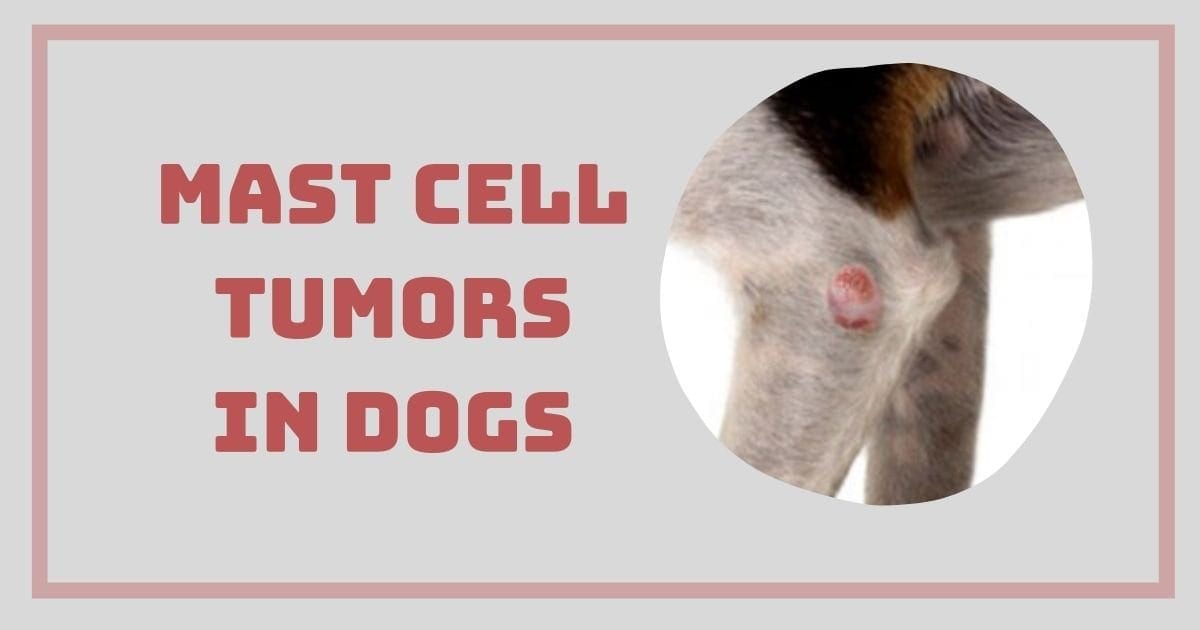
Grading and Staging of Mast Cell Tumors in Dogs
When your vet removes the tumor, they will want to send it off for histopathology (biopsy). This will allow them to tell if the tumor is completely removed and determine how likely it is to come back or spread.
Grading helps determine the behavior of the tumor. Low grade tumors are less likely to spread or return, while high grade tumors are more likely to metastasize and grow back.
Staging is done to figure out how much the cancer has already spread.
With lower (zero or one) staging, the mast cell tumor has not spread to other locations. Mast cell tumors most commonly metastasize (spread) to the lymph nodes, spleen, and liver.
Higher stages (three or four) correlate with more spread of the cancer to other sites.
Causes of Mast Cell Tumors in Dogs
Like other types of cancer in dogs, mast cell tumors are likely caused by a mix of genetic and environmental factors. There is a receptor on the surface of mast cells called c-kit. Current research suggests that mast cell tumors are the result of a mutation in this c-kit receptor.
Certain breeds are more likely to get mast cell tumors. These breeds include:
Mast Cell Tumors in the DOG. What to do Next with Dr. Dan.
FAQ
Can a dog get a mast cell tumor?
These tumors can appear anywhere on a dog’s body but are most commonly found on the skin. While some MCTs are benign, others can be highly aggressive and spread to other parts of the body. Local Invasion and Ulceration: Mast cell tumors can grow rapidly and invade surrounding tissues, causing significant damage.
Can a dog die from mast cell cancer?
Meaning most dogs do not succumb to the cancer. It is still important to monitor these dogs after surgery to make sure regrowth or spread do not occur. Dogs with high grade mast cell tumors or tumors which cannot be removed, have a more aggressive behavior and do not do as well. Multiple treatment options may be needed for these dogs.
How do you know if a dog has a mast cell tumor?
Symptoms of mast cell tumors in dogs can vary depending on the location and grade of the tumor. Common signs may include a lump or mass under the skin, itching or redness around the tumor, vomiting, diarrhea, or weight loss. 3. Can mast cell tumors be prevented in dogs? Unfortunately, there is no known way to prevent mast cell tumors in dogs.
Can a dog recover from a mast cell tumor?
If surgery is not an option because the tumor is too big to remove, then radiation therapy may be considered. Recovering from surgical removal of a low-grade mast cell tumor in dogs usually requires two weeks of rest, pain medications, antihistamines like Benadryl ®, and wearing a recovery collar.
Are there side effects of mast cell tumors in dogs?
Some dogs may experience side effects from treatment for mast cell tumors, such as nausea, vomiting, or changes in appetite. These side effects are usually temporary and can be managed with supportive care. 13. Can mast cell tumors in dogs be detected with blood tests?
Do dogs succumb to mast cell cancer after surgery?
Mast cell tumors which are small, low grade, and completely removed by surgery, do well for a long time. Meaning most dogs do not succumb to the cancer. It is still important to monitor these dogs after surgery to make sure regrowth or spread do not occur.
Is my dog in pain with a mast cell tumor?
How long will a dog live with a mast cell tumor?
What happens if I don’t remove my dog’s mast cell tumor?
Do tumors hurt to touch on dogs?