
Hey there fellow dog lovers! Today we’re gonna talk about something that bugs me every summer (pun totally intended) – those pesky mosquitoes and whether they’re actually dangerous to our furry friends. As someone who’s spent countless evenings swatting these annoying bloodsuckers away from both myself and my pup I’ve wondered just how worried I should really be.
Spoiler alert mosquitoes aren’t just annoying – they can actually pose some serious health risks to our four-legged companions. But don’t panic! I’m here to break down everything you need to know about these tiny vampires and how to protect your best friend from their irritating (and potentially dangerous) bites
The Real Danger Behind Mosquito Bites on Dogs
Let’s be real – mosquitoes are probably the most hated insects on the planet. They’re not just a nuisance for us humans; they’re equally bothersome to our canine companions. But the irritation factor is just the tip of the iceberg.
More Than Just an Itch: Disease Transmission
The biggest threat mosquitoes pose to dogs isn’t the bite itself – it’s what they might be carrying. These tiny insects are basically flying disease transporters, and they don’t discriminate between hosts.
The primary concern? Heartworm disease.
According to the American Heartworm Society, heartworm disease affects over 1 million dogs in the United States annually. That’s a lot of pups suffering from a preventable disease!
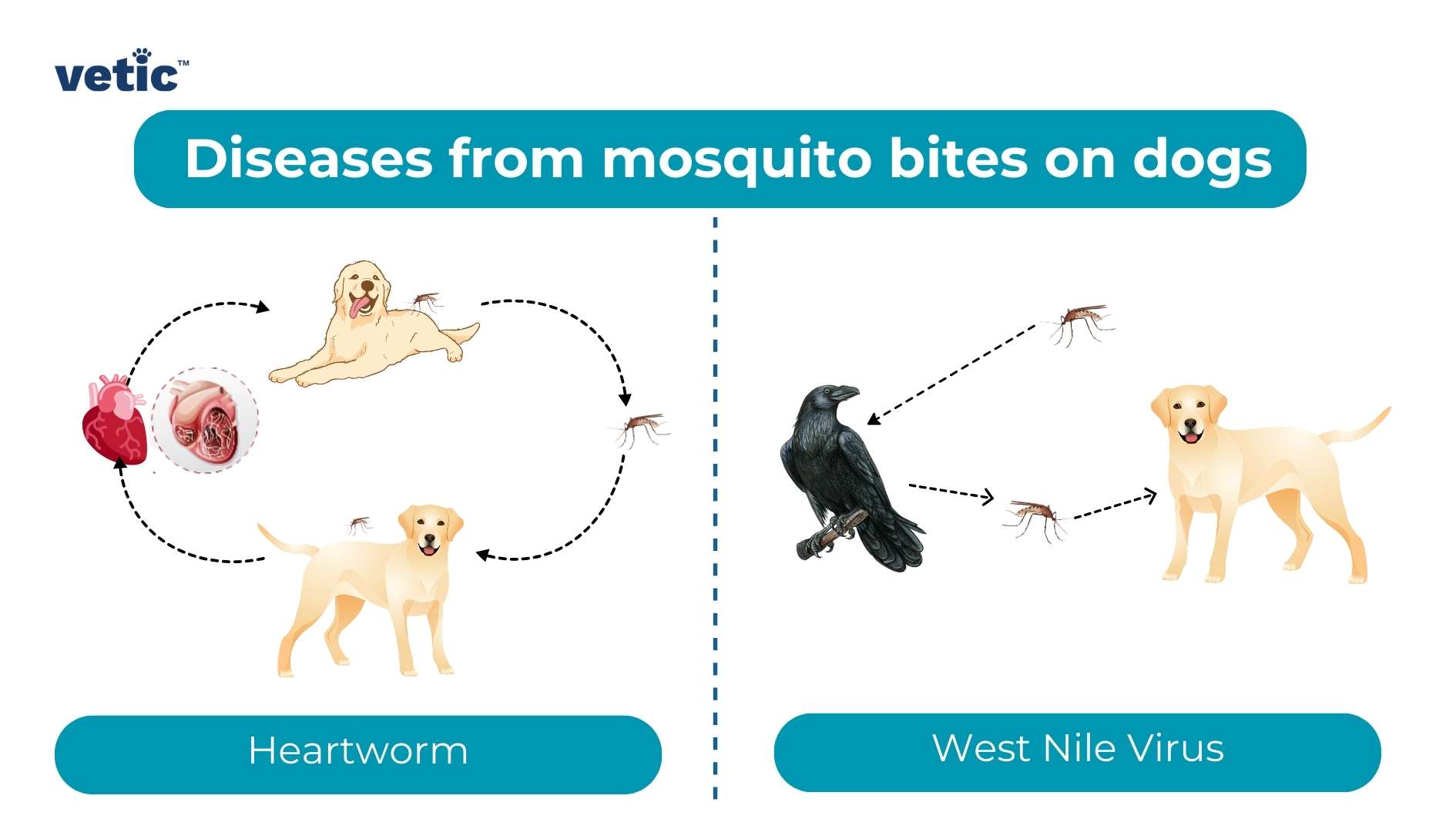
Here’s how the heartworm lifecycle works:
- A mosquito bites an infected animal and picks up baby heartworms (microfilariae)
- These larvae develop inside the mosquito
- When the mosquito bites your dog, it deposits these larvae into your dog’s bloodstream
- The larvae migrate through your dog’s tissue and develop into adult heartworms
- These worms take up residence in your dog’s heart, lungs, and blood vessels
- Adult heartworms reproduce, creating more microfilariae
- Another mosquito bites your infected dog, and the cycle continues
This whole process can take 6-7 months from bite to adult worms. Once established, these parasites can cause serious damage to your dog’s heart, lungs, and blood vessels. Untreated, heartworm disease can be fatal.
But heartworms aren’t the only threat. Mosquitoes can also transmit other diseases to dogs, including:
- Eastern equine encephalitis (EEE)
- West Nile virus
While these are relatively rare in dogs compared to heartworm disease, they’re still potential threats, especially in areas where these diseases are prevalent.
Signs Your Dog Has Been Bitten by Mosquitoes
Sometimes it can be tricky to spot mosquito bites on dogs, especially if they have thick or long fur. But there are some telltale signs to watch for:
- Small, raised, itchy welts (similar to human mosquito bites)
- Excessive scratching, licking, or chewing at a particular spot
- Visible irritation on areas with less fur (belly, ears, nose)
If your pooch has been bitten, you’ll probably notice them scratching at the bite area. These bites typically resolve within a day or two without treatment, but keep an eye out for excessive scratching that could lead to secondary infections or hot spots.
Dogs with shorter coats, like Pit Bulls or Greyhounds, will show the welts more clearly than fluffier breeds like Huskies. So if you’ve got a furball, you might need to pay extra attention to their behavior to spot a problem.
Symptoms of Heartworm Disease: The Silent Threat
The really scary thing about heartworm disease is that symptoms often don’t appear until the infection is advanced. By then, significant damage may have already occurred. Early detection through regular veterinary testing is crucial.
Watch for these warning signs of heartworm disease:
- Persistent cough
- Fatigue or reluctance to exercise
- Decreased appetite
- Weight loss
- Swollen abdomen (due to fluid accumulation)
- Difficulty breathing
- Pale gums
If your dog shows any of these symptoms, especially if they live in or have traveled to areas where heartworm disease is common, get them to a vet ASAP for testing.
The 5 Best Mosquito Repellents for Dogs
Now that we know the risks, let’s talk about how to protect our four-legged friends from these blood-sucking pests. There are several effective options on the market specifically formulated for dogs.
1. K9 Advantix II
K9 Advantix II is a heavy-hitter in the world of parasite protection. It’s a topical, spot-on treatment that not only repels mosquitoes but also kills and repels fleas and ticks.
Key Features:
- Active ingredients: Imidacloprid, permethrin, and pyriproxyfen
- Monthly application
- Becomes effective within 12 hours
- Waterproof after 24 hours
- Safe for dogs over 7 weeks old
- Made in the USA
It’s a bit on the pricier side, but many pet parents (including some staff at K9 of Mine) swear by it for comprehensive protection.
2. ShieldTec Plus
If you’re looking for a more budget-friendly option, ShieldTec Plus offers similar protection to K9 Advantix II at a lower price point.
Key Features:
- Active ingredients: Permethrin and pyriproxyfen
- Easy application
- Waterproof
- 30-day protection
- Also protects against fleas, lice, and ticks
- Made in the USA
While it may not be quite as effective as K9 Advantix II according to some reviews, it’s a solid option for pet parents on a budget.
3. Absorbine UltraShield EX
For those who prefer a spray-on application, Absorbine UltraShield EX offers flexible protection that can be applied directly to your dog’s coat.
Key Features:
- Active ingredients: Permethrin, pyrethrins, and piperonyl butoxide
- Kills over 70 species of insects
- Includes sunscreen and coat conditioner
- Weatherproof for up to 17 days
- Ready to use with no mixing required
- Made in the USA
This product is versatile – you can also use it on your dog’s house or bedding for extra protection.
4. Wondercide Flea, Tick, & Mosquito Spray
If you prefer natural products, Wondercide offers a plant-based alternative that many pet parents love.
Key Features:
- Contains cedarwood oil and lemongrass oil
- Available in 4 different scents
- Can be used on your dog and around your home
- Also effective against fleas and other bugs
- One bottle lasts 4-6 weeks
- Made in the USA
Natural doesn’t always mean less effective, but be aware that results may vary compared to conventional insecticides.
5. Vet’s Best Mosquito Repellent
Another natural option, Vet’s Best is extremely affordable while still offering decent protection.
Key Features:
- Plant-based, DEET-free formula
- Contains lemongrass oil and geraniol oil
- Pleasant scent
- Safe for dogs and cats over 12 weeks of age
- Can be reapplied every 2 hours as needed
- Made in the USA
- Safe for humans too!
While it may require more frequent application than some other options, its wallet-friendly price makes it accessible for most pet parents.
Mosquito Repellents You Should NEVER Use on Dogs
Now, let’s talk about what NOT to use on your fur baby. There are certain mosquito repellents that are downright dangerous for dogs.
1. DEET-Based Products
NEVER use DEET on or around your dog. DEET is one of the most common ingredients in human mosquito repellents, but it can be toxic to dogs. Exposure can cause:
- Excessive drooling
- Vomiting
- Diarrhea
- Eye irritation
- Discoordination
- Seizures
- In severe cases, even death
This includes not letting your dog lick your skin after you’ve applied DEET-based repellent to yourself. Better safe than sorry!
2. Products Not Specifically Labeled for Dogs
As the EPA says, “the label is the law.” Any mosquito repellent not specifically labeled for use on dogs should be avoided. This includes products for humans, products for other animals, and generic insect repellents.
The warning on these products about using them only as directed isn’t just legal jargon – it’s there to protect your pet from potentially harmful chemicals that haven’t been tested for safety in dogs.
Other Ways to Protect Your Dog from Mosquitoes
Beyond using dog-safe repellents, there are several other steps you can take to reduce your dog’s exposure to mosquitoes:
Limit Outdoor Time During Peak Mosquito Hours
Mosquitoes are most active during dawn and dusk. When possible, try to walk your dog and schedule outdoor playtime outside of these peak hours.
Eliminate Standing Water Around Your Home
Mosquitoes breed in stagnant water, so removing their breeding grounds can significantly reduce their population around your home:
- Empty and refresh water bowls regularly
- Remove old tires, buckets, or containers that collect water
- Keep bird baths moving with a fountain attachment
- Fix areas with poor drainage
- Clean gutters to prevent water accumulation
Use Mosquito Traps or Repellents in Your Yard
Consider using mosquito traps or yard treatments to reduce the overall mosquito population in your outdoor spaces. Just make sure any products used are safe for pets who may come into contact with treated areas.
Protective Clothing for Dogs
For short-haired dogs or those particularly sensitive to mosquito bites, protective clothing like light t-shirts might provide an additional barrier during peak mosquito season.
What to Do If Your Dog Gets Bitten by a Mosquito
So your dog got bitten despite your best efforts. Don’t panic! Here’s what to do:
-
Prevent scratching: Try to keep your dog from scratching or chewing at the bite to prevent infection. An Elizabethan collar (the “cone of shame”) might be necessary if they won’t leave it alone.
-
Monitor the bite area: Most mosquito bites will resolve on their own within 1-2 days. Keep an eye out for signs of infection like increased redness, swelling, warmth, or discharge.
-
Watch for allergic reactions: Though rare, some dogs may have allergic reactions to mosquito bites. Signs include facial swelling, vomiting, severe diarrhea, or lethargy. If you notice these symptoms, seek emergency veterinary care immediately.
-
Ensure heartworm prevention is up to date: If your dog isn’t already on heartworm preventative medication, talk to your vet about starting one right away.
The Importance of Year-Round Heartworm Prevention
I cannot stress this enough – heartworm prevention is ESSENTIAL for all dogs, regardless of where you live. While mosquito activity varies by region and season, the American Heartworm Society recommends year-round prevention for all dogs.
Why year-round protection? A few reasons:
- Mosquitoes can survive in unexpected places and times (including indoors!)
- It’s easy to forget to restart prevention if you stop during certain seasons
- Many heartworm preventatives also protect against other parasites
- Treatment for heartworm disease is expensive, risky, and difficult for your dog
Some recommended heartworm preventatives include:
- Heartgard Plus
- Sentinel
- Revolution
- ProHeart 12 (an injection that lasts 12 months)
So, are mosquitoes dangerous to dogs? The answer is a resounding YES. Beyond the annoyance and discomfort of bites, mosquitoes pose a serious health risk to our furry friends through the transmission of heartworm disease and other illnesses.
But don’t let the buzz kill your vibe! With proper prevention measures, including:
- Appropriate mosquito repellents designed specifically for dogs
- Regular heartworm preventative medication
- Environmental management to reduce mosquito populations
- Limiting exposure during peak mosquito hours
…you can significantly reduce the risks and keep your four-legged family member safe and comfortable.
Remember, your vet is your best resource for advice specific to your dog’s needs and your local area. Schedule regular check-ups and heartworm tests, and don’t hesitate to ask questions about the best prevention protocol for your unique pup.
Have you dealt with mosquito issues with your dog? What products or strategies worked best for you? Drop a comment below – I’d love to hear your experiences!
Stay safe out there, and keep those tails wagging!
Disclaimer: This article is meant for informational purposes only and should not replace professional veterinary advice. Always consult with your veterinarian before starting any new treatment or prevention protocol for your dog.
Signs of Mosquito Bites on Dogs Body Copy
In most cases, your dog will not notice a mosquito bite.1 If your dog is affected by mosquito bites, you may see these signs:
- Scratching, licking, or biting at the site of the bite
- Rubbing their ears or nose against a rough surface
- Red bumps or welts on the skin, like mosquito bites on a human
Although these bites can be a nuisance to both humans and dogs, the real danger of mosquitoes lies in the disease transmission. Mosquitoes are a vector for heartworm disease, which can have devastating effects on your pet.
Can Dogs Get Sick from Mosquito Bites?
When you think about diseases that are transmitted by mosquitoes, one may think of the ones that are most dangerous to humans: West Nile virus or Zika virus. But in fact, these diseases are extremely uncommon in dogs. The most dangerous mosquito-borne illness to dogs is heartworm disease, and it only takes a single mosquito bite to transmit it.
When a mosquito bites an animal that has been infected with heartworms, it picks up the heartworm larvae. When that same mosquito bites your dog, those heartworms are transmitted onto the skin near the mosquito bite. After the mosquito leaves, the larvae actively migrate into the bite wound infecting your dog.1
Heartworm disease is a serious threat that can cause permanent damage to your dog’s heart and arteries of the lungs. In the most severe cases, heartworm disease can be fatal to dogs. It’s important for pet owners to recognize the signs of heartworms in dogs, and to schedule an appointment with your vet if your dog displays any of those signs.
Are Mosquitoes Harmful to Pets? Protecting Cats & Dogs from Bites and Diseases
FAQ
Can a mosquito bite a dog?
Guard your dog from mosquitoes. Just as mosquitoes bite humans, they can also bite dogs. These pests can live all year long and can reproduce quickly, emerging even during short periods of warm, moist weather. Here’s what you should know about your dog and mosquitoes — and how to help prevent mosquitoes. Can Mosquito Bites Harm Your Dog?
Can a dog lick a mosquito bite?
All dogs react differently to mosquito bites. Many of them will only have minor reactions that do not need any treatment, though you should monitor the area for signs of infection. If your dog tries to lick or chew at a bite, then you should prevent this with an Elizabethan collar (or similar).
What are the risks associated with mosquito bites on dogs?
Below are the mild risks associated with mosquito bites on dogs. Red bumps are the result of how your dog’s bodies react to mosquito bites. When mosquitoes bite dogs, they pierce the skin so that they can feast on their target’s blood. As these insects feed on their target, mosquitoes secrete saliva directly to their targets.
Can mosquitoes make dogs sick?
Yes, mosquitoes can make dogs sick by transmitting diseases such as heartworm and, less commonly, West Nile Virus. While a bite itself can cause itching and irritation, the most serious risk is heartworm, a potentially fatal parasite that damages a dog’s heart and lungs. Dogs can also have allergic reactions to mosquito saliva, leading to hives or severe anaphylaxis.
What to do if your dog gets bit by a mosquito?
What happens if my dog eats mosquitoes?
How to keep mosquitoes away in a dog safe?
Planting marigolds around your home can create a natural barrier against mosquitoes. They’re safe for dogs, adding both protection and beauty to your garden.Nov 6, 2023