
Service dogs provide various types of highly valuable assistance to individuals who suffer from all types of disabilities. And, for the most part, service dogs are well-trained, highly-tolerant animals that are dedicated to their human companion. When it comes to selecting a dog breed as a service animal, some breeds are more common than others, with Labradors and Golden Retrievers being the most common service breeds. However, recent studies suggest that this is due in large part to the fact that these breeds are simply the most common breeds in the United States, and therefore, more people select these breeds as service companions. Studies also suggest that these breeds are considered among the safer breeds as they rarely attack humans.
More recently, people looking for a service animal have started to select pit bulls. However, based on the evidence, pit bulls are generally considered a poor choice for a service animal. Regardless, breed advocate groups have pushed the acceptability of pit bulls are service animals. This raises very valid concerns, not just for those who require the assistance of a service animal but also for members of the general public who may encounter a service animal in places where they wouldn’t normally find a pit bull.
Pit bulls often get a bad rap in the media, but many people wonder if these loyal companions can serve as legitimate service animals. As someone who’s researched this topic extensively, I can tell you that the answer isn’t always straightforward. Let’s dive into whether pit bulls can legally become service dogs and what challenges owners might face.
The Legal Status of Pit Bulls as Service Dogs
Yes, pit bulls can legally be service dogs under federal law.
According to the Americans with Disabilities Act (ADA), service animals are defined as dogs that have been individually trained to perform specific tasks for people with disabilities. The ADA doesn’t restrict service animals based on breed, which means pit bulls cannot be discriminated against solely because of their breed if they meet the service animal definition.
As the LegalClarity team explains:
“Federal law generally does not impose breed restrictions on service animals. The ADA does not restrict the type of dog breeds that can be service animals, meaning a ‘pitbull’ or any other breed cannot be discriminated against solely based on its breed if it meets the definition of a service animal.”
This is an important distinction for pit bull owners to understand Even if your local area has breed-specific legislation (BSL) that restricts or bans pit bulls, these laws must make exceptions for service animals.
What Qualifies a Dog as a Service Animal?
Before we go further, let’s clarify what makes any dog—pit bull or otherwise—a legitimate service animal:
- The dog must be individually trained to perform specific tasks or work directly related to the person’s disability
- The tasks must help mitigate the person’s disability
- The dog must be trained to behave properly in public settings
- The dog must be under the handler’s control at all times
Examples of tasks service dogs might perform include:
- Guiding people with visual impairments
- Alerting individuals with hearing impairments to sounds
- Pulling a wheelchair
- Retrieving items
- Alerting to and protecting a person during a seizure
- Reminding someone to take medication
- Calming a person during an anxiety attack
It’s important to note that emotional support animals, therapy dogs, and pets are not considered service animals under the ADA, even though they may provide comfort and support.
Pit Bulls as Service Dogs: Strengths and Considerations
According to Service Dog Certifications, pit bulls actually have several qualities that make them potentially excellent service dogs:
Strengths of Pit Bulls as Service Dogs:
- Physically capable: They’re strong enough to pull wheelchairs and provide stability for mobility assistance
- Loyal and dedicated: They tend to be extremely devoted to their handlers
- Eager to please: This makes them trainable for complex tasks
- Intuitive: Many pit bull owners report their dogs have a natural sense for emotional changes
- Sturdy build: Their physical structure can handle the demands of service work
As Service Dog Certifications notes: “Despite the stigma attached to the Pit Bull, they do make excellent Service Dogs. They are large enough and strong enough to pull a wheelchair, as well as offer physical support for those with balance or mobility issues.”
Special Considerations:
While pit bulls can legally be service dogs, potential handlers should be aware of some challenges:
- Public perception: Unfortunately, some people may react negatively to pit bulls in public spaces due to misconceptions about the breed
- Housing challenges: Despite ADA protections, some housing providers may attempt to deny housing to pit bull service dogs
- Additional scrutiny: Pit bull service dogs may face more questioning and scrutiny than other breeds
- Breed-specific legislation: Some areas have laws restricting pit bulls, which can complicate travel
Handler Responsibilities
If you have a pit bull service dog, you have specific responsibilities to maintain your access rights:
- Your service dog must be under control at all times (leashed unless the leash interferes with the dog’s work)
- You’re responsible for the dog’s care, supervision, and waste cleanup
- The dog must be housebroken and well-behaved in public
- You must ensure your dog doesn’t pose a direct threat to others
Remember that a service dog can be asked to leave a public place if it’s out of control and you don’t take effective action to control it, or if it’s not housebroken.
Public Access Rights and Limitations
Pit bull service dogs, like all service animals, have broad access rights under the ADA. They’re generally allowed in all public accommodations where the public can go, including:
- Restaurants
- Hotels
- Stores
- Hospitals
- Transportation systems
- Government buildings
This access is protected even if the establishment has a “no pets” policy, since service animals are working animals, not pets.
When you enter a public place with your pit bull service dog, staff are limited in what they can ask you. They may only ask:
- Is the animal required because of a disability?
- What work or task has the animal been trained to perform?
Staff cannot:
- Ask about your disability
- Require medical documentation
- Ask the dog to demonstrate its task
- Charge extra fees for service animals
Common Misconceptions About Pit Bulls
One reason pit bulls face extra scrutiny as service dogs is the many misconceptions about the breed. Let’s address a few:
| Misconception | Reality |
|---|---|
| All pit bulls are aggressive | Well-bred and properly trained pit bulls are typically friendly and loving companions |
| Pit bulls have “locking jaws” | This is anatomically impossible – their jaw structure is similar to other dog breeds |
| Pit bulls aren’t good with children | Many pit bulls are extremely tolerant of children when properly socialized |
| Pit bulls can’t be trained properly | Pit bulls are intelligent and typically eager to please, making them trainable |
As Service Dog Certifications points out: “A well-bred ‘Pit Bull’ is friendly, loving, and a devoted companion. They have no idea of their size and believe that any lap is an opportunity for love and affection.”
Training a Pit Bull as a Service Dog
If you’re considering training a pit bull as a service dog, here are some tips:
- Start early: Begin socialization and basic training as early as possible
- Seek professional help: Consider working with a professional trainer experienced with both service dog training and pit bulls
- Focus on public behavior: Ensure your dog is exceptionally well-behaved in public settings
- Document training: Keep records of all training sessions and achievements
- Be prepared for challenges: Have a plan for handling negative public reactions
Real Experiences
Many pit bull owners have successfully trained their dogs as service animals. One example from the Service Dog Certifications website shares:
“I rescued a pit bull who had been in a shelter for four months because people think they are bad dogs. She is in training as a service dog and I could not be happier. She is loving and loyal. She is not aggressive and would not be a good guard dog because she just wants to be petted and loved.”
Final Thoughts
So, are pit bulls allowed to be service dogs? Absolutely! Under federal law, any dog breed, including pit bulls, can be a service animal if properly trained to perform tasks for a person with a disability.
While challenges exist due to public perception and breed-specific legislation, many pit bulls are successfully working as service dogs across the country. The key is proper training, socialization, and understanding your rights and responsibilities as a handler.
If you’re considering a pit bull as a service dog, I recommend consulting with a professional trainer experienced with the breed and service animal work. With dedication and the right approach, a pit bull can become an excellent service dog and invaluable partner for someone with a disability.
Remember that the quality of the individual dog and its training—not its breed—should be the determining factor in selecting a service animal.
Have you had experience with a pit bull service dog? I’d love to hear your stories in the comments below!
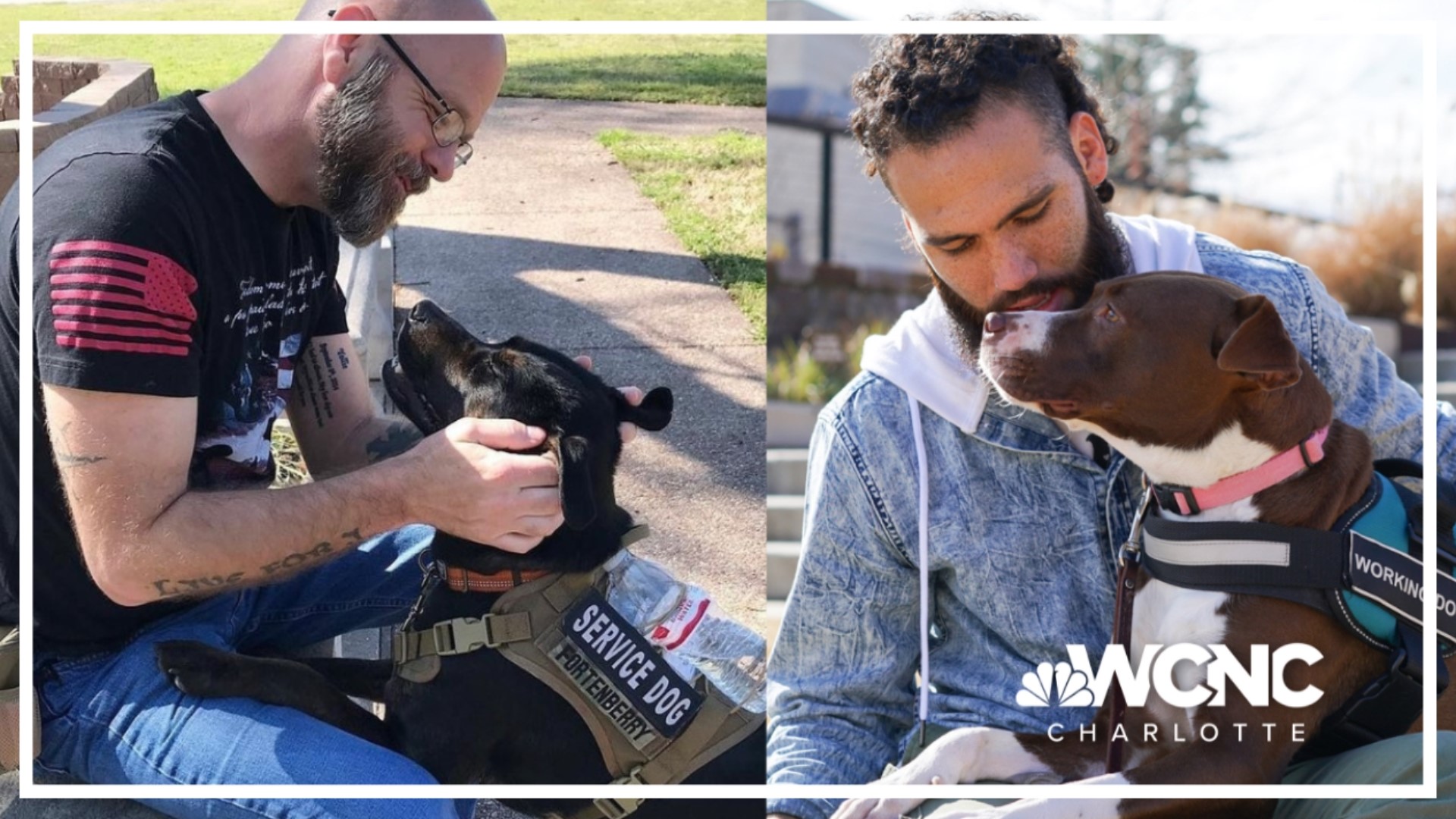
The Risks to Others of Pit Bull Service Dogs
Many breeds of dogs make service animals, and while most breeds are capable of inflicting serious injuries to humans, certain breeds of dogs have a much higher likelihood of attacking. For example, more than 65 percent of all fatal dog attacks over the 13-year period between 2005 and 2017 involved a pit bull. By a wide margin, pit bulls are responsible for the highest number of deaths; however, they also cause the most non-fatal injuries.
There are a few reasons why pit bulls are more dangerous than most other breeds. For example, pit bulls are larger and heavier than many other breeds, giving them the ability to easily overpower children and most adults. Pit bulls have also shown an increased likelihood of engaging in a random, unprovoked attack. Finally, due to their breeding history, Pitbull Terriers are hard-wired to go for vital areas of the body when attacking, such as the face, groin, and neck. There is also evidence that pit bulls tend to latch on once they bite, increasing the severity of a victim’s wounds when they pull their body away from the attacking animal.
Advice for Those Considering a Pit Bull as a Service Animal
The selection of a service animal is a major life choice that will impact the lives of the individual as well as the dog. Those looking for a pit bull as a service animal are advised to thoroughly consider why they want to select a pit bull. For example, individuals who believe that pit bulls have unfairly developed a bad reputation shouldn’t let that fact alone guide their decision, as they can instead adopt or foster a pit bull as a pet. There isn’t anything wrong with advocating on behalf of pit bulls; however, choosing a pit bull as a service animal isn’t necessarily the best way to do this, as it could put others in danger and may end up contributing to the breed’s already tarnished name.
Second, pit bulls and other breeds are known for their guarding, protection and fighting characteristics and tend to be poor choices for service animals because these animals are exceptionally strong and can be difficult for individuals with disabilities to control.
Third, a pit bull’s temperament is not fully developed until it reaches adulthood, which is about at the age of two. Thus, some individuals have been frustrated by a pit bull exhibiting natural aggressive behavioral traits even after a year or more of training. However, once a dog exhibits aggression—especially towards humans—it becomes unsuitable as a service animal.
Finally, using a pit bull as a service dog can create a social barrier between a person with a disability and society because many will refrain from approaching the individual out of fear of their service animal.
Can a pit bull be a service dog?
FAQ
Can my pitbull be a service dog?
Yes, a Pitbull can be a service dog, as breed is not a disqualifier under the Americans with Disabilities Act (ADA); instead, the dog must be individually trained to perform tasks that assist a person with a disability. A Pitbull’s suitability depends on its individual temperament and ability to be calm, confident, and trainable in various situations, along with dedicated training and early socialization.
What breed cannot be a service dog?
No specific breed is banned from being a service dog under the Americans with Disabilities Act (ADA); any dog can be a service animal if it is trained to perform tasks for a person with a disability. Dogs can’t be service dogs if they are not trained for a specific task, if they display aggressive behavior, are not under control, or pose a direct threat to the health or safety of others.
What states do not allow pit bull dogs?
What qualifies as a service dog in Virginia?
Service animals are working animals, not pets. The work or task a dog has been trained to provide must be directly related to the person’s disability. Dogs whose sole function is to provide comfort or emotional support do not qualify as service animals under the ADA.