
Dogs are always getting into mischief and often eat things they shouldn’t. Puppies, in particular, will chew anything they can get hold of as they explore. Because dogs like to mouth things to explore their world, it’s common for dogs to lick or ingest things that they shouldn’t.
Cardboard is one such thing some dogs simply can’t resist chewing on. Like other paper products, cardboard has a soft but chewy consistency, and this can leave some inquisitive pups more likely to taste and chew it. This is especially true if something tasty was on the cardboard before that your dog gets a sniff of.
But what happens if your dog actually swallows cardboard? Can dogs eat cardboard? You are probably wondering if it will cause him any damage and what you should do about it. Read on to find out your next steps with your canine companion.
Have you ever walked into your living room to find your furry friend has turned that Amazon box into confetti? Or maybe you’ve caught your pooch nibbling on a toilet paper roll? If so. you’re definitely not alone in wondering can a dog digest cardboard?
As a dog owner myself, I’ve seen my Lab mix Buddy demolish cardboard boxes with impressive speed. It’s one of those weird dog behaviors that leaves us scratching our heads and worrying about what’s happening in their digestive system
The Short Answer: No, Dogs Cannot Digest Cardboard
Let me be super clear right off the bat – dogs cannot digest cardboard. Unlike the food they eat, cardboard isn’t broken down by the normal process of digestion in your dog’s body. Their digestive system simply doesn’t have the enzymes needed to break down cardboard fibers.
When your pup eats cardboard, it passes through their system largely intact. It’s not absorbed into their bloodstream like nutrients from their regular food. This is important to understand because it influences what happens next.
What Happens When Your Dog Eats Cardboard?
So what exactly happens when Fido decides to munch on your delivery box? Here’s the journey that cardboard takes:
- Initial consumption – Your dog chews and swallows pieces of cardboard
- Passage through stomach – The cardboard moves to the stomach where it gets mixed with digestive juices
- Small intestine travel – Despite being soaked in digestive acids, the cardboard remains mostly intact
- Exit strategy – The cardboard eventually exits in your dog’s poop, often visible as undigested pieces
For most dogs who eat small amounts of cardboard, this journey happens without incident. The cardboard simply passes through their system and comes out the other end.
Is Cardboard Toxic or Harmful to Dogs?
This is probably your biggest worry, right? The good news is that plain cardboard isn’t toxic to dogs. It’s basically just processed wood pulp, so there’s nothing inherently poisonous about it.
However, that doesn’t mean eating cardboard is completely risk-free. The dangers come from:
- Obstruction risk – Large pieces can clump together and cause blockages
- Box contents – The real danger might be what was inside the box (chocolate, medications, etc.)
- Ink and adhesives – Some cardboard has printing inks or glues that could cause mild stomach upset
- Staples or other attachments – Physical hazards attached to the cardboard
Dr. Rebecca MacMillan, a veterinarian, notes that “small amounts of consumed cardboard will pass with ease” for most dogs. It’s when they eat large quantities that problems can arise.
Warning Signs Your Dog Is Having Trouble With Cardboard
While most cardboard adventures end without drama, you should watch for these symptoms that could indicate your dog is having trouble:
- Vomiting (especially repeated vomiting)
- Diarrhea or constipation
- Loss of appetite
- Nausea or excessive drooling
- Abdominal pain (whining, hunched posture)
- Lethargy or depression
- Fever
If you notice any of these symptoms after your dog has eaten cardboard, it’s time to call your vet right away. These could be signs of an intestinal blockage, which is a serious medical emergency.
What To Do If Your Dog Eats Cardboard
So your dog just went to town on a cardboard box. Now what? Here’s my step-by-step guide:
1. Stop the Behavior & Secure Your Pup
First things first – get your dog away from the cardboard to prevent them from eating any more. Put them in their crate or in another room while you clean up.
2. Assess How Much Was Eaten
Try to figure out approximately how much cardboard your dog consumed. A few small pieces are usually less concerning than an entire box.
3. Check What Was In The Box
This is super important! The contents of the cardboard container might be more dangerous than the cardboard itself. If the box contained chocolate, medications, raisins, or other toxic substances, that’s an immediate vet call.
4. Observe Your Dog
Watch your dog closely for any signs of distress or illness. Are they acting normal? Eating and drinking? Having normal bowel movements?
5. Call Your Vet If Concerned
When in doubt, call your vet. They know your dog’s history and can give you specific advice based on your dog’s size, age, and health status.
Will My Dog Be OK After Eating Cardboard?
The good news is that most dogs will be absolutely fine after eating small amounts of cardboard. Their bodies will simply pass it through their system within 24-72 hours.
As Dr. Jenny Alonge, a veterinary reviewer for Rover.com, points out, “If your pup does manage to sneak in a few small bites, they’ll likely be okay.” The risk increases with the amount consumed and the size of your dog (smaller dogs are at higher risk of blockages).
Why Do Dogs Eat Cardboard Anyway?
Ever wondered why your furry friend is so attracted to cardboard in the first place? There are actually several reasons:
1. Age and Development
Puppies explore their world with their mouths and are especially prone to chewing everything, including cardboard. It’s a natural part of puppy development, and they may especially like it when they’re teething.
2. Boredom and Lack of Stimulation
A bored dog is a destructive dog! Dogs without enough mental stimulation or exercise might turn to cardboard shredding as entertainment. It makes an appealing sound and has a satisfying texture to destroy.
3. Scavenging Instincts
Dogs evolved as scavengers, and cardboard (especially food packaging) might smell interesting or contain food residue that attracts them.
4. Anxiety or Stress
Some dogs chew cardboard as a way to self-soothe when they’re anxious, scared, or experiencing separation anxiety.
5. Pica
In some cases, persistent eating of non-food items like cardboard could indicate a condition called pica, which might have medical or behavioral causes.
How to Stop Your Dog from Eating Cardboard
If you’re tired of cleaning up cardboard confetti, here are some tips to break the habit:
- Keep cardboard out of reach – The simplest solution is prevention! Use secure recycling bins and keep boxes stored away.
- Provide appropriate chew toys – Give your dog plenty of appropriate items to chew on instead.
- Address boredom – Make sure your dog gets enough physical exercise and mental stimulation.
- Train the “leave it” command – This essential cue can help you redirect your dog away from cardboard.
- Consider puzzle toys – These can provide the mental stimulation your dog craves.
- Check for underlying issues – If the behavior is sudden or obsessive, consult your vet to rule out medical causes.
The Bottom Line on Dogs and Cardboard
To sum it all up: dogs cannot digest cardboard, but small amounts usually pass through their system without causing harm. The real dangers come from potential intestinal blockages if large amounts are consumed, or from toxic substances that might have been in or on the cardboard.
As a responsible pet parent, your best bet is to keep cardboard away from your curious canine and provide plenty of appropriate chew toys instead. And remember – when in doubt about anything your dog has eaten, your veterinarian is always your best resource!
Have you ever had a cardboard catastrophe with your dog? I’d love to hear your stories in the comments below! And if you found this article helpful, please share it with other dog parents who might be dealing with their own cardboard-loving canines.
FAQ About Dogs Eating Cardboard
How long does it take for a dog to pass cardboard?
The “gut transit time” varies between dogs depending on size, activity level, and other factors. Generally, it takes between 24-72 hours for items to pass through a dog’s digestive system. You may notice pieces of undigested cardboard in your dog’s stool during this time.
Is it safe for dogs to play with cardboard boxes?
For dogs that just shred cardboard without eating it, supervised play might be okay. However, veterinarians generally recommend against using cardboard as a toy since it can send mixed messages and potentially lead to ingestion.
What should I do if my dog ate a toilet paper roll?
A single toilet paper roll core is usually not cause for alarm in medium to large dogs, but could potentially cause problems in very small dogs. Monitor your pet for any signs of distress and contact your vet if you’re concerned.
Can eating cardboard indicate a health problem in my dog?
Sometimes. While many dogs chew cardboard out of boredom or curiosity, a sudden obsession with eating non-food items (called pica) could indicate nutritional deficiencies or other health issues. If the behavior is new or seems compulsive, consult your veterinarian.
What alternatives can I give my dog instead of cardboard?
Instead of cardboard, offer appropriate chew toys, puzzle feeders, Kong toys stuffed with treats, or safe edible chews recommended by your veterinarian. These provide similar satisfaction without the risks.

Is Cardboard Toxic To Dogs?

No, cardboard is not usually toxic to dogs. Eaten in small quantities, it is unlikely to cause any problems to your pet. Most dogs will be fine after eating a small amount of cardboard or paper.
Dogs can’t digest cardboard, but in most cases, they should be able to pass it without any issues. However, larger quantities of cardboard could cause an obstruction. The cardboard isn’t broken down by the normal process of digestion, so large pieces could become stuck together and cause a blockage in your dog’s stomach or guts. This blockage will require urgent veterinary attention.
You should also be aware of any contents the cardboard might have contained before it was chewed up. Some packaging could contain products that are harmful to dogs, such as chocolate, medications, or raisins. In fact, dogs are much more likely to chew cardboard if it contains something tasty.
One of my more memorable cases was a dog that munched his way through two advent calendars, accidentally eating some of the cardboard as well as the chocolate inside! The owners did the right thing and brought him straight in to see me so that we could start treatment promptly. If your pup has eaten anything potentially harmful, as well as the cardboard, then you should call your veterinarian right away.
What Happens If A Dog Eats Cardboard?
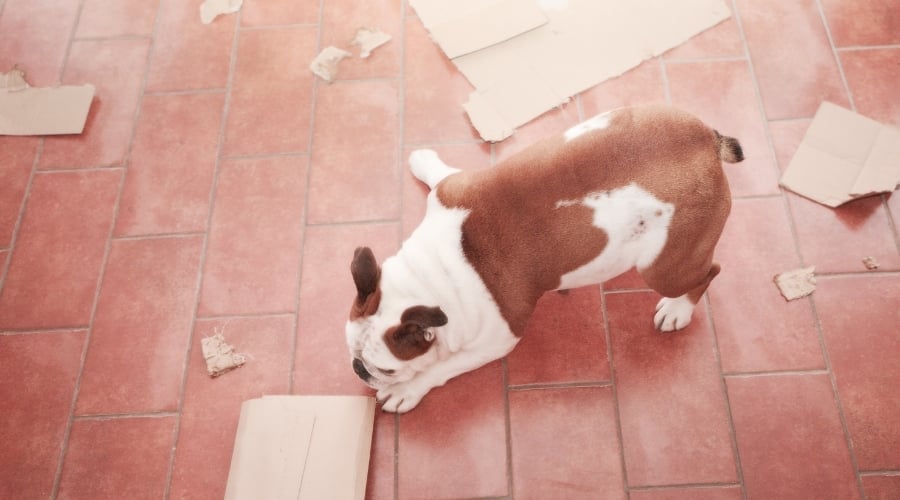
If only a small amount of cardboard was consumed, then they may not have any symptoms at all other than passing some of the undigested cardboard in their stools. However, if your dog eats it frequently or eats a large volume in one go, then he could be at higher risk of getting an intestinal blockage. You may see the following symptoms if there is a blockage:
- Vomiting
- Diarrhea or constipation
- Loss of appetite
- Nausea
- Excessive drooling
- Pain in the abdomen
- Fever
- Lethargy
If you notice any of these symptoms, then you must get to a local veterinarian as soon as possible.