
Knowing when to take your puppy outside for the first time is a balance between the benefits of early socialisation and the risk of them being overwhelmed by the experience. They will also need to be medically ready for exposure to the wider world. Here we explore some important questions such as whether you can carry your puppy outside before vaccinations or how long you should wait to take them out after the second set of puppy vaccinations. Our simple guidance is designed to make the transition from indoors to outdoors a happy and relaxed time for both you and your dog.
Are you a new puppy parent wondering if your furry bundle of joy can explore the great outdoors before they’re fully vaccinated? I totally get it – you’re eager to introduce your pup to the world but also worried about keeping them safe from potential illnesses. Well, you’ve come to the right place!
As a dog lover who’s raised multiple puppies, I’m gonna share everything you need to know about when puppies can safely go outside before their vaccination series is complete. The good news? Your puppy doesn’t need to be completely housebound until they’re fully vaccinated!
The Vaccination Timeline: When Are Puppies Fully Protected?
First, let’s understand what “fully vaccinated” actually means:
- Most puppies receive their first vaccines at 6-8 weeks old
- They need booster shots every 3-4 weeks until they’re 16-20 weeks old
- Core vaccines include DAPP (Distemper, Adenovirus, Parainfluenza, Parvovirus)
- Rabies vaccine is typically given around 12-15 weeks
- A puppy is considered fully vaccinated two weeks after their final core vaccines (usually around 18 weeks old)
So does this mean your puppy can’t step paw outside until they’re 18+ weeks old? Not exactly!
Can Puppies Go Outside Before Vaccinations? Yes, But With Limitations
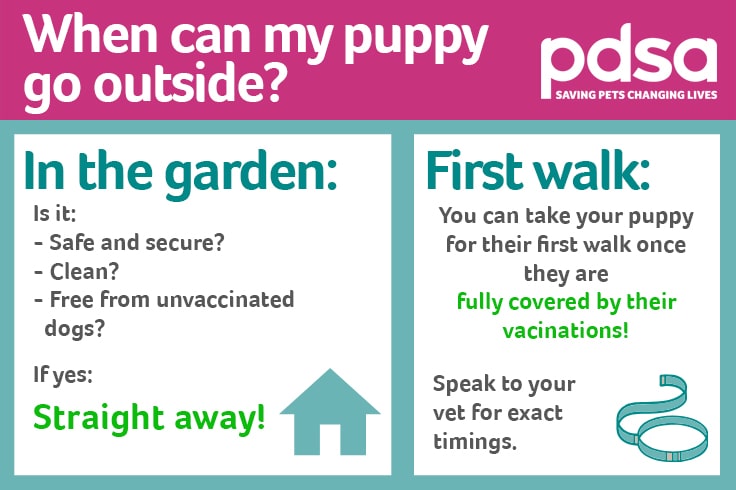
The short answer is YES – puppies can go outside before they’re fully vaccinated, but with important restrictions. There’s a balancing act here between protecting them from disease and providing crucial early socialization.
Safe Outdoor Spaces for Partially Vaccinated Puppies
Your backyard is typically safe for young puppies, even those who haven’t completed their vaccination series. Dr. Brian Evans, medical director at Dutch, explains that carrying your puppy to a secluded outdoor space for potty breaks is perfectly fine – just avoid areas where other dogs may have left feces
Safe outdoor spaces include:
- Your fenced-in backyard
- A friend’s private yard (if no sick dogs have been there)
- Your porch or balcony
- Carrying your puppy in your arms in low-traffic areas
Places to AVOID before full vaccination
- Dog parks
- Pet stores
- Popular walking trails
- Public parks where many dogs congregate
- Veterinary hospital parking lots (carry your puppy inside!)
The Socialization Dilemma: Why Some Outside Time Matters
Here’s the tricky part – puppies need early socialization during their critical developmental window (3-12 weeks), which occurs BEFORE they’re fully vaccinated at 16-20 weeks.
Dr. Evans points out that “keeping them completely isolated in your home until their vaccine series is complete risks making them fearful of the outside world and all of the normal noises, sights, and textures.”
So what’s a responsible puppy parent to do? There are safe ways to socialize your pup before full vaccination:
- Invite fully vaccinated, healthy dogs from trusted friends to your home
- Take car rides to expose them to new environments (without letting them walk in public areas)
- Use a dog stroller for short outings (keeping them off the ground)
- Introduce them to different household objects, sounds, and textures
- Arrange supervised playdates with vaccinated dogs
- Attend puppy classes that require proof of vaccination for all participants
The Risk: What Diseases Are We Worried About?
Understanding the risks helps explain why we’re so cautious. Unvaccinated puppies can contract several serious or even deadly diseases from contaminated environments or other dogs, including:
- Parvovirus (highly contagious and potentially fatal)
- Distemper virus
- Kennel cough (caused by Bordetella, parainfluenza, influenza)
- Leptospirosis
- Adenovirus
- Rabies (though less common)
Many of these diseases either have no effective treatment or require expensive hospital care. The risk is real – which is why veterinarians recommend limited exposure to public areas until vaccination is complete.
When Can Puppies Start Walking on Leash?
I remember being so excited to take my pup on his first real walk! Most vets recommend waiting until two weeks after the final vaccines in the puppy series (around 18 weeks old) before taking your puppy for walks in public places.
For those early leash-training sessions, stick to your yard or other safe spaces. Dr. Evans recommends starting leash training as early as possible, but keeping sessions short and positive: “Short, frequent training sessions are much more effective than long, daily sessions.”
When Can Puppies Go to Dog Parks?
Dog parks are definitely off-limits until your puppy is fully vaccinated. The high concentration of dogs with unknown vaccination status makes these areas particularly risky for partially vaccinated puppies.
Even after vaccination, introduce your puppy gradually to dog parks. These environments can be overwhelming for young dogs who are still developing their social skills.
Tips for Keeping Your Puppy Protected
Here are some practical tips to keep your puppy safe while still giving them needed exposure to the world:
- Talk to your vet about which vaccines are necessary for your specific region
- Carry your puppy when visiting the vet clinic (even the parking lot can harbor germs)
- Avoid letting your puppy sniff animal feces outside
- Ensure all other dogs in your household are up-to-date on vaccines
- Let neighbors know you have an unvaccinated puppy
- Use a puppy pad or designated potty area if you live in an apartment without private outdoor space
- Wash your hands after handling other dogs before touching your puppy
Special Situations: Apartment Living and Potty Training
If you live in an apartment without a private yard, potty training presents an extra challenge. You can:
- Create a potty area on a balcony or patio using sod or artificial grass
- Carry your puppy to a quiet outdoor area away from heavy dog traffic
- Use puppy pads temporarily until vaccination is complete
- Ask your vet about relatively safe areas near your building
My Personal Experience
When I brought home my Lab puppy Rusty, I was super anxious about balancing socialization with safety. My vet recommended carrying him outside for potty breaks in our apartment complex but avoiding the community dog park. We did puppy playdates with my sister’s vaccinated Golden Retriever, which gave Rusty crucial dog-to-dog social time without the risks of public spaces.
Was it a pain sometimes? Yep! But those few weeks of extra caution were worth it to protect his health while still helping him develop into a well-adjusted dog.
Final Thoughts: Finding Balance
Raising a healthy, well-socialized puppy requires finding the right balance between protection and exposure. While full public access should wait until after complete vaccination (around 18 weeks), limited and controlled outdoor experiences are not just possible but beneficial before then.
Remember these key points:
- Private yards are generally safe for puppies at any age
- Avoid public areas with high dog traffic until fully vaccinated
- Early socialization is critical – find safe ways to expose your puppy to new experiences
- Consult your veterinarian about specific recommendations for your area
- Full vaccination is typically complete around 16-20 weeks (with protection starting 2 weeks after)
So yes, your puppy can go outside before vaccinations – just be smart about where and how! With the right precautions, you can raise a healthy, confident, and well-socialized dog.
Have you found creative ways to socialize your puppy before vaccination? I’d love to hear your experiences in the comments below!
How to socialise your puppy before they can go outside
The first few months of your puppys life are key for learning socialisation skills, so you should start to build their confidence within the home environment as soon as possible. Friends and family can visit your puppy for play dates so they get used to meeting strangers and hearing different voices. You can also start to teach your puppy to come to you when they’re interacting with someone else as invaluable training for life. You can also help to desensitise your puppy before they can go outside by listening to a special download with sounds such as babies crying or cars on the road. It’s even possible to take them out on a car journey, as long as they are closely supervised by a passenger, parking up in a busy area so they can look out of an open window, explore the exciting smells and get used to crowded places. Their socialisation period of development is crucial for limiting behavioural troubles during adulthood, such as fear and aggression. Good early socialisation will result in a sociable dog who is comfortable around people, other dogs and various unfamiliar situations. Exposing them to a range of people, situations and objects from 8-12 weeks old will also help them to better adapt to new experiences going forward.
When can puppies go outside?
Puppies can go outside after their second set of vaccinations which will be given at 12 weeks of age. When you collect your puppy from the breeder or shelter, it’s important to confirm that they’ve had their first set of vaccinations and if so, receive their vaccination card or paperwork. You should also ask the exact age of your puppy so you’ll know when they’re 3 months old and need the second set of vaccinations. If you’re wondering when you can take your puppy for a walk after vaccinations, you can usually start with a short stroll 2 weeks after the second Vaccinations are carried out by your vet. Vaccinating your new puppy for the second time will give your puppy the effective protection they need as a puppy. The 2nd set of vaccinations, which are required at 12 weeks old, are critical to fully protect them as they grow into adulthood. As well as ensuring your puppy can go outside, vaccinations mean that your young canine will not pass on any infections to other dogs when they start to socialise on the street or in the local park.
Taking Puppy Outside Before Vaccinations
FAQ
What not to do with a puppy before vaccinations?
What is the 7 7 7 rule for puppies?
The 7-7-7 rule for puppy socialization is a guideline for exposing young puppies to a variety of experiences to build confidence and prevent fear or anxiety. By seven weeks of age, a puppy should have experienced at least seven different people, seven different locations, seven different types of toys, eaten from seven different food bowls, been on seven different types of surfaces, had seven different experiences, and been on at least seven short car rides. This early, positive exposure helps a puppy develop into a well-adjusted, adaptable adult dog.
Can you take an unvaccinated puppy outside to pee?
Can I walk my unvaccinated puppy outside?
Puppies typically need around three rounds of shots before they are fully vaccinated and can go outside without major risk to their health. These shots should include protection for the following illnesses. Some vets may offer a vaccine that protects your puppy from more than one of these illnesses at once.