
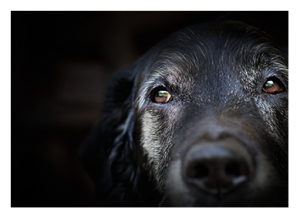
 Many people give CBD to their dogs to help control seizures.
Seeing your beloved dog have a seizure can be a frightening experience. Seizures can be subtle, indicated by staring, a dazed appearance, whining, twitching, jerkiness, heavy breathing, or unusually rapid eye movements. They can also be distressingly severe, resulting in uncontrollable fits, tremors, and even loss of consciousness.
Seizures are basically caused by the abnormal firing of neurons in the brain. If your dog has seizures, whether mild or severe, you should visit your veterinarian to determine the cause.
If you want to supplement your dog’s treatment with a natural remedy, CBD oil should be your first option. Cannabidiol (CBD) is a non-psychotropic component of the Cannabis sativa plant, which has been shown to have anticonvulsant properties. Extracted from industrial hemp (not marijuana), CBD is legal in all states.
If you’ve been desperately searching for solutions to help your furry friend who suffers from seizures, you’ve probably come across CBD oil as a potential treatment. With all the buzz around CBD these days, it’s hard to separate fact from fiction As a pet parent myself, I know how heartbreaking it is to watch your dog go through seizures and feel helpless. So let’s dig into what we actually know about CBD for dog seizures based on real research, not just internet hype
What Exactly Is Canine Epilepsy?
Before we dive into CBD, let’s understand what we’re dealing with. Idiopathic epilepsy is the most common cause of recurrent seizures in dogs, affecting up to 5% of all canines. It’s basically a neurological disorder where your dog experiences seizures without any identifiable cause (that’s what “idiopathic” means).
The really frustrating part? Even with traditional anti-seizure medications
- Up to 30% of dogs with epilepsy continue having seizures despite treatment
- Most medications come with some pretty nasty side effects like sedation and appetite changes
- These drugs can affect your dog’s quality of life significantly
No wonder we’re all looking for alternatives!
CBD 101: What Is It and How Does It Work?
CBD (cannabidiol) is one of many compounds found in the cannabis plant. Unlike THC (that other famous cannabis compound), CBD doesn’t make your dog “high” It’s non-psychoactive but does interact with receptors in the brain.
Some key points about CBD:
- It’s extracted from cannabis (marijuana) plants
- Unlike THC, it doesn’t cause psychoactive effects
- It interacts with receptors in the brain, which explains its potential therapeutic effects
- It’s being studied for various medical applications, including seizure control
The Scientific Evidence: What Research Actually Shows
Here’s where things get interesting. There’s been significant research into CBD for dog seizures in recent years, particularly through the AKC Canine Health Foundation (AKCCHF).
The Groundbreaking Clinical Trial
From 2017 to 2021, a major clinical trial was conducted at Colorado State University, with Dr. Stephanie McGrath as the principal investigator. This study, funded by the AKCCHF, was designed to answer whether CBD could help dogs with epilepsy.
The study was well-designed:
- 39 dogs with epilepsy completed the trial
- Dogs represented mixed breeds and 14 different purebreds
- It was a crossover study (dogs received either CBD or placebo, then switched)
- It was “double-blinded” (neither owners nor vets knew which treatment dogs were receiving)
The Results Were Promising
The findings, published in the Journal of Veterinary Internal Medicine in 2023, showed:
- Dogs taking CBD oil had significantly fewer seizure days compared to when they took a placebo
- CBD was generally well-tolerated by most dogs
- The most common side effects were vomiting and decreased appetite
- Some dogs showed elevated liver enzyme levels, which needs further investigation
This research is really important because it’s one of the first large-scale, published studies examining CBD’s effects on seizure activity in dogs. Before this, we mostly had anecdotal evidence (basically, pet owners saying “it worked for my dog!”).
Current Challenges with CBD for Dogs
Despite the promising research, there are still some significant hurdles:
1. Lack of Regulation
One of the biggest concerns is that many CBD products for pets are completely unregulated. A 2020 study of CBD product quality found that:
- Only 10 out of 29 products were accurately labeled regarding CBD content
- Two products contained unacceptable levels of heavy metals
- Many products claimed to have a Certificate of Analysis but didn’t meet standards
As Dr. Wong from Southeast Veterinary Neurology puts it: “Many of the CBD products that are out there are not regulated, which means that what it says on the label is not necessarily what’s in the bottle.”
2. Legal Gray Areas
The legal environment around CBD for pets is confusing:
- There are currently no cannabis-based drugs approved by the FDA for use in animals
- The American Veterinary Medical Association (AVMA) states that “under current federal and state law, veterinarians may not administer, dispense, prescribe, or recommend cannabis or its products for animals”
- This puts vets in a difficult position when clients ask about CBD
3. We’re Still Learning About Dosing
The optimal dosage of CBD for dogs with epilepsy isn’t fully established yet. The AKCCHF is currently funding a continuation study to compare different doses and formulations to determine the most effective approach.
What This Means for Your Dog
If you’re considering CBD for your dog’s seizures, here’s what I think you should know:
-
Talk to your vet – Even if they can’t legally prescribe CBD, they should be informed about what treatments your dog is receiving
-
Be cautious about product selection – If you do decide to try CBD:
- Look for companies that provide third-party testing results
- Verify CBD concentration and check for contaminants
- Start with low doses and monitor your dog closely
-
Keep realistic expectations – CBD might help reduce seizures, but it’s unlikely to eliminate them completely
-
Monitor for side effects – Watch for:
- Vomiting or decreased appetite
- Changes in behavior
- If your dog is on other medications, be especially vigilant as interactions are possible
-
Regular blood work – If your dog is taking CBD long-term, regular blood tests to check liver enzymes are recommended
Owner Tips from the Experts
Based on the research, here are some practical tips if you’re considering CBD:
- Start slow with CBD and carefully monitor your dog’s response
- Request regular blood work to check liver enzyme levels
- Keep a detailed seizure log to track patterns and share with your vet
- Stay informed by following updates from trusted sources like the AKCCHF
The Future of CBD for Canine Epilepsy
The good news is that research is ongoing. The AKCCHF is now funding a study to refine the dosing schedule for treating canine epilepsy with CBD. Researchers are comparing different doses and formulations to maximize benefits while minimizing side effects.
This continued research is super important. As Dr. McGrath explains, “If CBD does prove to be an effective anticonvulsant, this would affect thousands of dogs worldwide.”
How You Can Help Advance Research
If you want to support this important research:
- Consider making a tax-deductible donation to the AKCCHF Epilepsy Initiative
- Participate in active research studies if your dog qualifies
- Share accurate information about CBD research with other pet owners
As Dr. Diane Brown, CEO of the AKCCHF, says: “Working together, we can accomplish so much more for our dogs.”
Final Thoughts: Is CBD Right for Your Dog?
The honest truth is that while research is promising, we still don’t have all the answers about CBD for dog seizures. The science is evolving rapidly, and what we know today might change tomorrow.
For some dog owners, the potential benefits of CBD might outweigh the uncertainties, especially if traditional medications aren’t working well or are causing severe side effects. For others, waiting for more conclusive research makes more sense.
What’s most important is making an informed decision in partnership with your veterinarian and keeping up with new research as it emerges.
I believe that advances in technology, science, and medicine are happening faster every year, so we’ll have more definitive answers soon. In the meantime, if your dog suffers from seizures, know that researchers are working hard to find better treatments that could improve your pet’s quality of life.
Have you tried CBD for your dog’s seizures? What was your experience? I’d love to hear your stories in the comments below!
Disclaimer: This article is intended for informational purposes only and does not constitute veterinary advice. Always consult with your veterinarian before starting any new treatment for your pet.

How do you treat dogs’ seizures with CBD?
Give your pet CBD regularly to reduce the severity and frequency of seizures. Typically, relief will be best achieved by dosing twice a day. Dosage amounts can vary quite a bit from one situation to the next, so it may be necessary to experiment to find the right amount and how often to give.
CBD for dogs is available in many convenient forms. Give extracts from a dropper bottle directly into the mouth, add to food, drop on a treat, rub into bare skin or inside the ears, or drop on your pet’s paw so they will lick it off. You can also offer tempting CBD treats, tasty solid Coconut Oil with CBD, and topical hemp CBD ointments. Make sure the CBD product you choose is lab-tested so you can be sure you’re giving your pup the best opportunity for natural relief with CBD.
How does CBD work to reduce seizures?
All mammals have an endocannabinoid system, a network of numerous receptors that regulates body functions. Endocannabinoids are synthesized on demand by the body to maintain homeostasis – a stable internal environment. When a condition such as epilepsy interferes with homeostasis, these internal mechanisms lag behind the body’s needs. Supplementing with the phytocannabinoids found abundantly in hemp can help restore balance.
Two types of endocannabinoid receptors have been identified: CB1 receptors, found predominantly in the brain, nervous system, glands, and organs; and CB2 receptors, existing mainly in the regulatory cells of the immune system. While CBD supplements benefit both types, their ability to calm overactive neurons and control seizures comes from the interactions with CB1 receptors. When the nervous system has been impacted by an illness or injury, CBD supplements can restore homeostasis.
CBD for Dogs with Seizures | Recommended?
FAQ
Is CBD good for dogs with epilepsy?
Home » Blog » CBD for Dog Seizures: The Honest Truth You’re probably here because you’ve heard that CBD has been shown to have positive results in human patients with epilepsy, so you’re curious about CBD for dog seizures. Idiopathic epilepsy is the most common type of seizures in dogs, but it has no identifiable cause.
Can CBD oil reduce seizures in dogs?
There’s anecdotal evidence available that’s supportive of the use of CBD oil in epileptic dogs, but a few promising recent studies have shown that CBD oil can reduce the length and frequency of seizures (33% reduction in “seizure days” in one study) in dogs when used in conjunction with other anti-seizure medications (such as Phenobarbital).
Is CBD a good antiseizure agent for dogs?
One study tested CBD on rat and mouse models of epileptic seizure in dogs (i.e. simulations of seizures and CBD response based on medical data) and concluded that CBD is an effective antiseizure agent. While this research is enlightening, what are the results of research that involved actual CBD clinical trials with dogs?
Does CBD reduce seizure frequency in dogs with refractory epilepsy?
The median change in monthly seizure frequency was a 33% reduction for the CBD group. Effects of CBD in fourteen dogs with refractory epilepsy: In this study, CBD was administered at 2 mg/kg every 12 hours for 3 months; the treatment resulted in a significant reduction in seizure frequency and seizure days compared to the placebo.
Does honest paws CBD oil tincture help a dog with epileptic seizures?
Customers say the Honest Paws Well CBD Oil Tincture helps control seizures in dogs. Pet owners love that dogs love the taste of the product and that it is simple to dose and give. “Our pups epileptic seizures are gone and without the horrible side of prescription meds, thank you Honest Paws. Your cbd oil is a miracle.” 2. Penelope’s Bloom CBD Oil
Can CBD be used for seizures?
CBD is already used for seizures in humans. Not only do people use CBD as an alternative to medications like Keppra, but CBD is even FDA-approved for seizure treatment in the form of Epidiolex. Epidiolex is a prescription for specific forms of epilepsy that consists of CBD isolate.
Is CBD good for dogs with seizures?
What is the best medicine for dogs with seizures?
Phenobarbitol, levetiracetam (Keppra), zonisamide and potassium bromide are all good first choices for treatment. There are several different anticonvulsants available for dogs. Zonisamide and levetiracetam have become popular because they work well with minimal side effects.
Can CBD help stop seizures?
In fact, CBD is an effective anti-seizure medicine. In 2018, the FDA approved a purified CBD extract, a brand name called Epidiolex, for three severe genetic epilepsy syndromes: Lennox-Gastaut syndrome, Dravet syndrome, and tuberous sclerosis.
Do vets recommend CBD for dogs?