
When a female dog is in heat (known as estrus), it’s normal part of their regular cycle of fertility when they are not spayed.
As a pet parent you may be wondering, “What is heat in dogs” or “How long are dogs in heat?”
There are many behavioral and physical changes you will recognize and it’s important to know how it will affect your dog.
Knowing things like how often a dog comes into heat and how long it lasts will help you be prepared.
If you’ve ever owned an unspayed female dog, you know that heat cycles can be challenging to manage. Between the mess, the behavior changes, and keeping eager male dogs away, it’s no wonder many pet owners ask: can you stop a dog’s heat cycle? The short answer is yes, and I’ll walk you through everything you need to know about managing, preventing, or stopping those heat cycles completely.
Understanding Your Dog’s Heat Cycle
Before diving into prevention methods it’s important to understand what exactly happens during a heat cycle. A female dog’s heat cycle (also called estrus) is her body’s natural way of signaling she’s ready to mate and become pregnant.
Most female dogs experience heat cycles about twice per year, approximately every six months. However, this can vary based on:
- Your dog’s breed
- Her age
- Individual factors
A complete heat cycle typically lasts between 18-24 days, though the timing can vary. During this time, you’ll notice:
- Swelling of the vulva
- Blood-tinged vaginal discharge
- Increased urination
- Restlessness
- Behavioral changes (sometimes more affectionate or aggressive)
- Decreased appetite
- Excessive licking of the vulva
- Increased attention from male dogs
- Swollen nipples
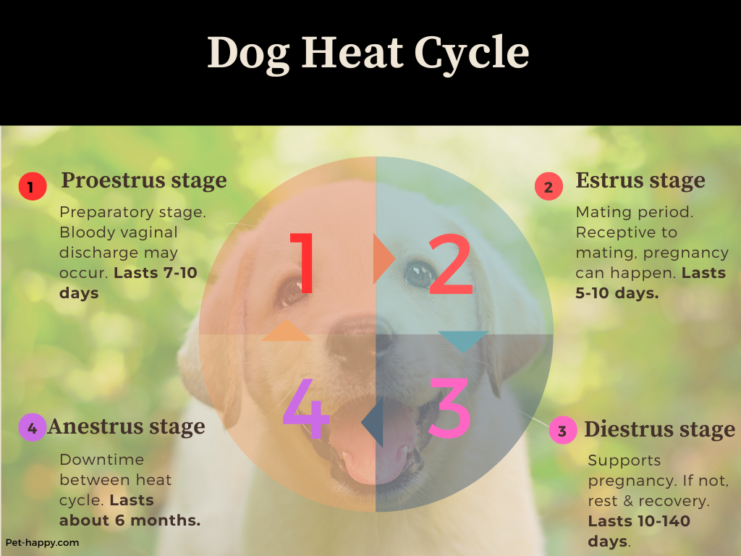
The heat cycle actually consists of three phases:
-
Proestrus The beginning phase lasting 7-10 days (can range from a few days to four weeks) Characterized by swelling and bloody discharge Dogs won’t allow mating during this phase,
-
Estrus The “true heat” phase when females will accept males for mating Lasts 3-21 days, averaging around 9 days
-
Anestrus: The resting phase between cycles, typically lasting 4-5 months.
Female dogs can have their first heat cycle as young as 6 months or as late as 24 months of age, with small breeds typically starting earlier than large breeds.
Why Would You Want to Stop a Dog’s Heat Cycle?
There are several reasons why pet owners might want to prevent their dog’s heat cycles:
-
Preventing unwanted pregnancies: The most obvious reason is to avoid having a litter of puppies.
-
Avoiding the mess: Heat cycles involve bloody discharge that can stain furniture, carpets, and bedding.
-
Behavioral management: Dogs in heat can become restless, anxious, or exhibit other behavioral changes.
-
Health benefits: Preventing heat cycles can reduce the risk of certain reproductive cancers and infections.
-
Reducing wandering: Female dogs in heat may try to escape to find a mate, putting them at risk of getting lost, injured, or stolen.
Methods to Stop a Dog’s Heat Cycle
Now let’s get to the main question – can you stop a dog’s heat cycle? Yes, there are two primary methods:
1. Spaying (Surgical Method)
Spaying is the surgical removal of a female dog’s reproductive organs (ovaries and uterus). This is a permanent solution that completely eliminates heat cycles.
Benefits of spaying include:
- Permanent prevention of heat cycles
- Elimination of risk of unwanted pregnancies
- Reduced risk of mammary tumors (breast cancer)
- Prevention of pyometra (a life-threatening uterine infection)
- No risk of ovarian or uterine cancers
Things to consider about spaying:
- It’s a surgical procedure requiring anesthesia
- It’s irreversible – once spayed, your dog can never reproduce
- While generally safe, there are risks associated with any surgery
- There’s a recovery period of approximately 10-14 days
According to veterinarians, contrary to popular belief, your dog does NOT need to experience her first heat cycle before being spayed. In fact, spaying before the first heat cycle provides the greatest protection against mammary tumors.
2. Medications (Non-Surgical Method)
If you’re not ready to commit to spaying but want to temporarily prevent heat cycles, medication might be an option:
Hormonal medications:
These are typically GnRH (Gonadotropin-Releasing Hormones) that can be administered as:
- Injections
- Subcutaneous implants
These medications work by interrupting the hormonal signals that trigger heat cycles.
Potential side effects of heat cycle prevention medications:
- Enlargement of mammary glands
- Weight gain
- Personality changes
It’s worth noting that these medications are considered a short-term solution. If you decide you want your dog to breed in the future, you can discontinue the medication, and your dog’s normal reproductive cycle should resume.
Temporary Management (Not Prevention)
If you’re not looking to prevent heat cycles but just manage them temporarily, here are some options:
Dog diapers:
- Help contain the mess
- Need to be changed every 3-4 hours
- Should be leakproof, absorbent, comfortable, and secure
- Not 100% reliable for preventing pregnancy
Keeping dogs separated:
- If you have male and female dogs, use crates, gates, and closed doors
- Avoid dog parks and other areas with dogs
- Keep your dog on a leash when walking during her heat cycle
- Never underestimate a dog’s determination to mate – even fenced yards aren’t enough!
Making the Decision: What’s Best for Your Dog?
When deciding whether to stop your dog’s heat cycles and which method to use, consider:
-
Do you want your dog to breed in the future?
- If yes, spaying is not an option.
- If no, spaying provides the most benefits.
-
Your dog’s age
- Young dogs can safely be spayed before their first heat.
- Senior dogs (over 8 years) are at higher risk for pyometra, making spaying beneficial even later in life.
-
Health considerations
- Some health conditions may influence which options are safest.
- Consult with your vet about your dog’s specific health profile.
-
Lifestyle factors
- How will you manage an intact female during heat cycles?
- Can you ensure she won’t accidentally get pregnant?
The Importance of Consulting Your Veterinarian
Before making any decisions about preventing your dog’s heat cycles, I strongly recommend consulting with your veterinarian. They can:
- Provide personalized advice based on your dog’s breed, age, and health status
- Discuss the pros and cons of different options
- Recommend the most appropriate timing for spaying if that’s your choice
- Prescribe appropriate medications if you go that route
- Answer specific questions about your dog’s reproductive health
Common Myths About Dog Heat Cycles
Let me clear up some misconceptions:
Myth 1: Dogs need to have a litter before being spayed.
Truth: There’s no health benefit to allowing your dog to have puppies before spaying.
Myth 2: Dogs go through menopause like humans.
Truth: Dogs do not experience menopause. They can continue to have heat cycles and get pregnant throughout their lives, even as seniors (though it’s not recommended).
Myth 3: Male dogs go into heat too.
Truth: Only female dogs go into heat. Males can detect and respond to females in heat through pheromones, but they don’t have heat cycles themselves.
Myth 4: A dog in heat can be completely managed with a diaper.
Truth: While diapers help manage the mess, they aren’t 100% reliable for preventing pregnancy and don’t address behavioral changes.
FAQs About Stopping a Dog’s Heat Cycle
Q: At what age should I spay my dog?
A: This depends on your dog’s breed and size, but generally between 6-12 months of age. Discuss with your vet for personalized advice.
Q: Will my dog’s personality change after spaying?
A: Some dogs may become calmer, but dramatic personality changes are uncommon. The core temperament typically remains the same.
Q: Are there natural remedies to stop a dog’s heat cycle?
A: No scientifically proven natural remedies exist to stop heat cycles. Be wary of unproven products that claim to do so.
Q: How soon after a heat cycle can my dog be spayed?
A: Most vets recommend waiting until 2-3 months after the end of a heat cycle before performing spay surgery.
Q: Will stopping my dog’s heat cycle make her gain weight?
A: Some dogs may have a slightly decreased metabolism after spaying, but weight gain can be prevented with proper diet and exercise.
Conclusion
Yes, you absolutely can stop a dog’s heat cycle, either permanently through spaying or temporarily through medications. The best choice depends on your specific situation, your future breeding plans, and your dog’s individual health needs.
When it comes to managing female dogs, I’ve found that spaying is the most reliable, beneficial, and hassle-free option for most pet owners who don’t plan to breed their dogs. Not only does it eliminate the inconvenience of heat cycles, but it also provides significant health benefits and helps reduce the number of unwanted puppies.
Whatever you decide, work closely with your veterinarian to make the best choice for your furry friend’s health and wellbeing. After all, our dogs rely on us to make these important decisions for them!
Have you dealt with managing a dog in heat? What methods worked best for you? I’d love to hear your experiences in the comments below!
When Do Dogs Go Into Heat?
Dogs can have their first heat when they’re as young as 6 months old or as old as 24 months of age. Even though dogs can become pregnant during this timeframe, it’s generally not advisable, as they are still not fully mature.
The timing of a dog’s first heat varies, with size being a major factor.
Small-dog breeds tend to have their estrus cycle at an earlier age (around 6 months old), while large- or giant-breed dogs may not come into heat until later (18–24 months).
What are common behaviors of a female dog in heat?
Common behaviors for dogs in heat are restlessness, increased aggression or becoming more affectionate, increased urination, and licking their vulva.
Physical changes can also include a swollen vulva, swollen nipples, and bloody vaginal discharge.