As you may have heard, January 21 is National Hug Day. But before you throw your arms around your pooch in celebration of this display of affection, let’s explore this question: Do dogs like to be hugged?
Experts in dog behavior believe that, in general, dogs do not like being embraced. However, every dog has a unique personality. Some may dislike hugs more strongly than others, and some may actually adore them.
As primates, we are wired to express affection through hugging. Even chimps do it! But dogs show their love in other ways, as their legs are not exactly made to wrap around another dog or person. Hugging is truly a foreign concept to our canine companions. When you throw your arms around your pup, they’re probably thinking, why does my human do this? – Much like the way we ask ourselves why dogs sniff each other’s behinds when they meet. Although humans and canines have been intimately connected throughout our evolutionary history, there are still some primal instincts and forms of communication that we do not share—and hugging is one of them.
The closest thing our furry family members do to a hug is something referred to as “standing over,” which is when a dog puts their leg over another dog’s back or shoulder. It is not an aggressive behavior, but thought to show competitiveness or control. It’s common to see dogs do this while they’re roughhousing.
So how can you tell what your dog is feeling when you give them a loving squeeze? The best way is to observe their body language while you’re hugging them. It’s important to note that just as dogs have their own unique personalities, they also have their own individual ways of expressing emotion.
If you have a dog that that’s not too fond of close contact, he probably won’t enjoy being held or squeezed. In this case, it might be best not to attempt a hug, because, just like us, little things can make our pets anxious. It may be a cause for concern, though, if they start exhibiting unwanted or compulsive behaviors—but don’t fret too much if all they do is pull away from your embrace. Since you know your dog’s personality best, you can probably guess what kinds of interactions your dog will tolerate and what will make them uneasy.
As a dog lover who’s spent countless evenings with my pup Bear snuggled up against me, I’ve often wondered if all dogs enjoy cuddling as much as he does There’s something incredibly rewarding about having your furry friend choose to curl up with you after a long day But I’ve noticed that not all of my friends’ dogs seem as enthusiastic about snuggle time. So what’s the deal – do all dogs like to cuddle?
The short answer is no – not all dogs inherently love cuddling with their humans. While many dogs enjoy close physical contact a dog’s desire to cuddle depends largely on its breed, temperament, past experiences and individual personality. Some dogs can’t get enough snuggle time, while others prefer to show their affection in different ways.
Why Some Dogs Love to Cuddle
Dogs that enjoy cuddling do so for several compelling reasons
1. Warmth and Comfort
Cuddling for warmth goes back to a dog’s early days of domestication. When puppies are born, they instinctively cuddle with their mother and littermates for warmth and protection. This behavior often carries into adulthood, with many dogs seeking out the cozy comfort of their human’s body heat.
2. The Bonding Hormone
Scientific studies have shown that dogs release significantly more oxytocin (often called the “love hormone”) when they interact with their owners compared to other animals like cats. When your dog cuddles with you, both of you experience a boost in this feel-good hormone, which strengthens your bond and creates feelings of trust and happiness.
3. Security and Safety
Many dogs find comfort in being close to their humans because it makes them feel secure. Your presence signals safety, and physical contact reinforces that protective feeling.
4. Attention and Affection
Let’s be honest – dogs are attention seekers! Cuddling is one way they can guarantee your undivided attention and affection.
Why Some Dogs Don’t Like Cuddling
If your dog isn’t a cuddler, don’t take it personally. There are several reasons why some pups prefer their personal space:
1. Breed Tendencies
Some dog breeds are naturally more independent and less interested in physical affection. Breeds that were developed for independent work, like hunting or guarding, sometimes prefer less physical contact.
2. Past Trauma or Lack of Socialization
Dogs with histories of neglect or abuse may be wary of close physical contact. Similarly, dogs who weren’t properly socialized as puppies may find cuddling uncomfortable or stressful.
3. It’s Too Restricting
Dogs communicate through body language, and some perceive cuddling or hugging as restrictive or threatening. What we see as a loving embrace, they might experience as being trapped.
4. Temperature Sensitivity
Dogs have higher body temperatures than humans and some breeds (especially those with thick coats) may find cuddling too warm, particularly in hot weather.
5. They Show Affection Differently
Your dog might not be a cuddler but still loves you deeply! Many dogs show affection in other ways, like:
- Following you around the house
- Leaning against you
- Bringing you toys
- Making eye contact
- Wagging their tail when they see you
- Licking your hands or face
Most Cuddly Dog Breeds
If cuddle time is important to you, certain breeds are more likely to enjoy snuggling:
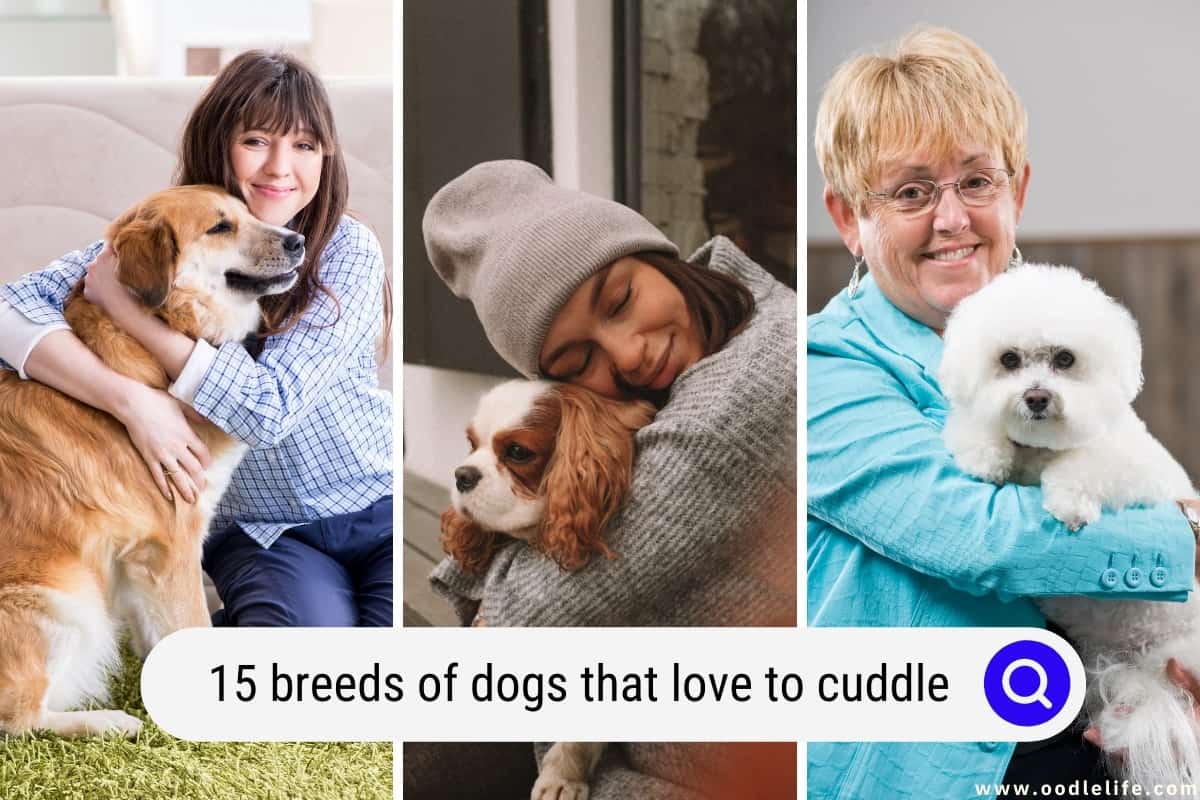
- Golden Retrievers
- Labrador Retrievers
- Cavalier King Charles Spaniels
- Bichon Frises
- Chihuahuas
- Italian Greyhounds
- Boxers
- Great Danes (gentle giants who often think they’re lap dogs!)
- Pit Bulls
- Brussels Griffons
Least Cuddly Dog Breeds
These breeds tend to be more independent and less interested in prolonged physical contact:
- Afghan Hounds
- Chow Chows
- Shiba Inus
- Basenjis
- Cairn Terriers
- Irish Wolfhounds
- Borzois
- Jindos
- Shar-Peis
- American Foxhounds
Can You Teach Your Dog to Cuddle?
Good news! With patience and positive reinforcement, you can often encourage your dog to be more comfortable with cuddling. Here’s how:
Understanding Your Dog’s Baseline
First, observe your dog’s current comfort level with physical affection. When do they seek it out? When do they pull away? Learn to read their body language so you know when they’re uncomfortable.
Take Advantage of Natural Cuddle Times
Notice when your dog is naturally more affectionate (often when they’re tired or first thing in the morning) and make yourself available during these times.
Exercise First, Cuddle Later
A tired dog is often a more cuddly dog! Make sure your pup gets plenty of physical and mental exercise before attempting cuddle time.
Build Trust Through Bonding
The more your dog trusts you, the more likely they’ll be comfortable with physical closeness. Spend quality time playing, training, and engaging in activities your dog enjoys.
Reward Cuddly Behavior
When your dog voluntarily cuddles with you, reinforce this behavior with gentle praise, treats, or whatever your dog finds rewarding.
Name the Behavior
Use a specific command like “cuddle” and reward your dog when they respond appropriately. Over time, they’ll associate the word with the action.
Be Patient and Respect Boundaries
Never force your dog to cuddle if they’re uncomfortable. Respect their space and let them approach you on their terms.
Create a Cozy Environment
Make cuddle time extra appealing with soft blankets, comfortable positions, and a calm atmosphere.
What Dog Owners Say About Cuddle Training
I surveyed several dog owners about how they encourage cuddle time with their pets. Here’s what they shared:
“When the mood hits them, ya gotta be ready. I tap my chest and say, ‘Wanna cuddle?'” – Mark with his Labrador
“Mine is more cuddly in the morning or right after a nap. Sometimes he’ll just climb on my lap… other times he lays across the room from me lol.” – Sarah with her Terrier mix
“Leave the window open so it’s cold – mine likes to be near me but not on me. However, when it’s a little chilly she will come and snuggle a little more.” – Jamie with her Husky
“I just taught him ‘cuddle’ as a command and now he sleeps like this.” – Vicky with her Sprollie (Springer Spaniel/Collie mix)
Do Puppies Like to Cuddle?
The puppy cuddling situation is complicated. Very young puppies often cuddle because that’s what they’re used to doing with their mom and littermates. As they grow and gain independence (and energy!), their desire for cuddles may temporarily decrease.
Most owners report that their dogs become more cuddly again as they mature and settle down. There’s no specific age when dogs start to enjoy cuddling more – it varies widely depending on the individual dog.
The Difference Between Cuddling and Hugging
It’s important to note that while some dogs enjoy cuddling (lying next to or partially on you), most dogs don’t actually like being hugged! A full embrace with arms wrapped around them can feel restrictive and threatening to many dogs.
Always pay attention to your dog’s body language when you’re showing physical affection. Signs of discomfort include:
- Turning their head away
- Licking their lips
- Yawning
- Stiffening their body
- Trying to move away
- Showing the whites of their eyes
Final Thoughts
While not all dogs are natural cuddlers, many can learn to enjoy close contact with their humans given time, patience, and positive experiences. Remember that your dog’s reluctance to cuddle doesn’t mean they don’t love you – they may just be showing their affection in ways that feel more comfortable to them.
And if you do successfully train your pup to be a cuddle bug, be prepared for the consequences! As dog owner Heather warns, “I have the opposite problem – mine wants to live inside of my face… every… single… moment.” But with a face as cute as your furry friend’s, who could possibly complain?
What about you? Is your dog a natural cuddler or did you have to work on it? I’d love to hear your experiences in the comments!
Reading Your Dog’s Body Language
A good way to gauge your dog’s reaction to a hug is to have someone take a picture of the two of you. If you don’t have anyone around to snap a photo of you and your pup, try snapping a selfie or looking in the mirror at your dog’s face when you go in for a hug. A dog that is uncomfortable with an embrace may keep their mouth closed and have a tense expression on their face. They might also hold their ears back against their head or try to escape. Unfortunately, what we believe to be a loving cuddle may come across more to them as a move straight out of a professional wrestling match.
A relaxed dog may pant calmly, its mouth and tongue looking rather slack. If your dog is enjoying your hug, they might also lean into you or lick your face.
Here are some doggie behaviors that can show they like your hugs, or that they’re happy in general:
Dogs wag their tails for many different reasons. It can communicate fear, tension, and happiness as well as a whole swell of other emotions. When a dog is really happy, they tend to wag their tail with their entire back end. You probably notice your dog wagging in this way when you greet them at the door.
If your pup is wagging their tail in a loose, relaxed way, it’s a good indicator that they’re calm and enjoying the moment.
Putting a Paw On You
Does your dog put their paw over your arm or on your lap when you hug or scratch them? This could be their way of saying, “I like this attention, keep it coming!”
Paws aren’t just for digging holes in the yard; they’re also a major communication tool for dogs. If your pup ever comes up to you while you’re sitting down or distracted by something and gets your attention with their paw, they could be saying they want water, are hungry, or are just looking for some cuddles.
Why Do Dogs Like to Cuddle? This is Why Dog Like to Cuddle
FAQ
What breed of dog does not like to cuddle?
While dogs are known for getting and giving affection, some breeds such as Bloodhounds, Chow Chows and Afghan Hounds prefer to have their own space.
What dog breed is most cuddly?
Why do some dogs like to cuddle and others don’t?
Are some dogs not cuddly?
Yes, some dogs do not like to cuddle due to individual personality, personality, health issues, or past experiences like neglect or abuse. Forcing cuddles can cause discomfort or fear, especially if it makes the dog feel restricted or trapped. It is important to respect a dog’s boundaries, pay attention to their body language, and remember that dogs can show affection in other ways besides physical closeness.