
Are you tired of watching your furry friend tremble during thunderstorms or hide under the bed when fireworks start? Maybe your pup gets super stressed during car rides or vet visits. If this sounds familiar, you’ve probably wondered about those anxiety jackets for dogs that seem to be everywhere these days. But do they actually work, or are they just another pet product gimmick?
I’ve been researching this topic for weeks now and lemme tell you – there’s a lot to unpack about these doggy stress-busters! So grab a coffee and let’s dive into everything you need to know about anxiety jackets for dogs.
What Exactly Are Dog Anxiety Jackets?
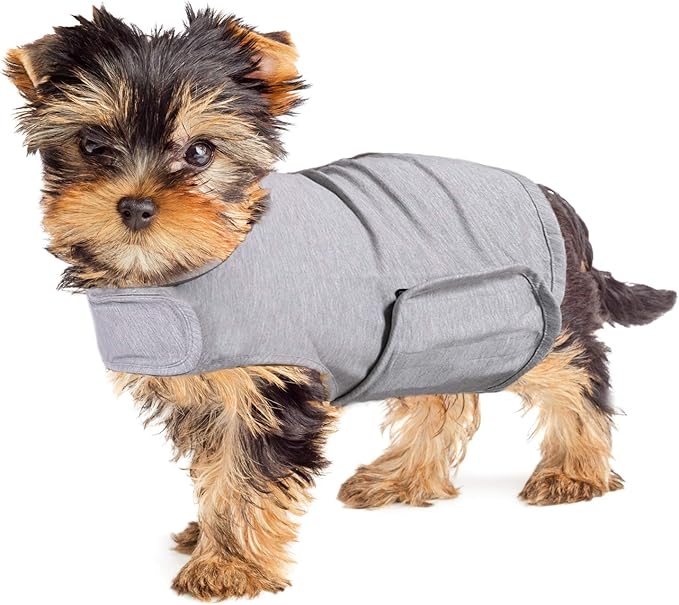
Anxiety jackets (also called anxiety vests, pressure wraps, or compression shirts) are wearable garments designed to calm anxious dogs. The most popular brand is probably the ThunderShirt, but there are others like The Original Anxiety Wrap, Mellow Shirt, Surgi-Snuggly, Calm Coat, and the Weighted Calm Collection from Canada Pooch.
These vests work on a pretty simple principle – they apply gentle, constant pressure around your dog’s torso, kinda like giving them a continuous hug. This concept might sound familiar because it’s similar to:
- Swaddling human babies to help them sleep better
- Weighted blankets that help people with anxiety
- The calming effect of a firm hug when someone is upset
The Science Behind Dog Anxiety Jackets
So what’s actually happening when your dog wears one of these pressure wraps? According to research. including work by animal scientist Temple Grandin. the gentle pressure helps calm animals in several ways
- Releases feel-good hormones – The pressure stimulates the release of oxytocin, dopamine, and other chemicals that promote a sense of well-being
- Provides physical comfort – Just like how a tight hug can be comforting to humans
- Creates a sense of security – The constant gentle pressure mimics the feeling of being held or protected
In a 2014 study published in The Journal of Veterinary Behavior, researchers found that dogs wearing properly tightened ThunderShirts showed lower heart rates during stressful situations and fewer anxiety behaviors like looking toward the door or yawning (which is actually a stress-reduction technique in dogs – who knew?).
Another study reported by Science Direct found that “after 5 uses of the Anxiety Wrap, 89% of owners reported that it was at least partially effective in treating their dogs.” Those are pretty impressive numbers!
Common Signs Your Dog Might Need an Anxiety Jacket
Before investing in an anxiety jacket, it’s important to recognize the signs that your dog is actually experiencing anxiety. Dogs can’t tell us when they’re stressed, but they sure do show us through their behavior.
Common signs of anxiety in dogs include:
- Excessive panting and drooling
- Whining, barking, or howling
- Trembling or shaking
- Hiding or cowering
- Pacing and restlessness
- Destructive behaviors (chewing furniture, digging, etc.)
- Trying to escape
- Accidents in the house (even in house-trained dogs)
- Excessive licking or chewing
- Aggression toward other dogs or people
If your dog displays several of these behaviors during stressful situations like thunderstorms, fireworks, travel, or vet visits, an anxiety jacket might be worth trying.
When Do Anxiety Jackets Work Best?
Based on my research and the experiences of real dog owners, anxiety jackets seem to be most effective for certain types of anxiety:
Most Effective For:
- Noise phobias (thunderstorms, fireworks, loud machinery)
- Travel anxiety (car rides, new environments)
- Mild separation anxiety
- Vet visits
- Meeting new people or animals
Less Effective For:
- Severe separation anxiety
- Aggressive behavior
- Generalized anxiety disorder
- Dogs who hate wearing clothing
One important thing to note: anxiety jackets work best for situational anxiety rather than chronic, generalized anxiety. In other words, they’re great for specific stressful events but probably won’t solve long-term anxiety issues on their own.
Real Experiences: Do They Actually Work?
I’ve read through countless reviews and personal experiences, and the consensus seems to be… it depends on the dog! While some pet parents report dramatic improvements, others see little to no effect.
For example, in one test with a Labrador named Logan who was afraid of thunderstorms, the ThunderShirt Sport made a significant difference. When fireworks began booming in the neighborhood, Logan became tense and concerned. After putting on the ThunderShirt, he laid back down and quickly returned to sleep.
However, for a Miniature Dachshund named Oscar with separation anxiety, results were much slower. Initially, the ThunderShirt didn’t seem to help at all. Over time, though, his distress became milder, and he eventually started napping during stressful situations – something he rarely did before.
This mixed bag of results is pretty typical. According to dog behavior expert Denise Herman, “It can be anything from generalized anxiety to very specific triggered anxiety,” but she adds that anxiety wraps may not work in every situation.
Choosing the Right Anxiety Jacket for Your Dog
If you’ve decided to give an anxiety jacket a try, here’s how to choose the right one:
Size and Fit
The most important factor is getting the right size and fit. A properly fitting anxiety vest should be:
- Snug but not restrictive
- Allow full range of motion
- Not cause rubbing or chafing
- Easy to put on and take off
Most brands offer sizing guides based on your dog’s weight and chest measurement. When in doubt, size down rather than up – these vests need to be tight to work properly.
Style Options
There are several different styles available:
ThunderShirt Classic – The original design with a flap construction, made of polyester, spandex, and rayon blend
ThunderShirt Sport – 100% polyester with a flap construction, more breathable for active dogs
ThunderShirt Polo – Has a more seamless design that attaches under the belly
Weighted Calm Collection – Features weighted elements to provide more pressure
The differences between styles are mostly about material, appearance, and how they fasten, rather than effectiveness. Choose one that seems most appropriate for your dog’s size, coat type, and activity level.
How to Introduce an Anxiety Jacket to Your Dog
Don’t wait until the middle of a thunderstorm to try an anxiety jacket for the first time! Here’s a better approach:
- Start gradually – Place the folded jacket on the ground with treats on top to create positive associations
- Practice during calm times – Put it on your dog for short periods when they’re already relaxed
- Use proper technique – Fasten the neck strap first, slide it over your pup’s head, then secure the chest straps
- Reward good behavior – Give treats and praise when your dog accepts the vest
- Gradually increase wearing time – Work up to longer periods before using it in stressful situations
Animal behaviorists emphasize that you should introduce the wrap during pleasant times so your dog doesn’t associate it only with scary situations.
Limitations and Things to Consider
While anxiety jackets can be helpful, they’re not magic solutions for every dog. Here are some important considerations:
- Not a substitute for training – Anxiety jackets work best alongside proper behavioral training
- Results vary widely – What works for one dog may not work for another
- May mask symptoms – Some behaviorists worry that dogs might still feel anxious but just show fewer outward signs
- Not for continuous wear – Effectiveness may diminish with constant use
- Temperature concerns – Avoid using during extreme heat
- Medical considerations – Check with your vet before using on elderly dogs or those with heart conditions
Alternatives to Try
If an anxiety jacket doesn’t seem to help your dog (or if you want to try multiple approaches), there are several other options:
Environmental Changes
- Create a safe space in your home where your dog can retreat
- Use sound machines or music to mask scary noises
- Close blinds during storms to block lightning flashes
- Stay with your dog during stressful events when possible
Calming Products
- Pheromone diffusers like Adaptil
- Calming treats with ingredients like L-theanine or CBD
- Bach’s Rescue Remedy for Pets (a homeopathic solution)
- Weighted blankets designed for dogs
Professional Help
- Behavior modification training
- Anti-anxiety medications prescribed by your vet
- Working with a certified animal behaviorist
Many pet parents find that a combination approach works best – perhaps using an anxiety jacket alongside calming treats and behavior training.
The Bottom Line: Are Anxiety Jackets Worth Trying?
After reviewing all the evidence, I’d say anxiety jackets are definitely worth a shot for most dogs with situational anxiety. They’re:
- Non-invasive
- Drug-free
- Relatively affordable
- Easy to use
- Backed by some scientific evidence
- Reported to help many dogs
Even if they don’t completely eliminate your dog’s anxiety, they might reduce it enough to make stressful situations more manageable. And since they don’t have side effects (as long as they fit properly), there’s little downside to trying one.
Just remember that what works for one dog might not work for another, so manage your expectations and be prepared to try different solutions if needed.
Have you tried an anxiety jacket for your dog? I’d love to hear about your experiences in the comments! And if you’ve found other effective ways to help your anxious pup, please share those too – we’re all in this together!
Final Thoughts
Dog anxiety is a real problem that affects many of our furry friends. As pet parents, it’s our job to help them feel safe and secure, whether that means using an anxiety jacket, training, medication, or some combination of approaches.
The science behind anxiety jackets is promising, and many dog owners report positive results. Just remember that they’re not a cure-all, and the most effective approach to dog anxiety usually involves multiple strategies tailored to your individual dog’s needs.
So is it worth spending $30-60 on an anxiety jacket? For most anxious dogs, I’d say absolutely! Even if it only helps a little, that’s still a significant improvement in your pup’s quality of life – and that’s something we all want for our four-legged family members.
Do Dog Anxiety Vests Really Work? Here’s What You Need to Know
Dog anxiety can be a common issue for many pet parents. Fortunately, various solutions are available to help alleviate anxious behaviors in dogs, including anxiety vests. But do these vests really work? In this article, well explore the effectiveness of anxiety vests, how they work, and how to select the right one for your pup.
Understanding Dog Anxiety
Just like humans, dogs can experience anxiety, a natural stress response. As a pet parent, understanding dog anxiety is crucial in helping our beloved pets cope with the ups and downs of everyday life. Anxiety in dogs can be caused by various factors.
Common sources of anxiety in dogs
Some of the most common sources of anxiety in dogs include:
- Loud noises: Many dogs become anxious in response to loud noises, such as fireworks, thunderstorms, or even vacuum cleaners. This type of anxiety can be challenging to manage, as some noises are unavoidable.
- New environments: Moving to a new home, introducing a new pet, or welcoming a newborn can cause anxiety in dogs. The changes in their environment can make them feel insecure, leading to anxious behaviors.
- Medical issues: Pain and discomfort from underlying medical conditions or the aging process can also lead to anxiety in dogs. In these cases, working with a veterinarian to address the health issue is essential.
Signs and symptoms of anxiety in dogs
Recognizing the signs of anxiety in dogs is essential for pet parents as it allows them to intervene and help provide support when needed. The following are common signs and symptoms of anxiety in dogs:
- Panting and drooling more than usual
- Excessive licking or chewing
- Whining or whimpering
- Shaking or trembling
- Hiding or cowering
- Restlessness or pacing
- Increased aggression or fear of other dogs or people
- Destructive behaviors, such as chewing on furniture or digging
- Attempts to escape the environment (jumping fences or digging under them)
- Accidents in the house, even in house-trained dogs
Why We Make Our Anxiety Vests Weighted
Weighted anxiety vests have gained popularity among pet parents as a non-invasive and potentially effective way to help anxious dogs cope with stress. Weighted anxiety vests can serve as an alternative or a complement to other anxiety treatments, such as behavioral therapy, or calming treats.
How Do Weighted Anxiety Vests Work?
Weighted anxiety vests work by applying gentle and constant pressure on a dogs shoulder region. According to the principles of pressure therapy, this gentle pressure helps activate the release of oxytocin and other feel-good hormones like dopamine, to promote relaxation and alleviate stress. This pressure works similarly to how a tight hug or a calming rub on the back can soothe a child or an adult.
The Science Behind Weighted Anxiety Vests
While the concept of weighted anxiety vests for dogs might seem relatively new, using weighted pressure to alleviate anxiety and promote relaxation is backed by scientific research. Studies have found that this pressure can help stimulate the release of oxytocin, which can help reduce anxiety and lower heart rate.
It is essential to note that weighted anxiety vests might not work for every dog or every anxiety-triggering situation. While some dogs might respond well to this type of pressure therapy, others might benefit more from a combination of approaches, such as training, medication, or environmental changes. Pet parents should consult a veterinarian or a professional dog trainer to identify the best action for their anxious dog.
Assessing the Effectiveness of Anxiety Vests
It is essential to understand that the success of a calming vest can vary from one dog to another. Some dogs may take a while to respond to their anxiety vests. It is best to allow your dog to wear the vest a few times to get accustomed to it, as it may take time for the effects to work.
Factors That Influence the Success of Anxiety Vests
When considering using an anxiety vest for an anxious dog, its essential to consider various factors that may influence the vests success. These factors include the dogs sensitivity, the type of anxiety the dog experiences, and the comfort and fit of the vest.
Some dogs may be more sensitive to touch and pressure, making them more receptive to the calming effect that anxiety vests provide. Dogs with sensitivities to loud noises may benefit significantly from wearing an anxiety jacket. In contrast, those with generalized anxiety or those fearful of specific objects or situations may require additional support and training alongside the anxiety vest.
Another factor to consider is the proper sizing and fit of the vest. If the vest is too tight, it may cause discomfort, and if its too loose, the constant pressure needed to provide the calming effect may be lost.
Lastly, its vital for pet parents to set realistic expectations and understand that anxiety vests may not be an all-encompassing solution for their dogs anxiety. In some cases, additional interventions like training, environmental changes, or consultation with a veterinarian or certified trainer may be needed for the best results.
Selecting the Right Anxiety Vest for Your Dog
Finding the right anxiety vest for your dog involves understanding your dogs needs, determining the appropriate size and fit, and considering various available options.
Proper sizing and fit
One of the most critical aspects of selecting the right anxiety vest for your dog is ensuring the proper size and fit. To get the right size, reference our size guide on the Weighted Calming Vest Page.
Our anxiety vests are adjustable to provide a snug but comfortable fit that offers the gentle pressure needed for a calming effect. When wearing the vest, your dog should be able to move freely without any discomfort or limitations in their range of motion.
Tips For Introducing The Vest To Your Dog
Introducing the calming vest to your dog may require patience and a gradual approach, especially if your dog is sensitive or hesitant about new things. Here are some tips for introducing the vest to your dog:
- Start by allowing your dog to sniff and investigate the vest. You can place the vest on the floor, encouraging your dog to approach it. Offer praise and treats for positive interaction.
- Once your dog is comfortable with the vests presence, drape it over their back without securing it. This lets them get used to the vests feel, weight, and texture.
- When your dog is comfortable with the vest draped on their back, begin securing the velcro on the vest around your dog’s stomach. Be gentle and patient, and never force the vest on your dog if they display signs of distress.
- Lastly, practice wearing the vest during low-stress situations before introducing it in anxiety-inducing scenarios. This helps create a positive association with the vest and ensures your dog is comfortable wearing it when needed.
Conclusion
Understanding dog anxiety and recognizing its signs and symptoms is crucial for pet parents. Weighted anxiety vests can be a helpful tool in reducing anxiety and stress in some dogs, but its essential to remember that not every dog will respond the same way to this treatment. Always consult a veterinarian or professional dog trainer to find the best options to help your anxious dog. By working together, pet parents and professionals can help ensure a happier, healthier life for our beloved pups.
We use first-party and third-party cookies to understand the uses of our online store and to be able to improve it and to adapt the content to your preferences. For more information, please consult our Privacy Policy.
Does the Thundershirt work for dog noise anxiety?
FAQ
How long can a dog wear an anxiety vest?
How Long Can a Thundershirt Remain on a Dog? The dog can wear his or her thundershirt all day if necessary.Aug 16, 2022
What is the best thing to give a dog for anxiety?
Fluoxetine (Reconcile or Prozac) – FDA-approved for the treatment of separation anxiety in dogs, this medication can also be used to treat other forms of …Mar 30, 2022
What is the most effective calming aid for dogs?
Do vets recommend ThunderShirts for dogs?
Veterinarians and dog trainers frequently recommend this drug-free option for dogs that suffer from separation anxiety, fear of loud noises (hence the name ThunderShirt), and travel anxiety. In fact, any dog suffering. from anxiety or nervousness could benefit from this device.