
Dogs, our faithful companions, possess an uncanny ability to discern changes in their human families. But do they truly comprehend the concept of babies, and more intriguingly, do they harbor affection for these tiny newcomers?
The relationship between dogs and infants has long fascinated both pet owners and researchers alike. While scientific evidence regarding dogs’ cognitive understanding of babies remains limited, anecdotal observations and behavioral cues suggest a complex and evolving dynamic between our furry friends and these bundles of joy.
Exploring the depths of canine perception, emotional responses, and the factors influencing their interactions with infants unveils a captivating interplay between instinct, social cues, and individual temperament.
Unraveling this enigmatic bond sheds light on the intricate ways in which dogs perceive and potentially embrace these miniature members of our human pack.
A dog’s behavior around a baby can vary widely depending on the individual dog’s temperament, socialization, and previous experiences with children. The most common behaviors include playfulness, protectiveness, gentleness, curiosity, and anxiety or stress.
The information provided herein is for informational purposes only. Please refer to our disclaimer for more details..
As babies grow into toddlers, some dogs may perceive them as playmates due to their increased mobility and interaction. Dogs with playful tendencies might be gentle with babies or engage in chase, or interactive behaviors with the child.
However, it’s imperative to closely supervise these interactions to prevent any accidental rough play or misunderstandings. Dogs, especially those not accustomed to children, may not discern a toddler’s limitations or the fragility of their bodies.
Encouraging gentle interaction, teaching the child to respect the dog’s space, and ensuring the dog doesn’t become overwhelmed by the child’s energy are essential aspects of fostering a safe and harmonious bond between dogs and babies.
Dogs, renowned for their loyalty, often develop a protective instinct towards infants. Dogs seem to instinctively perceive babies as vulnerable members of their pack.
This behavior stems from the dog’s innate social structure, where they prioritize safeguarding the pack’s young and vulnerable. In other words, they sense that a baby is similar to a puppy and so they create an instant special bond.
This protective demeanor might manifest as the dog positioning itself nearby, maintaining vigilant watch over the baby, and displaying wariness towards unfamiliar individuals and even family members, especially when they approach the infant.
The reason dogs safeguard the baby can emerge from a deep-rooted sense of responsibility and care within the dog.
While this protectiveness can be beneficial, it’s essential to ensure the dog’s behavior remains non-aggressive or overly territorial, and it’s crucial to introduce the dog to new individuals and situations cautiously to avoid undue stress or misinterpretation of intentions around the baby.
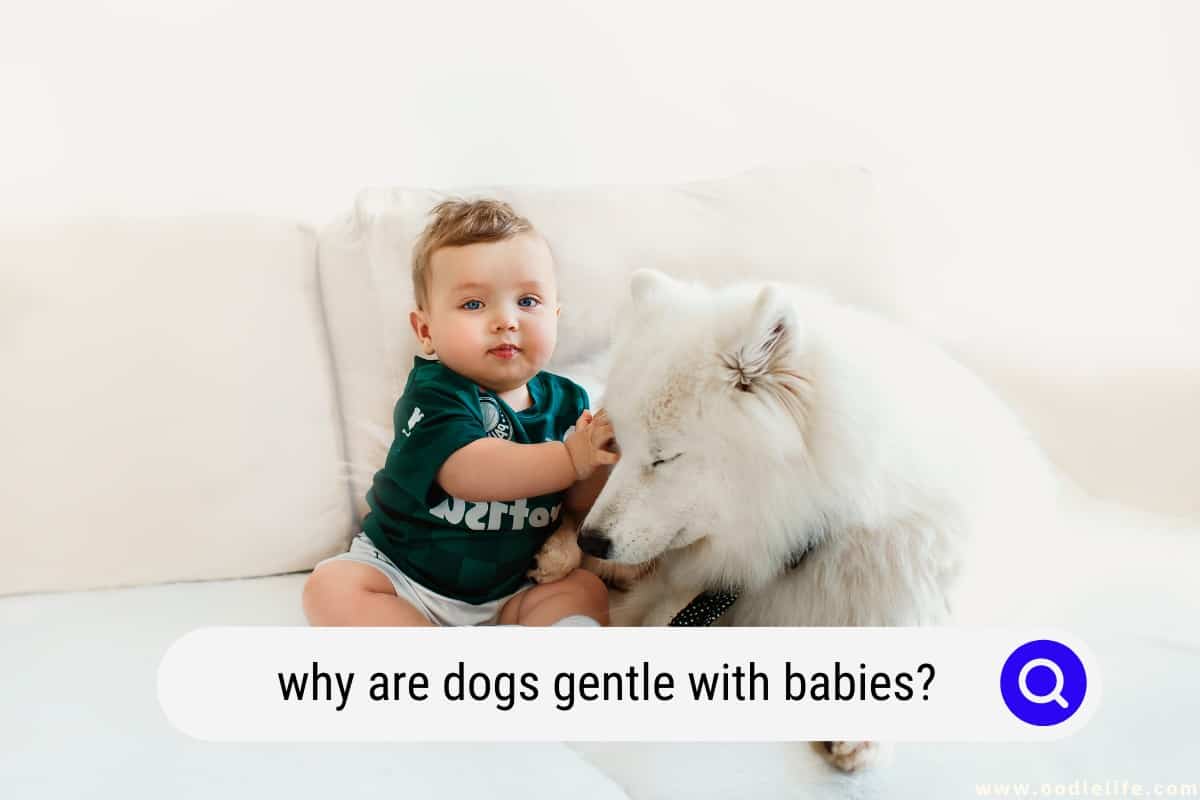
Dogs often exhibit an inherent gentleness around babies, recognizing their fragility through subtle cues. This behavior arises from the dog’s ability to discern the vulnerability of infants and can see the difference between adults and babies.
In response, dogs typically adjust their demeanor, displaying a careful and deliberate approach. They might slow down their movements, tread softly, and maintain a calm disposition near newborns.
This gentle behavior reflects the dog’s innate understanding of the need for caution and delicacy around the tiny human. It’s a testament to the dog’s adaptability and sensitivity to the environment, recognizing the need for a different interaction style compared to their interactions with adults or older individuals.
Nonetheless, it’s important to supervise these interactions closely to ensure both the baby’s safety and the dog’s comfort, fostering a positive and strong relationship between them.
A dog’s innate curiosity often prompts them to explore and comprehend new elements introduced into their environment, including a new baby in the family. Dogs may exhibit inquisitive behaviors such as sniffing, closely observing, or even following the baby to decipher their presence and understand this unfamiliar addition.
Through olfactory cues and visual observation, dogs attempt to gather information about the baby, new smells, movements, and sounds, striving to comprehend and assimilate this novel member into their social sphere.
This curiosity reflects the dog’s natural inclination to investigate changes in their surroundings, driven by their inquisitive nature and an instinctual need to comprehend the dynamics of their pack. While this curiosity is typically harmless, it’s important to monitor these interactions as a dog take a special interest in human babies, they aren’t stand-in babysitters for young children.
The new arrival of a baby can significantly alter the dynamics of a household, and potentially cause anxiety or stress in some dogs. Changes in routines, noisy infants, sudden and unpredictable movements, or a shift in the amount of attention directed toward the dog might unsettle them.
Dogs are creatures of habit and can be sensitive to disruptions in their environment, which can evoke feelings of unease or anxiety. The unfamiliar sounds or unpredictable behaviors associated with a baby, especially if not proper introduction methods aren’t used or managed, can cause stress in certain dogs.
Additionally, a decrease in attention or alterations in the dog’s routine might contribute to feelings of neglect or anxiety. They can refrain from contact and would be rather left alone.
It’s crucial to provide reassurance, maintain routines as much as possible, and create positive associations between the dog and the baby to mitigate stress and help the dog acclimate to the new family dynamics smoothly. Prepare your dog for the baby’s arrival, and make sure your pup understands that babies are babies and that they are different from adults.
Have you ever wondered if your furry friend can actually tell that the tiny human in your house is well a baby? It’s one of those questions that dog owners often ask themselves when they notice their pets behaving differently around infants. As someone who’s spent countless hours observing this fascinating interaction, I’m excited to dive into this topic with you.
Dogs have an uncanny ability to sense things that we humans sometimes miss, and their relationship with babies might be more complex than we initially thought. Let’s explore whether dogs truly understand what babies are and how they perceive these small, vulnerable members of our families.
The Fascinating Signs That Dogs Recognize Babies
When it comes to dogs and babies, there are several telling behaviors that suggest dogs can indeed tell babies apart from adults:
- Tail wagging at the sight of babies – Many dogs will immediately start wagging their tails when they see a baby or even just a stroller
- Perked-up ears when babies cry or coo
- Extra gentleness around infants compared to how they interact with adults
- Protective behavior towards babies in the household
- Special interest in babies that they might not show in adults
One of the most interesting things I’ve noticed is how some dogs will whine or bark if kept away from the baby, almost as if they’re saying, “Hey! Let me check on that tiny human!”
How Do Dogs Know Babies Are Different?
While dogs don’t speak English and can’t possibly know that we call these little humans “babies,” they definitely sense a difference. But how?
The Power of Scent
Dogs have an extraordinary sense of smell—much more powerful than ours. Experts believe that one major way dogs distinguish babies from adults is through scent Babies have a distinct smell that’s different from adults, and dogs can easily detect this difference
Size Recognition
The size difference between babies and adults is another obvious factor. Dogs can clearly see that babies are smaller than grown humans, which might trigger different behaviors.
Sound Differentiation
Research has shown that dogs can differentiate between various human vocalizations including a baby’s cry. When they hear an infant crying many dogs respond with care or protection, suggesting they recognize this sound as coming from a vulnerable being.
The Historical Bond Between Dogs and Human Babies
For thousands of years, humans have brought both dogs and babies into their homes. This long history of coexistence has likely shaped how dogs interact with our offspring.
Most dogs show remarkable patience with babies and treat them more gently than they do adults. Some dog owners have even reported that their pets treat human babies similar to how they would treat puppies—with extra care and protection.
As one canine behavior specialist puts it: “Dogs are incredibly perceptive animals, and they are able to pick up on the unique scent and movements of a baby. I believe that dogs are aware when a baby is present, and that they may feel a sense of responsibility to protect and care for the baby.”
The Science Behind Dogs’ Behavior Around Babies
While we don’t have concrete scientific evidence explaining exactly how dogs know babies are different, several factors likely contribute:
- Social hierarchy awareness – Dogs understand pack dynamics and can recognize when a new member joins the family
- Protective instincts – Dogs’ natural instinct to protect vulnerable pack members extends to human babies
- Emotional sensitivity – Dogs can read human emotions and respond to how we treat and interact with babies
- Adaptability – Dogs are highly adaptable creatures that can adjust their behavior based on situational needs
An animal behaviorist notes: “Dogs have a remarkable ability to read human emotions and respond accordingly. When a baby is introduced into the household, dogs may pick up on the cues from their owners and adjust their behavior towards the baby.”
Common Concerns About Dogs and Babies
Many parents worry about how their dog will react to a new baby. Here are some of the most common concerns and their answers:
Will my dog be jealous of the new baby?
Some dogs may experience jealousy when a baby arrives, but with proper training and supervision, this can typically be managed effectively.
Is it safe to have my dog around my baby?
With proper supervision and training, many dogs can safely interact with babies. However, you should never leave them unsupervised together, regardless of how trustworthy your dog seems.
How can I prepare my dog for a baby’s arrival?
Start by training your dog to follow basic commands and establishing clear boundaries. Gradually introduce your dog to baby items, sounds, and smells before the baby arrives.
What if my dog shows aggression toward the baby?
If your dog shows any signs of aggression, seek professional help immediately from a trainer or behaviorist. Never leave your dog alone with the baby if there are any concerns.
Creating a Harmonious Relationship Between Your Dog and Baby
Here are some practical tips for fostering a positive relationship:
- Maintain your dog’s routine as much as possible after baby arrives
- Set aside one-on-one time with your dog to prevent feelings of neglect
- Reward calm, gentle behavior around the baby
- Establish clear boundaries about where the dog can go and how they should behave
- Supervise all interactions between your dog and baby
- Provide plenty of exercise for your dog to reduce anxiety and excess energy
My Personal Experience
When my sister brought her newborn home, her German Shepherd who had previously been somewhat aloof suddenly became the baby’s shadow. I watched in amazement as this energetic dog would lie down gently beside the baby, maintaining a respectful distance but always keeping watch. If the baby cried, the dog would alert the adults with a gentle nudge—never barking, as if somehow knowing that loud noises might upset the infant.
What struck me most was how the dog seemed to inherently understand the fragility of this new family member. There was no training involved—it was as if some ancient canine instinct had activated in the presence of a human baby.
Do Dogs Truly Understand What Babies Are?
So, do dogs know that babies are babies in the way we understand it? Probably not exactly. Dogs don’t conceptualize things the way humans do. They don’t know that we call these small humans “babies” or understand the concept of human childhood development.
However, they absolutely can tell that babies are different from adult humans. They sense their vulnerability, recognize their unique sounds and smells, and often respond with gentleness and protection that suggests a deep, intuitive understanding.
A canine ethologist explains it well: “Dogs have a strong sense of social hierarchy and pack mentality. When a baby is brought into the family, dogs may see this as an opportunity to establish a new dynamic within the pack. Dogs are highly adaptable creatures, and they are able to form close bonds with babies, acting as protectors and companions.”
Final Thoughts
The relationship between dogs and babies is truly remarkable. While dogs may not intellectually understand what a baby is in human terms, they demonstrate an impressive ability to recognize babies as special, vulnerable beings that deserve extra care and protection.
This ability speaks to the deep bond that has developed between humans and dogs over thousands of years of coexistence. Our canine companions continue to amaze us with their intuition, adaptability, and capacity for forming meaningful connections with the youngest members of our families.
If you’re bringing a baby home to meet your dog for the first time, remember that with proper introduction, supervision, and training, many dogs and babies develop beautiful friendships that can last throughout childhood and beyond.
Have you noticed your dog behaving differently around babies? I’d love to hear your experiences in the comments below!
Can dogs sense babies in the womb?
Dogs have incredible senses, but their ability to detect a baby in the womb isn’t scientifically proven. However, many dog owners have reported behavioral changes or increased attention from their dogs towards pregnant women.
It’s believed that dogs might notice changes in scent, behavior, verbal cues, and body language of pregnant individuals, which could pique their curiosity or make dogs behave differently. This intuition, though not confirmed by scientific research, still fascinates many pet owners.
In essence, a dog’s reaction to a baby encompasses a spectrum of behaviors, reflecting their adaptive nature and sensitivity to environmental changes.
Supervision, gradual introductions, and positive reinforcement are pivotal in fostering a safe and harmonious relationship between the dog and the baby, ensuring mutual comfort and understanding.
As households navigate the integration of dogs and babies, patience, guidance, and mindful observation remain indispensable.
By recognizing and addressing a dog’s responses with care and consideration, families can nurture a bond that fosters a supportive, secure environment for both their canine companions and cherished infants.
Whether dogs understand what babies need or not, it is important to be cautious and always keep an eye on the dog around a baby.
Do dogs know how to be gentle with babies?
FAQ
Do dogs understand what a baby is?
Experts aren’t sure whether dogs understand what a baby is. Dogs can hear, smell, and see babies, but they don’t really comprehend the concept of a baby. It’s surprising that dogs behave differently around babies than adults. While your dog might not pay much attention to adults, you may notice that your dog seems particularly interested in babies.
Do dogs understand the difference between humans and babies?
This is quite a difficult question to answer. In fact, experts agree that dogs seem to understand that there is a difference between adult humans and babies or young children, just as they understand the difference between an adult animal and a baby.
Why do dogs behave differently towards babies?
In fact, experts agree that dogs seem to understand that there is a difference between adult humans and babies or young children, just as they understand the difference between an adult animal and a baby. Their peculiar smell and harmless appearance are probably the main reasons that make dogs behave differently towards babies.
Do dogs like babies?
Dogs tend to have more patience with babies and are usually gentler with them than with adults. Some owners have reported that their dog has become highly protective of their babies. You may even notice that some dogs treat human babies like their own puppies.
Do dogs behave differently around babies?
Dogs often act differently around babies and seem to treat them with extra care to ensure their safety. However, this doesn’t mean that dogs understand what babies are or what we call them. Dogs are protective of babies and small children.
Do dogs know if babies are more fragile than adults?
Some owners have reported that their dog seems to know that babies are more fragile than adults. You may even notice that some dogs treat human babies like their own puppies. While humans haven’t quite figured out how dogs know this, it is good for most dog owners that dogs seem to have this instinct.
Can dogs sense babies are babies?
While there’s no scientific proof, many experts say dogs can sense when their owner is pregnant. Pets don’t understand a new baby will be joining the family in nine months, but they can notice differences in mood, posture, behavior and body chemistry.
Do dogs know to be gentle with newborn babies?
Dogs know to be gentle with babies because they want to protect the youngest member of their pack or family. This behavior is instinctual because dogs are pack animals that respond well to hierarchy. Interacting with babies also increases dopamine levels and makes them happy.
Why are dogs like babies?
The reason domestic dogs act like babies is because they are programmed to live in a group. You are your dog’s “group”. Because you provide food and shelter and make him mind you, he knows you’re the Alpha ‘dog’, the leader of his group.
How do dogs act when you have a baby?
Unfortunately, not all dogs will become extra-loving during pregnancy. Instead, your dog may start showing a different side you aren’t used to. Some dogs develop separation anxiety or seem to move backward in their training by eating things, destroying the house, or peeing and pooping in the house.