
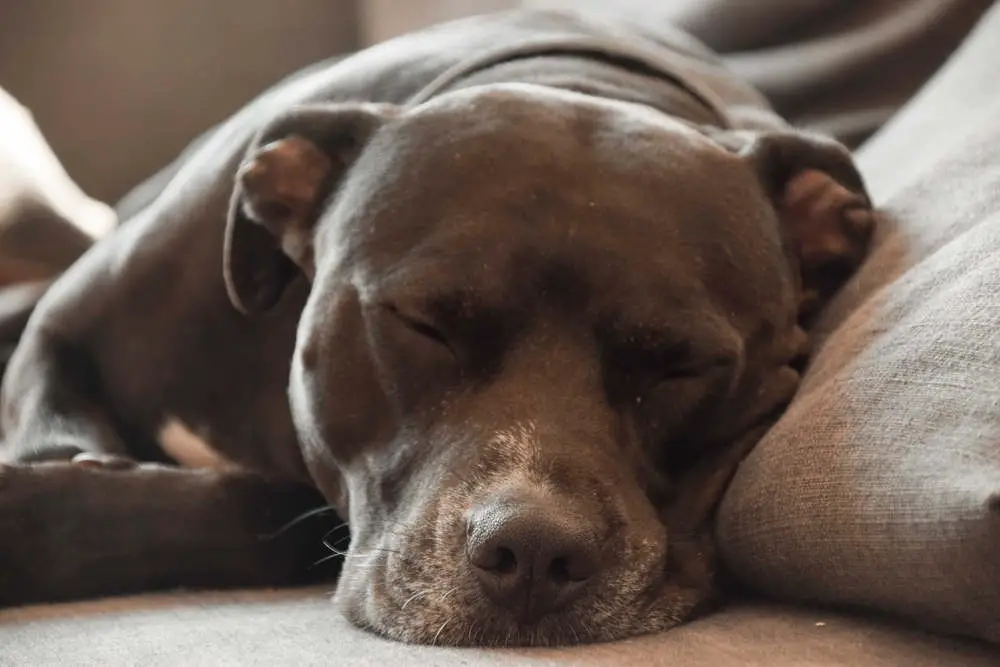
Pitbulls are among the main culprits when it comes to lazy afternoon snoozes on the couch and cheeky mid-morning shut eye.
Yes, this medium-sized, bulky breed likes to get as much sleep as possible during the day and night. They have a robust, muscular build and a playful nature, which means that they expend a lot of energy throughout the day.
But their sleeping patterns might surprise you. Those 14 hours of downtime are divided up between multiple short naps during daylight hours and some solid shut eye after sunset.
So let’s have a closer look at what affects a Pit bulls sleeping patterns and give you some insight into what to expect from your pup during each stage of its life.
Have you ever looked over at your Pitbull snoozing on the couch (again!) and wondered if all that sleeping is normal? Trust me, I’ve been there too. My Pitbull, Rocco, seems to have mastered the art of sleeping in ways that would make even cats jealous!
So, do Pitbulls sleep a lot? Yes Pitbulls do sleep a lot. A healthy adult Pitbull typically sleeps 12-14 hours per day with puppies sleeping even more at 18-20 hours daily. While this might seem excessive, it’s completely normal for the breed and necessary for their health and well-being.
In this article I’ll dive deeper into the fascinating world of Pitbull sleep habits explain why your muscular buddy needs so much rest, and help you understand when sleeping might indicate a problem. So grab a coffee (since your dog is probably already napping anyway) and let’s explore this topic together!
How Many Hours Do Pitbulls Sleep?
When it comes to Pitbull sleep patterns, here’s what’s typical:
- Adult Pitbulls: 12-14 hours of sleep daily
- Pitbull puppies: 18-20 hours of sleep daily (sometimes up to 20 hours!)
- Additional rest time: 5-6 hours of just lying down and relaxing (not actually sleeping)
That means your adult Pittie might only be truly active for 4-7 hours each day! This is completely normal and healthy for the breed.
Unlike humans who are generally monophasic sleepers (getting all our sleep in one long bout at night), Pitbulls are polyphasic sleepers. This means they get their sleep in shorter periods throughout the day and night. Research shows most dogs sleep for just about 45 minutes at a time on average.
Why Do Pitbulls Sleep So Much?
There are several reasons why your Pitbull might be catching all those Z’s:
1. It’s Normal Dog Behavior
First things first – dogs naturally sleep more than humans do. While we adults aim for 6-9 hours of sleep each night, dogs require substantially more shuteye. This isn’t laziness; it’s just how their bodies work!
2. They’re Getting Plenty of Exercise
If your Pitbull is getting proper exercise (which they should!), they’ll naturally sleep more to recover. Just like human athletes need more rest after intense training, your muscular Pittie needs recovery time after physical activity.
My Pitbull always sleeps like a rock after our long hikes. It’s his way of recharging those muscles after burning all that energy!
3. Boredom
Let’s be honest – dogs don’t have jobs, hobbies, or smartphones to keep them busy. When there’s nothing to do, sleeping becomes a default activity. If your dog is alone for long periods with nothing to do, they’ll likely sleep to pass the time.
4. Age Factors
The age of your Pitbull significantly impacts their sleep needs:
- Puppies (0-1 year): Need 18-20 hours of sleep daily for proper growth and development
- Adult Pitbulls (1-8 years): Need 12-14 hours of sleep daily
- Senior Pitbulls (9+ years): May sleep more, similar to puppies, as they enter their senior years
5. Possible Health Issues
While sleeping a lot is usually normal, excessive sleep beyond what’s typical for your dog could indicate health problems. Issues like canine narcolepsy, hypothyroidism, or heart disease may cause increased sleeping. If your Pitbull suddenly changes their sleep patterns, it’s worth consulting your vet.
Are Pitbulls Lazy Dogs?
Let me tackle this common misconception head-on: Pitbulls are NOT lazy dogs!
Despite all that sleeping, Pitbulls are actually energetic, active dogs when awake. Think about it – has your Pitbull ever turned down a chance to play fetch or go for a walk? Probably not! These muscular dogs have plenty of energy; they just need proper recovery time too.
Pitbulls are strong, athletic dogs with impressive muscle mass. Maintaining those muscles requires energy, and sleep is how they restore it. When they’re awake, Pitbulls can be incredibly active and playful.
The truth is, what looks like laziness is actually efficiency. Pitbulls conserve energy when there’s nothing important happening, then spring into action when it’s time to play or work.
Pitbull Puppies and Sleep
If you think adult Pitbulls sleep a lot, wait till you meet a Pittie puppy! These little bundles of energy can sleep a whopping 18-20 hours daily.
Pitbull puppies sleep so much because:
- They’re growing rapidly (which requires tremendous energy)
- Their brains are developing (sleep is crucial for neural development)
- Their immune systems are strengthening
- They burn massive energy during their brief awake periods
Don’t worry if your Pitbull puppy seems to switch from hyperactive to fast asleep in moments – this is perfectly normal! During those 4-6 hours they’re awake, they’re often absolute whirlwinds of energy.
Signs Your Pitbull Might Have Sleep Problems
While lots of sleep is normal, there are some red flags to watch for:
- Sudden changes in sleep patterns: If your normally active dog suddenly sleeps much more or less
- Difficulty waking up: If your dog seems unusually hard to rouse from sleep
- Falling asleep abruptly during activities: Could indicate narcolepsy
- Excessive lethargy when awake: Normal Pitties should be energetic when not sleeping
- Signs of discomfort while sleeping: Whining, shifting positions frequently, or unable to get comfortable
- Behavioral changes: Irritability, confusion, or disorientation
If you notice any of these signs, please consult your veterinarian. Early detection of health problems can make treatment much more effective.
How to Help Your Pitbull Sleep Better
Want to ensure your Pittie gets quality sleep? Here are some tips:
1. Establish a Consistent Routine
Dogs thrive on routine. Try to feed, walk, and play with your Pitbull at consistent times each day. This helps regulate their internal clock and improves sleep quality.
2. Provide Plenty of Exercise
A tired Pitbull is a good sleeper! Make sure your dog gets adequate physical activity:
- Adult Pitbulls need 1-2 hours of exercise daily
- Mix up activities between walks, playtime, and training
- Include both physical and mental stimulation
3. Create a Comfortable Sleeping Environment
Your Pitbull needs a cozy place to rest those muscles:
- Invest in a supportive dog bed (orthopedic beds work great for muscular breeds)
- Place the bed in a quiet, draft-free area
- Keep the sleeping area at a comfortable temperature
- Consider a crate if it helps your dog feel secure
4. Use Positive Reinforcement
Never punish your dog for sleeping. Instead, use positive reinforcement to encourage good sleep habits:
- Reward calm behavior with treats and praise
- Create positive associations with their bed or sleeping area
- Use a consistent bedtime routine to signal it’s time to sleep
5. Schedule Regular Vet Check-ups
Regular veterinary visits can catch potential health issues before they affect your dog’s sleep. Annual check-ups are recommended for adult Pitbulls, with more frequent visits for puppies and seniors.
FAQs About Pitbull Sleep Habits
Are Pitbulls more lazy than other dog breeds?
No, Pitbulls aren’t lazier than other breeds. They’re actually quite energetic when awake! Their sleep needs are similar to many medium-sized breeds. They simply need adequate rest to maintain their muscular physique.
My Pitbull sleeps with me all night but still naps all day – is this normal?
Absolutely normal! Remember, dogs are polyphasic sleepers. They’ll sleep with you at night but still need those daytime naps to get their full 12-14 hours.
Should I wake my Pitbull up if they’re sleeping too much?
Generally, no. Let sleeping dogs lie! Unless your Pitbull is missing meals or bathroom breaks, it’s best to let them sleep when they need to. If you’re concerned about excessive sleep, consult your vet rather than disrupting their rest.
Why does my Pitbull suddenly fall asleep while playing?
If your Pitbull abruptly falls asleep during active play, this could be a sign of narcolepsy. This is different from a dog who gradually winds down. Consult your veterinarian if you notice this pattern.
Do Pitbulls sleep more in winter?
Many dogs, including Pitbulls, may sleep somewhat more during winter months. This is normal and similar to how humans often feel more tired during shorter, darker days.
Conclusion
So, do Pitbulls sleep a lot? Yep, they sure do! With adult Pitties sleeping 12-14 hours daily and puppies snoozing up to 20 hours, these muscular dogs definitely need their beauty rest.
But this doesn’t make them lazy – it makes them efficient! Pitbulls are simply conserving energy when there’s nothing better to do, and recharging those impressive muscles for their next adventure.
As long as your Pitbull is active and energetic when awake, eating well, and displaying normal behavior, all that sleeping is completely healthy. Just make sure they’re getting adequate exercise, mental stimulation, and regular vet check-ups to keep them in tip-top shape.
And next time you see your Pittie snoring on the couch, remember – they’re not being lazy, they’re just being a dog! So maybe take a cue from your four-legged friend and enjoy a nap yourself. After all, they might be onto something with this whole sleeping business!
Exercise and Mental Stimulation
Pit bulls high energy levels necessitate regular exercise to keep them physically and mentally fit.
Engaging in play, walks, and training sessions helps them expend energy and promotes better sleep. After active play, pit bulls often take naps to restore and recuperate.
Mental stimulation is also essential for a pit bulls well-being.
Training courses and interactive toys keep their minds engaged, leading to more peaceful slumbers. Lack of exercise and mental stimulation can result in restlessness and disruptive behavior during the night.
So if you’re a pit bull owner, make sure you set up a regular exercise and training schedule. Your dogs’ routine should include longer, calming walks. This will help them to cultivate a calm demeanor while still burning a lot of energy.
Also, schedule time for mentally stimulating games where you challenge and develop their brain power. This will help your pit bull sleep much better at night.
Factors That Affect the Sleep Patterns of a Pit Bull
Like most domestic dogs, the average pit bull has distinctive sleeping patterns that significantly affect its behavior, mental state and overall health.
Consider the following factors that might influence how much your pit bull sleeps:
The age of your pit bull will effect not just how much sleep it gets but how much it actually needs to stay healthy.
Puppies simply require more sleep and downtime than adult dogs – as we’ll discuss a bit later. This is largely due to their development and growth.
Pit bulls stop growing when they’re about 12 months old. But they will only fully develop into their adult phase at about 18 months. So during this adult phase, their all-day snoozing habits will slowly begin to phase out.
They’ll become more alert and fully active and simply want to be awake more often during the day. But that’s not to say they won’t take the opportunity to bask in the warm afternoon sun for a nap when they can.
Medium-sized dog breeds, which pit bulls are, become senior citizens at about 9 – 10 years of age. Unfortunately, that doesn’t mean any free bus rides for these four-legged legends. But it does mean that they need to slow down just a tad. Senior dogs often prefer the couch for a nap rather than the mid-morning jog they might have been up for as adolescents. So if you notice your older dog sleeping more often, that’s ok – and to be expected!
The health of a pit bull directly impacts its sleep.
Dogs with health issues may experience discomfort, pain, or lethargy, affecting their sleeping patterns.
Pit bulls are sensitive animals, so just like humans will lose sleep over something that’s ‘just not right,’ these dogs will stay awake and alert you to something that’s affecting their overall health.
Monitoring your pit bulls sleep habits can help identify any potential health concerns, and seeking veterinary advice is crucial in such cases.