
Is there a dog tracking microchip? What can microchips and GPS trackers do exactly? Get the facts to keep your dog safe!
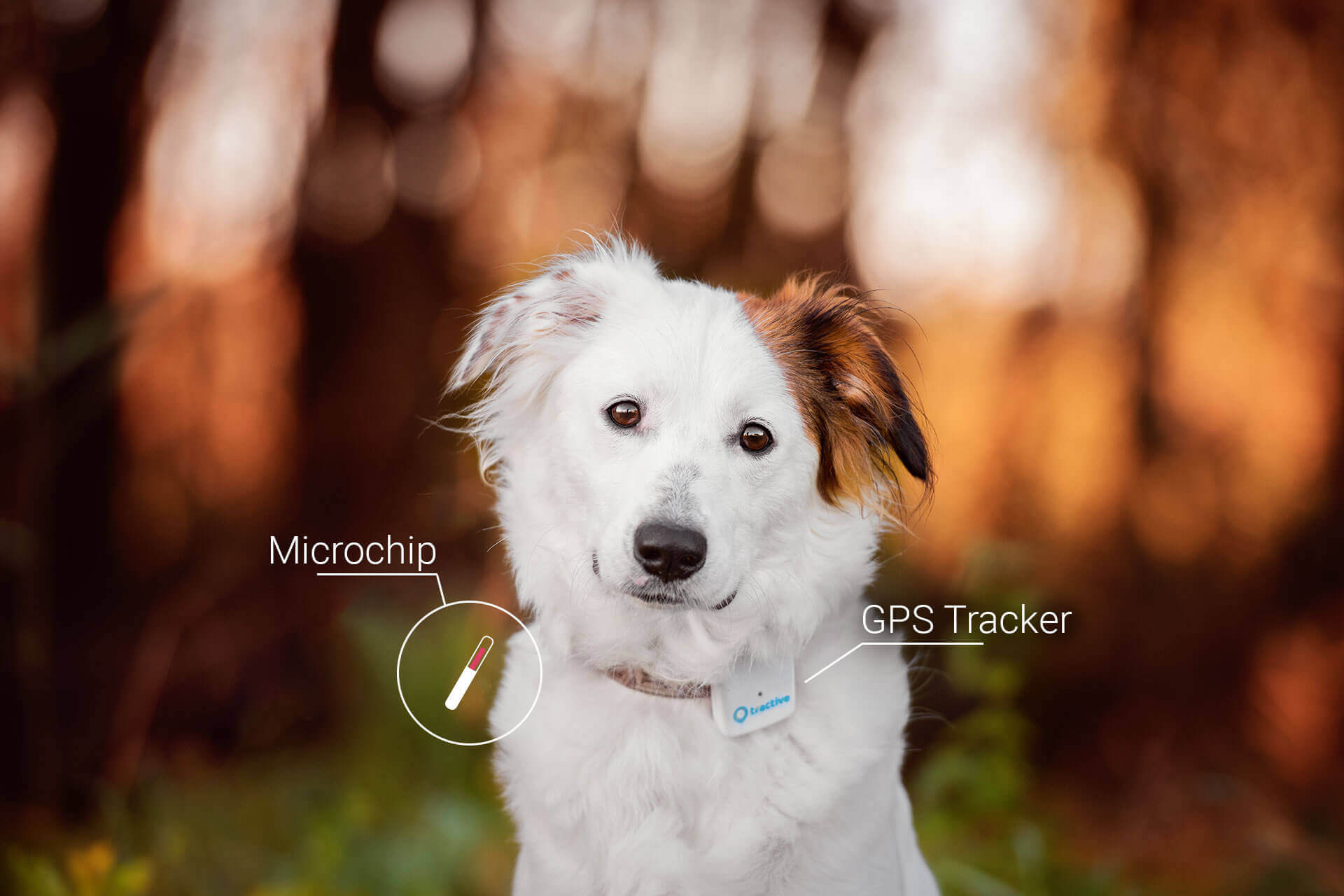
Dogs run away all the time. And when they do, we understandably want to find them and bring them back to safety as soon as possible. So maybe you’ve been thinking – can I track my runaway dog with a dog tracker chip? While it’s not possible to track your dog with a microchip, a better option does exist. In this post, we explain why that is, what a chip for dogs can and cannot do, and what GPS trackers for dogs offer that microchips don’t.
Have you ever wondered if that tiny microchip in your furry friend can help you track them down when they go on an unauthorized adventure? You’re not alone! One of the most common misconceptions pet parents have is thinking that microchips work like some sort of doggy GPS. Let me clear this up once and for all – microchips do NOT have GPS capabilities.
But don’t worry – I’ve got all the info you need about what microchips actually do, how they differ from GPS trackers, and what combination of tools will best keep your four-legged escape artist safe.
The Truth About Pet Microchips
What Exactly Is a Microchip?
A microchip for dogs is basically a tiny RFID (Radio-Frequency Identification) transponder about the size of a grain of rice. It gets injected under your dog’s skin, typically between the shoulder blades, in a procedure that’s quick and causes minimal discomfort – similar to a routine vaccination
The microchip itself is incredibly small – only about 11-14 mm long and 2-2.3 mm thick weighing approximately 0.025 grams. These tiny devices are enclosed in soda lime glass which is compatible with living tissue to prevent inflammation.
How Do Microchips Actually Work?
Here’s the thing – microchips are passive devices. They don’t actively transmit any signals and definitely don’t connect to satellites or cell networks. They’re essentially just tiny ID cards that sit dormlessly under your dog’s skin until activated by a special scanner.
When a lost dog is found and taken to a vet or animal shelter, the staff will scan the dog using a special scanner that emits low-frequency radio waves. When the scanner passes over the area where the microchip is implanted, the radio waves activate the chip, which then transmits the unique identification number back to the scanner.
This ID number can then be entered into a database to retrieve the owner’s contact information – assuming you’ve registered the microchip and kept your information up-to-date!
The Limitations of Microchips
While microchips are fantastic for identification purposes, they have some serious limitations:
- They’re completely passive – they don’t transmit location data
- Someone must physically find your dog first
- Your dog must be taken to a place with a scanner
- Not all scanners can read all types of microchips
- Databases may be limited to your local area
- Your contact info needs to be current in the database
In other words, if your pooch decides to make a break for it, the microchip will do absolutely nothing to help you find them. It only comes into play after someone else finds your dog.
GPS Trackers: The Real Deal for Finding Lost Dogs
If you want to actively track and locate your dog, you need a GPS tracker, not a microchip.
What Are GPS Trackers for Dogs?
GPS trackers are wearable devices that attach to your dog’s collar. Unlike microchips, these are active devices that use Global Positioning System technology to determine your dog’s location in real-time.
Most GPS dog trackers are significantly larger than microchips (they have to be to contain all that tech), but they’re still designed to be comfortable for your dog to wear. For example, the Tractive GPS Dog Tracker measures about 71 x 29 x 17 mm and weighs just 39 grams – suitable for dogs 4 kg and up.
How Do GPS Trackers Work?
GPS trackers work in a completely different way than microchips:
- The tracker uses GPS satellites to determine its exact location
- It then transmits this location data via cellular networks (similar to how your phone sends texts)
- The information is received by an app on your smartphone or computer
- You can view your dog’s location in real-time on a map
This means that when Fido disappears after spotting a squirrel, you can immediately see where he is and head straight there – no waiting for someone else to find him and scan a chip!
The Awesome Features of Modern GPS Trackers
Today’s GPS trackers for dogs offer way more than just location tracking. Many come with features like:
- Virtual Fence alerts – get notified if your dog leaves a designated safe area
- Activity and wellness monitoring – track your dog’s exercise and sleep patterns
- Health alerts – warnings about unusual behavior patterns
- Location history – see where your dog has been hanging out
- Waterproof design – for dogs who love water adventures
- Light and sound features – to help locate your dog in the dark
- Family sharing – so multiple people can track your dog
Microchip vs. GPS Tracker: A Side-by-Side Comparison
Let me break down the key differences for ya:
| Feature | Microchip | GPS Tracker |
|---|---|---|
| Location tracking | ❌ None | ✅ Real-time tracking |
| Power source | No battery (passive) | Rechargeable battery |
| Size | Rice-sized implant | Small device on collar |
| Cost | One-time fee ($25-50) | Device cost + subscription |
| Installation | Implanted under skin | Attaches to collar |
| Durability | Permanent (lifetime) | Several years with proper care |
| Range | Must be scanned directly | Unlimited (where cell service exists) |
| Features | Basic ID only | Tracking, virtual fence, health monitoring, etc. |
Why You Actually Need Both
I’ve had many pet parents ask me, “Should I get a microchip or a GPS tracker?” And my answer is always the same – get both!
Here’s why you need the dynamic duo:
- Microchips are permanent – they can’t fall off or be removed easily
- GPS trackers provide active location – they help you find your pet proactively
- Microchips serve as backup – if the GPS tracker falls off or the battery dies
- GPS trackers work immediately – no waiting for someone to find and scan your pet
I’ll never forget when my neighbor’s Lab, Cooper, decided to go on a solo adventure. Thanks to his GPS tracker, they were able to see he was heading toward a busy intersection and intercepted him before anything bad happened. But what if that tracker had fallen off? The microchip would’ve been the backup plan when someone eventually found him.
Real-Life Success Story
There’s a heartwarming story about a dog named Imogen who was rescued from a frozen lake thanks to her GPS tracker. Her owner noticed something was wrong when the GPS location showed Imogen far away from where she should be. When the owner arrived at the location shown on the map, she found Imogen had fallen through ice into freezing water, about 20 feet from shore. Without that real-time GPS tracking, Imogen might not have survived.
A microchip alone couldn’t have saved Imogen – it would only have identified her body after it was too late. This shows just how valuable active tracking can be in emergency situations.
How to Keep Your Dog Safe (A Complete Approach)
For maximum pet security, I recommend a three-pronged approach:
- ID tags on collar – The simplest form of identification with your name and phone number clearly visible
- Microchip implant – Permanent identification that can’t fall off or be removed
- GPS tracker – Real-time location tracking for immediate recovery
This comprehensive approach ensures that no matter what happens, you have multiple ways to be reunited with your dog.
Common Questions About Microchips and GPS
Can I track my dog with a microchip?
Nope! Microchips do not have GPS capabilities and cannot be used to track your dog’s location.
How do I update my microchip information?
Contact the microchip registry associated with your pet’s chip. Popular registries include:
- Free Pet Chip Registry
- Microchip Registration Center
- HomeAgain
Are GPS trackers expensive?
While GPS trackers cost more upfront than microchips, many are surprisingly affordable. Most require a monthly subscription (similar to a cell phone plan) that can cost as little as “the price of a cup of coffee per month” according to Tractive.
Do GPS trackers work everywhere?
GPS trackers work best in areas with good cellular coverage. If your dog wanders into an area with no cell service, tracking may be limited until they return to an area with coverage.
Is microchipping painful for my dog?
Microchipping causes minimal discomfort – about the same as a routine vaccination. No anesthesia is required, and most dogs barely notice it happening.
Final Thoughts
So there ya have it – your dog’s microchip definitely doesn’t have GPS capabilities. It’s an ID tag, not a tracking device. But that doesn’t mean it’s not valuable! The ideal approach is to use both a microchip AND a GPS tracker to maximize your chances of finding your furry friend if they ever decide to go on an unauthorized adventure.
Remember, keeping your contact information updated in the microchip registry is crucial. And if you opt for a GPS tracker (which I highly recommend), make sure to keep it charged and properly attached to your dog’s collar.
Have you had any experiences with microchips or GPS trackers helping you find a lost pet? I’d love to hear your stories in the comments below!
What are the advantages of a GPS tracker over a dog chip?
 GPS trackers, unlike microchips, allow you to track your lost dog in real time; dramatically increasing your chances of retrieving your runaway dog.
Can a microchip help me find my lost dog?
Unfortunately, microchips are extremely limited in their use. The only way to make use of a microchip is for someone to find your dog, bring them to a vet and read the chip.
While you’re on the search for your missing dog, a microchip is of no help.