
The window in the bedroom of the apartment I recently moved into is too large to support the window-unit air conditioner I used in my previous apartment. While I’m sure you do not care about this “window” into my life, ha-ha, this predicament and New York City’s recent ungodly July temperatures have caused me to ponder a question that I believe you will find quite interesting. Do fans work on dogs?
Fans, of course, do not cool the air. They work through convection and sweat evaporation. Heat is transferred from your body to the air surrounding it and blown away; and then heat is transferred from your body to the air surrounding it and blown away; and then heat is transferred from your body to the air surrounding it and blown away, etc.
I, of course, sleep with my dog in my bed every night — he is my little snuggle cuddle bug, and I love his face and ears. We currently sleep with a fan pointed directly at us. But is that fan doing anything for him? I reached out to Dr. Jerry Klein, chief veterinary officer of the American Kennel Club, to ask, and he pretty much immediately told me that it is not particularly doing much for him, no.
“You’ll see dogs sometimes standing in front of a fan because they like the feel of it,” Klein said, “but it’s not necessarily going to cool them in the same way it would a person.” This is because dogs do not eliminate body heat the way humans do. They sweat a little through their paw pads, but not through their bodies, where their fur acts like an insulator; a dog’s primary method of body heat removal is panting.
According to Klein, a fan might be enough to make a dog feel better if the temperature is in the 70s or 80s. “But when it’s dangerously hot, like in the upper 90s or the 100s, all a fan is going to do is blow hot air around. That’s not enough to create a safe environment for a dog.”
The danger here is heatstroke — the word that echoes through the minds of nervous dog owners all summer long: heatstroke, heatstroke, heatstroke. It is when (in this case) a dog’s self-cooling methods prove inadequate, causing his body temperature rise to the point of health complication or death.
“Something about heatstroke that I’ve noticed is dogs in nature don’t tend to die of heatstroke, because they’re smart,” Klein said. “They don’t exert themselves during the day, they seek shady areas, they never hunt during the day. Dogs undergo heatstroke because they’re immersed in an area where people put them, and they’re not being supervised.” Owners leave dogs in closed vehicles, or areas that don’t have shade. They tie them up somewhere seemingly shady, not realizing the sun is going to move. They leave them in dangerously hot apartments. “So we have to be cognizant of that,” Klein said. “It is a dangerous situation and dogs can die.”
(And as a PSA: Klein said another important thing about heatstroke is that it can be sneaky. “If you have a dog that you think was undergoing heatstroke, but then he starts to look better, get him into a vet anyway.” Heatstroke, which can present through excessive drooling, a color change in the gums and tongue, vomiting, diarrhea, and disorientation, can sometimes take 12 to 24 hours to become fully noticeable.)
Before taking his role at the AKC, Klein worked as an emergency vet and said he did find a canine use for fans. “Ideally you want to get an animal suffering from heatstroke into an air-conditioned building or car as soon as possible. But one of the things we did do, which entailed a fan, is that we would mist them down with cool water — never cold, but cool — and we’d put a fan on them.”
Once they’re soaked with cool water down to their skin (cool rather than cold to avoid causing a shock to their system), the fan can do its evaporation work. “So it’s not like a fan can’t help, but it’s not the same as air-conditioning, and we have to understand that.”
Soaking a towel in cool water and wrapping it around your dog, making sure the skin is wet, and then making use of your fan can help, Klein said. But it’s not something to rely on when temperatures are dangerously high. And this, by the way, also goes for cats — they, too, only sweat a bit through their paw pads and need wetted skin to get much use from a fan.
So I suppose on dangerously hot nights, which we’ll be experiencing the next few days here in New York, my dog Peter will have to sleep in his crate in the living room, which has a window that properly fits a window-unit air conditioner. And I suppose I’ll sleep next to him there, on the couch.
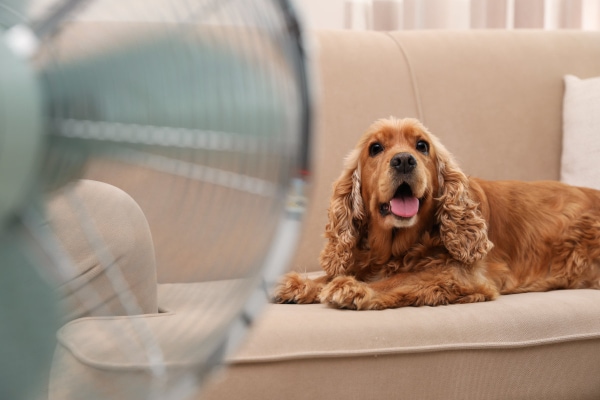
Dog near fan
Ever pointed a fan at your furry friend during a scorching summer day and wondered if you’re actually helping them? I’ve done this countless times with my own pup, especially during those unbearable heat waves when my air conditioner just can’t keep up. But here’s the shocking reality – fans don’t cool dogs the same way they cool humans, and this misunderstanding could potentially put your pet at risk
Today, I’m gonna dive deep into the science behind cooling dogs, explain why fans might not be your best option, and share some actually effective cooling methods that veterinarians recommend.
The Science: Why Fans Work Differently for Dogs Than Humans
When the thermometer climbs, we humans rely on our body’s natural cooling system – sweating. Fans help us by speeding up the evaporation of sweat from our skin, creating that cooling sensation we crave.
But dogs? They’re built totally different.
According to Dr. Jerry Klein, chief veterinary officer of the American Kennel Club, “Fans don’t necessarily cool dogs in the same way they would a person.” This is because dogs don’t eliminate body heat like we do.
Here’s the key difference:
- Humans: Sweat all over our bodies, which evaporates and cools us down
- Dogs: Only sweat through their paw pads and primarily cool themselves by panting
That thick fur coat your dog sports? It actually works as an insulator, preventing the air movement from a fan from reaching their skin where it could help with heat transfer.
When Might a Fan Help Your Dog?
Fans aren’t completely useless for dogs, but their effectiveness is super limited.
Dr. Klein explains that “a fan might be enough to make a dog feel better if the temperature is in the 70s or 80s. But when it’s dangerously hot, like in the upper 90s or the 100s, all a fan is going to do is blow hot air around. That’s not enough to create a safe environment for a dog.”
You might notice your pooch standing in front of a fan because they enjoy the feeling of air blowing through their fur, but this doesn’t mean their body temperature is actually decreasing significantly.
The Dangers of Relying Only on Fans During Extreme Heat
Relying solely on a fan during extreme heat can be risky business. The biggest danger is heatstroke – a potentially fatal condition that occurs when a dog’s body temperature rises dangerously high.
Signs of heatstroke in dogs include:
- Body temperature above 106°F
- Excessive panting
- Bright red or blue gums
- Glazed eyes
- Vomiting or diarrhea
- Disorientation
- Collapse or loss of consciousness
Dr. Klein points out something interesting about heatstroke: “Dogs in nature don’t tend to die of heatstroke, because they’re smart. They don’t exert themselves during the day, they seek shady areas, they never hunt during the day.” It’s when humans interfere by placing dogs in dangerous situations – like hot apartments with inadequate cooling – that problems arise.
12 More Effective Ways to Cool Down Your Dog
So if fans aren’t great at cooling dogs, what actually works? Here are 12 methods that veterinarians and canine experts recommend:
1. Wet Towel Technique
One of the simplest and most effective methods is using a wet towel. Soak a towel in cool (not cold) water and place it on your dog’s underbelly, particularly covering the inner thighs to cool the femoral artery.
Pro tips:
- Use thin towels like flour sack or kitchen towels
- Keep two towels on rotation so you can swap them out as they warm up
2. Tepid Shower
If your dog can stand or walk, a shower with tepid water can help lower their body temperature.
IMPORTANT: Never use cold water as it can shock your dog’s system and cause complications!
3. Create a Breeze (With a Twist)
While a regular fan alone isn’t super effective, you can enhance its cooling power:
- Place a block of ice in front of the fan to create cooler air
- Ensure the fan isn’t blowing directly at your dog’s face
- Use dog-specific fans designed for crates if needed
4. Provide a Cooler Environment
Creating a cooler space can help bring down your dog’s temperature:
- Let your dog lie on tile, marble, or wooden floors instead of carpet
- Draw curtains and close doors to keep rooms shaded
- Move to lower levels of your home like basements which stay naturally cooler
5. Air Conditioning
AC is one of the most effective cooling methods, but be careful not to let your dog lay directly on vents to prevent cooling too rapidly.
6. Digging (Emergency Outdoor Option)
If you’re outdoors without access to cool water, find shade and dig a hole. The dirt beneath the surface is cooler and can provide temporary relief.
7. Cooling Vests
Specialized cooling vests can be incredibly effective. These three-layer garments use water to keep your dog cool while reflecting heat and promoting evaporation.
8. Swimming
A dip in a dog pool, lake, or ocean can efficiently lower your dog’s temperature. Just remember:
- Not all dogs are natural swimmers
- Avoid fast-moving water or strong currents
- Never let your dog swim in water with signs of algae (it can be toxic!)
9. Fresh Water Supply
Always provide access to fresh water, which helps your dog cool themselves more efficiently through panting.
Tip: Consider cooling water bowls, but be aware that some dogs dislike chilled water.
10. Footbath
Fill a tub with cool water and let your dog stand in it. With their paws submerged, they can cool down more effectively through the paw pads.
11. Regular Grooming
Maintaining your dog’s coat helps air flow reach their skin. But NEVER completely shave your dog, especially double-coated breeds!
12. Frozen Treats
Homemade frozen dog treats can help cool your pup from the inside out, plus they’re fun and affordable to make.
When Fans Actually CAN Help Dogs
There is ONE situation where fans actually do help dogs effectively: when their fur is already wet.
According to Dr. Klein, when treating dogs with heatstroke, “we would mist them down with cool water — never cold, but cool — and we’d put a fan on them.” Once the dog’s skin is wet, the fan can help with evaporation and cooling.
So if you wanna make that fan useful, try:
- Wetting your dog’s fur with cool water
- Ensuring the skin underneath is damp
- THEN using the fan to enhance evaporation
5 Dangerous Cooling Methods to AVOID
While researching cooling methods, I came across some seriously bad advice online. Here are 5 dangerous methods you should never use:
-
Ice Packs: Applying ice packs directly to your dog’s skin can cause blood vessels to contract, reducing blood flow and making it harder for them to cool down.
-
Ice Baths: While it might seem logical, very cold water can shock your dog’s system and cause additional problems.
-
Complete Shaving: Many owners think shaving their dog in summer helps, but a healthy coat actually protects against overheating and sunburn.
-
Swimming in Algae-Filled Water: Some algae are toxic to dogs if ingested and can lead to serious health complications.
-
Leaving Dogs in Cars with AC Running: The AC could fail if the car stalls, quickly creating a dangerous situation for your pet.
Final Thoughts: Be Prepared for Hot Weather
As a dog owner myself, I’ve learned that preparation is key to keeping our furry friends safe during hot weather. While fans might provide minimal relief in moderately warm temperatures, they simply aren’t reliable for serious cooling.
Instead, focus on:
- Providing constant access to fresh water
- Creating cool, shaded environments
- Using appropriate cooling tools like vests or wet towels
- Recognizing the early signs of overheating
And remember, if your dog shows signs of heatstroke, don’t wait – get them to a vet immediately, even if they seem to improve. Heatstroke effects can take 12-24 hours to fully manifest.
With these strategies, you’ll be much better equipped to keep your four-legged friend comfortable and safe, even when the temperature soars. Your dog will thank you with all those happy tail wags!
Stay in touch. Get the Cut newsletter delivered daily Email This site is protected by reCAPTCHA and the Google
By submitting your email, you agree to our Terms and Privacy Notice and to receive email correspondence from us.
Things you buy through our links may earn Vox Media a commission
Sign In To Continue Reading
Password must be at least 8 characters and contain:
- Lower case letters (a-z)
- Upper case letters (A-Z)
- Numbers (0-9)
- Special Characters (!@#$%^&*)
This password will be used to sign into all
As part of your account, you’ll receive occasional updates and offers from New York, which you can opt out of anytime.
Do fans keep dogs cool?
FAQ
Can a fan cool a dog?
Fans can help dogs cool down when the weather and room aren’t too hot. Fans can bring down the temperature of a dog’s coat, help a dog release heat through their skin, and speed up the cooling process when a dog pants. But once the room’s temperature rises past 80 degrees, fans won’t be much use to cool down a dog.
Are fans bad for dogs?
Fans are not bad for dogs. Fans help regulate temperature, manage humidity, deter pests, and prevent heatstroke. However, fans do not directly help dogs cool down because dogs do not sweat. Strong, loud, and unprotected fans can hurt dogs. Do not aim a fan directly at dogs.
Can a fan help a dog?
“So it’s not like a fan can’t help, but it’s not the same as air-conditioning, and we have to understand that.” Soaking a towel in cool water and wrapping it around your dog, making sure the skin is wet, and then making use of your fan can help, Klein said. But it’s not something to rely on when temperatures are dangerously high.
How do you keep a dog cool if the temperature rises?
If the temperature is rising and you only have a fan to keep your dog cool, then there is a way to help your dog cool down quickly and stay cool with a fan: Just add water. The combination of moisture and moving air is a very effective cooling method. To do this, wet your dog with cool water, not cold water.
Do dogs like a fan blowing on them?
Some dogs love a fan’s breeze blowing on them and others don’t like it at all. If your dog likes the feeling of a fan blowing on them, then there’s nothing wrong with pointing a fan directly at your dog while they sleep or sit there to cool down. Keep the fan a few feet away from your dog and have it on a low or medium setting.
Why do dogs stand in front of a fan?
“You’ll see dogs sometimes standing in front of a fan because they like the feel of it,” Klein said, “but it’s not necessarily going to cool them in the same way it would a person.” This is because dogs do not eliminate body heat the way humans do.
Is it okay to have a fan blowing on a dog?
What is the fastest way to cool down a dog?
To quickly cool down an overheated dog, immediately move them to a cool, shaded area and offer them small amounts of cool water to drink. Wet their coat with cool (not cold) water, focusing on the neck, armpits, and inner thighs, and create a breeze by using a fan or placing them in an air-conditioned space. Wrap ice packs in a towel and apply them to the groin, armpits, and neck. Crucially, contact a veterinarian immediately for emergency care, as heatstroke can be fatal.
Do dogs sleep better with a fan on?
Do dogs need an AC or fan?
Fans aren’t as effective on cats or dogs because they have fur and because they don’t sweat through their skin. A fan can help, but a portable air conditioning unit is likely to be better. Fans aren’t going to lower the temperature, they’re just going to make the animal more comfortable.