
Knowing the signs that a dog may be dying can help you prepare in advance and help ensure that your dogs last days are full of love and light.
Knowing the signs that a dog may be dying can help you prepare in advance and help ensure that your dogs last days are full of love and light.
Saying goodbye to your dog is one of the hardest things a pet owner must do. Of course, we all want as much time as possible with our beloved pups, and knowing when to let them go can be challenging. But we also dont want our aging or ill dogs to suffer because we love them, and thats where you can help.
Assessing your dogs quality of life can help you determine when it is time to say goodbye and help you provide greater comfort in your dogs final days.
Facing the final journey of your furry companion is perhaps the hardest part of being a dog parent. When that difficult time approaches knowing how to provide comfort and dignity can make an enormous difference – both for your precious pup and for your own peace of mind. I’ve gone through this heart-wrenching experience myself, and I know the overwhelming mix of emotions that comes with it.
Understanding Your Options
When your dog reaches the end of their life, you basically have two main options to consider:
- Euthanasia – A veterinarian-assisted peaceful passing, either at a clinic or in your home
- Natural passing – Allowing your dog to die naturally with supportive care
Each approach has its considerations, and what’s right for one family might not be right for another. The most important thing is making sure your dog isn’t suffering unnecessarily.
Signs Your Dog Is Nearing the End
Before making any decisions, it’s important to recognize when your dog is truly approaching their final days. Dogs are masters at hiding pain, so we need to be extra observant.
Common signs that your dog is nearing the end include:
- Loss of appetite and disinterest in food or water
- Increased sleep and decreased responsiveness
- Difficulty moving, stiffness, or weakness
- Incontinence issues
- Disorientation or confusion in familiar surroundings
- Breathing difficulties or irregular breathing patterns
- Restlessness or unusual discomfort
Your dog may have occasional “good days” where they seem more alert or interested, but these typically become less frequent as their condition progresses.
How to Help Your Dog Pass Comfortably at Home
If you’ve decided to allow your dog to pass naturally at home (after consulting with your vet), there are several ways to make this transition as peaceful as possible.
1. Create a Peaceful Environment
Your dying dog will benefit enormously from a calm, stress-free space.
- Use soft bedding and absorbent pads for comfort and managing incontinence
- Keep fresh water close by to prevent dehydration
- Provide supportive cushioning for weak joints
- Maintain a dimly lit, quiet space to promote relaxation
- Consider a heating pad if they seem cold (monitor to prevent overheating)
- Place something with your scent nearby to help them feel secure
2. Ensure Food and Water Accessibility
As appetite diminishes, focus on making nutrition and hydration as easy as possible:
- Offer bone broth or flavored water to encourage drinking
- Provide soft, palatable foods like boiled chicken or wet dog food
- Consider syringe feeding if needed (but be aware this can sometimes cause stress)
- Watch for signs of dehydration like dry gums or sunken eyes
3. Maintain Familiar Routines When Possible
Keeping some semblance of normal routine can help your dog feel secure:
- Modify daily activities based on their energy level
- Keep interactions calm and reassuring
- Never force movement if they resist
- Allow plenty of undisturbed rest
4. Keep Your Dog Clean and Comfortable
Hygiene becomes increasingly important as mobility decreases:
- Keep clean towels and pet wipes handy
- Change bedding quickly when soiled
- Give gentle brushing when appropriate
- Use a warm, damp cloth for cleaning their face and paws
- Consider waterproof bedding and absorbent pads for incontinence
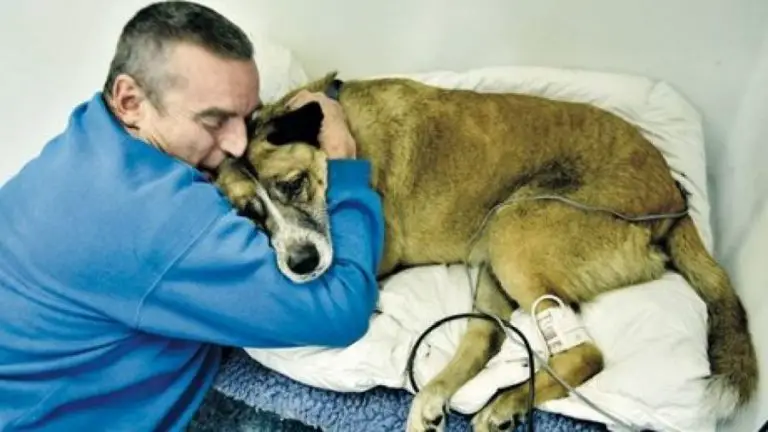
5. Provide Loving Presence
Your presence is one of the greatest comforts you can offer:
- Sit near them, speaking softly
- Offer gentle petting based on their response
- Keep familiar scents nearby
- Respect their need for both companionship and occasional solitude
Homeopathic Support for a Peaceful Transition
Some pet owners find homeopathic remedies helpful for easing their dog’s final hours. While these won’t cause death, they may help keep your dog mentally and physically comfortable.
Popular homeopathic remedies include:
-
Arsenicum album 30C – Often the first remedy to consider for restlessness, fear, discomfort, weakness, increased thirst, and coldness. Some believe it helps relieve the fear of death.
-
Tarentula cubensis 30C – Particularly helpful for pain relief, intense restlessness, and symptoms associated with cancer.
These remedies can be given every couple of hours until you see results. If you don’t see improvement after three doses, consider trying a different remedy.
When Natural Death Becomes Too Difficult
It’s important to acknowledge that sometimes, despite our best intentions, natural death may involve prolonged suffering. Many pet owners hope their dog will “just go peacefully in their sleep,” but unfortunately, this doesn’t always happen.
Signs that euthanasia might be the kinder option include:
- Unmanageable pain despite medication
- Severe difficulty breathing
- Inability to stand or move
- Complete refusal of food and water for extended periods
- Signs of significant distress
The Option of In-Home Euthanasia
If you’re concerned about the stress of a vet visit but feel euthanasia may be necessary, in-home euthanasia services are available in many areas. This allows your dog to spend their final moments in familiar surroundings, surrounded by loved ones.
Veterinarians who provide this service ensure the process is:
- Calm and unrushed
- Guided by your dog’s and your family’s needs
- Conducted in your dog’s favorite spot
- Free from the stress of travel and unfamiliar environments
Legal and Ethical Considerations
It’s worth noting that in many places, there are legal obligations to seek help if your pet is suffering. Animal cruelty laws often require pet owners to bring suffering pets to a veterinarian, and some locations prohibit at-home euthanasia without a licensed veterinarian present.
These laws exist to protect animals from unnecessary suffering, so it’s important to keep your veterinarian involved in the process even if you prefer a natural death at home.
Making the Final Decision
The decision of how to help your dog pass away is deeply personal and influenced by many factors:
- Fear of losing your companion
- Concern that you might be acting too soon
- Stress about your dog experiencing anxiety, especially at a vet’s office
- Family dynamics and disagreements about timing
- Religious beliefs about euthanasia
What’s most important is honestly assessing your dog’s quality of life and potential suffering. Dr. Jeff Werber, a veterinarian quoted in one of our sources, notes that “It is very rare for a pet to be sick, but not be suffering, and then peacefully pass away overnight.”
Personal Experience and Reflection
When my own dog Aaron was approaching his final days due to a brain tumor, I watched him carefully for signs that he needed my intervention. I was prepared to euthanize him if necessary but hoped to allow him a natural passing if he wasn’t suffering.
When his breathing became labored and he became restless, I turned to homeopathy. A dose of Arsenicum album 30C helped him relax, and he was able to pass peacefully at home within hours.
Would I allow another dog to pass naturally at home? I don’t have a definitive answer – only that with each and every dog, I’ll try to listen to what they’re telling me and honor their needs in those final moments.
Questions to Ask Your Veterinarian
If you and your veterinarian are hoping to help your dog die naturally at home, consider asking:
- What specific signs of pain or discomfort should I watch for?
- Where can I go if my dog is in pain after hours?
- How can I help my dog stay calm during this time?
- What is my dog’s current quality of life?
- What should I expect during the natural dying process?
Final Thoughts
Helping your dog pass away is one of the most difficult experiences you’ll face as a pet parent. Whether you choose natural death at home, at-home euthanasia, or euthanasia at a veterinary clinic, the most important thing is ensuring your dog’s comfort and dignity.
Remember that you’re not alone in this journey. Veterinarians, pet hospice services, and support groups are available to help you through this difficult time. And whatever you decide, know that giving your dog a peaceful transition is the final act of love you can provide for your faithful companion.
Have you gone through this experience with your dog? What helped you and your furry friend during that difficult time? I’d love to hear your stories in the comments below.
Small dogs: 10-15 years
| Breed | Lifespan |
|---|---|
| Chihuahua | 15-17 years |
| Chinese crested | 15-17 years |
| English toy spaniel | 13-15 years |
| Fox terrier | 13-15 years |
| Lakeland terrier | 12-14 years |
| Manchester terrier | 12-14 years |
| Pomeranian | 14-16 years |
| Rat terrier | 13-15 years |
| Russell terrier | 12-14 years |
| Yorkshire terrier | 12-15 years |
2 Pale gums and cold paws
If your dog has pale gums or cold paws/lips, it could be a sign the end of their time is near. Pale gums and cold extremities can be caused by poor circulation, a sign that the heart is struggling to pump blood.
How you can help: To help give some comfort, you can try gently rubbing paw balm into their pads. You can also try to warm them by dipping them carefully into a bowl of warm water and gently towel-drying.
At the end of their life, some dogs may start having seizures. This can be the result of metabolic changes, kidney failure or problems in the brain.
How you can help: The most important thing you can do for your dog if theyre having a seizure is to keep them away from things that may hurt them, including stairs or sharp edges. Gently hold their head and offer comfort until it passes.
Near the end of life, many dogs have difficulty breathing. You may notice changes in their breath rate (faster or slower) or uneven breathing. You may also see changes to the sounds of their breathing (harsher or quieter). Labored breathing often indicates that a dog is at the very end of life.
How you can help: Hold your dog. Be present and tell them you love them. Prepare to let go.
Grief over Pet Loss: How to Cope and What Needs to Change
FAQ
Is there anything I can do to help my dog pass away?
What can I give my dog to help pass?
Dogs often drink hydrogen peroxide if mixed 50:50 with milk or ice cream, and it remains effective. Encouraging movement, such as playing ball, walking, or running up and down stairs, can enhance the fizzing effect after administering hydrogen peroxide.
Can I let my dog pass away at home?
If you wish to have him euthanized at home, you will need to arrange for a veterinarian to come to your house and perform an in-home euthanasia. Many veterinarians offer this service. If it needs to be done tonight, you will have to take him to an emergency veterinary clinic for the injection.
What to do if your dog dies at home naturally?