
When a dog presents with a history of seasonally inflamed, itchy skin that doesn’t respond well to maintenance medication, veterinarians often suspect allergies.
After ruling out parasites, skin infections, and other common causes of pruritus and inflammation, the next logical step is typically recommending allergy testing.
Is your furry friend constantly scratching licking their paws or suffering from skin irritations? You might be considering an allergy test to pinpoint the cause of their discomfort. Blood tests for dog allergies seem like a convenient solution, but the big question remains are they actually accurate?
As a pet parent myself, I’ve navigated the confusing world of canine allergy testing, and what I’ve discovered might surprise you. Let’s dive into the real story behind blood allergy testing for dogs.
Understanding Dog Allergies: The Basics
Before we tackle the accuracy question, let’s get clear on what we’re dealing with. Dogs commonly suffer from three main types of allergies:
- Environmental allergies (atopy) – reactions to pollens, dust mites, molds, and other airborne substances
- Food allergies – adverse reactions to ingredients like beef, chicken, or soy
- Flea allergy dermatitis – an allergic reaction to flea saliva
These allergies typically manifest as skin problems (itching, redness, inflammation) and sometimes gastrointestinal issues in the case of food allergies.
What Do Blood Allergy Tests Actually Measure?
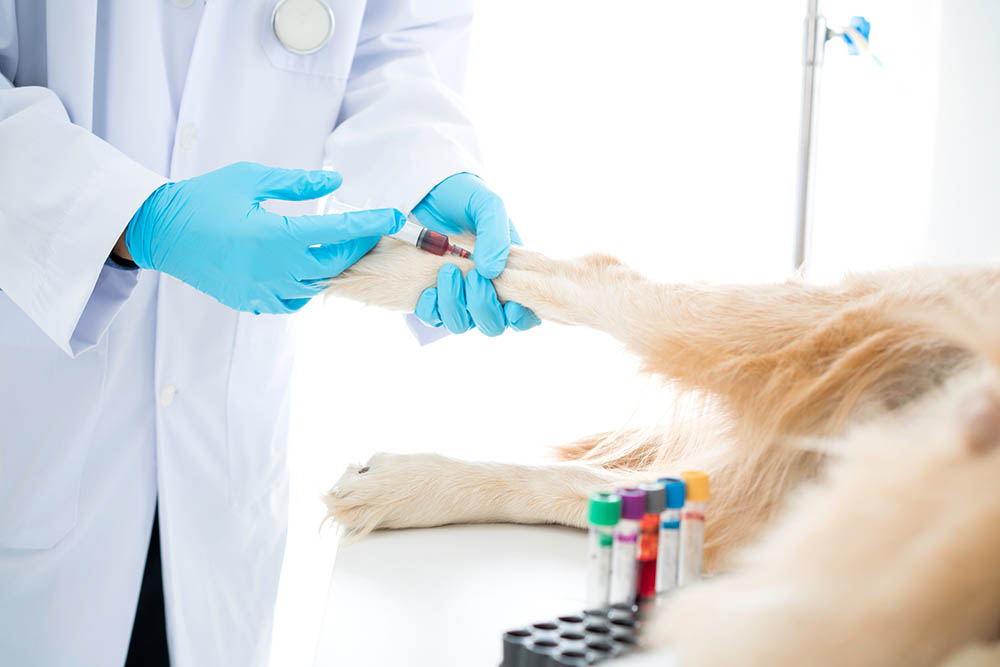
Blood tests for allergies (also called serum allergy tests) look for specific antibodies in your dog’s bloodstream called Immunoglobulin E (IgE). These antibodies are produced when your dog’s immune system overreacts to substances it perceives as threats.
The test measures levels of allergen-specific IgE antibodies, theoretically identifying which environmental substances your dog might be reacting to. Sounds straightforward right? Well, here’s where things get complicated.
The Hard Truth About Blood Allergy Test Accuracy
I hate to break it to ya, but the consensus among veterinary dermatologists isn’t exactly glowing when it comes to blood test accuracy.
According to multiple veterinary sources, blood allergy tests have some significant limitations:
- High rates of false positives – Many healthy dogs without any allergy symptoms show positive results for certain allergens
- Inconsistent results – The same dog tested at different times might get different results
- Poor correlation with symptoms – A positive blood test doesn’t necessarily mean that allergen is causing your dog’s symptoms
As noted in a 2023 veterinary blog post, “blood tests have low sensitivity and specificity – meaning that the rate of false-positive and false-negative results is high. Many healthy dogs without symptoms of allergic skin disease have elevations in some allergen-specific IgE.”
Blood Tests vs. Intradermal (Skin) Testing
When comparing the two main types of allergy testing, here’s what the evidence shows:
| Test Type | Pros | Cons |
|---|---|---|
| Blood Testing | • Convenient (single blood draw)<br>• No sedation required<br>• Can be done while dog is on medications<br>• Widely available | • Higher false positive rates<br>• Less accurate overall<br>• Results can be inconsistent |
| Intradermal Testing | • Considered the “gold standard”<br>• More accurate<br>• Fewer false positives<br>• Results available same day | • Requires sedation/anesthesia<br>• Hair must be shaved<br>• Must stop medications for weeks before<br>• Requires specialist (dermatologist)<br>• More expensive |
The University of Wisconsin Veterinary Care notes that “Neither skin testing nor blood testing is consistently better. For many of our patients, we could do either a skin test or a blood test and the results would be comparable. For some patients, either the blood test or the skin test turns out to be more revealing.”
Food Allergy Testing: An Even Bigger Problem
Here’s where I need to be super blunt: blood tests for food allergies in dogs are essentially useless.
The veterinary community is pretty unanimous on this point. As stated in the Vet Help Direct article, “there’s currently no evidence for the use of blood tests to either diagnose food allergies or identify specific allergens.”
If you suspect your dog has food allergies, save your money on blood tests. The only reliable method for diagnosing food allergies is a proper elimination diet trial lasting 8-12 weeks under veterinary supervision.
So Why Are Blood Tests Still Used?
With all these limitations, you might wonder why veterinarians still recommend blood allergy testing. Good question! There are actually legitimate reasons:
-
For immunotherapy planning – After a diagnosis of atopic dermatitis is made based on clinical signs and ruling out other causes, blood tests can help identify potential allergens for inclusion in immunotherapy (allergy shots or drops)
-
When intradermal testing isn’t possible – Some dogs can’t undergo intradermal testing due to health concerns, medication requirements, or lack of access to a veterinary dermatologist
-
As a preliminary screening tool – Blood tests can sometimes provide useful information that guides further diagnostic work
As Dr. Catherine Barnette, DVM, notes, “Although the results obtained from blood allergy testing may differ from those that would be obtained through intradermal testing, many pets still experience clinical improvement when receiving immunotherapy based upon blood allergy testing results.”
What About Those Saliva and Hair Tests?
You might have seen advertisements for at-home allergy testing kits using hair or saliva samples. I need to be crystal clear here: these tests have zero scientific validity. They’re a complete waste of money.
Reputable veterinary sources explicitly state there’s no evidence supporting these methods for allergy testing. Your hard-earned cash is better spent on a proper veterinary consultation.
The Right Approach to Diagnosing Dog Allergies
If you suspect your dog has allergies, here’s the approach most veterinary dermatologists recommend:
-
Start with a thorough vet exam – Rule out other causes of itching like parasites, infections, etc.
-
Consider a food trial – If food allergies are suspected, a proper elimination diet using a novel protein or hydrolyzed diet for 8-12 weeks is the only reliable way to diagnose
-
For environmental allergies – Diagnosis is based on:
- Clinical history and symptoms
- Ruling out other causes
- Response to treatment
- Possibly allergy testing (intradermal preferred if available)
-
For flea allergy – Strict flea control is both diagnostic and therapeutic
When Blood Testing Makes Sense
Despite the limitations, there are situations where blood allergy testing might be your best option:
- Your dog can’t be taken off medications required for intradermal testing
- You don’t have access to a veterinary dermatologist for intradermal testing
- Your dog can’t tolerate sedation/anesthesia needed for skin testing
- You’re specifically planning to pursue immunotherapy
The Bottom Line: Proceed with Realistic Expectations
The main takeaway? Blood tests for dog allergies have limitations and shouldn’t be used as the sole method to diagnose allergies. They’re most useful for guiding immunotherapy after a diagnosis has already been made.
If your vet recommends a blood allergy test, ask:
- What specific information they hope to gain
- How the results will guide treatment
- Whether intradermal testing might be a better option
Remember, treating allergies in dogs is often a long-term commitment involving multiple approaches. No single test will provide all the answers, and management typically involves a combination of:
- Allergen avoidance (when possible)
- Medications to control symptoms
- Possibly immunotherapy for environmental allergies
- Strict diet control for food allergies
Our Experience
We went through this with our Labrador, Bella, who had terrible seasonal itching. The blood test showed she was allergic to practically everything – grass, trees, dust mites, you name it! But when we did the intradermal testing, it showed she was mainly reacting to certain grass pollens and house dust mites.
The immunotherapy based on her skin test results has been life-changing – she’s now about 80% better during allergy season. So yeah, the extra cost and hassle of the intradermal testing was totally worth it in our case.
Final Thoughts
While blood tests for dog allergies have their place in veterinary medicine, they’re far from perfect. Understanding their limitations helps set realistic expectations and make informed decisions about your dog’s care.
Has your dog undergone allergy testing? What was your experience? I’d love to hear your stories in the comments below!
Remember, the journey to managing your dog’s allergies might be challenging, but with the right approach and expectations, you can help your furry friend find relief and live their best, itch-free life.
Intradermal Allergy Testing for Dogs: How It’s Done and What to Expect
Intradermal allergy testing involves injecting small amounts of allergens just under the skin to identify allergic triggers in dogs. This procedure is usually performed under sedation or general anesthesia, with strict monitoring to ensure the patient’s safety. Typically, 40-60 allergen injections are given in a single area of the body, such as the lateral thorax or abdomen.
A “positive” reaction appears as a visible swelling, similar to a hive, which typically forms within 20 minutes of the injection. If no swelling occurs, the dog is considered not allergic to that specific allergen.
By carefully assessing the skin reactions at each injection site, a veterinary dermatologist can identify the allergens responsible for triggering the dog’s atopic dermatitis, guiding treatment options and allergen-specific therapies.
Intradermal allergy testing is widely regarded as the “gold standard” for diagnosing atopic dermatitis in dogs. Other allergy tests are often compared to intradermal testing for accuracy and reliability.
However, there are important precautions and restrictions for pets undergoing intradermal allergy testing. Female dogs should not be tested if they are pregnant or in heat, as hormonal changes can affect test results. It is also recommended to test pets at the end of their allergy season, typically in the fall, for the most accurate results. Pets should not have a bath for five days prior to testing, and they must be fasted the morning of the procedure to ensure safe sedation.
Additionally, intradermal allergy testing cannot be performed if the patient has recently received certain medications, as they may interfere with the test results.
- Long-acting injectable steroids within the last 90 days
- Oral steroids within the last 30 days
- Topical steroids (including ear or eye medications) within the last 14 days
- Antihistamines within the last 7 days
- Essential fatty acids within the last 7 days
Intradermal allergy testing can present challenges for some dogs, especially those who experience extreme pruritus (itchiness) when medications are discontinued. This can make the testing process more difficult for patients that are sensitive to the cessation of allergy treatments.
Another limitation is the need for sedation or anesthesia, which may not be suitable for dogs with certain underlying medical conditions. Additionally, some pet owners may be reluctant to pursue sedation or anesthesia due to concerns about the risks involved.
All hair at the test site must be clipped. With the right veterinary table, it’s a minor inconvenience for most pets, but could be a significant disadvantage for show dogs or dogs judged based on their appearance.
Finally, intradermal allergy testing requires an experienced veterinary dermatologist to administer the test and interpret the results. The skin reactions at each injection site can be subjective, and distinguishing between normal and allergic reactions requires specialized expertise. This can be an obstacle for pet owners in rural areas who may not have access to a veterinary dermatologist or mobile veterinary care, requiring long-distance travel for testing.
Benefits and Limitations of Allergy Testing for Dogs
Allergy testing is a valuable tool for identifying the underlying causes of atopic dermatitis in dogs, which is commonly triggered by inhaled allergens like pollen, mold spores, and dust. However, it’s important to note that allergy testing is not recommended for diagnosing food allergies, which require a food trial with a hypoallergenic diet for confirmation.
Additionally, allergy testing cannot diagnose atopic dermatitis itself. Atopic dermatitis must be diagnosed first through a thorough evaluation of medical history, clinical signs, and the exclusion of other skin conditions. Allergy testing is most useful once atopy is diagnosed, helping to identify specific allergens for targeted immunotherapy or other treatments aimed at reducing allergic reactions.
There are two primary methods of allergy testing in dogs: intradermal skin testing and blood (serum) testing. Each method offers unique benefits and limitations, both medically and from a client perspective.
Dog Allergy Testing: Is it worth it?
FAQ
How accurate is blood allergy testing in dogs?
Dog allergy blood tests are not reliable for diagnosing food allergies and should not be used to determine what ingredients a dog is allergic to; however, they can be useful in identifying environmental allergens, such as pollens, molds, and dust mites, though they are generally considered less accurate than intradermal skin testing. For food allergies, an elimination diet trial is the only accurate method, while environmental allergies can be diagnosed through blood or intradermal testing to develop an allergy immunotherapy plan.
Do vets recommend allergy tests for dogs?
How Vets Test for Allergies in Dogs. There are two types of allergy diagnostic testing: intradermal allergy testing and serum allergy testing. Your veterinarian will recommend allergy testing based on your pet’s symptoms and a variety of other factors.
How much does a dog allergy blood test cost?
How much does it cost to test a dog for allergies? The cost to test a dog for allergies can vary based on the type of test and the veterinary clinic. Intradermal testing typically ranges between $200 and $300 whereas a blood test can cost between $200 and $400.
Are dog allergy tests any good?
A cat or dog allergy test can be very effective in identifying the underlying cause of allergy symptoms and helping to diagnose atopic dermatitis (a skin …