
Picture this: one thousand football fields lined up in a row, each one filled with dog poop one foot deep. It’s not a pleasant thought, but that’s how much waste our canine pets create each year in the U.S.
You’re not gonna like what I’m about to tell you. Once I started to dig into how to handle my dog’s poop in the most responsible, environmentally-friendly way, I didn’t like it either.
If you’re like me, you dutifully scoop your dog’s poop with a biodegradable or compostable bag that you paid good money for. We feel good about buying those bags because we think they’re better for the planet. Newsflash: they’re not. We’ve been had.
I couldn’t find any data on how big the “dog poop bag” business is, but if you search Amazon for that term you get over a thousand hits. Start clicking and you’ll see lots of language (“USDA certified,” “certified compostable,” biodegradable, “made from vegetables”) designed to make you think that those bags will melt away and sprout daisies when they hit the landfill.
Problem is, all those certifications are based on commercial composting facilities which engineer the perfect conditions needed for the bags to break down. Those conditions do not exist in the landfill, so the bags simply don’t break down as claimed. Instead, they get buried beneath other garbage and fester, all the while releasing greenhouse gasses into the atmosphere. Lots and lots of greenhouse gasses.
So what’s a responsible dog owner to do? To find out, I reached out to Rose Seemann, author of The Pet Poo Pocket Guide. Seemann is a co-founder of Enviro Pet Waste Network, a nonprofit whose goal is to connect and educate people on sustainably managing pet waste. We talked about all the different ways dog owners deal with their crap and came up with some good, better, and best options.
Nobody wants to see–or worse–step in your dog’s daily offering. At the very least, pick it up and throw it away. Some cities will even fine you for not doing so. But the big question is what to pick it up with? There are two basic choices: paper or plastic.
The Poop Scoop: Not What You Think!
As a dog parent, I’ve spent countless walks clutching those little plastic bags, wondering if my “eco-friendly” choice was actually making any difference. If you’ve ever stood in a pet store staring at packages labeled “biodegradable,” “compostable,” or “plant-based” and felt confused – you’re not alone!
The truth about biodegradable dog poop bags is more complicated than most of us realize. Despite what manufacturers claim many so-called “biodegradable” options aren’t nearly as green as they appear. Let’s dig into the real poop on these products and figure out what’s actually helping our planet and what’s just clever marketing.
What Are Dog Poop Bags Actually Made Of?
Traditional dog poop bags are typically made from polyethylene, a non-renewable plastic derived from petroleum These can take hundreds of years to decompose and contribute to our massive plastic pollution problem
But what about those “biodegradable” alternatives? Here’s where it gets messy
Types of “Eco-Friendly” Poop Bags:
-
Biodegradable bags: Often made with conventional plastic plus additives that help them break down (sometimes called “oxo-biodegradable”)
-
Compostable bags: Usually made from plant-based materials like cornstarch, potato starch, or sugarcane
-
Plant-based bags: Contain some percentage of plant material but are often blended with petroleum-based plastics
Here’s something that shocked me: many “plant-based” compostable bags only contain 20% plant material! The rest? Usually a biodegradable fossil fuel-based plastic called PBAT (polybutylene adipate terephthalate). This means even the “greenest” options still use quite a bit of petroleum-based ingredients.
The Biodegradable Bag Myth: They Don’t Break Down Where You Think
The biggest misconception is that biodegradable bags break down naturally in landfills or the environment. This is simply not true in most cases!
Most biodegradable and compostable bags are designed to break down ONLY under very specific conditions:
- High temperatures (55°C/131°F or higher)
- Presence of specific microorganisms
- Proper moisture levels
- Sufficient oxygen
These conditions exist in industrial composting facilities but NOT in:
- Regular landfills (which lack oxygen)
- Natural soil
- Oceans or waterways
- Your backyard compost bin (in most cases)
Studies show that supposedly biodegradable bags can remain intact for years in natural environments before fragmenting into microplastics. Even “home compostable” bags don’t fully break down in home compost systems about 60% of the time!
Compostable vs. Biodegradable: What’s the Difference?
These terms get tossed around interchangeably, but they’re not the same:
Biodegradable: Can break down into smaller pieces through natural processes (though the timeframe isn’t specified and could be years or decades)
Compostable: Can break down into carbon dioxide, water, and biomass under composting conditions, leaving no toxic residue
Put simply: All compostable bags are biodegradable, but not all biodegradable bags are compostable!
The Reality Check: Where Do These Bags Actually End Up?
Let’s be real – intentions are great, but the disposal system matters most. According to surveys:
- Less than 5% of dog owners compost their compostable poop bags at home
- Only 3% of compostable plastic products actually get fully composted
- Most compostable bags end up in landfills, where they produce methane (a potent greenhouse gas)
- Very few industrial composting facilities accept dog waste in the UK or US
In other words, without the right disposal infrastructure, even the “greenest” poop bags often end up in the same place as regular plastic bags.
How To Identify Truly Biodegradable or Compostable Bags
If you want to use better poop bags, look for these certifications:
For industrial composting:
- ASTM D6400 (US standard)
- EN 13432 (European standard)
For home composting:
- TÜV OK Compost Home certification
- AS 5810-2010 certification
Beware of vague terms like “eco-friendly,” “green,” or “earth-friendly” without specific certifications. These are often examples of greenwashing!
The Top 5 Eco-Friendly Dog Poop Bags That Actually Work
Based on testing and certifications, these bags are among the best options:
-
G.A.S. Home Compostable Dog Poop Bags – Made from cornstarch with multiple certifications for home and industrial composting
-
BioBag Standard Pet Waste Bags – Made from plant starches, vegetable oils, and compostable polymers, great for smaller dogs
-
beyondGREEN Dog Waste Bags – US-manufactured with plant-based biopolymers, certified for home composting
-
Pet N Pet Compostable Dog Poop Bags – Budget-friendly option made from cornstarch with home composting certifications
-
Pogi’s Compostable Dog Poop Bags – Available with handles, made from bio-based vegetable material
Remember tho – a bag’s environmental benefit depends on how you dispose of it!
Can I Actually Compost Dog Poop?
The big question! Yes, but it’s complicated:
Home Composting Dog Waste:
- Requires specialized knowledge and proper setup
- Needs high temperatures (above 131°F/55°C) to kill pathogens
- SHOULD NEVER be used on edible gardens or vegetables
- Is best done in a separate compost system from your regular compost
Industrial Composting:
- Not all facilities accept pet waste (check locally)
- Requires proper collection and transport systems
The USDA states: “Dog waste compost can be used as a soil additive for revegetation, lawn establishment, and planting beds. It should not be used on crops grown for human consumption.”
7 Myths About Biodegradable Dog Poop Bags BUSTED!
Let’s clear up some common misconceptions:
Myth 1: Compostable poop bags are made from 100% plants.
Truth: Most contain 50-80% fossil-fuel-based materials.
Myth 2: They biodegrade in natural environments.
Truth: They need specific composting conditions not found in nature.
Myth 3: They’re less toxic than conventional plastic.
Truth: Studies show they can be similarly toxic and may create problematic microplastics.
Myth 4: They prevent plastic waste.
Truth: Without proper disposal, they end up in the same places as regular plastic.
Myth 5: They break down in landfills.
Truth: Landfills lack the oxygen and microorganisms needed for proper breakdown.
Myth 6: They don’t create microplastics.
Truth: When not properly composted, they can create similar pollution problems.
Myth 7: They aren’t plastic.
Truth: Even plant-based bags are chemically processed into plastic-like materials.
So What’s The Best Solution For Dog Waste?
There’s no perfect answer, but here are your best options:
If you have a municipal composting program that accepts pet waste:
- Use certified compostable bags
- Follow local guidelines for disposal
If you’re an experienced composter:
- Use home-compostable certified bags
- Maintain a separate composting system for pet waste
- Never use the compost on food gardens
If you don’t have access to composting:
- Consider recycled plastic bags (reusing waste that already exists)
- Look for bags that support plastic cleanup initiatives
- Focus on proper disposal (in trash, not littering)
Some innovative companies have created “plastic negative” poop bags, where they remove more plastic from the environment than they use in production.
The Bottom Line on Biodegradable Dog Poop Bags
The honest truth? Most “biodegradable” dog poop bags aren’t living up to their eco-friendly promises – at least not yet. The problem isn’t just with the bags themselves but with our waste management systems that aren’t equipped to handle them properly.
Until our infrastructure catches up, the most responsible choice might be:
- Use truly certified compostable bags if you have access to proper composting
- Consider bags made from recycled materials if you don’t
- Never flush dog waste down the toilet (contrary to what some suggest)
- Always pick up after your dog (even “natural” waste can cause environmental problems)
I’ve switched to bags that are certified for home composting and set up a separate composting system in my yard (far from any vegetable gardens). It’s not perfect, but it’s better than adding more plastic to landfills.
FAQ About Biodegradable Dog Poop Bags
Q: Do biodegradable dog poop bags break down in landfills?
A: Usually not. Landfills lack the oxygen, microorganisms, and conditions needed for proper breakdown. In fact, they may produce methane gas when they partially decompose.
Q: Is it safe to use compost made from dog waste in my garden?
A: It can be used in ornamental gardens and for lawn establishment, but NEVER for growing food. The risk of spreading harmful bacteria is too high for vegetable or fruit gardens.
Q: How long does it take for a biodegradable dog poop bag to decompose?
A: In proper composting conditions, anywhere from 3-6 months. In landfills or natural environments, it could take years or even decades.
Q: Are compostable bags worth the extra cost if I don’t compost?
A: Honestly, probably not. Without proper composting, they don’t offer significant environmental benefits over regular bags.
Remember, being a responsible pet owner means picking up after your dog – regardless of what bag you use. The most important thing is keeping our communities clean and safe for everyone!

Better: Build a Poop Digester
If you have a yard and your dog does most of his business there, making a poop digester is a great solution. It’s a mini septic system designed to send his crap down into the soil, where it will eventually break down and enrich it. Site location here is key. You don’t want to build your digester near any waterway or too close to buildings with foundations which could impede drainage.
It’s a fairly simple DIY project that entails drilling holes and removing the bottom of a sealable container (like a 5-gallon bucket or old garbage can), lining it with stones, and burying it. Poop goes in along with grass clippings or leaves and a sprinkling of septic treatment which helps things break down faster. Seemann says that septic processing slows down when temps drop below 40 degrees F: “Be sure your bin is big enough to get through the cold spells or have a backup plan.”
Paper Dog Poop Bag Options
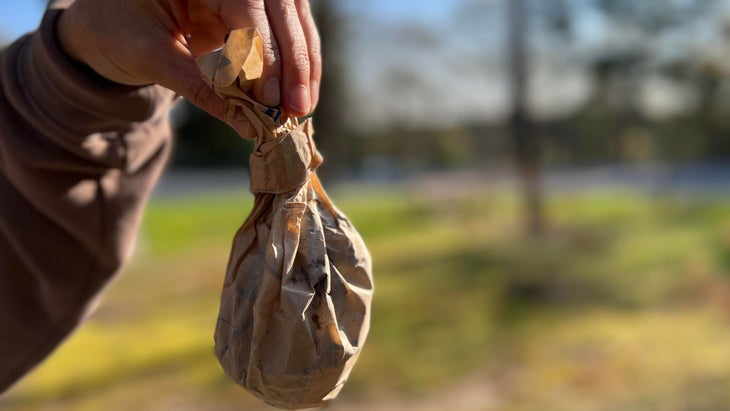
I ordered up PoopShark Poop Bags and Pooch Paper. The former is a three-sided bag; the latter is a simple square sheet that you twist shut.
After using these bags for a couple of weeks on woodsy and residential walks that often last an hour or more, I encountered a big drawback: the paper is thin, uncoated, and not designed to encapsulate a wet turd for more than 15 or 20 minutes. After that, things get start to get a little sketchy. I found I had to carry a backup plastic bag, which defeats the purpose of choosing a paper scooper.
Representatives from both companies conceded that their best markets are in urban areas, where dog walkers have easy, frequent access to bins, so minimal toting is necessary. I do believe that for city dwellers and short-haul dog walkers, these two products are good options—far better than plastic ones—but I wish that both companies were clear in their marketing about the limitations.
If your end game is to trash your bag of poop, then use either a repurposed plastic bag—bread, carrot, newspaper, or deli bags all do the trick—or buy bags made from 100 percent post-consumer recycled materials as a way to support recycling infrastructure, like these from Only Natural. And, as I said: Do not waste your money on anything marketed biodegradable or bio-based. Those companies are capitalizing on our desire to do something good for the planet and not properly educating us on the real-world breakdown of their products. I see it as just plain greenwashing.
If composting programs accepted pet waste, it might be a different story. Then those bags would have a logical place to go. But for now, it’s just too hard to find a composting facility that allows pet waste. Rose Seemann of Enviro Pet Waste Network only knows of two municipal composting facilities (in Nantucket, Massachusetts, and Brattleboro, Vermont) and a smattering of small-scale composting projects in city parks, dog runs, and trailheads in the U.S. that welcome pet waste into their composting facilities. (Canada is way ahead of the U.S. on this front.)