Your dog’s lifestyle is very different from their wild ancestors who lived outdoors year-round. Before domestication, dogs had tougher paw pads, less body fat, and were able to gradually adjust to warmer temperatures throughout the spring and summer. Because our modern pups live alongside us in climate-controlled environments, it’s important to be aware of how high temperatures can affect your dog before exercising outdoors on a hot day.
It’s a scorching summer day, and you’re sweating bullets. You look over at your furry companion panting heavily on the porch, and you can’t help but wonder – are dogs OK in 90 degree heat? The short answer is no 90 degrees is generally too hot for most dogs, and requires special precautions to keep them safe.
As a dog owner myself, I’ve learned through some scary close calls that our canine friends just don’t handle extreme heat the way humans do. Let’s dive into why high temperatures pose such dangers to our furry friends and what we can do to protect them.
Why Dogs and Hot Weather Don’t Mix Well
Unlike humans who can sweat through their entire body, dogs can only release heat through panting and sweating through their paw pads. This limited cooling system makes them extremely vulnerable when temperatures climb.
According to recent veterinary guidance updated on May 30, 2024, leaving a dog outside in temperatures about 85-90°F for just a few minutes can cause them to overheat. This can quickly become life-threatening if they don’t have access to shade, cooler temperatures, and plenty of fresh water.
Dogs’ normal body temperature sits between 100.5 and 102.5°F – already higher than humans. When their body temperature reaches 106°F, they’re experiencing heatstroke. That’s only a 4-degree increase from their normal range which can be fatal.
Factors That Affect Your Dog’s Heat Tolerance
Not all dogs handle heat the same way. Several factors determine how well your pup can cope with hot weather:
Breed Matters
Some breeds struggle significantly more in hot weather:
- Brachycephalic (short-nosed) breeds like Bulldogs, Pugs, Boxers, and Shih Tzus have compromised airways that make panting less effective
- Double-coated breeds like Golden Retrievers retain more heat than short-coated breeds like Labradors
- Dogs with darker coats absorb more heat than those with lighter fur
Age and Health Status
- Puppies and senior dogs have a harder time regulating body temperature
- Dogs with health conditions like heart disease, obesity, respiratory issues, or nervous system diseases are more vulnerable
- Dogs taking certain medications like diuretics, beta blockers, or sedatives may be more susceptible
Size Matters
- Larger dogs have more surface area and can take longer to cool down
- Smaller dogs can typically cool themselves more efficiently
Signs Your Dog Is Overheating
Knowing the warning signs of heat distress could save your dog’s life. Watch for:
- Excessive panting and drooling
- Hot skin to the touch
- Bright red, blue, or purple gums
- Tacky or dry gums
- Vomiting or diarrhea (possibly bloody)
- Weakness or listlessness
- Confusion or disorientation
- Unsteady walking
- Muscle tremors
- Seizures
- Collapse or loss of consciousness
What Temperature is Too Hot for Dogs?
Let’s break down the temperature ranges and what they mean for your dog:
| Temperature | Safety Level | Recommendations |
|---|---|---|
| Above 90°F | Dangerous | Limit outdoor time to just brief potty breaks (5 minutes max) |
| 80-90°F | High Risk | Short leashed walks only, provide shade, water, and cooling |
| 70-80°F | Caution | Limit outdoor activity, especially for at-risk breeds |
| Below 70°F | Generally Safe | Monitor for individual tolerance |
Remember that humidity plays a huge role too! High humidity makes it harder for dogs to cool through panting, making even moderate temperatures dangerous.
The “5-Second Rule” for Pavement
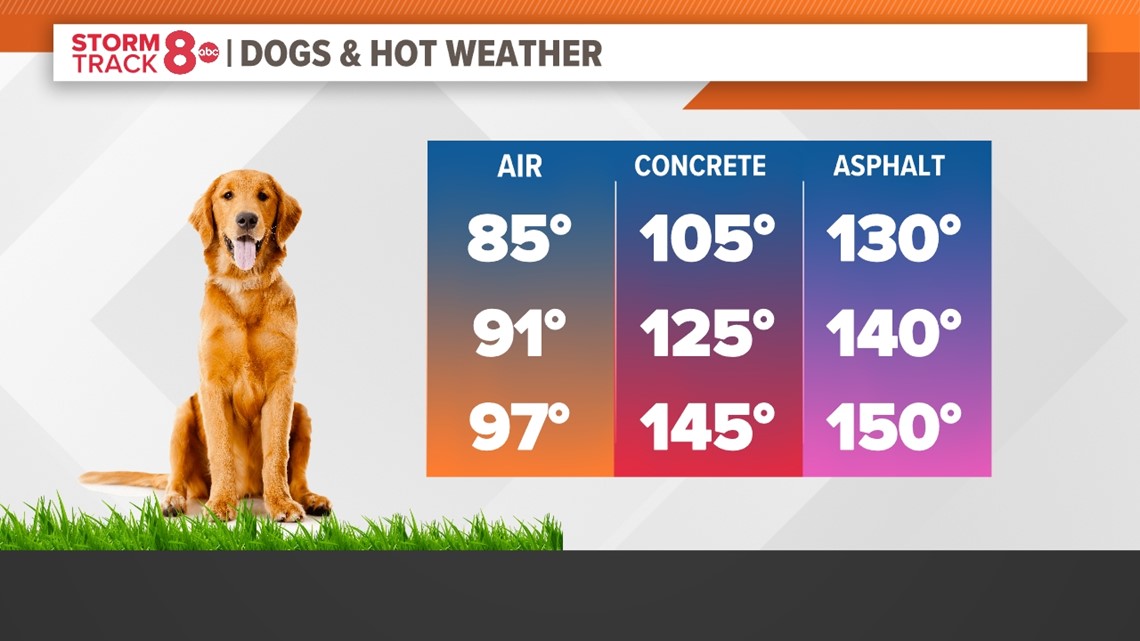
A good rule of thumb: if you can’t comfortably keep your hand on the pavement for 5 seconds, it’s too hot for your dog’s paws! Asphalt can be up to 40-60 degrees hotter than the air temperature, causing severe burns to sensitive paw pads.
How to Keep Your Dog Safe in Hot Weather
When temperatures climb to 90°F or higher, here are essential steps to protect your furry friend:
1. Timing is Everything
- Walk dogs early morning or late evening when temperatures are cooler
- Avoid outdoor activity during peak heat (usually 10am-4pm)
2. Provide Cooling Options
- Ensure constant access to fresh, cold water
- Create shaded areas in your yard
- Consider cooling mats or vests for high-risk dogs
- Set up fans in areas where your dog rests
3. Indoor Alternatives
- Use puzzle toys and indoor games for mental stimulation
- Try indoor potty options like pee pads or indoor turf for extremely hot days
4. Never, Ever Leave Dogs in Cars
Even with windows cracked, temperatures inside a parked car can rise 20 degrees in just 10 minutes. On a 90°F day, car interiors can reach 120°F in mere minutes – a death sentence for dogs.
How to Cool Down an Overheated Dog
If you suspect your dog is suffering from heat distress:
- Move them to a cool, shaded area immediately
- Douse them with cool (not cold) water, especially over their head, abdomen, armpits and feet
- Place wet, cool cloths on their body (changing frequently as they warm up)
- Use a fan to circulate air over their wet fur
- Offer small amounts of water to drink
- Get to a veterinarian ASAP – don’t delay treatment!
Avoid using ice or very cold water as this can constrict blood vessels and actually trap heat in the body. Also, don’t apply alcohol to paw pads (an outdated recommendation).
When to Call the Vet
Heatstroke is a true medical emergency. About half of dogs who experience heatstroke don’t survive, so quick action is crucial.
Call your vet immediately if:
- Your dog’s temperature exceeds 104°F
- They show any signs of heat distress
- They’ve been exposed to high heat and aren’t acting normally
If your regular vet isn’t available, go to the nearest emergency clinic. Don’t wait to see if they improve – with heatstroke, minutes matter.
Power Outages and Heat Safety
What if your AC goes out during a heatwave? Have a backup plan:
- Identify pet-friendly hotels or family members who could take you and your dog
- Consider emergency boarding facilities
- Keep battery-powered fans on hand
- Have cooling mats available
- Store extra water for emergencies
Common Questions About Dogs and Heat
Can I shave my double-coated dog to keep them cooler?
Surprisingly, no! A dog’s coat provides insulation against both cold AND heat. Shaving can actually make them more vulnerable to overheating and sunburn. Regular brushing to remove excess undercoat is a better option.
My dog loves playing fetch. Can we still do this in hot weather?
Exercise increases body temperature significantly. In 90°F weather, even brief periods of exertion can be dangerous. Save active play for cooler times or switch to water activities like swimming.
How can I tell if my dog is just tired or actually overheating?
Excessive panting that doesn’t slow down after a few minutes of rest, drooling more than usual, and seeming disoriented are key warning signs. When in doubt, assume it’s heat-related and take cooling measures.
Do dogs get used to hot climates over time?
While dogs can acclimate somewhat to their environment, they still have biological limitations. Even dogs who live in hot climates need the same precautions during extreme heat.
Real Talk: It’s Better to Be Cautious
As someone who’s watched my own dog struggle on a hot day, I can tell you the fear of seeing your pet in distress is awful. It’s WAY better to be over-cautious than to risk your dog’s life.
The simple truth is that 90°F is too hot for dogs to safely spend time outdoors. Brief potty breaks (under 5 minutes) with immediate return to air conditioning is the safest approach.
Remember – we chose to bring these amazing animals into our lives, and it’s our responsibility to protect them from hazards they can’t understand. Your dog depends on you to make smart choices about their safety in hot weather.
Stay cool, be vigilant, and enjoy summer with your furry friend in ways that keep them safe and comfortable!
Have you had any close calls with your dog in hot weather? Share your experiences in the comments below!
What heat index is safe for dogs?
The heat index is what weather conditions feel like when both air temperature and humidity level are considered. High humidity can be dangerous for dogs too. When the air is humid, panting is less effective at evaporating moisture, so dogs have a harder time cooling off. Justine Lee, DVM, DACVECC, DABT, & Board-certified veterinary specialist recommends this method of factoring in humidity as well as temperature to determine if the heat index is safe for your dog:
“If the temperature (in °F) + humidity level add up to 150 or higher, avoid exercising your dog outdoors. For example, an 80° day with 80% humidity is too hot to walk your dog.”

| Temp °F | |
| 100° | Its too hot to walk your dog. |
| 90° | |
| 89° | |
| 88° | |
| 87° | |
| 86° | |
| 85° | Dangerous heat for all dogs – use extreme caution or avoid walking outside if your dog is large or at risk. |
| 84° | |
| 83° | |
| 82° | |
| 81° | |
| 80° | Walking outside is potentially unsafe, and could be dangerous for larger dogs. Modify or skip your walk. |
| 79° | |
| 78° | |
| 77° | |
| 76° | |
| 75° | Risk is unlikely for small & medium breeds, but use caution with large or at-risk dogs. |
| 74° | |
| 73° | |
| 72° | |
| 71° | |
| 70° | |
| 69° | Small & medium dogs have low risk of overheating, but some large breeds may be at risk |
| 68° | |
| 67° | |
| 66° | |
| 65° | |
| 64° | Enjoy your walk! |
| 63° | |
| 62° | |
| 61° | |
| 60° |
Temperature ranges for safely walking dogs outdoors:
- 60°-64°F: Safe for all dogs
- 65°-69°F: Safe for small & medium dogs, potentially moderate risk for some large breeds
- 70°-75°F: Unlikely risk for small & medium dogs, moderate risk for large breeds or at-risk dogs
- 76°-80°F: Potentially unsafe heat for all dogs, moderate to high risk for larger dogs
- 81°-85°F: Dangerous heat for all dogs – use extreme caution or avoid walking outside
- 86°-100°F: Too hot to walk your dog
Cold weather can also be dangerous for dogs. Learn about when it’s too cold to walk your dog.
Take water with you
Bring a collapsible bowl and a water bottle along on your walk. If your pup is not a big fan of water, you can encourage them to stay hydrated by adding a splash of tasty bone broth.